Thank you for reading this post, don't forget to subscribe!
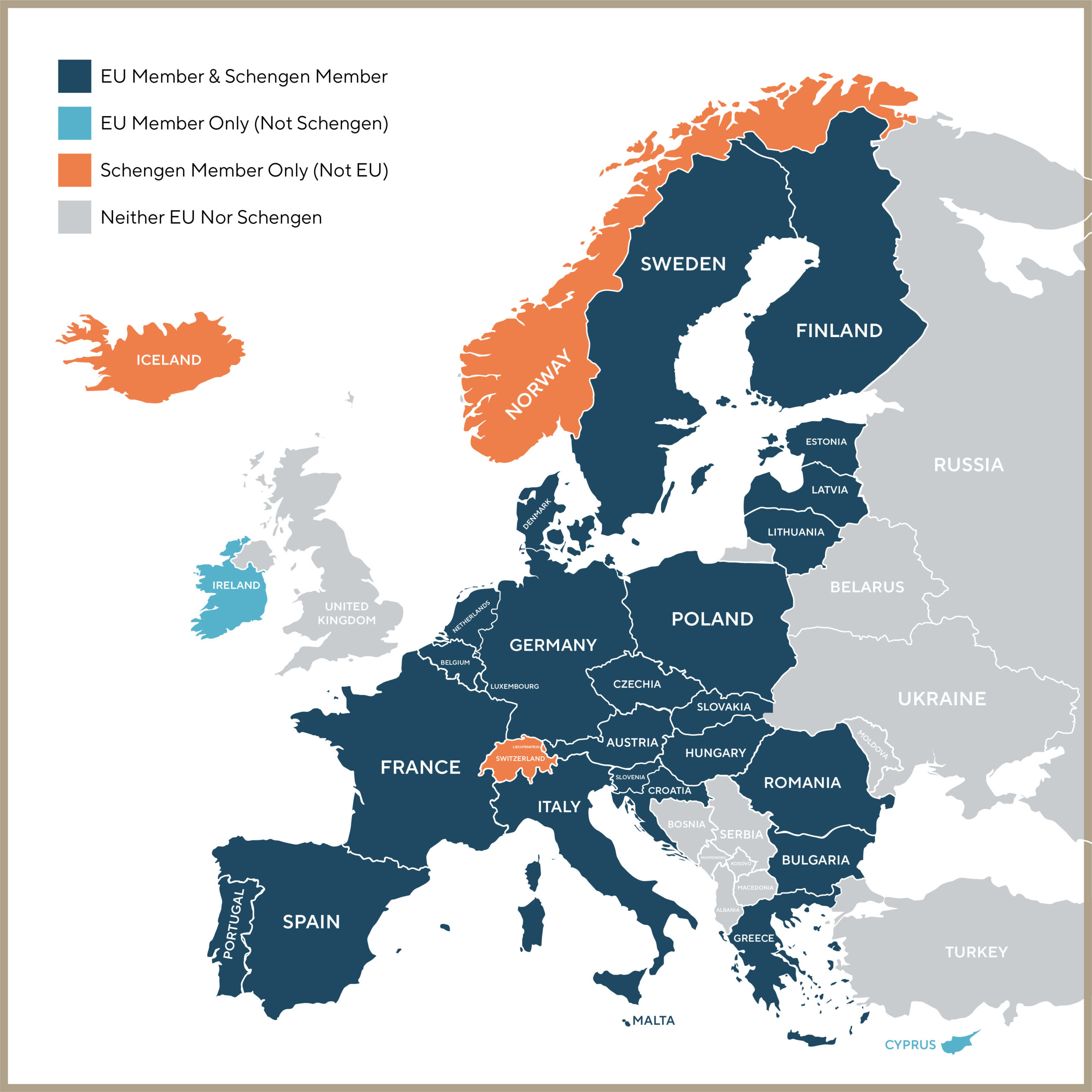
Yes, Switzerland is a Schengen country. It belongs to the Schengen Area but is not a member of the European Union. Eligible travelers can visit Switzerland under the common Schengen short-stay rules, while visa requirements depend on nationality, travel purpose, and length of stay.
For Americans planning a trip from the United States to Europe, Switzerland offers a simple way to explore the Alps, lakes, and historic cities within the Schengen travel system. A U.S. citizen with a valid passport can generally visit Switzerland for tourism or business without obtaining a visa in advance for a stay of up to 90 days within any 180-day period. Time spent in other Schengen countries counts toward the same limit.
Switzerland follows common Schengen rules for short visits, but that does not mean every traveler can enter without a visa. Visitors who need a visa must meet the applicable requirements, and travelers planning to work, study for an extended period, or live in Switzerland may need a different authorization. Understanding these distinctions before booking a flight can help prevent delays, extra costs, and problems at the border.
Yes. Switzerland is a full member of the Schengen Area and applies the common rules that govern short-stay visas and travel across participating countries. Its participation took effect on December 12, 2008, when the relevant Schengen arrangements came into force for Switzerland.
The Schengen Area is a group of European countries that generally allows people to cross internal borders without routine passport checks. This system makes travel between participating countries easier, although temporary internal border controls may be introduced when permitted by the rules.
For travelers, Switzerland’s membership means that a visit to Zurich, Geneva, Lucerne, or another Swiss destination falls under the Schengen framework. If the same trip includes France, Germany, Italy, or another Schengen country, the applicable short-stay limit is shared across the journey.
However, Schengen membership does not remove every entry requirement. Border officials can still check passports, the purpose of a visit, available funds, accommodation plans, return travel, and compliance with visa conditions.
Source: envoyglobal.com
Schengen membership
Switzerland participates in the common Schengen border and short-stay visa system.
No separate Swiss allowance
Travel days in Switzerland count toward the same short-stay allowance used in other Schengen countries.
Entry checks remain possible
Travelers must still satisfy the entry conditions that apply to their nationality and circumstances.
When Did Switzerland Join the Schengen Area?
Switzerland joined the Schengen system in 2008. Its participation followed agreements with the European Union and the steps required to apply the common rules. This made Switzerland part of the European border cooperation system even though the country remained outside the EU.
The practical change was important for visitors. Switzerland became part of the shared short-stay visa framework, and routine checks at many internal Schengen borders were removed. External border controls and immigration checks continued under the applicable rules.
Effective participation
December 12, 2008, marks the date Switzerland’s participation in the Schengen and Dublin arrangements came into force.
What Does Schengen Membership Mean for Visitors?
Schengen membership mainly affects short visits and movement between participating countries. A traveler who enters the area legally can generally continue from Switzerland to another Schengen destination without going through routine immigration control at every internal border.
This does not guarantee entry in every situation or eliminate the need to carry valid travel documents. Authorities may conduct checks, and travelers must comply with the conditions of their visa or visa-exempt status throughout their stay.
Simpler cross-border trips
Visitors can often travel between Switzerland and neighboring Schengen countries without routine internal passport checks.
Is Switzerland Part of the European Union?
No. Switzerland is not a member of the European Union. It is an independent country that has separate arrangements with the EU in several areas, including participation in the Schengen system.
The European Union and the Schengen Area are different groups. The EU is a political and economic union, while Schengen focuses mainly on internal border controls, external border management, and common short-stay visa rules. Some countries belong to both groups, while others participate in only one.
This distinction matters because EU membership does not determine every travel rule. Switzerland follows Schengen short-stay rules but retains its own national laws and procedures for matters such as long-term residence, employment authorization, and other immigration decisions.
Switzerland also uses the Swiss franc rather than the euro as its official currency. Visitors should not assume that every EU policy, payment rule, or residency entitlement applies in Switzerland simply because the country is part of Schengen.
Source: schengenvisainfo.com
European Union
A political and economic union of member countries. Switzerland is not an EU member.
Schengen Area
A group of 29 European countries that apply common rules for short-stay travel and cooperate on border management.
Swiss national rules
Switzerland retains its own rules for residence permits, work authorization, and many other domestic matters.
How Many Countries Are in the Schengen Area?
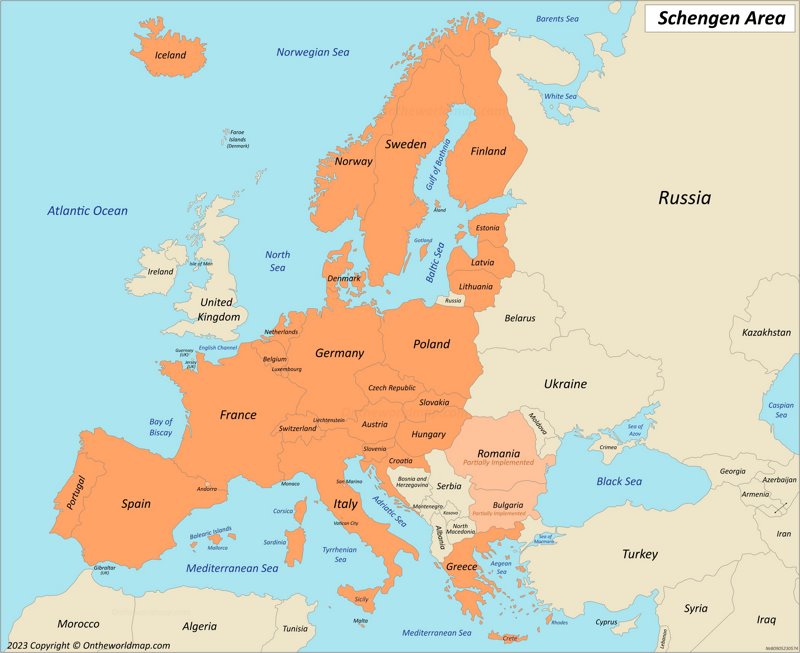
As of October 2026, the Schengen Area includes 29 countries: 25 EU member states and four countries outside the EU. Those four countries are Iceland, Liechtenstein, Norway, and Switzerland.
Bulgaria and Romania became full Schengen members on January 1, 2025. This change brought the number of participating countries to 29. Cyprus participates in Schengen cooperation, but internal border controls have not been fully lifted there. Ireland is not part of the Schengen Area.
Because the membership list can change, travelers planning a multi-country trip should confirm the current status of each destination. This is especially useful when a journey includes countries that are EU members but do not apply the same internal border arrangements.
Non-EU Schengen members
Iceland, Liechtenstein, Norway, and Switzerland participate in the Schengen Area without being EU member states.
Does Switzerland Use the Euro?
No. Switzerland’s official currency is the Swiss franc, commonly abbreviated CHF. Some businesses in tourist areas may accept euros, but the exchange rate and change policy can vary.
This is a separate issue from Schengen membership. Travelers can move through the Schengen Area under the applicable travel rules while still needing to account for different currencies, payment practices, and national laws.
Currency planning
Budget for expenses in Swiss francs and check whether your bank charges foreign transaction or ATM fees.
Do U.S. Citizens Need a Visa to Visit Switzerland?
U.S. citizens generally do not need a visa for tourism or business visits to Switzerland lasting up to 90 days within any 180-day period. This visa exemption applies under the Schengen short-stay framework, provided the traveler meets the other entry conditions.
A valid U.S. passport is essential. Travelers should also be ready to explain the purpose of the visit and, when requested, show that they have suitable accommodation, sufficient funds, and plans to leave the Schengen Area before their authorized stay ends.
Visa-free entry is not the same as a right to enter under all circumstances. Border officials can refuse entry if a traveler does not meet the applicable requirements. A traveler with a criminal, immigration, documentation, or other admissibility issue should seek guidance from the relevant authorities before departure.
The rules are different for a U.S. citizen who intends to work, settle in Switzerland, or undertake an activity that requires advance authorization. A visa exemption for a short visit does not provide general permission to take a job or live in the country.
Source: ontheworldmap.com
Tourism
A U.S. citizen can generally visit Switzerland for sightseeing, holidays, and similar short-stay purposes without a visa for up to 90 days in any 180-day period.
Business visits
Certain short business activities may qualify for visa-free entry, but ordinary visitor status does not automatically permit employment.
Longer stays
Study, employment, family reunification, or residence may require a national visa, a residence authorization, a work permit, or other approval.
Passport Validity for U.S. Travelers
U.S. travelers should check the passport rules before booking and again before departure. For short visits to the Schengen Area, a non-EU traveler’s passport generally must have been issued within the previous 10 years and remain valid for at least three months after the planned departure from the Schengen Area.
A passport that expires soon after arrival can create a problem even if the traveler has a confirmed ticket and hotel reservation. Check the expiration date and renewal timeline early enough to avoid a last-minute delay.
Travelers should rely on the current instructions of the Swiss authorities and the U.S. Department of State for the exact requirements that apply to their journey.
Check before booking
Confirm the passport’s issue date and expiration date against the current Schengen entry rules.
Do U.S. Travelers Need ETIAS?
ETIAS is a planned European travel authorization for certain visa-exempt visitors. It is distinct from a visa and is not the same as a passport or a residence permit.
Travelers should check the official European Union ETIAS website before departure to determine whether the system is operational and whether authorization is required for their travel date. Do not assume that a planned launch date is the same as an active requirement.
The EU Entry/Exit System is another separate measure. It records relevant entry and exit information for covered travelers and is not itself a visa or a substitute for an authorization that may be required.
Verify current status
Check official EU travel information for the latest ETIAS launch and application requirements before making plans.
Do You Need a Schengen Visa to Enter Switzerland?
Whether you need a Schengen visa depends mainly on your nationality, travel document, purpose of travel, and length of stay. Some nationalities can visit for short periods without a visa, while others must obtain a visa before traveling.
Switzerland issues short-stay Schengen visas, commonly known as Type C visas. These cover eligible short visits, such as tourism, visiting relatives, attending certain business events, or participating in short-term activities permitted under the visa rules.
A Schengen visa is generally intended for stays of no more than 90 days in any 180-day period. The visa’s validity dates, number of permitted entries, and authorized duration of stay must all be respected. A visa that allows multiple entries does not provide unlimited time in the Schengen Area.
Travelers who plan to remain in Switzerland for more than 90 days generally need to investigate a national Type D visa or another appropriate residence route. The correct procedure depends on the reason for the stay and may require approval from the relevant Swiss cantonal authority.
Source: mapnations.com
Type C visa
Used for qualifying short stays of up to 90 days within any 180-day period.
Type D visa
Used for certain longer stays in Switzerland, subject to the relevant national and cantonal requirements.
Work authorization
A visa or visa exemption does not by itself authorize every form of paid employment. Work may require a separate permit or approval.
How to Apply for a Swiss Schengen Visa
If your nationality requires a visa, start with the official Swiss government visa guidance for your country of residence. The process usually includes identifying the correct visa category, completing the application, arranging an appointment when required, preparing supporting documents, and submitting the application through the designated channel.
Apply well before the intended trip. Processing times can vary with the season, the completeness of the application, and whether the authorities need further information. An appointment or application submission does not guarantee that a visa will be issued.
Provide truthful information that matches your supporting documents. Inconsistent dates, unclear travel plans, missing financial evidence, or an incomplete insurance policy can lead to delays or refusal.
Step 1: Confirm the visa requirement
Use official Swiss visa guidance to check the rules for your nationality, residence, and travel purpose.
Step 2: Identify the correct application route
Follow the Swiss representation’s instructions for the country where you legally reside and submit the application through the authorized channel.
Step 3: Prepare supporting documents
Common documents include a valid passport, application form, itinerary, accommodation details, financial evidence, and travel medical insurance when required.
Step 4: Attend the required appointment
Provide biometrics or attend an interview if instructed by the relevant visa authority.
Step 5: Check the decision and visa conditions
Before traveling, review the validity dates, entry allowance, and permitted duration shown on the visa.
Where Should You Apply for a Schengen Visa?
If Switzerland is your only Schengen destination, you would generally apply through the Swiss authority responsible for your place of legal residence. If you plan to visit several Schengen countries, the correct application country is normally the country that is your main destination based on the purpose or length of stay.
If there is no clear main destination, the rules generally direct you to apply through the country where you will enter the Schengen Area first. Confirm the correct procedure with the official authorities because the details of your itinerary can affect the answer.
For example, a traveler who spends five nights in Switzerland and two nights in France would generally identify Switzerland as the main destination based on the length of the stay, assuming no other facts change that assessment.
Main destination
Apply through the country responsible for your principal destination when the common application rules require a Schengen visa.
Understanding the Schengen 90/180-Day Rule
The Schengen 90/180-day rule limits eligible short stays to 90 days in any rolling 180-day period. It applies across the Schengen Area as a whole, not to each country separately.
The word rolling is important. The 180-day period is assessed backward from each day of the planned or actual stay. It does not reset automatically on January 1, at the start of a new month, or when you cross from one Schengen country into another.
Both arrival and departure days generally count as days of presence. A short trip to a country outside Schengen does not erase the days already spent in the area. The calculation must account for the full travel history relevant to the date being checked.
The rule is most relevant to visa-exempt visitors and travelers holding short-stay visas. A long-stay visa or residence permit may be governed by different conditions, so travelers should not apply the short-stay rule to every immigration status without checking the specific rules.
Source: iasgyan.in
One shared limit
Days in Switzerland, France, Italy, Germany, and other Schengen countries all contribute to the same short-stay allowance.
A rolling calculation
Authorities assess the 180-day period for each day of stay rather than using a fixed calendar half-year.
Keep travel records
Save flight confirmations, hotel bookings, and other records that help you check arrival and departure dates.
Example of the 90/180-Day Rule
Suppose a U.S. citizen spends 30 days in France, 20 days in Italy, and 25 days in Switzerland during a relevant 180-day period. The traveler has used 75 days of the short-stay allowance, leaving a maximum of 15 days if the full 90-day allowance remains available and no other days affect the calculation.
This example is hypothetical and assumes the listed days are the only relevant days in the period. In a real itinerary, earlier visits and the exact dates matter because the 180-day window moves forward every day.
Before planning a long European trip, use the official European Commission short-stay calculator or seek advice from the relevant immigration authority if your situation is complex. Do not rely only on a rough count or a calendar-month estimate.
Hypothetical calculation
30 days in France plus 20 days in Italy plus 25 days in Switzerland equals 75 days, leaving 15 days of a 90-day allowance under the stated assumptions.
What Happens If You Overstay?
Staying beyond the period permitted by your status can lead to serious immigration consequences. Depending on the circumstances and applicable law, an overstay may result in fines, removal proceedings, entry restrictions, or problems with future visa applications.
If illness, a canceled flight, or another exceptional event prevents you from leaving on time, contact the competent immigration authority promptly and keep supporting evidence. Do not assume that an airline delay or a personal emergency automatically extends your authorized stay.
If you discover that your planned itinerary may exceed the permitted days, recalculate the dates before departure or seek qualified immigration advice. Correcting the problem in advance is generally safer than waiting until the border.
Act early
If a stay may exceed its authorized period, contact the relevant authority before the permitted stay ends whenever possible.
Can You Travel From Switzerland to Other Schengen Countries?
Yes. Travelers who are lawfully present in Switzerland can generally continue to other Schengen countries without routine internal border passport checks. Switzerland shares land borders with France, Germany, Italy, Austria, and Liechtenstein, all of which participate in the Schengen system.
This arrangement is useful for visitors who want to combine Swiss cities and mountain areas with nearby European destinations. For example, a traveler might visit Geneva before continuing to France, or travel from Zurich to Germany or Austria as part of the same itinerary.
A visa that is valid for the relevant countries and dates generally permits travel across the Schengen Area, subject to its entry count and other conditions. However, a visa with territorial restrictions or a different immigration status may have narrower rights. Read the visa sticker and official decision carefully before crossing a border.
Routine checks are usually absent at internal Schengen borders, but they can be temporarily reintroduced. Travelers should carry valid travel documents and comply with the rules even when they expect to cross a border without stopping at a checkpoint.
Source: odynovotours.com
France
Visitors can generally travel between Switzerland and France under the common Schengen rules when their status permits.
Germany and Austria
These neighboring Schengen countries can be included in the same trip without receiving a separate short-stay allowance.
Italy and Liechtenstein
Both are Schengen countries, so eligible travelers can usually include them in a wider itinerary subject to their travel documents and stay limits.
Does a Swiss Schengen Visa Work in France and Italy?
A standard Schengen short-stay visa issued by Switzerland generally allows travel to other Schengen countries during the visa’s validity, provided the visa is valid for the intended journey and the traveler follows all conditions.
The number of permitted entries matters. A single-entry visa may no longer authorize a new entry into the Schengen Area after the holder leaves it, even if the visa’s printed validity period has not ended. A multiple-entry visa may allow additional entries, but the total permitted stay still applies.
Travelers should verify that their planned route matches the visa conditions before booking nonrefundable tickets. A visa issued for one trip should not be assumed to authorize a different trip after the first visit has ended.
Check the entry count
Review whether the visa allows one entry, two entries, or multiple entries before leaving and returning to the Schengen Area.
Can Border Officers Check Your Passport Between Countries?
Yes. Although routine internal border controls have generally been removed, temporary controls may be introduced under Schengen rules. Police checks and other identity checks may also occur in situations permitted by law.
Carry your passport and any required visa or residence document. Do not assume that a train journey, road trip, or flight within Schengen removes your obligation to comply with identification requirements.
Keep documents accessible
Carry the travel documents required for your nationality and status throughout the trip.
What Travelers Should Prepare Before Visiting Switzerland
The best preparation is to confirm the rules that apply to your passport, travel purpose, and itinerary before paying for nonrefundable travel. Schengen membership simplifies many cross-border journeys, but it does not remove the need for careful planning.
Start with the official Swiss visa guidance and the travel advice issued by your own government. Check whether you need a visa, whether any travel authorization applies on your dates, how much passport validity is required, and whether your intended activities are allowed under your status.
Keep digital and printed copies of key bookings and travel documents where practical. Make sure the information in your application, flight reservation, accommodation details, and stated travel purpose is consistent. If the authorities ask for supporting evidence, you should be able to provide accurate information.
For travelers who need a visa, application requirements can vary by place of legal residence. Use the checklist issued by the Swiss representation responsible for your application rather than relying on a generic list from an unrelated country.
Passport
Check the passport issue date, expiration date, and any additional validity rules that apply to your trip.
Visa or travel authorization
Confirm whether your nationality and purpose of travel require a visa or another authorization before departure.
Travel itinerary
Keep your intended arrival and departure dates, accommodation details, and onward travel plans accurate.
Financial evidence
Be prepared to show that you can support yourself during the visit if the border authorities request it.
Travel medical insurance
If you need a Schengen visa, check the official insurance requirements. Visa applicants generally must provide qualifying coverage for emergency medical care and repatriation.
Special Considerations for Students and Workers
A short-stay visitor status is not a substitute for the permissions required for long-term study or employment. If you plan to enroll in a long course, accept a job, or move to Switzerland, contact the appropriate Swiss authority before traveling.
Long-term residence procedures can involve a national visa, a residence permit, authorization from a cantonal migration office, or other steps. The correct route depends on nationality, purpose, duration, and the specific legal requirements.
Do not begin work merely because you entered Switzerland without a visa or hold a valid Schengen visitor visa. Entry permission and permission to work are separate questions, and the consequences of unauthorized employment can be serious.
Students
Check the visa and residence requirements for the course duration and your nationality before making travel arrangements.
Workers
Confirm the applicable work authorization and entry procedure before starting employment.
Future residents
Review the long-stay route with the Swiss authorities responsible for your intended place of residence.
Where to Verify Official Travel Rules
For the most reliable information, use the Swiss Federal Department of Foreign Affairs and the State Secretariat for Migration. These authorities explain visa categories, entry requirements, and residence procedures.
U.S. citizens can also consult the U.S. Department of State’s Switzerland travel information and its guidance for Americans traveling in Europe. Travelers of other nationalities should check their own government’s travel advice and the Swiss representation responsible for their residence.
Rules can change, and individual circumstances can affect the correct answer. Verify the information close to your departure date, especially if your trip involves a long stay, paid activity, multiple entries, or a complex travel history.
Swiss Federal Department of Foreign Affairs
Consult official Swiss visa guidance and the instructions of the Swiss representation responsible for your application.
State Secretariat for Migration
Use Swiss migration guidance for entry, residence, short-stay calculations, and relevant authorization requirements.
U.S. Department of State
Review current information for U.S. citizens traveling to Switzerland and other European destinations.
Frequently Asked Questions
Q
Is Switzerland a Schengen country in 2026?
Yes. Switzerland is a member of the Schengen Area in 2026. It applies the common Schengen framework for short-stay visas and participates in cooperation on European border management. Switzerland is not a member of the European Union.
Q
Can I enter Switzerland with a Schengen visa issued by another country?
Generally, yes. A valid standard Schengen visa issued by another participating country can normally be used to visit Switzerland, provided the visa covers the travel dates, permits the intended entry, and has no relevant territorial restriction. The holder must also comply with the authorized duration of stay and all other entry conditions.
Q
Can I visit Switzerland without a visa?
That depends on your nationality, travel document, purpose, and length of stay. U.S. citizens generally qualify for visa-free tourism and business visits of up to 90 days in any 180-day period. Citizens of some other countries must obtain a Schengen visa before traveling. Check the current official requirements for your passport.
Q
How long can I stay in Switzerland with a Schengen visa?
For a standard short-stay visit, the general limit is up to 90 days within any 180-day period across the entire Schengen Area. Your visa may authorize fewer days, and its validity dates and number of entries also matter. A long-stay visa or residence permit follows different conditions.
Q
Can I work in Switzerland with a Schengen tourist visa?
A standard Schengen tourist visa does not provide general permission to work in Switzerland. Employment may require specific work authorization and the correct entry or residence status. Confirm the requirements with the Swiss authorities before accepting a job or starting work.
Q
Is Switzerland part of Schengen but not the EU?
Yes. Switzerland belongs to the Schengen Area but is not an EU member. Schengen participation concerns common short-stay visa rules and border cooperation, while EU membership covers a wider political and economic framework. The two groups overlap but are not identical.
Q
Does a trip to Switzerland count toward my 90 days in Europe?
Yes. Days spent in Switzerland count toward the common 90-day short-stay allowance for the Schengen Area. Time spent in France, Germany, Italy, and other Schengen countries also counts. You cannot receive a new 90-day allowance each time you cross into another Schengen country.
Q
Do U.S. citizens need ETIAS to visit Switzerland?
ETIAS is a separate travel authorization planned for certain visa-exempt visitors. Its actual application requirement depends on the official implementation status and the travel date. U.S. citizens should check the official European Union ETIAS website before departure rather than relying on an assumed launch date.
✦ Wrapping Up
Conclusion
Switzerland is a Schengen country, even though it is not part of the European Union. Its participation allows eligible visitors to travel under the shared short-stay framework and generally move between participating countries without routine internal border checks. The key rules still depend on nationality, visa status, travel purpose, and length of stay.
For U.S. citizens, short tourism and business visits are generally visa-free for up to 90 days in any 180-day period. Travelers who need a visa must apply through the correct authority, while those planning long-term study, work, or residence must investigate the relevant Swiss authorization. Everyone should confirm current passport and entry requirements before departure.
💡 Key Takeaway
Before booking your trip, check the official Swiss visa requirements for your nationality, calculate your total Schengen days using the rolling 90/180-day rule, confirm passport validity, and verify whether your travel purpose requires a visa, work permit, residence authorization, or other approval.