Thank you for reading this post, don't forget to subscribe!
In the United States, you can obtain an employment authorization document through U.S. Citizenship and Immigration Services (USCIS) if your immigration category qualifies. If you are a minor, you may need to contact your school or state labor agency. The correct office depends on your age, immigration status, and reason for working.
If you want to work legally in the United States, the first step is to identify which type of work authorization you need. The term work permit can refer to an Employment Authorization Document (EAD) for eligible noncitizens, a state-required work permit for a teenager, or permission to work under an employment-based immigration status. These options follow different rules and use different application processes.
For most eligible noncitizens seeking an EAD, the main agency is U.S. Citizenship and Immigration Services (USCIS). You generally apply using Form I-765, Application for Employment Authorization. However, not everyone needs this card. Some people already have permission to work through their immigration status, while others need an employer to petition for a specific work visa.
This guide explains where to obtain a work permit in the USA, how to choose the correct application route, which documents to prepare, and what to do if an application is delayed or denied. It also covers work permits for minors, common costs, renewal rules, and ways to avoid fraudulent services.
The place to obtain a work permit depends on the type of authorization you need. For an Employment Authorization Document, start with USCIS. For a minor’s work permit, check the labor agency or school system in your state. For an employment-based visa, the process often begins with a U.S. employer and may involve USCIS and the U.S. Department of State.
There is no single work permit office that handles every worker in the country. Applying through the wrong agency can waste time and money. Identify your immigration status, age, and intended job before selecting an application.
Source: busconomico.us
USCIS
Handles Form I-765 applications for employment authorization in eligible immigration categories and issues EAD cards when approved.
State labor department or school
Provides information about work permits, employment certificates, age limits, or other requirements for minors where state law requires them.
U.S. employer
May need to file an immigration petition for a foreign worker seeking a qualifying employer-sponsored visa.
U.S. embassy or consulate
Processes many nonimmigrant visa applications abroad after the required petition or other eligibility steps have been completed, when applicable.
The Main Difference Between a Work Permit and a Work Visa
An EAD is a document that proves employment authorization for eligible people. It is commonly issued as a plastic card called Form I-766. A work visa, by contrast, is a visa classification that may allow a foreign national to seek admission to the United States for a particular purpose. A visa alone does not always establish that its holder can work.
A person with an eligible immigration status may be allowed to work without obtaining a separate EAD. Another person may need an approved EAD before starting employment. The correct rule depends on the person’s status and any restrictions that apply.
EAD
Evidence of employment authorization for eligible noncitizens, subject to the terms and expiration date that apply.
Employment-based visa
An immigration route that may authorize work for a qualifying employer or under a particular classification.
Minor work permit
A state or local employment certificate that may be required for a young worker.
How to Obtain a Work Permit Through USCIS
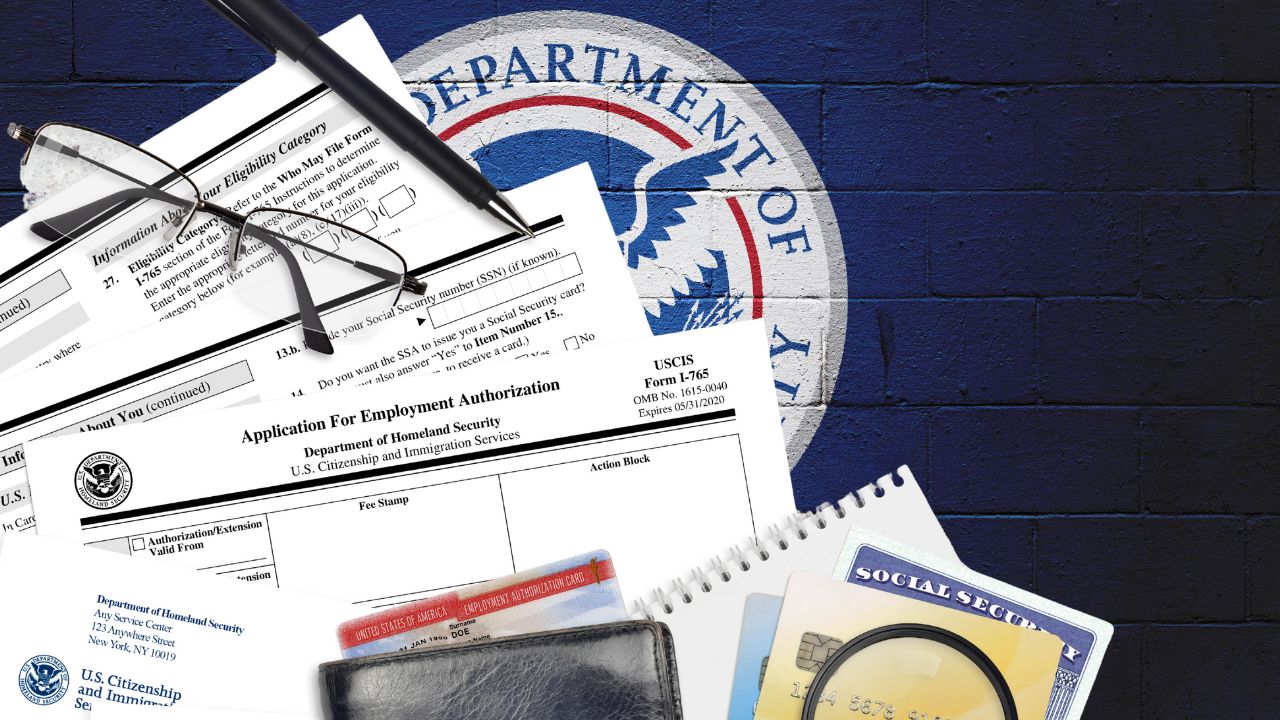
If you are a noncitizen who needs an EAD, USCIS is the main federal agency to contact. You can begin by reviewing the official Form I-765 page and its instructions. These resources explain who may apply, which evidence to submit, how to file, and whether a fee applies to your category.
Eligibility comes first. Filing Form I-765 does not automatically give you permission to work. USCIS must determine that you qualify under an applicable category, unless a separate rule already authorizes employment. Do not assume that having a Social Security number, a job offer, or a pending immigration case is enough.
Source: myvisang.com
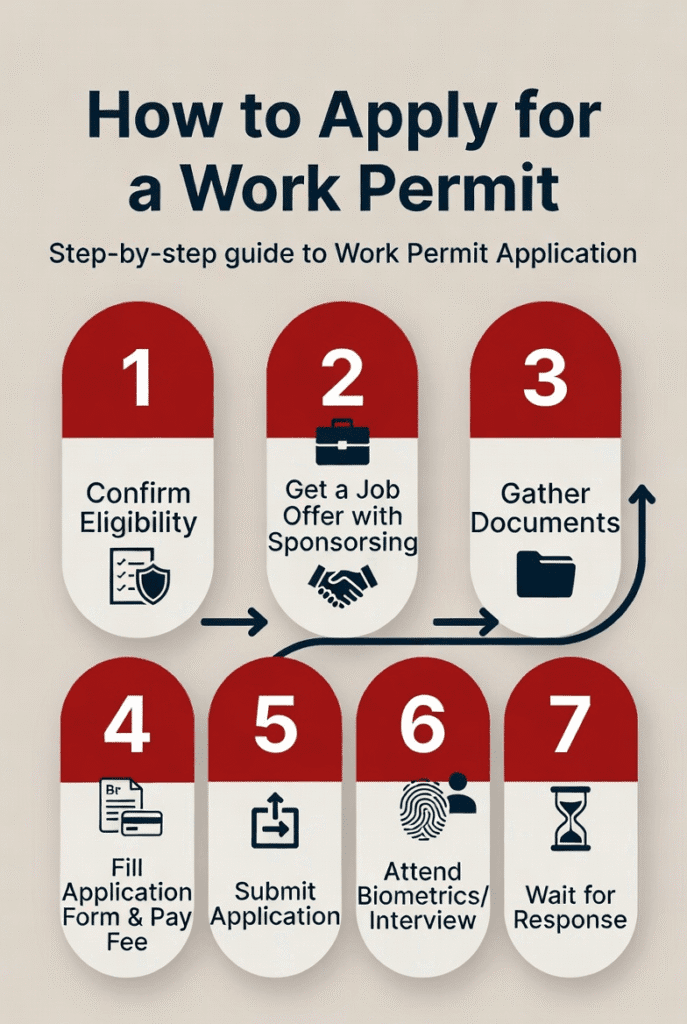
Step 1: Confirm eligibility
Review the current Form I-765 instructions and identify the category that matches your immigration situation.
Step 2: Choose the correct filing method
Check whether USCIS permits online filing for your category or requires a paper application sent to a designated location.
Step 3: Gather supporting evidence
Prepare identification, immigration records, photographs, and other evidence required by the instructions for your category.
Step 4: Pay the correct fee
Verify the current fee, any category-specific additional charges, and whether an exemption or fee waiver is available.
Step 5: Submit and track the case
Keep your submission confirmation, receipt notice, and case number so you can monitor updates and respond to requests.
Where to Find Form I-765
Use the official USCIS Form I-765 page at uscis.gov/i-765. It provides the current form, instructions, and filing information. If online filing is available for your category, the USCIS online account system can guide you through submission and allow you to upload supporting documents.
If you must file by mail, use the exact address specified for your eligibility category and filing method. USCIS filing locations can differ by application type, delivery service, and other factors. Do not rely on an old address copied from an unrelated website.
Online application
Use your USCIS online account when your category and application type are eligible for online filing.
Paper application
Download the current form and follow the latest instructions for mailing the complete application to the correct location.
Help with filing
Consult the USCIS Contact Center or a qualified immigration attorney if you cannot determine the correct category or filing procedure.
What Happens After You Apply?
After USCIS receives a properly submitted application, it generally issues a receipt notice if the filing is accepted. Keep this notice because it contains information used to identify and track your case. USCIS may request additional evidence, schedule a biometrics appointment when required, approve the application, or deny it.
If approved, the EAD is generally mailed to the address associated with the application. Check your case status and respond to official notices by their stated deadlines. Approval of a pending application should not be assumed before USCIS issues a decision.
Keep your address current
Follow USCIS procedures for reporting an address change so you do not miss a notice or card delivery.
Watch for requests
If USCIS asks for evidence, submit the requested material in the format and by the deadline stated in the notice.
Confirm work eligibility
Check the applicable rules before starting a new job or continuing employment after an authorization document expires.
Who Is Eligible for a U.S. Employment Authorization Document?
Not every noncitizen can obtain an EAD. Eligibility depends on a specific immigration category established by law or regulation. Some applicants may qualify because they have a pending immigration application, hold a particular status, or fall within a humanitarian or other eligible category.
Examples of people who may qualify in certain circumstances include some asylum applicants, refugees, asylees, people with Temporary Protected Status, certain adjustment-of-status applicants, and some spouses of eligible visa holders. These examples are not automatic guarantees. Each category has its own requirements, restrictions, and evidence rules.
Lawful permanent residents generally do not need a separate EAD to establish their basic right to work. Some nonimmigrant workers are authorized to work only for a specific employer or under defined conditions. Such workers should check their status and employment rules before filing Form I-765.
Source: nepyork.com
People with pending immigration applications
Some applicants may request employment authorization after meeting the timing and other requirements for their category.
Refugees and asylees
Their employment rights depend on the applicable legal provisions and documentation rules. A separate EAD may be useful or available in some situations.
Students
F-1 students may qualify for specific employment options, such as eligible practical training, while J-1 students and exchange visitors follow separate program rules. Required authorization must be obtained before the relevant work begins.
Temporary visa holders
Some may work only for an approved employer, while certain dependent spouses may qualify for separate authorization under specific rules.
What If You Already Have Permission to Work?
You may not need to apply for a separate work permit if your current immigration status authorizes employment. For example, lawful permanent residents and certain nonimmigrant workers have employment rights under their status, although restrictions may apply to the employer, job, or type of work.
Check your immigration documents and the official rules for your category. If your permission is tied to one employer, do not assume that you can transfer it to another employer without following the required process.
Check your status documents
Review your green card, Form I-94, approval notice, or other relevant records.
Confirm any restrictions
Determine whether the authorization covers the proposed employer, job, hours, and work location.
Where Can Teenagers Obtain a Work Permit?
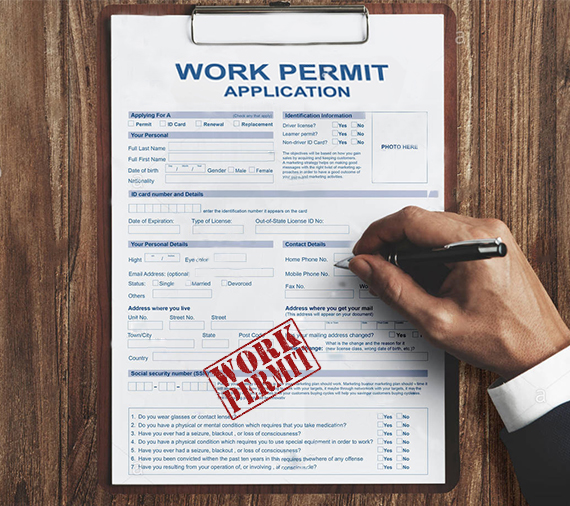
Teenagers seeking their first job should check their state’s youth employment rules. Depending on the state, a minor may need a work permit, employment certificate, proof of age, parental consent, or approval through a school or state agency. The process and minimum working age can vary.
Federal law does not require every young worker to obtain a work permit. However, federal child labor rules restrict the jobs, hours, and conditions permitted for minors. State law may add stricter protections or separate paperwork requirements. The employer and young worker must follow the rules that apply to the job.
Start with the U.S. Department of Labor’s youth employment resources and the official labor department website for your state. If your state directs minors to obtain documents through their school, contact the school office or guidance counselor.
Source: businesstoday.co.ke
Contact your state labor agency
Find out whether your state requires a work permit or employment certificate and which agency issues it.
Ask your school
Some states use school officials to verify age, school status, or required paperwork.
Prepare the required information
You may need proof of age, parent or guardian consent, employer details, or a job offer, depending on state rules.
Check the job’s duties and hours
A permit does not allow a minor to perform prohibited hazardous work or ignore legal limits on working hours.
Do Minors Need a Federal Work Permit?
No single federal work permit is required for all minors. Federal child labor law sets minimum age rules and limits certain work, while state laws determine whether additional documents are needed. This means a teenager’s requirements can differ between states and sometimes between types of employment.
For many nonagricultural jobs covered by federal law, 14 is the general minimum age, with exceptions for certain kinds of work. Federal rules also limit work hours for 14- and 15-year-olds and prohibit many hazardous occupations for workers under 18. Agricultural work has different rules, and additional state restrictions may apply.
Under age 14
Many regular nonagricultural jobs are unavailable, although limited exceptions may apply to certain work.
Ages 14 and 15
Federal rules limit permitted occupations and working hours, in addition to any stricter state requirements.
Ages 16 and 17
Federal law permits many jobs but prohibits hazardous occupations for workers under 18.
Can an Employer Help You Obtain a Work Permit?
Yes. An employer may help a foreign national obtain employment authorization, but the employer’s role depends on the immigration route. For certain temporary work visas, the employer must file a petition with USCIS before the worker can complete the remaining steps. Some classifications also require labor certification or other approvals.
A job offer alone does not grant immigration status or permission to work. The employer and prospective worker must identify the appropriate classification and meet its requirements. The process may involve USCIS, the U.S. Department of Labor, and a U.S. embassy or consulate, depending on the case.
Source: workpermitcheck.com
Temporary employer-sponsored visas
The employer may need to file Form I-129 or complete another process required for the worker’s classification.
Some employment-based immigrant cases involve a labor certification, an immigrant petition, and additional steps before permanent residence is granted.
Employer-specific authorization
Some workers cannot change employers or duties freely without meeting additional immigration requirements.
What Should You Ask a Potential Employer?
If you need sponsorship, ask whether the employer is willing and legally able to sponsor the relevant immigration category. Clarify which steps the employer will handle, which documents you must provide, and whether you must obtain a visa or other authorization before traveling or starting work.
Do not pay a recruiter or employer based only on a promise of guaranteed work authorization. Immigration applications can be denied, and no private person can guarantee that the government will approve a case.
Confirm the visa category
Ask which immigration classification applies to the job and why you appear to qualify.
Get written details
Request clear information about job duties, wages, sponsorship responsibilities, and expected application steps.
Verify the employer
Check that the business is genuine and that the proposed job and immigration process are credible.
Documents Needed to Apply for a Work Permit
The documents needed for a U.S. work permit depend on the application category. An EAD applicant may need identity documents, immigration records, photographs, and evidence that establishes eligibility. A minor may instead need proof of age, school information, parental consent, or employer details under state rules.
Use the current official instructions as your checklist. Do not submit the same set of documents for every category because some forms require specific evidence or additional records. Documents in another language may need an English translation that meets the agency’s requirements.
Source: fdvnlawfirm.vn
Identity evidence
A passport, government-issued identification, or other document specified in the applicable instructions.
Immigration records
Relevant admission records, notices, approval documents, or copies of prior employment authorization, as required.
Eligibility evidence
Documents that establish the category under which you are requesting authorization.
Photographs and form details
Photographs, signatures, and personal information that meet the current application requirements.
Payment or fee exemption evidence
The required filing fee or documentation supporting an applicable exemption or fee waiver.
How to Avoid Application Errors
Small errors can cause delays or rejection. Before submitting a form, verify that your name, date of birth, address, immigration category, and other details match the relevant records. Check that each required field is complete and that all required signatures are present.
Save a copy of the entire application and supporting documents. If you mail a paper application, keep proof of delivery. If you file online, save the confirmation and monitor your USCIS account for notices.
Use current forms
Download forms directly from the official government website rather than using an outdated copy.
Verify the mailing address
Check the latest category-specific filing instructions before sending paper documents.
Review the fee
Confirm the correct amount and payment method on the official fee schedule immediately before filing.
Keep copies
Retain the form, evidence, payment records, delivery proof, and all government notices.
How Much Does a U.S. Work Permit Cost?
The cost depends on the type of authorization, your filing category, and the current government fee schedule. Some Form I-765 applicants must pay a filing fee, while certain categories may qualify for an exemption or fee waiver. Other immigration classifications may involve separate petition, visa, or related fees.
Do not rely on a fee quoted by an old article or a private website. Government fees can change, and some immigration categories may have additional charges. Check the official USCIS fee schedule and the instructions for the exact form you plan to submit.
Source: eoroverview.com
USCIS application fee
Confirm the current Form I-765 fee for your category and whether online and paper filing have different prices.
Additional government charges
Check whether a separate fee applies to your particular status or immigration process.
Professional assistance
An attorney or authorized representative may charge a separate service fee. Ask for the scope and cost in writing.
State minor permits
Check the state issuing agency for any required charge. Do not assume that a minor’s permit has the same fee as an EAD.
Can You Apply for a Work Permit for Free?
Some applicants may qualify for a fee exemption or fee waiver, but eligibility depends on the form, category, and current rules. A waiver is not available to every applicant, and a request may require supporting evidence. Some separate statutory fees may not be waived even when another fee is exempt or waived.
Read the current Form I-765 instructions and fee guidance before filing. If you are unsure whether you qualify, use official USCIS information or seek advice from a qualified immigration attorney.
Check category-specific exemptions
Some categories have different fee rules from the standard application.
Review fee waiver requirements
If a waiver is available, follow the current instructions and provide the required evidence.
How Long Does It Take to Obtain a Work Permit?
Processing time varies by application type, eligibility category, workload, and whether USCIS needs more evidence. There is no single processing time that applies to every work permit. A state-issued permit for a minor may follow a much shorter process than a federal immigration application, but the state sets its own procedures.
For an EAD, check the USCIS processing-time information for the relevant form and category. Use the receipt notice to identify your case type and track your application. Processing estimates are not guarantees, and a case may take longer if USCIS requests additional evidence or needs further review.
Source: workpermitcheck.com
Check the correct category
Use the processing information that matches your application type rather than a general estimate for another category.
Track the receipt number
Use the official case-status service to review updates and notices.
Respond promptly
Send requested documents by the deadline and keep proof of submission.
Plan around expiration dates
Do not assume that a pending renewal automatically extends work authorization.
Can You Work While Your Application Is Pending?
A pending application does not automatically authorize employment. Whether you can work depends on your existing immigration status, the type of application, and any rule that specifically permits employment while the case is pending.
Rules for automatic EAD extensions have changed. Under the rule effective October 30, 2025, many renewal applications filed on or after that date no longer receive an automatic extension solely because the renewal was filed. Exceptions may apply, including certain extensions provided by law or a Federal Register notice. Some qualifying renewals filed before that date may retain an extension under the applicable rules.
Before continuing to work after an EAD expires, verify your exact category and filing date using current USCIS guidance. If your employment authorization is unclear, speak with a qualified immigration attorney or an appropriate legal aid organization.
Do not assume filing equals approval
A receipt notice proves that USCIS received an application, but it does not by itself grant work authorization.
Review renewal rules
Check the applicable category, filing date, expiration date, and any special extension notice.
Ask before continuing employment
Confirm that your authorization remains valid rather than relying on an old extension rule or informal advice.
Common Mistakes to Avoid When Obtaining a Work Permit
The most common problems arise when applicants use the wrong process, misunderstand their eligibility, or rely on unofficial advice. A careful review before filing can help prevent avoidable delays and unnecessary expenses.
Immigration and employment rules can affect a person’s ability to work, remain in the country, or maintain a particular status. If a mistake could affect your immigration case, get qualified legal help instead of guessing.
Source: workpermitcheck.com
Applying under the wrong category
Use the category that matches your actual status and circumstances, not the one that seems easiest.
Using outdated information
Verify the current form edition, filing address, fee, and eligibility instructions on the relevant government website.
Working without authorization
Do not start or continue work unless your status and documents permit it under the applicable rules.
Ignoring expiration dates
Check the end date on your authorization and determine whether a valid extension or other employment authorization rule applies.
Trusting guaranteed approval claims
No private service can guarantee a government decision. Be cautious of anyone promising special access or asking you to provide false information.
How to Recognize a Work Permit Scam
Fraudulent services may promise instant approval, sell fake government documents, or claim that a payment will guarantee an EAD. Others may collect personal information or immigration documents without a legitimate reason. These practices can expose applicants to financial loss, identity theft, and immigration problems.
Use official government websites for forms, fees, and case updates. If you need legal advice, consult a licensed attorney or a representative authorized to provide immigration legal services. Not every notary, consultant, or document preparer is qualified to give immigration advice.
Avoid guaranteed outcomes
Treat claims of guaranteed approval, special government influence, or secret processing channels as warning signs.
Protect personal records
Share passports, immigration documents, and identification only through trusted, necessary channels.
Verify the service provider
Check the professional’s credentials and authority before paying for legal assistance.
Frequently Asked Questions
Q
Where do I apply for a work permit in the United States?
If you are an eligible noncitizen applying for an Employment Authorization Document, start with U.S. Citizenship and Immigration Services at uscis.gov/i-765. If you are a minor, check your state’s labor department or school system. If you need an employer-sponsored work visa, your employer may need to begin the immigration petition process.
Q
Can I get a work permit without a job offer?
Some EAD categories do not require a job offer, while others involve specific employment or status requirements. Employer-sponsored visa categories generally require an employer or qualifying petitioner. Check the rules for your exact category before applying.
Q
Can I apply for a work permit online?
Some eligible applicants can submit Form I-765 online through a USCIS account. Other applications must be filed on paper. Check the current instructions for your eligibility category to determine the accepted filing method.
Q
Do U.S. citizens need a work permit?
U.S. citizens do not need an EAD to establish their basic federal authorization to work. However, a citizen who is a minor may still need to comply with state youth employment rules, including any required work permit or employment certificate.
Q
How much does it cost to get a work permit?
The cost depends on the type of permit, application category, and current government fee rules. Some EAD applicants must pay a Form I-765 filing fee, while certain categories may qualify for exemptions or waivers. Check the current USCIS fee schedule before submitting an application.
Q
Can I work while waiting for my work permit?
Not unless your existing status or a specific legal rule authorizes you to work. A pending EAD application alone does not grant permission. Automatic extension rules also depend on the filing date, category, and applicable exceptions, so confirm your individual situation before working.
Q
Where can I get a work permit for a 16-year-old?
The answer depends on the state where the teenager will work. Some states require an employment certificate or work permit, while others do not. Contact the state labor department or school officials to learn the required steps, documents, and restrictions.
✦ Wrapping Up
Conclusion
The right place to obtain a work permit in the United States depends on who you are and why you need permission to work. Eligible noncitizens generally begin with USCIS and Form I-765 when they need an Employment Authorization Document. Minors should check state labor rules, while foreign workers seeking employer-sponsored visas may need an employer to start the immigration process.
Before applying, confirm your eligibility, collect the required documents, check the current fees, and follow the correct filing instructions. Keep copies of your application and notices, track your case, and verify your employment authorization before starting work or continuing after an expiration date.
💡 Key Takeaway
Start by identifying your immigration status or age-based work requirements. Then visit the official USCIS Form I-765 page at uscis.gov/i-765, or contact your state’s labor department if you are seeking a minor work permit. Use official guidance and qualified legal assistance when your eligibility or right to work is unclear.