Thank you for reading this post, don't forget to subscribe!
As of October 26, 2026, there is no single current priority date for every U.S. green card applicant. The correct date depends on your immigration category, country of chargeability, and the latest Department of State Visa Bulletin. For October 2026, the bulletin lists different dates for family-sponsored and employment-based cases. Applicants must also distinguish between the Final Action Dates chart and the Dates for Filing chart.
If you are waiting for a green card in the United States, your priority date can shape your next step. It helps the U.S. government determine your place in line when immigrant visas are limited. A person applying through a U.S. citizen parent may face a different wait from someone applying through an employer.
The U.S. Department of State publishes a monthly Visa Bulletin that shows which priority dates have reached the point for further action. The October 2026 bulletin is the relevant published bulletin for this guide. Its dates differ by category and country, so checking only one date can lead to the wrong conclusion.
This guide explains how to find the right date, read the official charts, and decide what to do next. It also explains why a date that allows you to file an application does not always mean that your green card can be approved immediately. Immigration rules can change, so check the official government pages before filing.
What Is the Current Priority Date for a Green Card in October 2026?
The current priority date for your green card is the cutoff date that applies to your specific immigration category and country of chargeability. It is not one universal date that every applicant must meet. The October 2026 Visa Bulletin provides separate charts for family-sponsored and employment-based immigration.
For an oversubscribed category, a published cutoff date generally means that applicants with priority dates earlier than the listed date can proceed to the stage covered by that chart, subject to the other requirements. A date equal to the cutoff is not earlier than it. If a category is marked Current, often shown as C, the category has no cutoff date for that purpose during the month, although all other eligibility rules still apply.
The Department of State publishes the Visa Bulletin, while U.S. Citizenship and Immigration Services, or USCIS, determines which chart adjustment-of-status applicants in the United States must use for filing during a given month. For October 2026, USCIS selected the Dates for Filing charts for both family-sponsored and employment-based adjustment applications.
Source: immi-usa.com
Family-sponsored green cards
These cases include certain spouses, children, adult sons and daughters, parents, and siblings of U.S. citizens or permanent residents. The applicable preference category and country of chargeability affect the cutoff.
Employment-based green cards
These cases include EB-1, EB-2, EB-3, certain special immigrants, and EB-5 investors. The category and country of chargeability determine the relevant date.
Immediate relatives of U.S. citizens
Qualifying spouses, unmarried children under 21, and parents of U.S. citizens who are at least 21 generally are not subject to the family-preference numerical limits. They usually do not wait for a preference-category priority date to become current, but other application and visa rules still apply.
October 2026 Employment-Based Final Action Date Examples
The October 2026 bulletin gives the following Final Action Dates for selected employment-based categories. These dates show the difference between countries and categories. They are not, by themselves, the filing dates that adjustment-of-status applicants should use in October because USCIS selected the Dates for Filing charts for that month.
EB-1
The Final Action Date is Current for all chargeability areas except mainland China and India. For mainland China, the cutoff is July 1, 2023; for India, it is February 1, 2023.
EB-2
The Final Action Date is January 1, 2025, for all chargeability areas except those listed separately. Mainland China has a cutoff of October 1, 2021, and India has a cutoff of November 1, 2013.
EB-3
The Final Action Date is May 15, 2024, for most chargeability areas, January 8, 2022, for mainland China, and January 1, 2014, for India. The Philippines has a cutoff of August 15, 2023.
Why Your Country Matters
The country used for visa allocation is usually your country of birth, not necessarily your current citizenship or the country where you live. This is known as country of chargeability. Special rules may allow some applicants to use a spouse’s country of birth or, in certain cases, a parent’s country of birth.
India, mainland China, Mexico, and the Philippines have separate cutoffs in some categories because demand and visa limits differ. Two people with the same employment category and similar filing dates may therefore face different waits. Always use the country column that legally applies to your case.
What Does a Green Card Priority Date Mean?
A priority date is the date used to establish an applicant’s place in line for an immigrant visa when the category is subject to numerical limits. The date helps the government manage demand when more people qualify to apply than there are visas available.
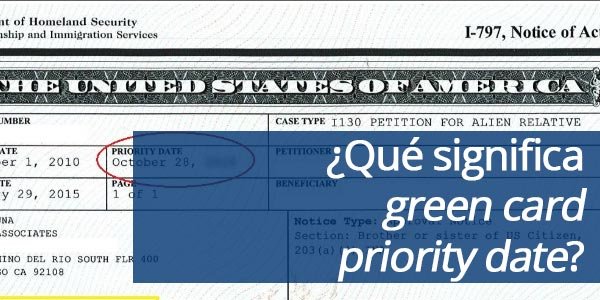
For many family-sponsored petitions, the priority date is the date USCIS properly receives Form I-130, Petition for Alien Relative. For employment-based cases that require a labor certification, it is generally the date the Department of Labor accepts the labor certification application for processing. If labor certification is not required, the priority date is generally the date USCIS properly receives the relevant immigrant petition, such as Form I-140.
Your approval notice or other case records may help you confirm the date. Do not assume that the date of petition approval is your priority date. Those dates can be different, and the priority date may remain important even while the petition is being processed.
Source: dataneb.com
Petition receipt date
This is often the key date for family petitions and for employment petitions that do not require a labor certification. Check the applicable petition and official notice.
Labor certification filing date
For employment-based cases that require labor certification, the date the Department of Labor accepts the application for processing generally establishes the priority date.
Approval date
This is when the petition is approved. It is not necessarily the priority date, so do not use it as a substitute without checking your case records.
Where Can You Find Your Priority Date?
Start with the official receipt or approval notice for your immigrant petition. For many family-based cases, Form I-797, Notice of Action, shows the receipt information needed to identify the priority date. Employment-based applicants should review the petition records and any labor certification documentation that applies to the case.
If the date is missing, unclear, or inconsistent across records, contact the petitioner, employer, or immigration attorney who handled the filing. Keep copies of the petition, receipt notice, approval notice, and any relevant labor certification records. A small date error can change whether you meet a visa cutoff.
Check the correct petition
Confirm that you are reading the notice for the immigrant petition tied to your green card case, not an unrelated application.
Check the category
Confirm the family or employment preference category shown in your case records. A date cannot be compared correctly without the right category.
How to Check the Current Green Card Priority Date
The safest way to check your current date is to compare your documented priority date with the correct category and country column in the official Visa Bulletin. Use the Department of State website for the bulletin and the USCIS website for the chart that applies to adjustment-of-status filings during the current month.
Do not rely only on a social media post, an immigration forum, or a third-party calculator. Such tools may help you understand a timeline, but the official government bulletin controls the published cutoff dates. Confirm the bulletin month before taking action.
Source: greencardpredict.com
Step 1: Confirm Your Immigration Category
Identify whether your case is family-sponsored or employment-based. If it is family-sponsored, find the preference classification, such as F1, F2A, F2B, F3, or F4, where applicable. If it is employment-based, identify the correct category, such as EB-1, EB-2, EB-3, EB-4, or EB-5.
Some applicants do not fall under a numerically limited preference category. For example, qualifying immediate relatives of U.S. citizens generally do not need to wait for a family-preference cutoff date. Confirm the legal category before comparing dates.
Step 2: Find Your Country of Chargeability
Locate the column that applies to your country of chargeability. The bulletin generally provides a column for all chargeability areas except those listed separately, as well as separate columns for mainland China, India, Mexico, and the Philippines.
Do not automatically select the country where you currently live or hold citizenship. The applicable chargeability rules usually depend on your place of birth, with limited exceptions. If cross-chargeability may apply through a spouse or parent, confirm the rules before using a different column.
Step 3: Select the Correct Chart
The Visa Bulletin has two main date charts. The Final Action Dates chart indicates when immigrant visa numbers may be available for final approval. The Dates for Filing chart indicates when eligible applicants may begin submitting documentation or, when USCIS authorizes it, file an adjustment-of-status application.
For October 2026, USCIS instructs applicants filing family-sponsored and employment-based adjustment-of-status applications to use the Dates for Filing charts. That choice is month-specific. Check USCIS instructions again before filing in another month, because the required chart may change.
Final Action Dates
Use this chart to assess whether the priority date is eligible for final action under the applicable cutoff and visa availability rules.
Dates for Filing
Use this chart to assess whether the case has reached the filing stage. For adjustment of status in the United States, first confirm that USCIS permits this chart for your category in that month.
Current
The letter C means the category is current for the purpose of that chart. It does not waive the remaining legal and documentary requirements.
Step 4: Compare Your Date
Suppose your priority date is April 10, 2024, and the applicable chart lists a cutoff of August 1, 2024. Because April 10, 2024, is earlier than August 1, 2024, your date meets that date comparison. You must still meet all other requirements for filing or approval.
If your priority date is September 1, 2024, it is later than the August 1, 2024, cutoff. It does not meet that cutoff. Wait for a later cutoff or check whether another valid route applies to your situation.
Step 5: Confirm the Next Step
If you are applying from within the United States, review the USCIS adjustment-of-status instructions and the eligibility rules for Form I-485. Meeting a Visa Bulletin date does not by itself establish eligibility to adjust status. Other rules, including immigration status, admissibility, and the type of petition, may affect whether you can file.
If you are applying from outside the United States, follow the National Visa Center’s instructions and the consular immigrant visa process when your case reaches the appropriate stage. A priority date meeting a filing cutoff does not guarantee that a visa interview or final approval is immediately available.
Final Action Dates vs. Dates for Filing
The two Visa Bulletin charts answer different questions. The Dates for Filing chart helps show when an applicant may start the next part of the process, while the Final Action Dates chart shows when a visa number can be allocated for final action under the applicable rules.
For applicants seeking adjustment of status in the United States, USCIS announces which chart may be used for filing each month. The Department of State also explains that immigrant visa applicants processing through a U.S. embassy or consulate should follow the relevant instructions from the National Visa Center and the consular process.
This distinction matters because a priority date can meet the Dates for Filing cutoff while still falling after the Final Action Date. In that situation, the applicant may be able to file if all requirements are met, but final approval may have to wait until a visa number is available.
Source: nepyork.com
Example: Filing is possible
Your date is earlier than the applicable Dates for Filing cutoff, and USCIS has authorized that chart for your category. You may be eligible to file Form I-485 if you meet all other requirements.
Example: Final action is still pending
Your date meets the filing cutoff but is later than the Final Action Date. You may be allowed to file, but a visa number may not yet be available for final approval.
Example: The category is current
If the relevant chart lists C, there is no cutoff date for that category and chart during that month. You still need to meet the applicable filing or approval requirements.
What Happens When a Priority Date Retrogresses?
Retrogression occurs when a cutoff date moves backward rather than forward. It can happen when demand for visas rises or the government adjusts allocations to stay within legal limits. A date that qualified under an earlier bulletin may no longer qualify under a later one.
If you have already filed Form I-485, a later cutoff does not automatically mean your application has been denied. USCIS may continue processing parts of the case, but final approval generally depends on visa availability and other eligibility rules. Follow official notices and seek legal advice if a change affects an urgent decision.
What Affects Green Card Priority Date Movement?
Priority dates move according to visa demand, legal limits, and the number of immigrant visas available in each category. A date may advance quickly in one category and barely move in another. Some categories may remain current, while others have long waits.
The government cannot issue unlimited immigrant visas in categories subject to annual numerical limits. The Department of State tracks reported demand and adjusts cutoff dates as needed. Its monthly bulletin explains that dates can move backward if necessary to keep visa issuance within annual limits.
Source: india.com
Annual visa limits
Family-sponsored and employment-based preference categories are subject to statutory numerical limits. These limits affect how many applicants can receive visas.
Demand in your category
A high number of applicants with earlier priority dates can slow movement, even when the category is otherwise eligible for visas.
Country of chargeability
Separate cutoffs may apply when demand from a particular country is high relative to available visa numbers.
Fiscal-year allocation
The U.S. government operates on a fiscal year that begins October 1. New annual allocations and changing demand can affect the dates published in a bulletin.
Changes in visa availability
If demand changes or a category approaches its numerical limit, the government may advance, hold, or move back a cutoff date.
Can You Predict When Your Priority Date Will Become Current?
You can use past Visa Bulletins to understand how a category has moved, but past movement cannot establish an exact future approval date. Cutoff dates may change at different speeds, and a category that advances one month may stop or retrogress later.
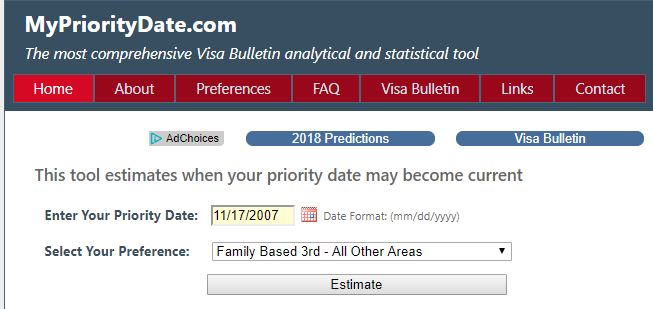
Third-party calculators can provide estimates based on stated assumptions. Treat those estimates as planning aids, not official decisions or guarantees. The published Visa Bulletin and USCIS filing instructions remain the key sources for deciding whether you can take the next step.
Common Mistakes to Avoid When Checking Priority Dates
Many green card applicants misunderstand the Visa Bulletin because they compare the wrong date, use the wrong chart, or assume that a current date guarantees approval. A careful check of your case records and the official monthly instructions can help prevent avoidable errors.
Before filing a form or making a major decision, confirm your priority date, category, country of chargeability, and applicable chart. If the case involves a complex family relationship, a change in marital status, or a question about eligibility, professional legal guidance may be useful.
Source: lynseyhawthorne.blogspot.com
Using the wrong month
A date that applied in a previous month may have changed. Always check the current published bulletin and the relevant USCIS instructions.
Confusing filing with approval
Meeting the Dates for Filing cutoff does not mean that an immigrant visa number is available for final approval.
Choosing the wrong country
Country of chargeability is generally based on country of birth, subject to limited exceptions. Current residence and citizenship do not automatically determine the correct column.
Treating a cutoff as inclusive
For a listed cutoff date, the priority date generally must be earlier than the date, not equal to it, for the chart’s date requirement to be met.
Assuming every applicant needs a priority date
Qualifying immediate relatives of U.S. citizens generally are not subject to the family-preference numerical limits. Their application process still has other requirements.
Relying on an unofficial prediction
A calculator or online discussion cannot replace official government guidance. Confirm eligibility and filing instructions through the relevant government website.
When Should You Seek Immigration Legal Advice?
Consider consulting a qualified U.S. immigration attorney if your priority date appears incorrect, you may qualify for cross-chargeability, your category is unclear, or a filing decision could affect your current immigration status. Legal help may also be useful if a cutoff has retrogressed after you filed or if a notice from USCIS or the National Visa Center is unclear.
An attorney cannot guarantee that a priority date will advance by a particular month. A useful consultation should explain the rule that applies to your category, the evidence needed, the risks of your proposed action, and the official source for the relevant cutoff.
Frequently Asked Questions
Q
What is the current priority date for a green card in October 2026?
There is no single date for every applicant. The October 2026 Visa Bulletin lists different cutoffs for family-sponsored and employment-based categories, with separate dates for certain countries. Check the official bulletin using your category and country of chargeability, then confirm which chart applies to your filing.
Q
How do I know if my green card priority date is current?
Find your priority date in your petition records. Compare it with the cutoff for your immigration category and country in the appropriate Visa Bulletin chart. Your date generally must be earlier than the listed cutoff. If the category is marked C, it is current for that chart, but other eligibility rules still apply.
Q
Does a current priority date mean my green card will be approved soon?
No. A current date means the date cutoff does not restrict the case under the applicable chart. Approval can still depend on petition validity, visa availability, background checks, admissibility, required documents, and other legal requirements. A current date is not a guarantee of immediate approval.
Q
What is the difference between a priority date and a receipt date?
A receipt date records when an agency receives a filing. In many family-based cases, the petition receipt date establishes the priority date. Some employment-based cases use the date a labor certification application is accepted for processing. Because the rules differ, check the documents and category that apply to your case.
Q
Can my green card priority date move backward?
Yes. This is called retrogression. It can occur when demand for visas or annual numerical limits require the government to move a cutoff backward. If this happens, a date that previously met the cutoff may no longer qualify for a new filing or final action under the updated rules.
Q
Which Visa Bulletin chart should I use to file Form I-485?
Check the USCIS adjustment-of-status filing chart instructions for the month in which you plan to file. For October 2026, USCIS selected the Dates for Filing charts for both family-sponsored and employment-based categories. The chart selection can change in a later month, and meeting the date cutoff does not by itself establish eligibility to file Form I-485.
Q
Do applicants from Bangladesh use the India priority date?
Not automatically. Visa chargeability is generally based on country of birth rather than current citizenship or residence. A person born in Bangladesh will generally use the all-chargeability-areas column unless an applicable exception, such as qualifying cross-chargeability, changes the result. A person born in India may be chargeable to India even if they now live in Bangladesh or another country.
✦ Wrapping Up
Conclusion
The current green card priority date depends on your immigration category, country of chargeability, and the Visa Bulletin chart that applies to your case. The October 2026 bulletin provides separate cutoff dates for family-sponsored and employment-based immigration, so checking a general date without these details can be misleading.
Start by confirming the priority date in your petition records. Then check the Department of State’s October 2026 Visa Bulletin and the USCIS instructions for adjustment-of-status filings. If you are applying from outside the United States, follow the National Visa Center and consular processing instructions that apply to your case.
Remember that filing eligibility and final approval are separate steps. A date can qualify for filing while final action remains unavailable. Because dates can advance, remain unchanged, or move backward, review the latest official information before making a decision.
💡 Key Takeaway
Visit the official Department of State Visa Bulletin at https://travel.state.gov/content/travel/en/legal/visa-law0/visa-bulletin/2027/visa-bulletin-for-october-2026.html and the USCIS adjustment-of-status filing charts at https://www.uscis.gov/green-card/green-card-processes-and-procedures/visa-availability-priority-dates/adjustment-of-status-filing-charts-from-the-visa-bulletin. Confirm your priority date, category, country of chargeability, and applicable chart before filing.