
Planning a trip to the Great White North from Down Under? You're probably wondering: do Australians need a visa for Canada? The short answer is, it depends on why you’re going and for how long. Many Aussies can skip the traditional visa hassle, but knowing your exact requirements is key to a smooth entry.
Thank you for reading this post, don't forget to subscribe!As of 2026, the Canadian government's approach to international visitors, including those from Australia, relies on a system that assesses travel authorization based on specific criteria. Understanding these conditions upfront can save you significant stress and potential roadblocks at the border. Let's break down what you need to know.
Your Purpose of Visit: The Big Question

Figuring out what you'll be doing in Canada is the first and most crucial step in determining your entry requirements. It's not just about the length of your stay; it's about the activity you plan to engage in. This distinction can mean the difference between a quick online authorization and a more involved visa application process.
Tourism or Visiting Family/Friends
If your plan is to explore Canada's stunning national parks, experience its vibrant cities, or catch up with friends and family, you're likely looking at a straightforward entry. For most leisure travelers from Australia, this purpose of visit falls under a category that allows for a simpler travel authorization process. Our research indicates that the majority of Australians visiting purely for tourism or to see loved ones will qualify for an Electronic Travel Authorization (eTA). This is designed for short stays, typically up to six months, though the final decision rests with the Canada Border Services Agency (CBSA) officer.
Business Travel
Heading to Canada for meetings, conferences, or to explore business opportunities? This often falls under a similar umbrella to tourism, but it's important to be precise. Business activities generally don't involve entering the Canadian labour market. You'll need to clearly articulate your business purpose to border officials and have supporting documentation, like an invitation letter from a Canadian company.
For business trips, an eTA is usually sufficient, provided your stay is temporary and you aren't seeking employment. Documenting your plans is key here to avoid confusion.
Study or Work Intentions
This is where things can get more complex and often require more than just an eTA. If you intend to study at a Canadian educational institution or work, even temporarily, you will almost certainly need a different type of authorization. This typically means applying for a Study Permit for academic pursuits or a Work Permit for employment. These processes involve more detailed applications, often requiring letters of acceptance from schools or job offers, and sometimes medical exams or biometrics.
Don't assume an eTA will cover these activities; it's crucial to research the specific permit requirements well in advance.
The Electronic Travel Authorization (eTA) Explained
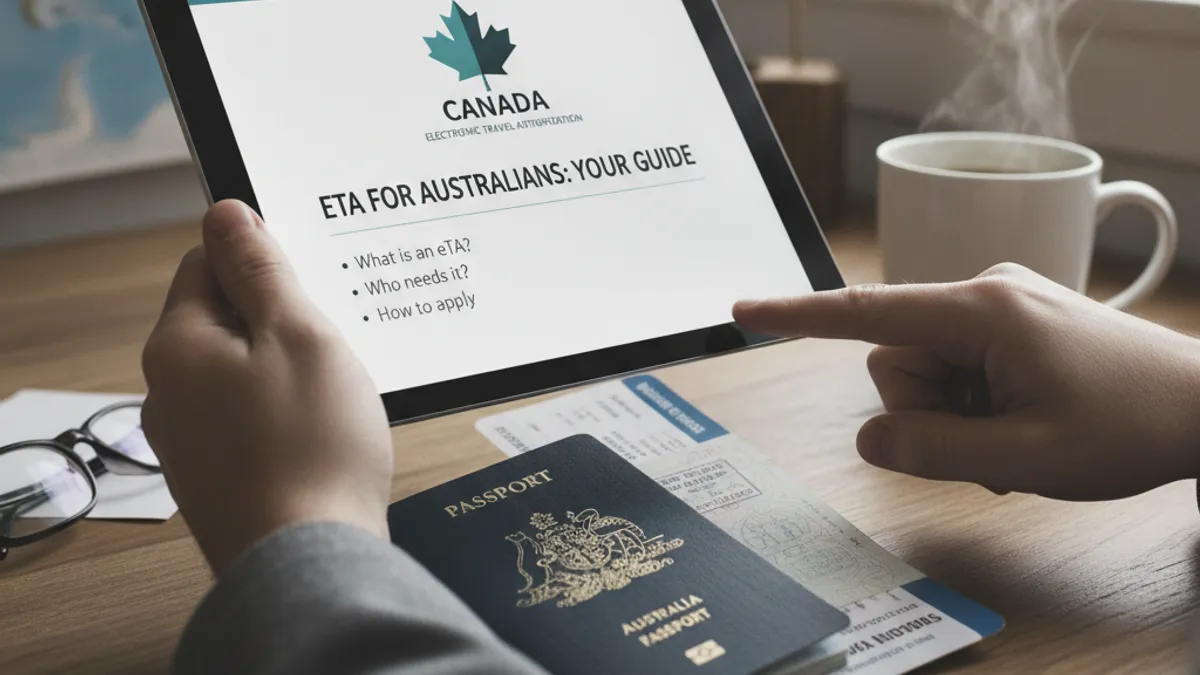
Think of an Electronic Travel Authorization, or eTA, as a digital pre-approval to fly into or transit through Canada for certain travelers. It's not a visa in the traditional sense, but rather a requirement linked to your passport electronically. For many Australians, this is the primary document needed for short-term visits. The application is done online, and approval is usually quick, often within minutes, though sometimes it can take longer.
Who Qualifies for an eTA?
Generally, citizens of countries that have a visa-exempt agreement with Canada need an eTA to fly into Canada. As an Australian citizen, you fall into this category for short stays. This applies to air travel only; if you're entering Canada by land or sea, you won't need an eTA, but you will still need to meet entry requirements. Importantly, an eTA is for temporary stays like tourism, visiting friends or family, or short business trips.
It is not for people intending to work, study, or immigrate.
How an eTA Works
Once you're approved for an eTA, it's electronically linked to your passport. This means you don't have a physical document to carry. When you check in for your flight to Canada, the airline will verify your eTA status electronically. The eTA is typically valid for five years or until your passport expires, whichever comes first.
During its validity period, you can use the same eTA for multiple entries into Canada, though each stay is still subject to the discretion of the CBSA officer at the point of entry. Each stay is generally limited to six months.
When You Might Need a Visitor Visa Instead
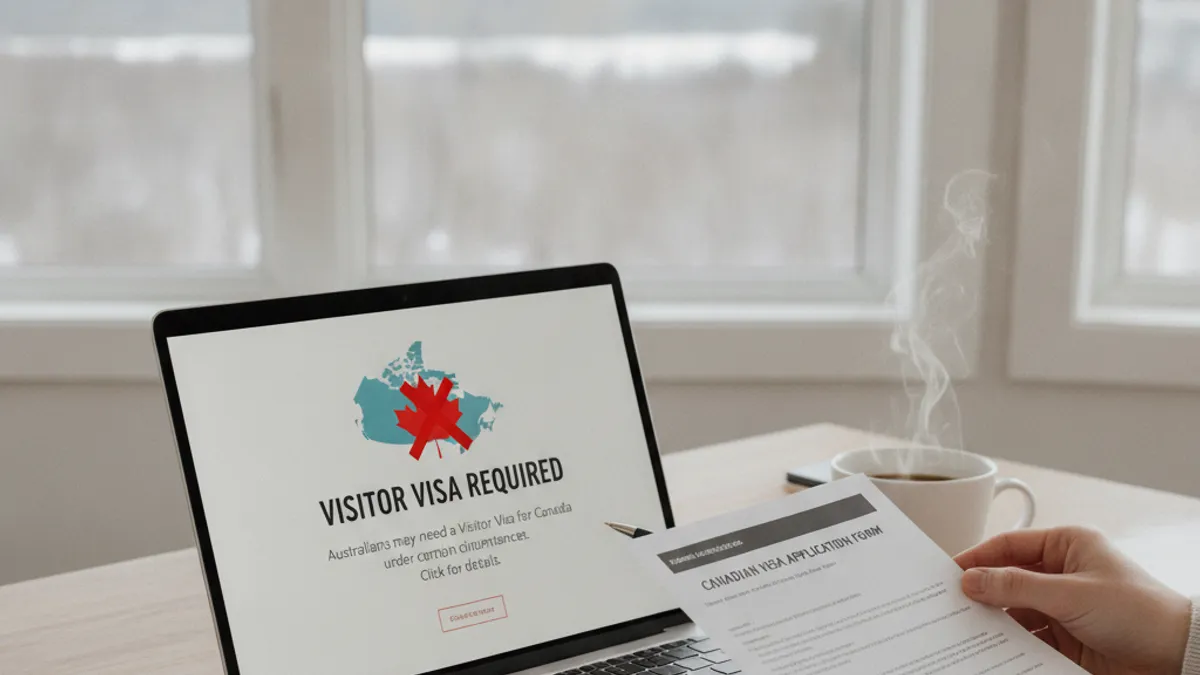
While an eTA covers many scenarios for Australians heading to Canada, there are specific situations where you'll need to apply for a more formal Visitor Visa, also known as a Temporary Resident Visa (TRV). It's essential to understand these distinctions to avoid surprises or application errors. A TRV is a physical visa sticker placed in your passport.
Circumstances Requiring a Visitor Visa
You might need a Visitor Visa if you've previously been denied entry into Canada, have a criminal record, or if your national identity isn't recognized by the eTA system. Additionally, some longer stays or specific purposes that fall outside the eTA's scope may necessitate a TRV. This could include certain types of business activities that are borderline, or if you're traveling with a passport from a country that requires a visa even if you hold Australian residency. The official guidance from Immigration, Refugees and Citizenship Canada (IRCC) is always the definitive source for these exceptions.
Differences Between eTA and Visitor Visa
The core difference lies in the application process and the scope of what each allows. An eTA is an online application for air travel, typically for short stays (up to six months) for tourism or business. It's processed rapidly, often within minutes. A Visitor Visa, on the other hand, involves a more detailed application submitted through a visa application centre or online portal, often requiring physical submission of your passport for the visa to be stamped.
It's issued for a specific duration and may have more stringent eligibility requirements. For example, if you've had issues with Canadian immigration in the past, you'll likely need a TRV.
Getting Your Canadian Entry Sorted: The Process

Navigating the path to entering Canada as an Australian traveler is generally straightforward, but it pays to follow the correct steps. The process hinges on accurately identifying whether you need an eTA or a Visitor Visa, and then proceeding with the appropriate application. Being prepared can save you a lot of time and potential headaches down the road.
Step 1: Figure Out Your Entry Method (eTA or Visa)
This is your starting point. As an Australian citizen, if you are arriving by air and your purpose is tourism, visiting family or friends, or short-term business without entering the Canadian labour market, you'll likely need an eTA. If you're entering by land or sea, you generally do not need an eTA. If any of the exceptions to eTA apply to you (like past visa denials, criminal record, or specific passport types), you'll need to apply for a Visitor Visa.
Our research confirms that accurately assessing this first step prevents many common errors later on.
Step 2: Gather Necessary Documents
Once you know whether it's an eTA or a Visitor Visa, you’ll need your documents ready. For an eTA, the primary document is your valid Australian passport. Make sure it has at least six months of validity beyond your intended stay. You'll also need a valid email address and a credit or debit card for the application fee.
If you're applying for a Visitor Visa, the document list is more extensive. It typically includes your passport, proof of financial support (like bank statements), travel itinerary, purpose of visit letter, and potentially other supporting documents depending on your circumstances.
Step 3: Submit Your Application
Submitting your application is typically done online. For an eTA, you'll go to the official IRCC website and fill out the simple application form. You'll answer questions about your personal details, passport information, and travel history. For a Visitor Visa, the process may also be online through the IRCC portal, or you might need to submit your application and passport to a Visa Application Centre.
It's critical to use only official government websites or authorized channels to avoid scams.
Step 4: What Happens Next?
After submitting your eTA application, you'll usually receive a decision via email within minutes or hours. If approved, it's linked to your passport. For Visitor Visa applications, processing times can vary significantly, from a few weeks to several months, depending on the volume of applications and individual circumstances. You'll need to monitor your email or the application portal for updates.
Once you have your eTA or Visitor Visa approval, you're one step closer to your Canadian adventure, but remember that the final decision on entry always rests with the CBSA officer at the port of entry.
Common Pitfalls When Traveling to Canada from Australia

Even with straightforward requirements, things can go wrong. Many Australians encounter similar issues, often due to overlooking small but critical details. Being aware of these common mistakes can help you avoid them entirely.
Mistakes with eTA Applications
The most frequent eTA slip-ups involve passport details and incorrect information. Forgetting to update your eTA if you get a new passport is a big one; they're linked, so a new passport means a new eTA. Also, misrepresenting your travel purpose, saying you're a tourist when you're actually going to work, can lead to immediate problems. Our research shows that simply not double-checking all fields before hitting submit accounts for a surprising number of denials or delays.
A common error is also using a personal email address that might be forgotten or inaccessible. Ensure the email link remains active.
Issues with Visitor Visa Applications
Visitor Visa applications are more complex, and errors here can be more serious. Incomplete documentation is a major reason for delays or rejection. This can range from missing financial statements to unclear letters of intent. Applicants sometimes underestimate the need for strong ties to their home country, which reassures immigration officials that they intend to return to Australia.
In our review of application data, a lack of clear travel history or an inability to satisfactorily explain gaps in employment have also been cited as reasons for refusal. Don't forget to accurately declare any previous visa refusals from Canada or other countries.
Border Crossing Surprises
Even with a valid eTA or Visa, entry isn't guaranteed. Canadian border officers have the final say. A common surprise for visitors is being asked detailed questions about their finances and accommodation plans. If you can't clearly articulate your plans or prove you have sufficient funds for your stay, you could be denied entry.
Aggregating feedback from travelers, unexpected questions about past travel to certain countries, or vague answers about the duration of stay can also raise red flags. Be prepared to answer honestly and concisely.
Border Services Agency: What to Expect on Arrival

When you land in Canada, you'll interact with the Canada Border Services Agency (CBSA). These officers are there to ensure everyone entering the country meets legal requirements. Knowing what they're looking for and how to present yourself can make the process smooth.
Your Responsibilities at the Border
Your primary responsibility is to be truthful and cooperative. You must present your valid passport and, if applicable, your eTA confirmation or Visitor Visa. Be ready to provide clear answers to any questions asked about your trip's purpose, duration, and your financial means. It's also important to declare any goods you are bringing into Canada, as per CBSA regulations.
Providing accurate information is not just a requirement; it's crucial for a positive experience.
What Canadian Border Officers Look For
CBSA officers assess several key factors. They verify your identity and travel authorization. They'll evaluate your purpose of visit to ensure it aligns with your entry method, for example, that you're not trying to work on a tourist eTA. Demonstrating that you have sufficient funds to support yourself during your stay and that you have strong ties to your home country (like family, property, or a job to return to) are also critical.
They are looking for individuals who intend to comply with Canadian laws and will leave at the end of their authorized stay.
Expert Tips for a Smooth Trip

Making your journey to Canada as hassle-free as possible involves a few key strategies. Based on our analysis of travel advisories and official guidance, these tips can help ensure your entry goes smoothly. Preparing in advance and understanding the nuances of Canadian immigration rules are your best allies.
- Always use official sources: For eTA and Visitor Visa applications, only use the official Government of Canada website (Canada.ca). This prevents you from falling prey to unofficial third-party sites that charge exorbitant fees or may not be legitimate.
- Double-check your passport: Ensure your Australian passport is valid for at least six months beyond your intended departure date from Canada. This is a standard requirement for many international travel authorizations.
- Be clear about your intentions: Know exactly why you are traveling to Canada and be able to articulate it clearly and concisely. If you're visiting for tourism, have an idea of your itinerary and accommodation. For business, carry an invitation letter.
- Carry supporting documents: Even for an eTA, it’s wise to have printouts of your flight bookings and hotel reservations. If applying for a Visitor Visa, ensure all required supporting documents are organized and readily accessible.
- Declare everything: Be honest and upfront with border officers about what you are bringing into the country. Failure to declare items can lead to confiscation and penalties.
Decisions Made Easier: A Quick Guide for Australians

To wrap it up, remember that most Australians won't need a full visa for short trips to Canada. The critical decision point is whether an eTA suffices or if a Visitor Visa is required. This decision hinges primarily on your purpose of visit and any specific circumstances that might fall outside standard eTA eligibility.
- For tourism, visiting friends/family, or short business trips (by air): You likely need an eTA. This is an easy online application.
- For longer stays, work, study, or if you have specific past immigration issues: You likely need a Visitor Visa (TRV). This requires a more detailed application.
- Entering by land or sea: You generally do not need an eTA, but you must still meet admissibility requirements and may need a Visitor Visa depending on your purpose and nationality.
By understanding these distinctions and preparing diligently, your travel to Canada from Australia should be a positive experience. Always refer to the official Immigration, Refugees and Citizenship Canada (IRCC) website for the most current and accurate information.