
Planning a trip to India as a US citizen? The first big question you'll face is about visas, and understanding the requirements can feel a bit like a puzzle. It’s not always a straightforward yes or no, because your specific travel plans make all the difference.
Thank you for reading this post, don't forget to subscribe!The truth is, most US citizens do need a visa to enter India. Your reason for visiting the country, whether it's for a quick holiday or a business venture, will determine the exact type of visa you need. As of 2026, these rules remain a key part of international travel protocols, and getting it wrong can mean being denied entry.
Your Travel Purpose: The Key to Needing a Visa
Figuring out if you need a visa for India boils down to one central question: why are you going? Your intended activities and the length of your stay are the primary factors that dictate your visa requirements. This isn't a one-size-fits-all situation; India has different visa categories designed for distinct purposes.
Think of your travel purpose as the first fork in the road. Are you planning to explore ancient temples and vibrant cities as a tourist? Maybe you're heading over for critical business meetings or to attend a specific conference. Some travelers go for medical treatments, while others embark on longer journeys for work or to study.
Each of these scenarios typically requires a different visa classification, with distinct application processes and permissions.
E-Visa vs. Regular Visa: Which Path For You?
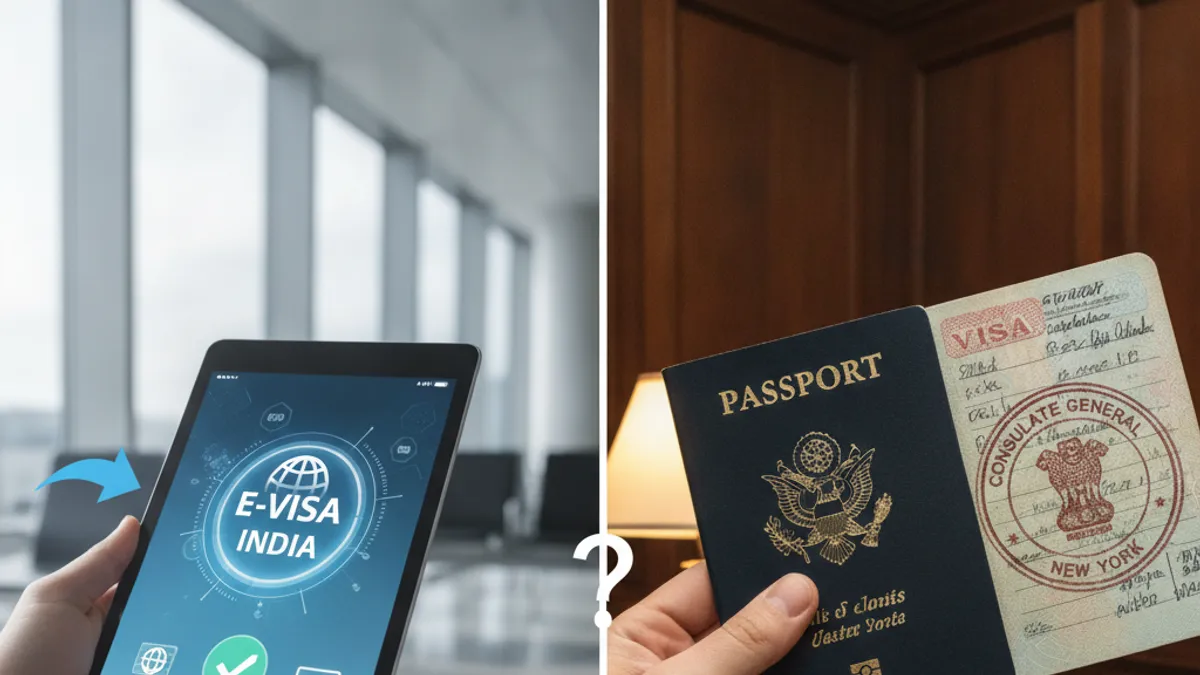
When you’ve determined your travel purpose, the next step is understanding the two main types of visas available: the E-Visa and the Regular (or sticker) Visa. These aren't interchangeable; they serve different needs and have different application methods and benefits. Choosing the right one is crucial for a smooth entry into India.
E-Visa: The Online Route Explained
The E-Visa is essentially an electronic visa, and it's become the go-to for many US citizens traveling to India for specific, shorter-term purposes like tourism, business, or medical conferences. The big advantage here is convenience. You apply online, and if approved, you receive an electronic authorization that you print and carry with your passport. It's designed to simplify the process, cutting down on the need for physical visits to an embassy or consulate.
With an E-Visa, you can typically expect a short-term entry permission. For instance, the E-Tourist Visa allows for multiple entries and can be granted for periods of 30 days, one year, or five years, with specific stay limits per visit. The E-Business Visa and E-Medical Visa have their own distinct rules regarding duration and entry.
Regular Visa: When You Need the Traditional Stamp
Sometimes, the E-Visa simply won't cover your travel needs. This is where the Regular Visa comes into play. This is the more traditional route, where a visa sticker is affixed directly into your passport by an Indian Embassy or Consulate. It's generally required for longer stays, more complex purposes of visit not covered by E-Visas, or for certain professional activities.
If you're planning to work in India, pursue long-term studies, or engage in activities that fall outside the scope of E-Visa categories, you'll likely need to apply for a Regular Visa. The application process for this type of visa is typically more involved. It often requires submitting a more comprehensive application form, providing a wider range of supporting documents, and potentially attending an in-person interview at a designated Indian visa application center.
Common Scenarios: Do YOU Need a Visa?
Let's dive into some typical travel situations to make it clearer whether you’ll need one of India’s visa options. Your specific plans are the deciding factor in whether you get to walk through immigration with minimal fuss or if you need to ensure your visa application is locked in beforehand.
Tourism in India
Planning a trip to see the majestic Taj Mahal, wander through the deserts of Rajasthan, or relax on the Goan beaches? If your primary goal is sightseeing, experiencing the culture, and enjoying India’s diverse landscapes for a recreational purpose, you're looking at tourism. As a US citizen, you will absolutely need a visa. The most straightforward way for most tourists is the E-Tourist Visa.
This electronic visa is generally available for stays up to 30 days, one year, or five years, depending on the specific E-Tourist Visa you secure. It's designed for leisure and sightseeing, not for making a formal visit for business or employment.
Business and Conferences
Heading to India for business meetings, to explore investment opportunities, or to network with industry professionals? Or perhaps you're attending a specific conference or seminar? This also requires a visa. For general business activities like attending meetings, business fairs, or trade-related discussions, the E-Business Visa is often the simplest route.
It allows for multiple entries and usually covers shorter durations.
However, if your business activities are more extensive, or if you're involved in areas like project execution, then a Regular Visa for business might be necessary. Similarly, if you're attending a conference, you’ll look at the E-Conference Visa, which requires specific invitations and documentation related to the event. It's crucial to match your exact business or conference activity to the correct visa category to avoid any issues upon arrival.
Medical Visits
India is a popular destination for medical tourism, offering specialized treatments and procedures. If your trip is focused on receiving medical care or accompanying a patient, you will need a visa. For shorter-term medical needs or procedures, the E-Medical Visa is an option. This electronic visa allows for entry specifically for medical treatment and usually has a limited duration.
However, if you are undergoing extensive or long-term medical treatment, or if you are accompanying someone who is, you might need to apply for a Regular Visa, often referred to as an "X Visa" or medical attendant visa. This pathway requires more extensive documentation, including letters from Indian hospitals confirming the medical necessity and proposed treatment plan. It ensures you have the proper authorization for your medical journey.
Longer Stays, Work, and Study
What if your visit isn't just for a short trip? If you intend to stay in India for an extended period, beyond what an E-Visa typically allows, or if you have secured employment or admission to an educational institution, you'll need a specific type of Regular Visa. These are not obtainable through the E-Visa system.
For employment, you'll need an Employment Visa. This usually requires a formal job offer from an Indian company and specific sponsorship documentation from the employer. For students, an Indian Student Visa is mandatory, and this requires an admission letter from a recognized Indian educational institution. These visas are for long-term commitments and have more rigorous application requirements, often involving proof of financial stability and clear intentions to return home after your period of study or work concludes.
Visa Application Steps: Getting It Right

When you've figured out which visa fits your travel needs, the next logical step is understanding how to actually get it. This process can seem daunting, but breaking it down makes it much more manageable. The path you take depends heavily on whether you're applying for an E-Visa or a Regular Visa.
The E-Visa Application Process
The E-Visa application is designed for speed and ease. You'll start by visiting the official Indian government E-Visa portal. Here, you’ll select your country, visa type (e.g., E-Tourist, E-Business), and purpose of visit. You’ll then fill out an online application form, providing accurate personal details, passport information, and travel dates.
Be prepared to upload a recent digital photograph and a clear scan of your passport's bio page.
After submitting your application and paying the required visa fee online, you'll typically receive an Electronic Travel Authorization (ETA) via email within a few business days, sometimes as fast as 24-72 hours for standard processing. It's absolutely critical to print this ETA and carry it with you, as you'll need to present it along with your passport upon arrival in India. The E-Visa is generally not stamped in your passport beforehand; it's an electronic approval granting you permission to travel.
Applying for a Regular Visa
Applying for a Regular Visa involves a more traditional, often more detailed, process. You'll typically start by filling out an online application form through the Indian Embassy or Consulate's designated visa service provider. This form will request extensive information about your background, travel history, and itinerary. Unique to this process, you will likely need to submit supporting documents not always required for an E-Visa, such as proof of accommodation, flight bookings, and sometimes financial statements.
Once your online application is submitted and reviewed, you'll usually be required to schedule an appointment at an Indian Visa Application Center (IVAC) or the consulate itself. This is where you'll physically submit your passport, application form, supporting documents, and pay the visa fee, which can vary based on the visa type and duration. In some cases, an interview may be conducted to clarify your intentions for visiting India. Your passport will then be held for processing, and the visa sticker will be affixed upon approval.
Crucial Details: Passport and Application Must-Haves
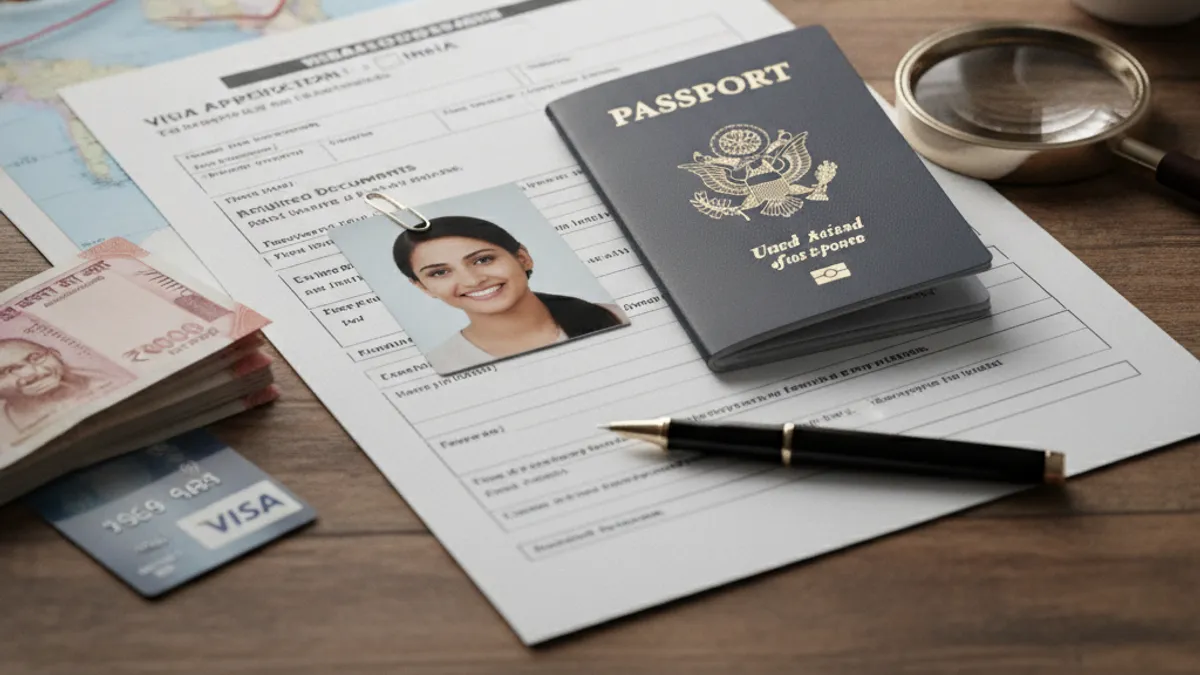
Beyond selecting the right visa and filling out forms, there are specific requirements related to your passport and the general accuracy of your application that are non-negotiable. Overlooking these can lead to significant delays or outright rejection, no matter how well-intentioned your travel plans are.
Passport Validity and Requirements
Your passport is your primary identity document for international travel, and India has specific rules for it. For any visa application to India, your passport must be valid for at least six months beyond your intended date of departure from India. This means if you plan to leave India on, say, December 15, 2026, your passport needs to be valid until at least June 15, 2027. Furthermore, you absolutely need at least two blank pages in your passport for visa stamping and arrival/departure stamps.
If your passport is nearing its expiration date or doesn't have enough blank pages, you'll need to renew it before you begin your visa application. Trying to apply with an eligible passport is a guaranteed way to face application rejection. Always check the expiry date and the number of available pages well in advance of your intended application submission.
Common Application Mistakes to Dodge
Making errors on your visa application is one of the quickest ways to cause problems. A common mistake US citizens make is entering incorrect personal details, such as a misspelling of their name or an incorrect date of birth that doesn't match your passport exactly. Another frequent slip-up involves the passport details themselves; ensure the passport number, issue date, and expiry date are entered precisely as they appear on your document.
With E-Visas, incorrect uploading of the photo or passport scan is also a recurring issue. Photos often fail to meet the strict requirements for size, background color, or facial expression. For regular visas, failing to provide all necessary supporting documents as listed by the consulate can lead to delays or a rejected application. Double-checking every field and cross-referencing with your passport is essential.
When to Seek Expert Help with Your Visa

While the E-Visa process is designed to be user-friendly, and regular visa applications are well-documented, there are times when seeking professional assistance is the smartest move. If your situation is complex, or if you're simply feeling overwhelmed by the requirements, an expert can save you a lot of stress and potential mistakes.
This often applies to individuals with dual citizenship, past visa issues, or very specific business or employment needs. Some travelers might also benefit from an expert if they have an unusual travel itinerary or if they need to apply for specific types of visas like research or film visas, which have more nuanced requirements. Navigating the intricate details and ensuring all documentation is perfect can be a challenge, and immigration consultants specializing in Indian visas can provide invaluable guidance. They stay up-to-date on the latest regulations and can help you avoid costly errors.
Navigating India's Visa Rules: Your Decision Guide
As we've explored, whether a US citizen needs a visa for India, and what kind, hinges primarily on their travel purpose. The E-Visa offers a streamlined, online solution for common travel needs like tourism, short business trips, and medical conferences. It’s efficient for stays typically ranging from 30 days up to five years, with specific entry permissions.
However, for longer durations, employment, study, or other specialized purposes not covered by E-Visa categories, a Regular Visa is necessary. This traditional route requires a more detailed application submitted through an Indian Embassy or Consulate, often involving in-person appointments. Always ensure your passport is valid for at least six months beyond your exit date and contains sufficient blank pages. Scrutinizing your application for accuracy before submission is paramount to avoid delays or rejection.