
Planning an international trip from Bangladesh can sometimes feel like a puzzle, especially when it comes to visa requirements. You’re probably wondering: which country no need visa for bangladeshi passport, and how can I actually make that happen smoothly? It’s a common question, and the good news is that several destinations offer visa-free entry or visa on arrival for Bangladeshi citizens.
Thank you for reading this post, don't forget to subscribe!Our research shows that understanding the specifics of these agreements is key to unlocking stress-free travel. Unlike a generic list, knowing the precise conditions, like passport validity periods, officially requires staying updated with bilateral agreements that can change. As of 2026, these pathways offer remarkable flexibility for tourists and business travelers alike.
Looking for a Global (Non-Bangladeshi) List?
This guide is specifically for Bangladeshi passport holders. If you’re researching visa-free destinations for a different nationality, check out our broader list of visa-free and visa-on-arrival countries worldwide.
Understanding Visa-Free vs Visa on Arrival
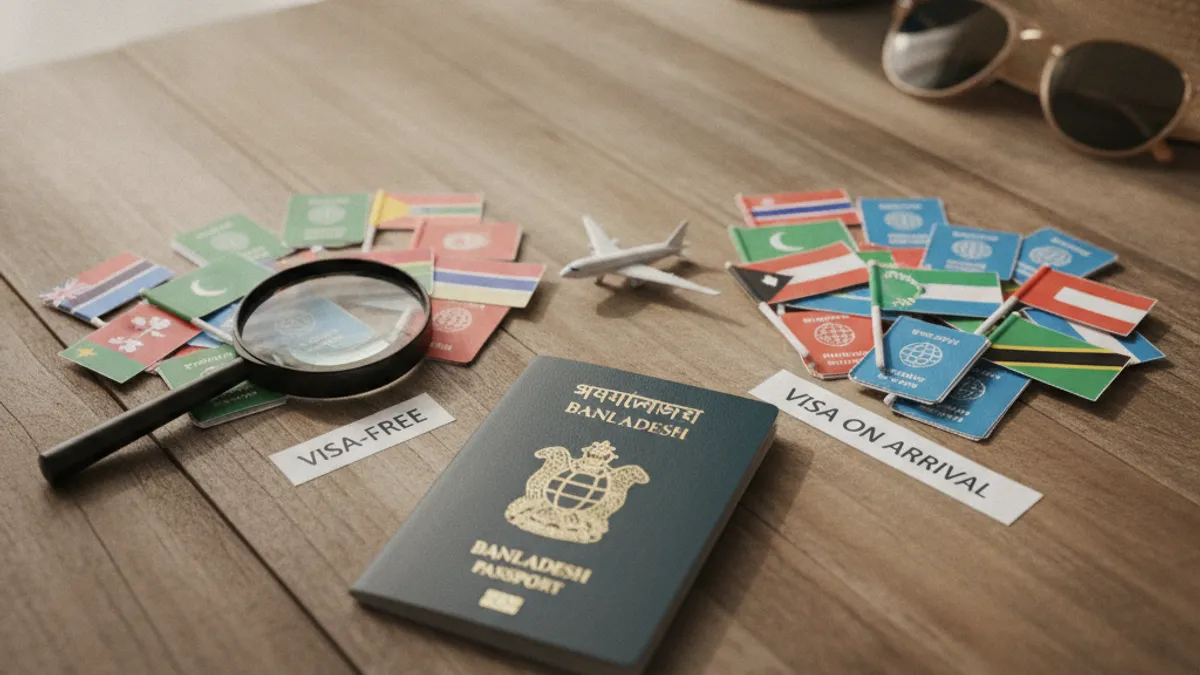
When we talk about traveling without a traditional visa application process, two main categories come up: visa-free entry and visa on arrival. It’s important to know the difference because they involve distinct procedures and requirements. Visa-free entry means you can enter a country for a specific period, usually for tourism or business, without needing to apply for a visa beforehand. You typically just present your passport and possibly other documents at immigration.
Visa on arrival, on the other hand, means you do need a visa, but you obtain it directly at the port of entry in the destination country. This still often streamlines the process compared to applying in advance, but it usually involves a fee and a slightly longer wait at immigration. For Bangladeshi passport holders, many countries fall into the visa-free category, but some might offer visa on arrival instead. Our analysis indicates that understanding which category a country falls into is the first step in planning your itinerary.
The International Air Transport Association (IATA) Travel Centre serves as a critical resource for verifying these classifications.
Where Can Bangladeshis Travel Without a Prior Visa?
Many countries offer simplified travel for Bangladeshi passport holders, primarily through visa-free entry or visa on arrival facilities. This significantly eases planning for short trips, whether for leisure or professional engagements. While the exact list can fluctuate due to international relations and policy changes, certain regions consistently provide easier access.
Our data aggregation from official embassy statements and government travel advisories shows that South Asia and Southeast Asia are generally the most accessible regions. However, don’t discount opportunities in the Middle East and parts of Africa. It’s crucial to approach this list not as a definitive, unchanging roster, but as a starting point for your research, always verifying with the destination country’s official immigration sources.
South Asia & Southeast Asia: Common Easy Access Points
For many Bangladeshi travelers, South Asia and Southeast Asia present some of the most straightforward international travel options. Countries within these regions often have long-standing bilateral agreements that facilitate easier entry. These typically involve either visa-free access for a set duration or a visa on arrival service, greatly simplifying trip planning.
For instance, nations like the Maldives traditionally offer visa-free entry for Bangladeshi tourists for a specified period, often up to 30 days, requiring only passport and potentially proof of onward travel or accommodation. Similarly, Nepal and Bhutan often permit entry with minimal visa formalities for tourism, though specific conditions apply, especially for Bhutan. In Southeast Asia, while many popular destinations like Thailand require a visa, some smaller nations or those with specific trade agreements might offer limited visa-free stays. Always confirm the exact duration and any accompanying entry stipulations, such as hotel bookings or onward flight tickets, directly with the destination’s embassy or immigration authority.
Middle East & Africa: Exploring Options
Beyond immediate neighbors, several countries in the Middle East and Africa present opportunities for Bangladeshi passport holders to travel with fewer visa hassles. These destinations can be attractive for business, tourism, or visiting family, and their policies often reflect growing diplomatic and economic ties. While direct visa-free entry might be less common than in adjacent regions, visa on arrival remains a popular facilitation.
For example, some nations in the Middle East have historically offered visa on arrival facilities for visitors from South Asia, making transit or short business trips more accessible. In Africa, specific countries have been evolving their immigration policies; our research points to a growing number of nations that grant visa-free entry or readily available visas on arrival to Bangladeshi citizens for short stays, often for tourism or business purposes. These can include countries like Rwanda or certain East African nations that are actively promoting tourism and foreign investment. It is vital to research these specific country policies before making any travel arrangements, as requirements can be quite specific about the purpose of visit and the required supporting documentation.
Europe & Beyond: Limited Visa-Free Opportunities
When considering travel to Europe or other continents further afield, the landscape for visa-free entry for Bangladeshi passport holders becomes significantly more restricted. Most European countries, including those in the Schengen Area, require a pre-arranged visa, which often involves a detailed application process and can be time-consuming. This is largely due to immigration policies and existing visa facilitation agreements between Bangladesh and these regions.
However, there are occasional exceptions or specific territories that might offer limited visa-free access, often for very short durations and specific purposes. These are typically short-term tourist stays and usually require stringent documentation. For instance, while direct visa-free access to the wider Schengen zone is rare, a few individual countries outside the core EU or specific microstates might have separate bilateral agreements. Always verify these limited opportunities through official sources, as they can be few and far between and are subject to rapid change.
Travel to North and South America from Bangladesh generally also requires a visa in advance for most countries.
Crucial Conditions for Visa-Free Entry

Securing visa-free entry isn’t just about holding a Bangladeshi passport; it hinges on meeting specific conditions set by the destination country. These are not mere suggestions; they are requirements that immigration officials will check at the border. Failing to meet even one condition can lead to denial of entry, regardless of whether the country theoretically offers visa-free access. Therefore, understanding these potential hurdles is as important as knowing which countries your passport might grant access to.
Our analysis of immigration regulations highlights that these conditions often revolve around the passport’s validity, the purpose of your visit, and the mandated duration of your stay. Additionally, many countries require proof of your intention to leave, such as a return ticket, and sufficient financial resources to cover your expenses during the visit. It’s essential to treat every visa-free destination as if it has formal entry requirements, because it does.
Passport Validity and Purpose of Visit
The single most critical factor for any international travel, visa-free or not, is the validity of your passport. Most countries require your passport to be valid for at least six months beyond your intended date of departure from their territory. This is a standard international benchmark to ensure you have sufficient time to complete your visit and depart without your passport expiring while you are abroad. For Bangladeshi passport holders, this rule is non-negotiable.
Beyond the expiry date, the purpose of your visit is equally vital. Visa-free agreements are typically designed for tourism, short business trips, or visiting friends and family. If your intention is to work, study long-term, or permanently reside in the destination country, visa-free entry is usually not applicable, and you will need to secure the appropriate visa in advance. Immigration officers are trained to assess your intentions based on your answers, the documents you present, and sometimes even your demeanor.
Misrepresenting your purpose of visit can lead to serious consequences, including immediate deportation and future travel bans.
Duration of Stay Limits
Every visa-free arrangement comes with a strict limit on how long you can stay in the country. This limit can vary significantly from country to country. While some nations might allow up to 90 days visa-free, others might offer a mere 15 or 30 days. It’s absolutely critical to know this number for your specific destination and to plan your trip accordingly.
Overstaying this permitted duration, even by a few hours, can result in fines, detention, deportation, and significant future travel restrictions.
For example, if a country offers 30 days visa-free, your travel dates must fall entirely within that 30-day window. This means if you arrive on the 1st of the month and the limit is 30 days, your departure must be no later than the 30th of that month. It’s not an open-ended invitation to stay as long as you like. Always double-check this detail through official government or embassy websites, as these durations can be adjusted by policy changes.
The total duration allowed for visa-free stays within a specific period, such as 90 days in a 180-day period for Schengen countries, is also a common restriction to be aware of, though this typically applies to countries requiring a visa application for Bangladeshis.
Essential Entry Requirements Beyond the Visa
Even when you’re traveling visa-free, you’re not simply walking through immigration with just your passport. Most countries, irrespective of visa policy, will have a set of standard entry requirements designed to ensure visitors are legitimate and do not pose a risk. These are measures to prevent overstays, illegal work, or financial burdens on the host nation. For Bangladeshi passport holders, understanding these secondary requirements is just as vital as confirming visa-free status.
Common requirements include proof of onward or return travel, meaning you need to show a confirmed flight or ferry ticket out of the country. Without this, immigration officials might assume you intend to overstay. They may also ask for proof of sufficient funds, such as bank statements or cash, to demonstrate you can support yourself during your stay without working illegally. Depending on the destination and its specific regulations, you might also need a hotel booking confirmation, an invitation letter from a resident, or even travel insurance.
Always research these specific requirements for your destination well in advance of your departure.
How to Confirm Visa Requirements Before You Travel
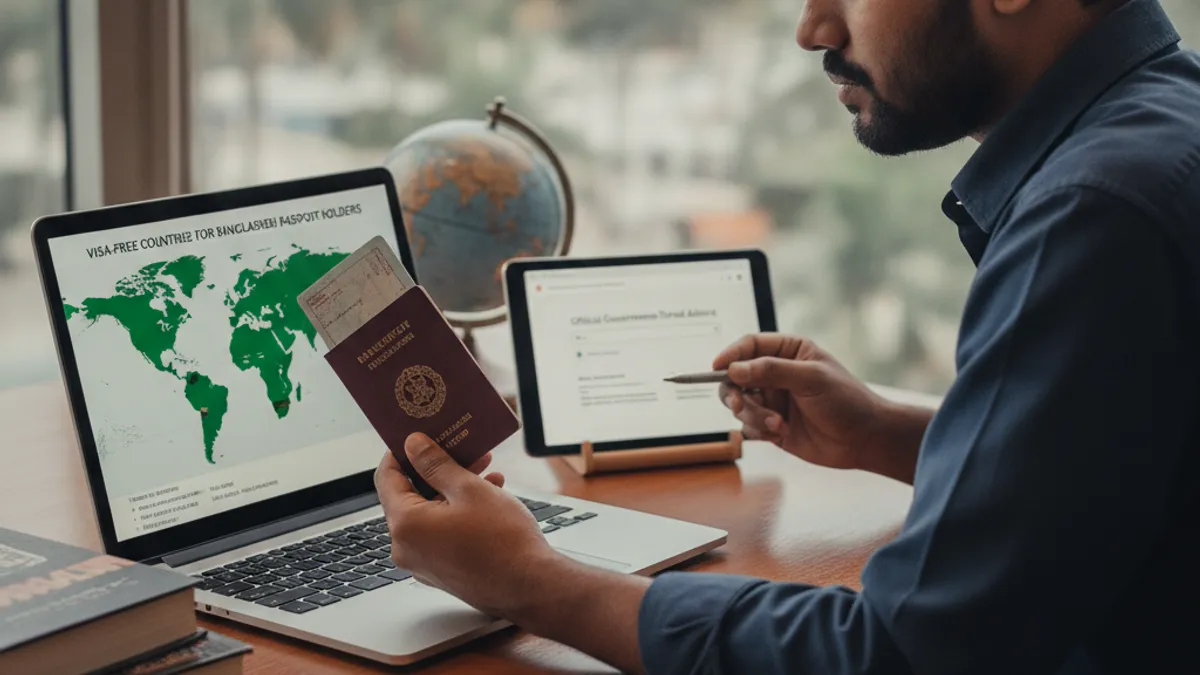
The absolute best way to avoid surprises at the border is to thoroughly confirm visa requirements before you even book your flight or accommodation. Relying on outdated information, hearsay, or generic travel blogs can lead to significant problems. The rules for entry can and do change, sometimes with little notice, due to diplomatic shifts or updated immigration policies. Therefore, you must go to the most authoritative sources available.
Our editorial analysis emphasizes that investing a little time in this verification process upfront will save you immense stress and potential financial loss later. What seems like a simple visa-free entry can have nuanced conditions, and confirming these directly is part of responsible travel planning for any Bangladeshi citizen.
Checking Official Sources
To confirm visa requirements accurately, you should always prioritize official government or diplomatic sources. For any destination country, the most reliable information will be found on the website of its embassy or consulate in Bangladesh, or its official immigration and border control agency. These sites provide the most up-to-date and legally binding information regarding entry permissions, required documents, and any associated fees or conditions.
Look for sections specifically addressing visa policies for foreign nationals, and be sure to navigate to the part that pertains to Bangladesh or countries with similar visa agreements. If you are traveling to a country that is part of a larger visa bloc, like the Schengen Area in Europe, you’ll need to consult the specific immigration authority for that bloc. For instance, national immigration authorities often publish detailed guides on their websites. Always look for URLs ending in .gov.govt, or official country-specific domains.
What to Do if Information Seems Unclear
Sometimes, even official websites can be complex or seem to lack clarity regarding specific situations. If you’re a Bangladeshi passport holder and the information on a country’s immigration website seems vague or contradictory regarding visa-free entry or visa on arrival, the next best step is to contact the destination country’s embassy or consulate directly. They are equipped to provide personalized guidance based on your nationality and intended travel purpose.
You can usually find contact details (phone numbers, email addresses) on their official embassy websites. When you reach out, be prepared to state your nationality, the purpose of your visit, and the intended duration of your stay. Ask specific questions like, “Do I need a visa to enter [Country Name] for tourism for 15 days with a Bangladeshi passport?” or “What are the exact requirements for obtaining a visa on arrival at [Airport Name]?” Their response, ideally in writing, can serve as valuable confirmation. If direct contact isn’t immediately fruitful, consider checking reputable travel organizations that aggregate official visa data, like the IATA Travel Centre, which aggregates information from airlines and border authorities worldwide.
Common Mistakes That Can Ruin Your Trip
Planning a trip that involves visa-free travel sounds simple, but many travelers, especially those with a Bangladeshi passport, fall into predictable traps. These missteps can range from minor inconveniences to outright denial of entry. Understanding these common errors beforehand is your best defense against travel disruption and unexpected costs. Our research shows that most of these mistakes stem from a lack of precise verification or a misunderstanding of how visa-free rules actually work in practice.
You should always assume that “visa-free” doesn’t mean “hassle-free.” It simply means you skip the pre-application step. You still need to meet the host country’s immigration standards at the point of entry. Many of these errors involve overlooking the small print or assuming existing knowledge is still current. Our analysis indicates that travelers often forget the fundamental requirements even when a visa stamp isn’t needed.
Failing to Check Current Policies
One of the most frequent and damaging mistakes is assuming that visa policies remain static. What was true last year, or even last month, might not be true today. International relations, security concerns, and trade agreements can all influence a country’s entry requirements for specific nationalities. If a country has recently changed its policy regarding visa-free access for Bangladeshi passport holders, and you haven’t checked, you could find yourself stranded at the airport or even denied boarding by the airline.
A prime example would be a country that previously offered visa on arrival but has now switched to requiring a pre-approved e-visa or a traditional visa application. Airlines are often notified of these changes and are obligated to check that passengers have the correct documentation. Therefore, your due diligence is crucial. Always cross-reference information from multiple official sources, including the destination country’s embassy website and airline travel advisories, close to your departure date.
For instance, checking directly with the immigration department of your destination country about their current entry requirements for Bangladeshi citizens is non-negotiable.
Misunderstanding Entry Conditions
Visa-free entry doesn’t mean you can arrive with just your passport and expect to breeze through immigration. As we’ve touched on, there are usually additional conditions that must be met. Some common misunderstandings involve the duration of stay, which we’ve discussed, but others are equally critical. For instance, many countries require proof of sufficient funds for your stay.
This can mean presenting a recent bank statement showing a balance of, say, $1000 USD, or even a specific amount of cash readily available.
Another example is the requirement for an onward or return ticket. Immigration officers need assurance that you intend to leave their country within the permitted visa-free period. Without a confirmed flight booking out to a different country (not necessarily back to Bangladesh), you might be denied entry. Some destinations also have specific health requirements, such as vaccinations, though these are less common strictly for visa-free entry and more for general public health.
Always check these specifics with the official immigration sources of your destination.
Traveling with an Expiring Passport
This might seem obvious, but it’s a mistake that catches many travelers off guard, including those with plans for visa-free travel. The standard international requirement is that your passport must be valid for at least six months beyond your intended date of departure from the country you are visiting. So, if you plan to leave a country on December 31st, your passport needs to be valid until at least June 30th of the following year.
For a Bangladeshi passport holder, this rule is strictly enforced by most countries, even those offering visa-free entry. If your passport expires sooner than this six-month window, you risk being denied boarding by the airline or refused entry at immigration. This rule isn’t just about the destination country; it’s a global standard to prevent travelers from becoming stranded with expired documentation. Always check your passport’s expiry date carefully and renew it well in advance if it’s nearing its expiration, especially if you’re planning international trips.
Planning Your Visa-Free Journey: Next Steps

Once you’ve identified potential visa-free destinations and confirmed their specific requirements, the next phase is practical preparation. This involves gathering all necessary documents, ensuring you have the financial means to support your trip, and understanding what to expect at immigration. Think of this stage as building the foundation for a smooth and enjoyable travel experience. It’s about moving from decision-making to execution, with a clear plan in place.
This preparation phase is crucial for all types of travelers, whether you’re a seasoned globetrotter or embarking on your first international adventure. By systematically addressing these points, you significantly reduce the chances of encountering unexpected problems. It builds confidence and allows you to focus on the exciting aspects of your trip rather than worrying about logistics at the border.
Gathering Necessary Travel Documents
This is perhaps the most straightforward but critically important step. For visa-free travel, your primary document is, of course, your Bangladeshi passport. As mentioned, ensure it meets the minimum validity requirements, typically six months beyond your departure date. Beyond the passport, you’ll need to have copies of any other required documentation readily accessible.
This can include printed copies of your return or onward flight tickets, hotel booking confirmations, and potentially letters of invitation if you are visiting friends or family.
Some countries may also ask for proof of sufficient funds. This could be in the form of recent bank statements showing a balance of, for example, BDT 100,000 Taka, or even a specific amount of cash readily available. While not always checked for short tourist stays, it’s wise to have them in case immigration officials request them. Organize these documents in a travel folder or a dedicated section of your carry-on luggage so they are easy to find when needed.
Having clear, printed copies is often better than relying solely on your phone, as battery life can be an issue.
Informing Your Bank and Credit Card Providers
This step might seem unusual for visa-free travel, but it’s a practical measure that can save you a lot of trouble abroad. When you plan to use your credit or debit cards in a foreign country, it’s a good idea to notify your bank or credit card provider of your travel dates and destinations. Banks often have fraud detection systems that can flag unusual transactions, especially those occurring in a different country. If your bank isn’t aware of your travel plans, they might temporarily block your cards to prevent suspected fraudulent activity, leaving you without access to your funds.
This applies even if you are not relying solely on plastic and have cash as well. Having your cards functional is essential for emergencies, unexpected expenses, or purchasing items not planned for. To inform your bank, you can typically do this through their mobile app, online banking portal, or by calling their customer service line. They will ask for your destination country or countries and your travel dates.
This simple step ensures your financial tools remain accessible throughout your journey, which is a key part of a stress-free trip.
Border Immigration: What to Expect
The final hurdle is the immigration process at your destination country’s border. Even with visa-free entry, you will interact with uniformed immigration officers. They are responsible for verifying your identity, checking your documentation, and ensuring you meet all entry requirements. Your interaction should be polite, direct, and honest.
Answer all questions truthfully and provide the documents requested without hesitation.
As we’ve highlighted, be ready to present your passport, onward ticket, and possibly proof of funds. The officer will likely ask about the purpose of your visit and how long you intend to stay. Respond clearly and concisely. For example, “I am here for a 10-day holiday and will be visiting [city/attraction].” If you have a letter of invitation, have it ready.
If you are asked about your accommodation, provide the name of your hotel or the address where you will be staying. Remember, they are checking to ensure you are a legitimate visitor who will adhere to the country’s laws and leave within the permitted time. A calm and prepared demeanor goes a long way here.
Comments are closed.