
Hey there! Landing in the UK from the US is usually pretty straightforward, and for most folks just popping over for a holiday or a short business trip, the answer is a resounding "no," you don't need a visa. But, like with most travel rules, there are always a few buts to consider.
Thank you for reading this post, don't forget to subscribe!Think of it this way: the UK government wants to know who's coming in, why they're coming, and how long they plan to hang around. So, the real question isn't a simple yes or no, but rather what kind of trip are you planning? That's what really makes the difference.
We're going to walk through this together, looking at the common scenarios so you can get a clear picture of your own situation without any confusion.
Quick Answer: Usually Not for Tourists!

As of 2026, US citizens typically do not need a visa for short stays in the UK for tourism, visiting family, or short business meetings. You can usually enter with just your valid US passport and be permitted to stay for up to six months. This falls under the UK's standard visitor rules, which are designed to facilitate easy entry for many international travelers.
US Citizens: When a UK Visa Isn't Needed (The Visitor Scenario)

For the vast majority of US citizens heading to the UK for tourism, visiting family, or very short business meetings, you'll be able to enter with just your valid US passport. This is because the UK operates a system where citizens of certain countries, including the United States, are granted "visitor status" upon arrival for specific periods. This status allows you to enter the country for purposes like sightseeing, attending conferences, or visiting loved ones, without the need for a pre-approved visa from an embassy or consulate.
What You Need for a UK Visitor Visa-Free Entry
To take advantage of visa-free entry as a visitor, there are a few key things you'll need to have ready. Your US passport is the absolute must-have; it needs to be valid for the entire duration of your intended stay. Beyond your passport, immigration officers at the UK border might ask you a few standard questions about your trip to ensure you meet the visitor criteria.
- Valid US Passport: Ensure it’s valid for your entire stay. Some sources recommend at least six months validity beyond your planned departure date, though for short visitor stays, validity for the trip duration is often the primary concern.
- Proof of Funds: You may be asked to show you have enough money to support yourself during your stay. This could be bank statements or cash.
- Return Travel Plans: Having a booked return ticket or evidence of onward travel can help demonstrate your intention to leave the UK.
- Purpose of Visit: Be ready to clearly explain why you are coming to the UK, whether it’s for tourism, visiting family, or attending a business meeting.
What to Expect at the UK Border as a US Citizen
When you arrive at a UK port of entry, you'll typically go through Immigration Control. US citizens will usually join the queue for non-UK/EU/EEA citizens. An immigration officer will check your passport and may ask you several questions about your visit. They are assessing whether you meet the requirements to enter as a visitor.
- Questions might include:
- Why are you visiting the UK?
- How long do you plan to stay?
- Where will you be staying?
- Do you have sufficient funds for your trip?
- Are you carrying anything that needs to be declared?
- Entry Stamp: If you are admitted as a visitor, your passport will usually be stamped. This stamp signifies the date of entry and often indicates the immigration status you've been granted ("Standard Visitor") and the maximum period you can stay. It's important to check this stamp before you leave the immigration desk.
UK Entry Requirements for Working in the UK

If your reason for traveling to the UK involves employment, even for a limited period, you will almost certainly need to obtain a specific work visa before you travel. The UK has a points-based immigration system for many work routes. This means you need to meet certain criteria, often including having a job offer from a UK employer approved to sponsor overseas workers. Attempting to work on visitor status is a serious breach of immigration rules and can lead to deportation and future entry bans.
- Skilled Worker Visa: This is the most common route for individuals coming to the UK for employment. It requires a job offer from an approved sponsor at an eligible skill level.
- Health and Care Worker Visa: This is a specific route for qualified doctors, nurses, and other registered health professionals.
- Temporary Work Visas: Depending on the nature of the work (e.g., creative, charity, seasonal worker), there are also different categories for temporary employment.
What's Needed for a UK Work Visa
The exact requirements for a UK work visa depend heavily on the specific type you are applying for. However, several core elements are common across most work routes. You will need to gather documentation demonstrating your eligibility, and this process can take several weeks or even months.
- Certificate of Sponsorship (CoS): For most work visas, you’ll need a unique reference number from your prospective UK employer. This CoS confirms they offer you a job that meets their sponsorship requirements.
- Job Offer: The job must be in an eligible occupation category and meet a minimum salary threshold.
- English Language Proficiency: You’ll generally need to prove you can speak, read, write, and understand English to a certain level, often through an approved English language test.
- Financial Requirements: You might need to show you have enough personal savings to support yourself in the UK if your sponsor can't guarantee support.
- Criminal Record Checks: Some visa types may require a criminal record certificate from countries you've lived in.
UK Entry Requirements for Studying in the UK

US citizens planning to study in the UK for a course longer than six months will need to apply for a Student visa. This visa is specifically for academic study at an approved educational institution. You cannot study in the UK on a standard visitor visa, except for very short, non-qualifying courses. The process requires you to have a Confirmation of Acceptance for Studies (CAS) from your chosen institution.
- Student Visa Eligibility: You must be accepted onto a course by an approved education provider and have a CAS. The course must be at an appropriate academic level.
- Financial Evidence: You’ll need to prove you have enough money to cover your tuition fees for one academic year and your living costs. The amount required depends on where you will be studying London fees differ from outside London. For instance, as of December 2023, you'd need to show £1,334 per month for living costs in London, or £1,023 per month outside London, for up to 9 months.
Key Documents for a UK Student Visa Application
Securing a Student visa involves a comprehensive application process. The UK Visas and Immigration (UKVI) service has strict requirements, and having all your documentation in order is crucial for a successful application. This visa route is designed to attract international students and contribute to the UK’s academic landscape.
- Confirmation of Acceptance for Studies (CAS): This is a crucial document issued by your UK educational provider. It contains a unique reference number and details about your course.
- Financial Evidence: Bank statements demonstrating you have held the required funds for a consecutive 28-day period leading up to your application date.
- English Language Proof: Typically demonstrated by a Secure English Language Test (SELT) from an approved provider or by having a degree taught in English.
- Academic Qualifications: Evidence of your previous academic achievements that helped you secure your place on the course.
- Tuberculosis (TB) Test Certificate: If you are coming from certain countries, you may need to provide a TB test certificate from an approved clinic.
UK Entry Requirements for Longer Stays (Over 6 Months)

If your plans involve staying in the UK for longer than the standard six-month visitor period, you will almost certainly need to apply for an appropriate visa before you travel. The visitor route is strictly for short stays, and attempting to overstay or change your immigration status at the border without prior approval is not permitted. This means that if you intend to live, work, study long-term, or even stay for an extended period for personal reasons (like caring for a relative), you must identify and apply for the correct long-term visa category.
This is one of the most common areas of confusion for travelers, as the six-month visitor allowance can seem flexible but is quite rigid when it comes to official immigration rules. It applies to the cumulative time spent in the UK over a 12-month period for many non-visa nationals. For example, if you visit for 3 months, leave, and return 2 months later for another 3 months, you’ve used up your 6-month allowance within a year and may need to apply for an extension or a different visa to re-enter.
What Happens if You Overstay Your UK Visitor Status?
Overstaying your UK visitor status, or any visa, can have serious consequences that can affect your future travel to the UK and potentially other countries. UK immigration authorities take these rules very seriously.
- Visa Bans: Overstaying can lead to a ban on returning to the UK for a significant period, often 10 years.
- Future Application Refusals: Past overstays can negatively impact future visa applications to the UK and sometimes even to other countries.
- Deportation: In severe cases, you could be detained and deported from the UK.
- Difficulty with Future Immigration: Even if a ban doesn't fully apply, a history of overstaying will make future immigration applications much harder to approve.
Specific Activities That Might Require a UK Visa
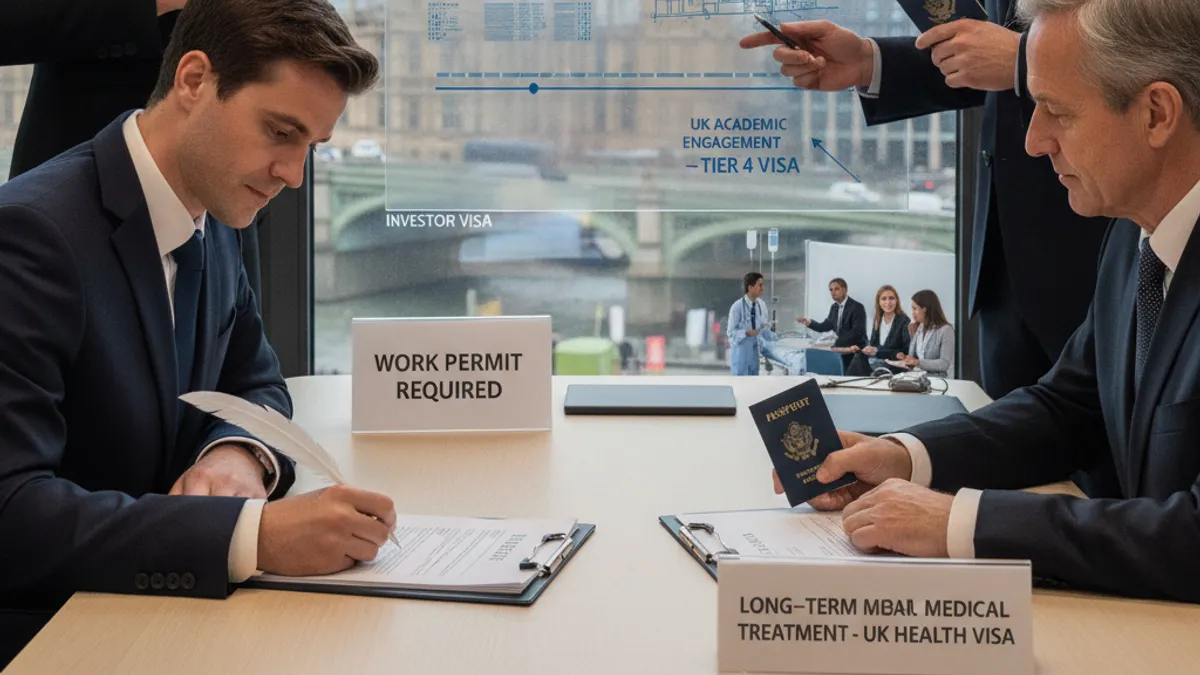
Beyond long-term stays, work, and study, certain specific activities even for shorter durations can necessitate a visa for US citizens, moving beyond the standard visitor permissions. The UK government views these activities as falling outside the broadly defined scope of general tourism or standard business meetings. It’s essential to research these thoroughly if your trip involves anything beyond typical sightseeing or attending a conference.
- Paid Performances: If you are coming to the UK to perform in public (e.g., as a musician, actor, or entertainer) and will be paid, you generally need a visa. The Creative Worker visa or the Permitted Paid Engagement visa might be applicable depending on the specifics.
- Journalistic Activities: While attending a conference or a brief business meeting is usually fine, undertaking active journalism, filming, or reporting for a US media outlet in the UK often requires a specific visa.
- Specific Business Activities: While short meetings or attending trade fairs are typically covered by visitor status, engaging in direct sales, providing services to UK clients, or setting up a business often requires a work or business visitor visa. The exact definition of "business visitor" can be nuanced.
- Volunteering: While some very short-term, low-impact volunteering might be permissible under visitor rules, longer or more structured volunteer roles often require a specific visa, such as the Youth Mobility Scheme (for specific age groups) or other relevant immigration routes.
- Medical Treatment: While visiting as a tourist and receiving minor, incidental medical treatment is usually fine, coming to the UK specifically for planned medical treatment often requires applying for a specific Medical Treatment visa.
Understanding the "Permitted Paid Engagement" Visa
This is a specific visa category designed for academics, scientists, doctors, dentists, or members of a similar profession, or accomplished speakers in their relevant field. It allows individuals to come to the UK for a specific paid engagement, such as giving a lecture or performing at a concert, at an academic institution, or for specific professional bodies.
- Purpose: To carry out a specific paid engagement, demonstration, or clinical attachment.
- Duration: Typically limited to one month.
- Sponsorship: You usually don't need sponsorship, but you must be invited by a recognized UK academic institution, professional body, or relevant organization.
- Evidence: You'll need a letter of invitation confirming the details of the engagement, including your remuneration. This is a distinct pathway from general business visitor rules.