Thank you for reading this post, don't forget to subscribe!
Current US immigration laws govern who can enter, live, work, study, seek protection, and become a permanent resident or citizen in the United States. The main rules come from federal law, especially the Immigration and Nationality Act, along with regulations, agency policies, court decisions, and applicable executive actions. The exact rules depend on a person’s immigration status, nationality, purpose of travel, and individual circumstances.
For people living in the United States or planning to move there, understanding current immigration laws can help prevent costly mistakes. US immigration rules cover tourist visas, employment visas, family sponsorship, green cards, asylum, naturalization, and removal proceedings. Different government agencies handle these matters, and a rule that applies to one immigration category may not apply to another.
As of October 26, 2026, US immigration policy continues to change through new regulations, agency guidance, court rulings, and enforcement decisions. One notable recent change is the revised public charge framework, which took effect on September 18, 2026, for covered applications. Other requirements, including visa eligibility, work authorization, admission at the border, and eligibility for relief from removal, depend on the applicable law and the facts of each case.
This guide explains the main US immigration laws, how they affect visitors and residents, and what people should check before taking action. It is general educational information, not individual legal advice. Because a small difference in status or filing date can change the result, readers should verify current requirements with the relevant federal agency or a qualified US immigration attorney.
What Are the Current Immigration Laws in the United States?
Current US immigration laws are the federal rules that determine who may enter the country, how long a person may stay, whether the person may work, and how someone may obtain permanent residence or citizenship. They also establish grounds for refusing admission, denying immigration benefits, detaining certain noncitizens, and removing people who violate applicable rules.
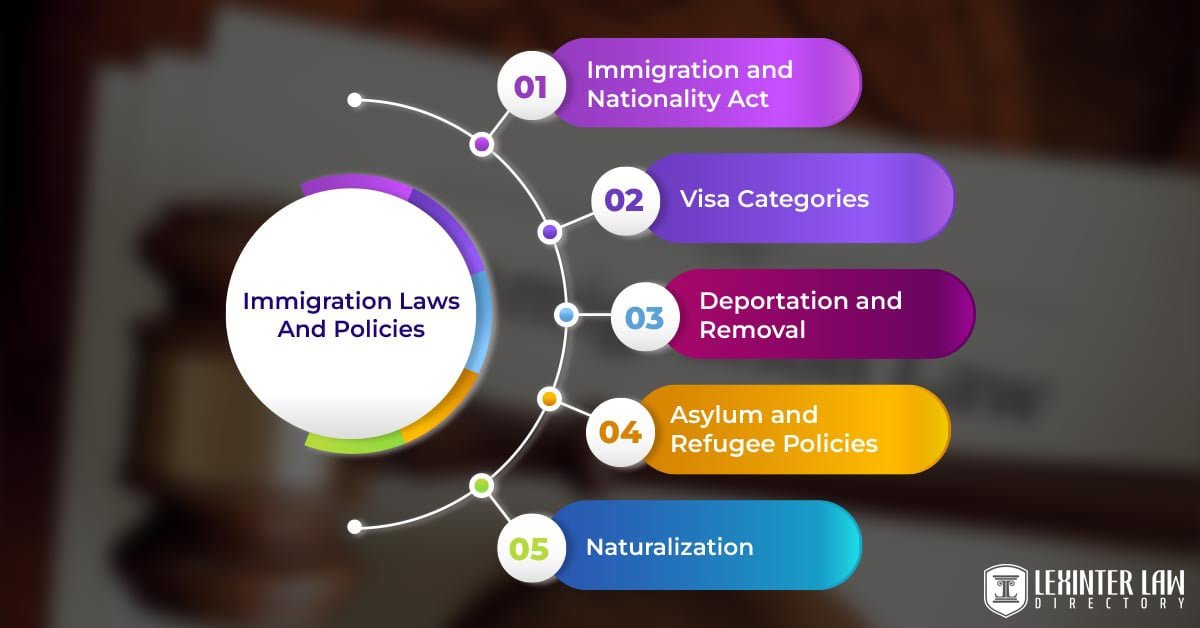
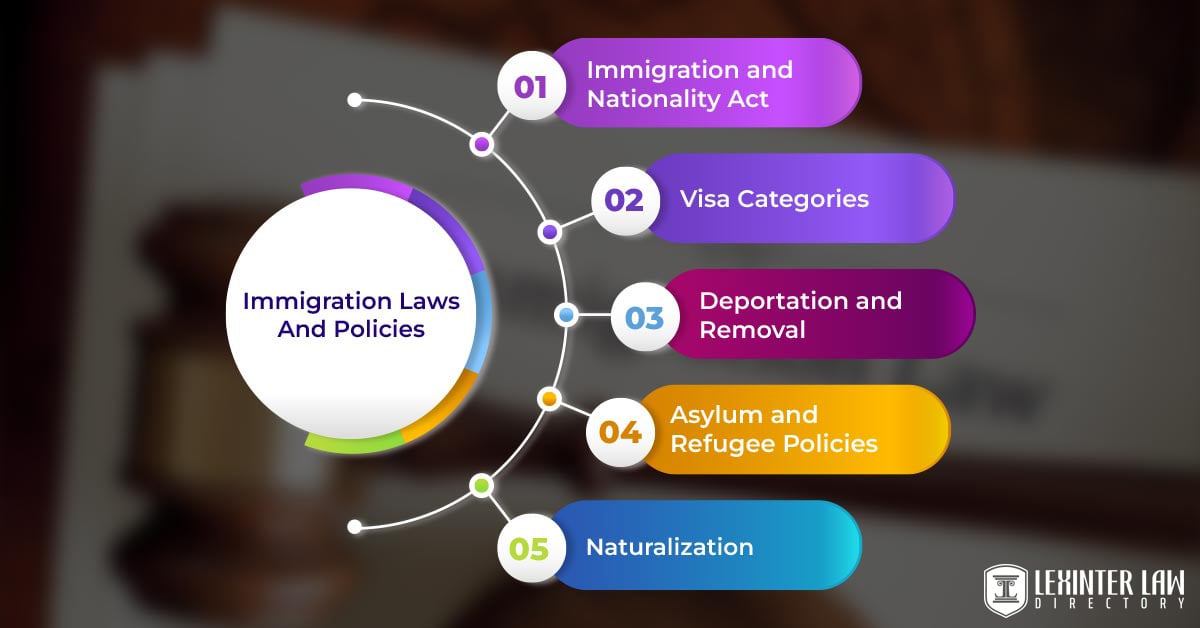
The Immigration and Nationality Act, commonly called the INA, is a core source of immigration law. Congress passes federal statutes, and authorized agencies issue regulations and guidance to administer them. Federal courts may also review immigration decisions and determine whether government actions comply with the law.
There is no single rule that applies to every immigrant or visitor. A US citizen sponsoring a spouse, an international student, a temporary worker, a person seeking asylum, and a tourist may face very different legal requirements. The correct answer therefore depends on the person’s category, immigration history, and the decision they need to make.
Immigration policy can change without every part of the law changing at the same time. A new agency policy may affect how applications are reviewed, while a court order may limit the policy’s use in certain cases. Readers should distinguish an enacted law from a proposed rule, a final regulation, an agency announcement, and a court order.
Source: ik.imagekit.io
Federal immigration law
Establishes the main rules for admission, visas, permanent residence, citizenship, inadmissibility, and removal.
Federal regulations
Explain how agencies administer statutory requirements, including application procedures and eligibility standards.
Agency guidance
Helps officers interpret and apply rules, but must be read within the limits of governing statutes, regulations, and court orders.
Court decisions
May interpret immigration statutes, review agency actions, or affect whether a policy can be applied in a particular case.
Which Agencies Enforce US Immigration Laws?
Several federal agencies share responsibility for immigration. US Citizenship and Immigration Services, or USCIS, handles many petitions and applications for benefits such as green cards, naturalization, and employment authorization. The Department of State processes US visas through embassies and consulates abroad.
Customs and Border Protection, or CBP, inspects travelers at ports of entry and administers border-related functions. Immigration and Customs Enforcement, or ICE, carries out specified immigration enforcement and detention functions. The Department of Justice’s Executive Office for Immigration Review, or EOIR, oversees immigration courts and the Board of Immigration Appeals.
Knowing which agency handles a matter can save time. A visa application abroad is generally a Department of State matter, while many applications to adjust status inside the United States are handled by USCIS. A case in immigration court follows a different process from an application pending with USCIS.
USCIS
Handles many immigration benefit applications, petitions, green cards, naturalization cases, and work authorization requests.
Department of State
Handles visa applications through US embassies and consulates and publishes visa-related instructions.
CBP and ICE
Perform different border inspection, immigration enforcement, investigation, and detention functions.
EOIR
Oversees immigration court proceedings and appeals within its legal authority.
Current US Visa Laws and Entry Requirements
US visa laws set requirements for foreign nationals who need permission to travel to the United States for a particular purpose. A visa generally allows its holder to travel to a US port of entry and request admission. It does not guarantee entry, a particular length of stay, or permission to work.
The type of visa a person needs depends on the reason for travel, nationality, and applicable immigration rules. A person visiting for tourism may qualify for a visitor visa or, if eligible, travel under the Visa Waiver Program. A student may need an F-1 or M-1 visa, while a person taking a qualifying temporary job may need an employment-based nonimmigrant visa.
Visa applicants generally must complete the relevant application, pay applicable fees, provide required documents, and meet the eligibility standards for their category. Consular officers may assess the purpose of travel, supporting evidence, and statutory grounds of inadmissibility. Some applicants may also need an interview or additional security review.
The period a person may remain in the United States is not necessarily the visa’s expiration date. For many nonimmigrants, the authorized period of stay is recorded in the admission record, often through Form I-94. Travelers should check that record and follow the conditions of admission rather than relying only on the date printed on a visa.
Source: neighborhoodlaw.org
Visitor visas
B-1 and B-2 classifications cover qualifying business visits and tourism or certain other temporary personal activities. They do not provide general permission to take a US job.
Student visas
F-1 and M-1 classifications have specific study, enrollment, and employment restrictions. Students must follow the rules that apply to their program and status.
Employment visas
Many temporary work categories require a qualifying job, an employer petition, or other authorization before employment may begin.
Visa Waiver Program
Eligible travelers from participating countries may seek short-term business or tourist admission after obtaining required travel authorization. Eligibility and permitted activities are limited.
Can You Enter the United States With an Expired Visa?
A visa’s expiration date and a person’s authorized stay are different matters. Someone who was lawfully admitted and remains within the authorized period may not need a valid visa stamp merely to continue that existing stay. However, an expired visa usually cannot be used for a new trip when a valid visa is required.
Before leaving the United States, travelers should consider whether they will need a new visa to return, whether their status allows the planned activities, and whether any pending application affects their travel options. Some people may qualify for limited exceptions, but these depend on detailed requirements.
Check Form I-94
Confirm the recorded admission information and authorized stay when applicable.
Check reentry requirements
Review the visa rules that apply to your nationality and immigration category before departing.
Review pending cases
Seek legal advice before international travel if an application, status violation, or removal issue could affect reentry.
Green Card Laws and Permanent Residence
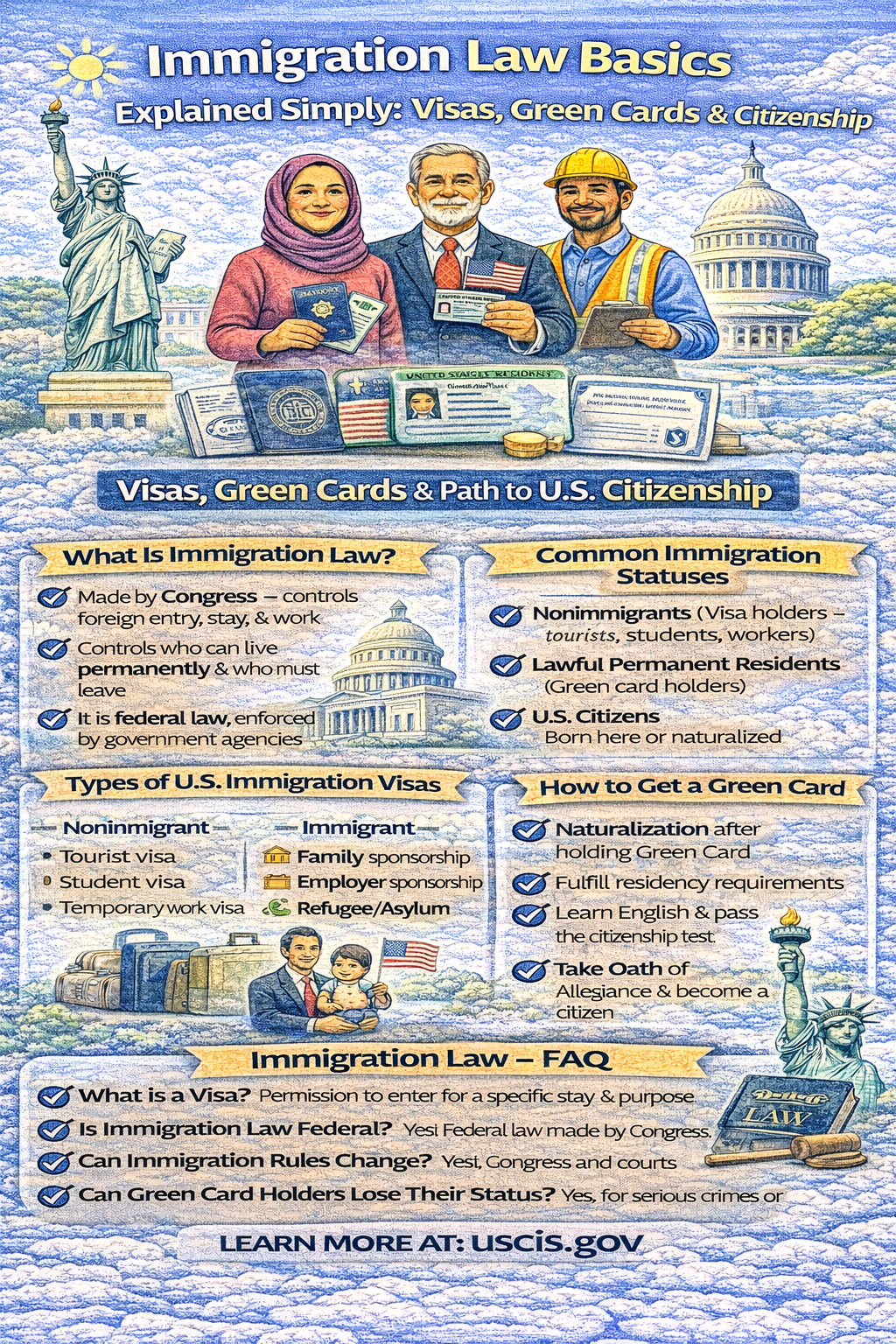
A green card gives a qualifying noncitizen lawful permanent resident status in the United States. Permanent residents can generally live and work in the country on an ongoing basis, subject to immigration law and the conditions of their status. A green card does not automatically make its holder a US citizen.
The main routes to permanent residence include family sponsorship, qualifying employment, certain humanitarian programs, and other categories created by law. Each route has its own eligibility rules, evidence requirements, and processing steps. Some applicants may apply through adjustment of status in the United States, while others complete immigrant visa processing abroad.
Family-based immigration often requires a qualifying relationship and a petition from an eligible US citizen or permanent resident. Employment-based cases may require an employer petition, labor certification, or proof of extraordinary ability or other qualifying criteria, depending on the category. Annual numerical limits and visa availability can affect when some applicants may move forward.
Approval is not automatic merely because a relative or employer submits a petition. Applicants may need to establish admissibility, provide financial sponsorship documents when required, complete medical examinations, and attend interviews. A criminal record, prior immigration violation, fraud finding, or other issue may affect eligibility and may require specialized legal analysis.
Source: lexinter.net
Family-based residence
Available to eligible relatives of US citizens and lawful permanent residents under the relevant family categories and priority rules.
Employment-based residence
Available through specified employment and professional categories, subject to eligibility and any applicable visa limits.
Humanitarian pathways
Certain refugees, asylees, and other eligible individuals may qualify for permanent residence under specific statutory provisions.
Other legal categories
Additional routes exist for certain special immigrants, diversity visa selectees, and other groups defined by law.
What Are the Main Duties of a Green Card Holder?
Lawful permanent residents must comply with federal and state laws, file required tax returns, and maintain accurate records. They should carry valid proof of permanent resident status when required and follow applicable procedures when renewing or replacing a green card.
Long trips outside the United States can raise questions about whether a person has abandoned permanent residence. The answer depends on the facts, including the length and purpose of travel and the person’s continuing ties to the country. A reentry permit may help in some circumstances, but it does not guarantee admission or resolve every residence issue.
Permanent residents who want US citizenship may later qualify to apply for naturalization. The usual route requires meeting residence, physical presence, good moral character, English, civics, and other statutory requirements, subject to exceptions and individual circumstances.
Maintain status
Keep required immigration documents current and comply with applicable legal obligations.
Plan international travel
Get legal advice before a long absence if it could affect permanent residence or eligibility for citizenship.
Review naturalization eligibility
Check residence periods, travel history, tax compliance, and other requirements before filing.
US Work Authorization and Employment Immigration Laws
US immigration law limits which noncitizens may work and what kinds of employment they may accept. A person’s right to work depends on citizenship, immigration status, the terms of a visa or other classification, and any required employment authorization document. Permission to remain in the United States does not always mean permission to work.
Some immigration categories authorize employment incident to status, while others require a separate application for an employment authorization document, commonly called an EAD. Certain employment-based visa categories also require an employer petition or other prior approval. Workers should confirm the exact authorization before beginning a job or changing employers.
Employers must follow federal employment verification requirements. The Form I-9 process is used to verify identity and employment authorization for covered hires. Employers may not demand particular documents simply because a worker appears foreign, and they must comply with applicable anti-discrimination rules.
Working without authorization can have serious consequences. Depending on the immigration category and circumstances, unauthorized employment may affect a future application, a change of status, or eligibility for certain benefits. A person who has started a job before receiving required approval should seek advice about the consequences rather than assume the problem will be overlooked.
Source: programclarity.com
Confirm work eligibility
Check whether the current immigration category authorizes the specific job and employer.
Review employer requirements
Some categories require an approved petition or additional authorization before employment starts.
Protect your documents
Keep copies of approval notices, employment authorization documents, and relevant immigration records.
Get advice before changing jobs
Changing employers, working additional hours, or taking a second job may affect eligibility in some categories.
Can a Visitor Work in the United States?
A standard tourist visa does not authorize ordinary employment in the United States. Business visitors may conduct certain permitted activities, such as attending meetings or negotiating contracts, but B-1 status is not a general work permit.
A visitor who receives a job offer should not assume that the offer itself grants work authorization. The person must determine whether a qualifying employment category is available and complete the required immigration process before starting work. The correct route depends on the job, employer, qualifications, and the person’s existing status.
Do not begin unauthorized work
Wait until all required approvals are in place.
Identify the correct category
Ask the employer or a qualified immigration attorney to assess the available visa or authorization route.
Asylum, Refugee Protection, and Humanitarian Immigration Laws
US immigration law provides several forms of humanitarian protection for people who meet specific legal requirements. Asylum, refugee admission, withholding of removal, and protection under the Convention Against Torture are distinct legal processes. They have different eligibility standards, application procedures, and consequences.
Asylum may be available to a person who meets the statutory definition of a refugee and is not barred from relief. The legal standard generally involves persecution or a well-founded fear of persecution based on race, religion, nationality, membership in a particular social group, or political opinion. Eligibility depends on the evidence and all applicable statutory and regulatory rules.
Many asylum applicants must follow a one-year filing deadline measured from their last arrival in the United States, unless an exception applies. Changed circumstances or extraordinary circumstances may affect the deadline analysis, but applicants should not assume an exception applies without examining the facts. Delaying an application can make a case harder to pursue.
Refugee admission usually involves processing outside the United States through a separate program. Withholding of removal and Convention Against Torture protection may prevent removal to a country where the applicable legal standard is met, but they do not provide the same status or benefits as asylum. A person who fears return should obtain qualified legal assistance to identify the correct process.
Source: lirp.cdn-website.com
Asylum
Protection available to qualifying individuals who meet the legal requirements and are not subject to applicable bars.
Refugee admission
A separate humanitarian process generally conducted outside the United States under applicable admission procedures.
Withholding of removal
A form of protection with a higher burden of proof than asylum and different immigration consequences.
Convention Against Torture protection
Protection that may apply when a person establishes the required likelihood of torture under the governing legal standard.
How Do Recent Asylum Procedure Changes Affect Applicants?
Asylum procedures can change through regulations, agency guidance, and court orders. A Department of Homeland Security interim final rule effective July 28, 2026, addresses referrals of certain affirmative asylum applications from USCIS to the Department of Justice’s immigration court system without an interview. USCIS may still conduct an interview before granting or denying asylum.
The rule does not mean every asylum application will be referred without an interview. Its application depends on the rule’s scope and the circumstances of the case. Applicants should read official notices carefully, keep copies of every filing, and respond to requests or hearing notices by the stated deadlines.
People seeking protection should not rely on social media summaries or assume that one procedural change determines their eligibility. A qualified immigration attorney or accredited representative can help review filing deadlines, evidence, procedural options, and the effect of applicable court orders.
Keep a complete record
Retain applications, supporting evidence, delivery confirmations, notices, and interview or hearing correspondence.
Track deadlines
Review official notices promptly and confirm whether a deadline or procedural requirement applies to your case.
Seek qualified help
Humanitarian cases can involve complex factual and legal issues that warrant individualized advice.
Deportation, Detention, and Removal Proceedings
US immigration law allows the government to seek removal of noncitizens who are legally removable. Common issues may include certain immigration status violations, unlawful entry, fraud or misrepresentation, and specified criminal convictions. The legal consequences vary, and not every allegation automatically results in removal.
Removal proceedings generally begin when the Department of Homeland Security files a Notice to Appear with the immigration court after serving the document on the person. The notice identifies the government’s allegations and charges. A hearing notice may provide the hearing date if it is not already listed.
An immigration judge considers the issues within the court’s authority and may decide whether the person is removable and whether a form of relief is available. Depending on the case, potential options may include asylum, cancellation of removal, adjustment of status, certain waivers, or other forms of protection. Eligibility is fact-specific, and some remedies have strict requirements.
Some noncitizens may be detained during immigration proceedings. Whether release is available and whether an immigration judge can review custody depend on the governing statute and the person’s circumstances. A bond hearing, when legally available, is separate from the main removal case.
People in removal proceedings should not ignore court notices or assume a case has been canceled because a hearing date changed online. Failure to appear can have serious consequences, including an order issued in absentia when the legal conditions are met. Anyone who receives a Notice to Appear should promptly obtain the case information and seek qualified legal help.
Source: lexinter.net
Read every notice
Check the allegations, charges, hearing information, and response requirements.
Attend required hearings
Follow the instructions in official notices and confirm changes through the immigration court’s official information systems.
Prepare evidence
Organize documents that may address the government’s allegations or support a legally available form of relief.
Review appeal deadlines
Certain immigration judge decisions may be appealed to the Board of Immigration Appeals, often subject to a 30-calendar-day deadline.
What Rights Do People Have in Immigration Court?
People in immigration court proceedings have important procedural rights. These can include the right to obtain representation at no expense to the government, present evidence, challenge evidence, and appeal certain decisions. The precise rights and available procedures depend on the type of proceeding and governing law.
The right to an attorney at no expense to the government means that the government generally does not have to provide a free lawyer in ordinary removal proceedings. People who cannot afford counsel may seek nonprofit legal services, law school clinics, or other qualified assistance.
A person should not sign documents they do not understand or rely on an unlicensed consultant who promises a guaranteed outcome. Immigration law is complex, and an error in a court filing or missed deadline can have lasting effects.
Seek legal representation
Use a licensed attorney or a representative authorized by the Department of Justice.
Preserve documents
Keep copies of court papers, evidence, receipts, and all correspondence.
Confirm the court’s instructions
Use official immigration court resources to check hearing information and filing requirements.
The 2026 Public Charge Rules and Green Card Applications
Public charge is a ground of inadmissibility in US immigration law that may affect certain applicants seeking a visa, admission, or adjustment of status. The analysis does not apply to every immigration category, and Congress has established exemptions for specified groups. Applicants must identify whether the rule applies to their particular case before drawing conclusions.
A major change took effect on September 18, 2026. The Department of Homeland Security rescinded the 2022 public charge regulation and issued updated guidance on how USCIS officers should assess the statutory ground of inadmissibility. The revised approach calls for case-by-case consideration of relevant facts under the governing law and guidance.
The statutory factors include age, health, family status, assets and financial resources, and education and skills. Officers may also consider other relevant evidence and an affidavit of support when the law permits. Under the revised guidance, the treatment of certain means-tested public benefits differs according to when the benefits were received, subject to the applicable rules and exceptions.
The change does not mean that every person who has received public assistance will be denied a green card. Nor does it mean that benefits have no possible relevance to any immigration decision. The legal category, benefit type, receipt date, exemption status, financial circumstances, and other facts can affect the analysis.
The new framework has also faced legal challenges. Because court orders can affect how a rule operates, applicants should check for current litigation and agency instructions before filing. People with pending adjustment applications should confirm which form edition and filing instructions apply to their submission date.
Source: neighborhoodlaw.org
Check whether the rule applies
Some applicants and immigration categories are exempt from the public charge ground of inadmissibility.
Review the effective date
The revised framework applies to covered adjustment applications postmarked or electronically submitted on or after September 18, 2026, subject to the governing rules.
Assess the complete record
The analysis may involve financial resources, family circumstances, health, education, skills, and other relevant facts.
Verify current instructions
Check the latest USCIS Policy Manual and form instructions because the rule and related litigation may affect individual cases.
Does Receiving Public Benefits Automatically Prevent a Green Card?
No. Receiving a public benefit does not automatically make every applicant ineligible for permanent residence. The public charge analysis applies only where the law makes it relevant, and the result depends on the governing standards and the applicant’s circumstances.
Under the guidance effective September 18, 2026, the treatment of certain means-tested benefits received on or after that date may differ from the treatment of benefits received earlier. The rules also include exemptions and category-specific provisions. Applicants should not withdraw a benefit or abandon an immigration application based only on a general online statement.
Before making a decision about benefits, a pending green card application, or a new filing, obtain advice from a qualified immigration attorney or a reputable nonprofit legal service familiar with the current framework.
Avoid broad assumptions
Public charge rules do not apply to all immigration categories in the same way.
Check benefit dates and type
The applicable guidance distinguishes between some benefits based on when they were received.
Review exemptions
Certain humanitarian and other categories are exempt under the governing law.
US Citizenship and Naturalization Requirements
Naturalization is the legal process through which an eligible lawful permanent resident or another person who qualifies under a specific statutory route becomes a US citizen. The standard process requires more than holding a green card for a set period. Applicants must meet all requirements that apply to their category.
Many applicants must have been lawful permanent residents for five years before filing. Some qualifying spouses of US citizens may be eligible under a three-year rule, subject to the statutory conditions. Special rules may apply to military service, certain spouses of US citizens employed abroad, and other categories.
The usual naturalization process includes filing Form N-400, attending a biometrics appointment if required, completing an interview, and meeting applicable English and civics requirements. USCIS may review residence, physical presence, tax history, criminal history, and other facts relevant to eligibility.
An applicant must also meet the applicable good moral character standard and comply with other statutory conditions. Certain criminal conduct, false claims to citizenship, past immigration fraud, or other issues may affect eligibility. A person with a complex immigration or criminal history should obtain legal advice before filing.
Approval generally leads to an oath ceremony, after which the person becomes a US citizen if all requirements are completed. Naturalization can provide rights and responsibilities that differ from permanent residence, including eligibility for a US passport and participation in federal elections when otherwise qualified.
Source: ik.imagekit.io
Confirm the correct residence period
Determine whether the standard five-year period, a qualifying three-year route, or another rule applies.
Review travel and residence
Extended absences may affect continuous residence or physical presence.
Prepare for the interview
Review the application, supporting records, and applicable English and civics requirements.
Resolve eligibility concerns
Get legal advice about criminal history, tax issues, prior misrepresentations, or other potential barriers.
Can a Green Card Holder Apply for Citizenship Immediately?
Usually not. Most applicants must satisfy a required period of permanent residence and other eligibility rules before applying. The correct filing date depends on the applicant’s category, residence history, and any permitted early-filing provision.
A person should also confirm that long trips abroad have not affected continuous residence and that all other requirements are met. Filing too early or omitting relevant facts may delay the case or lead to a denial.
Calculate eligibility carefully
Use the official USCIS naturalization guidance and form instructions to determine when filing is permitted.
Keep supporting records
Maintain green card, travel, tax, and other documents that may support the application.
How to Check the Latest Immigration Laws Before Applying
The safest way to check current US immigration laws is to start with the official agency responsible for the issue. Immigration rules may change between the time a person begins preparing an application and the day it is filed. Using the latest instructions helps reduce the risk of an incorrect form, an avoidable delay, or a missed deadline.
Start by identifying the exact immigration question. A person applying for a visa abroad should review Department of State information, while someone filing a green card or naturalization application will usually need USCIS guidance. People with court cases should use EOIR resources and follow the instructions in their court notices.
Next, check the date and legal status of any announcement. A proposed regulation is not necessarily a final rule, and an agency press release may not contain every condition or exception. Read the underlying rule or official guidance when a new policy could change eligibility, filing requirements, or the outcome of a case.
Finally, compare the official requirements with the facts of the case. Check the form edition, filing address, fees, supporting evidence, deadline, and any category-specific instructions. If a court order or pending lawsuit may affect the rule, seek qualified legal advice rather than relying on an outdated summary.
Source: lexinter.net
Step 1: Identify the immigration category
Determine whether the issue concerns a visa, green card, work authorization, asylum, naturalization, or removal proceedings.
Step 2: Use the correct official agency
Check USCIS, the Department of State, DHS, CBP, ICE, or EOIR according to the issue.
Step 3: Verify dates and status
Confirm whether the rule is proposed, final, effective, delayed, blocked by a court, or limited to certain applications.
Step 4: Review the full instructions
Check the latest forms, filing fees, evidence requirements, deadlines, and eligibility conditions.
Step 5: Get qualified help when needed
Consult a licensed immigration attorney or an authorized nonprofit representative for complicated or high-risk cases.
Where Can You Find Official Immigration Information?
USCIS publishes immigration benefit forms, eligibility guidance, processing information, and its Policy Manual. The Department of State publishes visa instructions and information about consular processing. DHS agencies publish guidance on border procedures and enforcement, while EOIR provides immigration court information and practice materials.
The Federal Register is useful for reviewing final regulations, proposed rules, effective dates, and official agency notices. Court orders and opinions may also affect how an immigration policy applies. A complete review should consider the current official rule and any relevant judicial decisions.
USCIS
Use uscis.gov for benefit applications, naturalization, green cards, employment authorization, and the USCIS Policy Manual.
Department of State
Use travel.state.gov for visa categories, consular processing, and visa-related guidance.
EOIR
Use justice.gov/eoir for immigration court information, procedures, and case-related resources.
Federal Register
Use federalregister.gov to review published regulations and official notices.
Common Immigration Law Mistakes to Avoid
Many immigration problems arise because a person misunderstands a deadline, assumes one document grants every type of permission, or relies on advice that does not apply to the person’s category. Careful recordkeeping and early review can help prevent avoidable errors.
One common mistake is treating a visa expiration date as the authorized end of a stay. Another is assuming that filing an application automatically extends status or grants work authorization. These effects depend on the specific filing, the applicant’s existing status, and the applicable rules.
Applicants should also avoid giving false information, submitting altered records, or hiding prior immigration history. Inaccurate statements can create serious problems, including possible fraud or misrepresentation findings. If a prior application contains an error, seek qualified advice about how to correct the record.
Another risk is relying on an unlicensed immigration consultant who promises guaranteed approval. In the United States, not every person who offers immigration assistance is authorized to provide legal advice. Use a licensed attorney or a representative accredited by the Department of Justice when legal assistance is needed.
Finally, do not ignore a government notice because it appears confusing or seems inconsistent with an earlier message. Contact the issuing agency through official channels, keep a copy of the communication, and seek legal advice if the notice affects a deadline, hearing, or immigration status.
Source: lirp.cdn-website.com
Do not miss deadlines
Calendar filing dates, interview appointments, court hearings, and response deadlines as soon as notices arrive.
Do not work without authorization
Verify that the current status and any required approvals permit the intended employment.
Do not assume approval is automatic
A petition, receipt notice, or pending application does not necessarily grant a visa, status, or work permission.
Do not rely on false guarantees
No legitimate representative can guarantee a government decision in an individual immigration case.
Keep copies of all records
Save applications, receipts, approval notices, travel records, and correspondence in a secure place.
When Should You Contact an Immigration Attorney?
Legal help is especially valuable when a person receives a Notice to Appear, faces detention, has a criminal record, has been accused of fraud, has a prior removal order, or may have violated immigration status. These issues can affect eligibility and may require careful review of statutes, regulations, and case law.
An attorney may also help when an application is denied, a deadline has passed, a visa has been refused, or an applicant is unsure whether travel could affect a pending case. People seeking asylum or other humanitarian protection should seek qualified assistance as early as possible.
Before hiring a representative, confirm that the person is licensed or otherwise authorized to provide immigration legal services. Ask about the scope of the work, fees, deadlines, and the documents needed. Keep copies of the agreement and all filings.
High-risk case
Seek prompt legal help for detention, removal proceedings, criminal issues, or suspected fraud.
Complex application
Get advice when eligibility depends on prior entries, status violations, waivers, or overlapping immigration categories.
Denied or delayed case
Review the official notice to determine whether a motion, appeal, new filing, or other response may be available.
Frequently Asked Questions
Q
What are the current immigration laws in the USA in 2026?
US immigration law in 2026 continues to govern visas, admission, green cards, work authorization, asylum, citizenship, and removal proceedings. The Immigration and Nationality Act remains a central statute, supplemented by federal regulations, agency guidance, and court decisions. The applicable requirements depend on the immigration category and individual circumstances.
One major recent development is the public charge framework that took effect on September 18, 2026, for covered applications. Other rules may also change, so applicants should check current official guidance before filing or traveling.
Q
Can immigration laws change while an application is pending?
Yes. A new law, regulation, agency policy, or court order may affect an application that has not yet been decided. Whether a change applies to a pending case depends on the wording of the rule, its effective date, any transition provisions, and applicable court orders.
Applicants should read official notices and check the instructions that apply to their filing date. If a change may affect eligibility or require a response, a qualified immigration attorney can help assess the available options.
Q
Does having a valid US visa guarantee entry?
No. A visa generally permits its holder to travel to a US port of entry and request admission. Customs and Border Protection officers determine whether the traveler may be admitted under applicable law.
Travelers should carry documents that support the purpose of the trip, follow the conditions of their immigration category, and verify the authorized period of stay after admission when applicable.
Q
Can a person work in the United States while an immigration application is pending?
Not automatically. Some applicants may qualify for employment authorization or may already have permission to work under their immigration category. Others must wait for the required approval before beginning employment.
A receipt notice alone does not generally provide universal work authorization. Applicants should check the rules for their category and any applicable extension or employment authorization provisions before accepting a job.
Q
Do the 2026 public charge rules apply to every immigrant?
No. The public charge ground of inadmissibility applies only to covered immigration categories, and the law provides exemptions for specified groups. The September 18, 2026, framework also uses a case-by-case assessment under the applicable statute and USCIS guidance.
The type and timing of benefits, the applicant’s financial and family circumstances, and other relevant facts may matter. People should obtain individualized advice before changing benefits or making decisions about a pending immigration application.
Q
What should I do if I receive a deportation or immigration court notice?
Read the notice carefully, identify the hearing date and allegations, and keep a copy of every document. Use official immigration court resources to confirm case information and follow all required deadlines. Do not ignore a hearing notice, even if you believe the government made a mistake.
Seek help promptly from a licensed immigration attorney or an authorized nonprofit representative. Depending on the case, the person may have legal defenses, eligibility for relief, or a right to appeal, but deadlines and available options vary.
Q
Where can I check official US immigration rules?
Use USCIS.gov for green cards, citizenship, work authorization, and many immigration benefit applications. Use Travel.State.gov for visa information and consular processing. For immigration court proceedings, consult Justice.gov/eoir.
The Federal Register publishes official regulations and notices. Check the latest form edition, effective date, and relevant court orders before relying on a policy summary.
✦ Wrapping Up
Conclusion
Current US immigration laws determine who can enter the United States, how long noncitizens may stay, which activities they may perform, and whether they can obtain permanent residence or citizenship. The rules also cover humanitarian protection, work authorization, public charge inadmissibility, and removal proceedings. The Immigration and Nationality Act provides the core statutory framework, while regulations, agency guidance, and court decisions help determine how the rules apply.
As of October 2026, immigration requirements must be checked against the latest official information. The public charge framework effective September 18, 2026, is one example of a recent change that may affect covered applicants. Eligibility, exemptions, filing dates, and court orders can alter the result, so general summaries should not replace a review of the rules that govern an individual case.
The most practical approach is to identify your immigration category, find the responsible federal agency, review the current instructions, and keep accurate records of every application and notice. If you face removal proceedings, a possible status violation, a criminal issue, a denied application, or a complex eligibility question, seek qualified legal advice before taking action.
💡 Key Takeaway
Before filing an immigration application, traveling internationally, accepting employment, or responding to an immigration notice, verify the current rules through USCIS.gov, Travel.State.gov, Justice.gov/eoir, or the relevant federal agency. For urgent or complex cases, contact a licensed US immigration attorney or an authorized nonprofit legal representative.