Thank you for reading this post, don't forget to subscribe!
To get a US travel visa, identify the correct visa category, complete Form DS-160 online, pay the required fee, schedule an appointment, prepare your supporting documents, and attend your visa interview when required. The consular officer will decide whether you qualify.
For travelers planning a trip to the United States, getting the right visa is one of the first steps. Whether you want to see New York City, visit family in California, explore national parks, or attend a short business meeting, your travel purpose determines which entry option you may need. Most visitors who do not qualify for the Visa Waiver Program must apply for a visitor visa before traveling.
The B-2 visa covers tourism, vacations, visits with friends or relatives, and certain medical trips. The B-1 visa covers permitted temporary business activities, while the combined B-1/B-2 visa can cover both types of visits. The US Department of State manages visa applications through American embassies and consulates, while US Customs and Border Protection decides whether travelers may enter at a US port of entry.
The process is manageable when you follow the right steps and prepare early. You should understand the application fee, appointment rules, required documents, and reasons an application may be refused before you begin. No website, travel agent, invitation letter, or financial document can guarantee approval.
This guide explains how to get a US travel visa, how to complete the application, what to bring to an interview, and what happens after a decision. It also covers common mistakes, application costs, processing delays, and practical ways to present a clear and truthful application.
The first step in getting a US travel visa is choosing the category that matches your planned activities. Applying for the wrong visa can delay your plans or lead to a refusal. For a short trip, most applicants will consider the B-2 tourist visa, the B-1 business visa, or the combined B-1/B-2 visitor visa.
A visitor visa is a nonimmigrant visa. This means it is intended for a temporary visit rather than permanent residence. The purpose of your trip, your personal circumstances, and the rules for the visa category all matter when the consular officer reviews your application.
Some travelers may qualify to visit the United States under the Visa Waiver Program. Eligible nationals can apply for Electronic System for Travel Authorization approval, known as ESTA, for qualifying tourism or business visits of up to 90 days. ESTA is not a visa, and approval does not guarantee entry.
Source: blog.journeymytrip.com
B-2 tourist visa
Generally used for vacations, sightseeing, visiting friends or relatives, and qualifying medical treatment.
B-1 business visa
Generally used for permitted activities such as attending business meetings, negotiating contracts, and participating in qualifying professional conferences. It does not authorize ordinary US employment.
B-1/B-2 visitor visa
Covers qualifying temporary business and tourism activities, subject to the conditions of the visa and US immigration law.
Visa Waiver Program and ESTA
May be available to eligible nationals of participating countries for qualifying short visits. Applicants must meet the program’s requirements and receive ESTA approval before boarding.
When a tourist visa is not the right option
A visitor visa does not authorize every kind of activity. If you intend to study for academic credit, accept a job in the United States, perform paid work, or move there permanently, you generally need a different immigration category. The correct option depends on your circumstances and intended activity.
Travel for the primary purpose of giving birth in the United States to obtain US citizenship for a child is not permitted under a visitor visa. If your plans involve a complex medical, work, study, or immigration situation, review the relevant official visa rules before applying.
For employment
Review the appropriate temporary worker or employment-based immigration category.
For academic study
Review the student visa requirements that apply to your course and institution.
For permanent residence
Explore the relevant immigrant visa or permanent residence process instead of relying on a visitor visa.
Check whether you need a visa
Visa rules depend on nationality, travel purpose, passport type, and individual eligibility. Canadian and Bermudian citizens generally do not need a nonimmigrant visa for ordinary tourism, although exceptions and special requirements can apply. Travelers from Visa Waiver Program countries may qualify for ESTA, subject to additional restrictions.
Use the US Department of State website at travel.state.gov to check visitor visa rules. If you qualify for ESTA, use the official US Customs and Border Protection website at esta.cbp.dhs.gov. Avoid unofficial sites that charge extra fees without providing a government service.
2. Check the Basic Requirements Before Applying
Before completing your application, confirm that you have a valid passport, a clear reason for visiting the United States, and enough information to explain how you will pay for the trip. You should also be able to describe your plans and explain why the visit is temporary. These factors help establish whether you qualify for a visitor visa.
There is no single document that guarantees approval. Consular officers assess applications individually, considering the applicant’s circumstances, travel plans, financial resources, and ties outside the United States. A person’s job, home, family responsibilities, education, or business commitments may help explain why they intend to return after a temporary visit.
Your application should reflect your real circumstances. Do not create documents, exaggerate income, hide previous visa refusals, or claim to have a job or property that you do not have. False information can cause a refusal and may create more serious immigration problems.
Source: nomadgirl.co
A valid passport
Check its expiration date and the passport validity rules that apply to your nationality and travel circumstances.
A genuine travel purpose
Know why you are visiting, which places or people you plan to visit, and how long you expect to stay.
A realistic travel budget
Estimate airfare, accommodation, food, transportation, insurance, and other expected costs.
Evidence of circumstances abroad
Prepare relevant records of employment, education, business, family responsibilities, or other commitments when they help explain your situation.
Accurate application details
Make sure your personal information, travel history, employment information, and stated purpose are truthful and consistent.
How much money do you need for a US tourist visa?
There is no universal minimum bank balance that guarantees a US tourist visa. The funds needed depend on the planned trip, its length, accommodation costs, who will pay, and the applicant’s wider financial circumstances.
For example, a hypothetical 10-day trip with a $1,200 airfare, $1,000 accommodation budget, $500 for food, $300 for local transportation, and $400 for other expenses would have an estimated total of $3,400. This is only a budgeting example, not a government financial threshold or an approval formula.
Your financial evidence should match your actual situation. If a relative or another person will cover part of your costs, explain that arrangement honestly and bring relevant supporting information if requested. Financial support from another person does not remove the need to qualify for the visa.
Bank statements
May help show available funds and account activity when relevant to the application.
Employment or business records
May help explain income, professional commitments, and your circumstances outside the United States.
Trip cost estimates
Can help you prepare a realistic budget and explain how you intend to pay for the visit.
3. Complete Form DS-160 Online
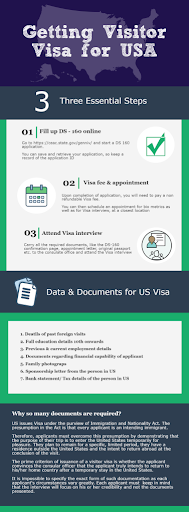
Form DS-160 is the standard online nonimmigrant visa application for most US visitor visa applicants. You submit it electronically through the US Department of State’s Consular Electronic Application Center. The information you provide helps the consular officer assess your eligibility.
Complete the form carefully and answer each question truthfully. You will need information from your passport, details about your planned visit, and information about your education, work history, and previous travel where applicable. Depending on your circumstances, the form may request additional information.
The form is only one part of the process. Submitting it does not automatically schedule your interview or mean that your visa has been approved. After submission, you must follow the appointment and payment instructions for the embassy or consulate where you intend to apply.
Source: stressedmum.co.uk
Open the official DS-160 website
Use the Consular Electronic Application Center linked from travel.state.gov rather than an unverified third-party form service.
Select your application location
Choose the embassy or consulate where you plan to complete the visa process, following its current instructions.
Enter your personal details
Use your passport and other records to enter your full name, date of birth, nationality, and other requested information accurately.
Explain your trip
Provide the requested travel dates, purpose, planned address or accommodation details, and other relevant information. If plans are not final, answer according to the form’s instructions.
Review your answers
Check spelling, dates, passport information, employment details, and travel history before submitting the application.
Submit and save the confirmation
After submission, print or save the DS-160 confirmation page with its barcode. Keep your application details for reference.
What if you make a mistake on the DS-160?
Do not ignore a significant error. The correct way to address it depends on the type of mistake, whether the form has been submitted, and the local appointment system. Review the Department of State’s DS-160 frequently asked questions and contact the relevant embassy or consulate if you need clarification.
A correction may require a new application or an update to the application associated with your appointment. Do not assume that changing information in one system automatically updates every other system. Follow the instructions for your specific case.
Before submission
Review and correct the information before sending the form.
After submission
Check the official correction instructions and determine whether you must submit a replacement DS-160 or update your appointment record.
4. Pay the US Travel Visa Application Fee
The standard application processing fee for a B-1, B-2, or B-1/B-2 visitor visa is currently $185 per applicant. This fee is generally nonrefundable, even if the consular officer refuses the application. Check the official Department of State fee page and your local embassy’s instructions before paying because fee rules and payment procedures can change.
The amount you pay in local currency, available payment methods, and the steps needed to connect your payment to your appointment depend on the country where you apply. Follow the official payment process for that location. Keep your payment receipt or confirmation if the local system requires it.
Some nationalities may also face a visa issuance fee after approval, depending on the applicable reciprocity schedule. Other costs may include passport delivery, travel to the interview, photographs, or document preparation. These additional expenses are separate from the standard application processing fee.
Source: blogger.googleusercontent.com
Standard B visa application fee
$185 per applicant under the current published fee schedule. Confirm the amount before payment.
Possible issuance fee
May apply after approval for certain nationalities. Check the Department of State’s reciprocity information.
Other trip-related expenses
May include transportation, document delivery, photographs, and any required supporting services.
How to avoid payment problems
Use only the payment method and payment portal listed in the official instructions for your application location. Before paying, check the amount, currency, reference number, and any deadline stated by the appointment system.
Do not pay an unverified agent who promises guaranteed approval or special access to an interview. No private company can control a consular officer’s decision. If a payment appears delayed or an appointment account does not recognize it, follow the official support procedure instead of paying a second time without checking.
Save the receipt
Keep a copy of the payment confirmation and any reference number.
Check local rules
Payment and appointment procedures vary by embassy and may be updated.
5. Schedule Your Visa Appointment
After submitting Form DS-160, follow the official instructions to create or access your appointment account, pay the required fee, and schedule the next available appointment. The exact sequence varies by location, so use the website of the US embassy or consulate where you will apply.
Most visitor visa applicants must attend an interview, although limited exceptions may apply. Even when an interview waiver seems possible, the consular section may still require an applicant to appear in person. Check the current rules for your location instead of relying on an old online post or another applicant’s experience.
Schedule as early as practical. Appointment availability depends on the location, visa category, season, and local demand. The Department of State publishes estimated visa interview wait times, but estimates can change as appointments are released and applicants reschedule.
Source: i.pinimg.com
Use the official appointment system
Follow the process linked from the relevant US embassy or consulate website.
Choose the correct appointment
Confirm that the appointment is for the appropriate visa category and applicant.
Review the confirmation
Check the appointment date, time, location, applicant details, and instructions for entry.
Check document delivery rules
Find out how the passport will be returned if the application is approved and whether you must select a delivery or pickup option.
Where should you apply?
The Department of State generally directs nonimmigrant visa applicants to schedule interviews in their country of nationality or residence. Current guidance published in July 2026 emphasizes applying in one of those locations, subject to designated-post rules for countries where routine processing is unavailable.
Applying in a third country can be more difficult because the consular section may have limited information about your circumstances or may not be able to accommodate nonresidents. Before choosing a location, review the current official policy and make sure you meet any residence requirements.
Country of nationality
Often the appropriate place to apply when you are living elsewhere temporarily.
Country of residence
Generally appropriate when you can demonstrate that you legally reside there.
Another country
Check current restrictions, local capacity, and eligibility before planning an application outside your country of nationality or residence.
How long does a US travel visa take?
There is no single processing time for every US visitor visa application. The total time can include waiting for an appointment, attending the interview, completing any required administrative processing, and returning the passport after a decision.
Check the official global visa wait-time page for the post where you plan to apply. That estimate does not guarantee the date you will receive an interview or the time needed to complete your case. Avoid buying nonrefundable travel arrangements before you have the required travel authorization.
Interview wait
The time until an appointment becomes available varies by post and can change.
Administrative processing
Some cases need additional review after the interview, which can add time.
Passport return
Delivery or collection takes additional time after the case reaches the relevant stage.
6. Prepare Your Documents for the Interview
Prepare the documents required by the embassy or consulate where you will attend your interview. For a standard visitor visa application, the core items usually include your passport, DS-160 confirmation page, and any payment receipt required by the local process. You may also need a photograph that meets the official specifications if your digital photo upload fails.
Additional documents can help explain your travel purpose, ability to pay, and intent to leave the United States after your temporary stay. There is no universal document package that guarantees a positive decision. Bring records that are relevant, genuine, current, and consistent with your application.
An invitation letter from a US friend or relative is not required for a visitor visa. The Department of State explains that applicants must qualify based on their own circumstances and ties outside the United States rather than assurances from US family or friends. A host’s letter may help explain the visit, but it cannot replace the applicant’s own eligibility.
Source: lh3.googleusercontent.com
Passport
Bring the passport required by the local instructions and check its validity before the appointment.
DS-160 confirmation page
Bring the confirmation page with the barcode, not just a screenshot of an unfinished application.
Payment confirmation
Bring the receipt if the appointment instructions require it.
Travel plan
Be ready to explain your intended dates, destination, accommodation, and main activities.
Financial evidence
Bring relevant records showing how the trip will be funded when requested or useful for explaining your circumstances.
Employment, education, or business records
Use genuine documents that help establish your current circumstances and commitments outside the United States.
Previous passports or travel records
Bring them if required or relevant to questions about your travel history.
How to organize your documents
Place your mandatory documents together and arrange supporting records so you can find them quickly. Make sure names, dates, and other details match the information on your application. If your documents use different formats or languages, check whether the embassy requires a translation.
Do not submit false bank statements, fabricated employment letters, altered travel records, or misleading information. Material misrepresentation can have serious immigration consequences. If you discover an inconsistency in your records, address it honestly and seek qualified immigration advice if the issue could affect eligibility.
Check consistency
Compare passport details, application answers, travel dates, and supporting records.
Follow local instructions
Check whether original documents, copies, translations, or a specific photograph format are required.
7. Attend the US Visa Interview
The visa interview gives a consular officer an opportunity to assess whether you qualify for the visitor visa. Answer questions directly, truthfully, and in a way that reflects your actual travel plans. The officer may ask about your purpose of travel, intended length of stay, employment, finances, family circumstances, or previous visits to the United States.
You do not need to memorize a speech. It is more useful to understand your plans and give clear answers that match your DS-160 form. If you do not know an exact detail, do not guess or invent an answer. Explain what you know and clarify uncertainty when needed.
Follow the instructions for entry to the embassy or consulate, including rules about prohibited items, arrival times, and required documents. Fingerprints are generally collected as part of the process, although procedures can vary by location and applicant.
Source: blog.journeymytrip.com
Why are you visiting the United States?
Explain the real purpose of your visit, such as tourism, a family visit, or a permitted business activity.
How long will you stay?
Give a realistic estimate that fits your travel plans and available time.
Who will pay for the trip?
Explain whether you will pay yourself or receive support from another person.
What do you do at home?
Describe your real employment, studies, business, family responsibilities, or other relevant commitments.
Why will you return after your visit?
Explain your actual circumstances and commitments outside the United States without making claims you cannot support.
How to make a clear and truthful case
The strongest approach is to present a credible, consistent account of your trip. For example, if you plan a short vacation, explain the places you want to visit, the time you have available, and how you will cover the costs. Your answers should reflect your actual plans rather than a script designed to impress the officer.
A job, family connection, property, or business may help explain your ties outside the United States, but no single factor guarantees approval. Consular officers assess the whole application under US immigration law. Do not assume that a large bank balance or a relative living in America automatically makes you eligible.
Be concise
Answer the question asked and provide additional details when requested.
Be consistent
Keep your answers aligned with your actual plans and the information in your application.
Be honest
Never conceal a material fact or submit a document you know is false.
8. Understand Approval, Refusal, and Administrative Processing
After your interview, the consular officer may approve the visa, refuse the application, or determine that further administrative processing is needed. Follow the instructions provided at the interview and through the official application system. Do not assume that an application has been approved until the official process confirms the result.
If your visa is approved, you may need to complete additional steps before your passport is returned. Depending on your nationality, an issuance fee may apply. Check the passport return instructions and verify the visa details when you receive your passport.
If the officer refuses the application under Section 214(b), it generally means you did not establish eligibility for the nonimmigrant category or did not overcome the legal presumption of immigrant intent. A 214(b) refusal is not a permanent ban, but the consular section cannot continue processing that closed application through an appeal. A new application normally requires a new form, another fee, and a new appointment.
Source: nomadgirl.co
Approved
Follow the instructions for any issuance fee, passport return, and final checks before travel.
Refused under Section 214(b)
Review the stated basis for refusal and consider reapplying when you can present a stronger or materially changed set of circumstances.
Additional administrative processing
Follow the officer’s instructions and allow the case to complete the required review.
Refusal under another legal provision
Review the specific reason because different grounds of ineligibility can have different consequences and possible remedies.
What should you do after a visa refusal?
Read the refusal notice carefully to understand the legal section that applies. If the refusal is under Section 214(b), think about whether your circumstances have changed significantly or whether you can address a genuine gap in the previous application. Reapplying immediately with the same facts and no meaningful changes may not improve the outcome.
If the refusal involves a possible legal ineligibility, past immigration violation, suspected fraud, or a complex travel history, consider consulting a qualified US immigration attorney. An attorney can explain the relevant law and possible options, but cannot guarantee that a visa will be issued.
Understand the reason
Identify the refusal section and read the official Department of State guidance.
Review changed circumstances
Determine whether new facts or evidence materially affect your eligibility.
Avoid guaranteed-approval claims
No consultant or agent can promise a consular decision.
9. Plan Your Trip After Receiving the Visa
Receiving a visa is a major step, but it is not the final decision about entry into the United States. A visa allows you to travel to a US port of entry and request admission. A Customs and Border Protection officer decides whether to admit you and determines the period you are authorized to stay.
Check the visa printed in your passport for your name, passport details, visa category, expiration date, and any listed conditions. If you find an error, contact the appropriate official authority before traveling. Do not assume that a visa with a long validity period authorizes you to stay in the United States for that entire period.
At arrival, be ready to explain your visit and answer questions about your plans. Keep your passport and other important travel documents accessible. Follow the admission period recorded on your entry documentation, including your electronic Form I-94 when applicable.
Source: i.pinimg.com
Check the visa details
Verify that your personal details and visa category are correct.
Keep your travel purpose consistent
Use the visa only for activities allowed under its category.
Review your admission record
Check the authorized stay period recorded by US Customs and Border Protection.
Leave on time
Depart by the authorized date unless you have obtained a lawful extension or other valid authorization.
Visa validity versus authorized stay
Visa validity describes the period during which you may generally use the visa to seek entry, subject to its conditions. Authorized stay is the period granted when you enter the United States. These are different dates and serve different purposes.
For example, a visitor may hold a multiple-entry visa that remains valid for several years but receive permission to stay for a much shorter period on a particular visit. The admission record, not the visa expiration date, determines the authorized stay for that entry.
Visa expiration date
Shows when the visa can no longer be used to request entry, subject to applicable rules.
I-94 admission record
Generally shows the authorized stay period for a visitor admitted to the United States.
Frequently Asked Questions
Q
How much does a US travel visa cost?
The standard application processing fee for a B-1, B-2, or B-1/B-2 visitor visa is currently $185 per applicant. It is generally nonrefundable. Additional costs may include passport delivery, travel to the interview, photographs, or a visa issuance fee for certain nationalities. Check the official Department of State fee schedule and the local embassy’s instructions before paying.
Q
Can I get a US tourist visa without an interview?
Some applicants may qualify for an interview waiver under the rules in effect at the relevant embassy or consulate. Eligibility depends on the applicant’s circumstances, visa category, and current local requirements. A consular officer may still require an interview, so check the official instructions rather than assuming that renewal or previous visa approval automatically qualifies you for a waiver.
Q
How long does it take to get a US travel visa?
The timeline varies by location and individual case. You must account for the wait for an interview, the decision process, possible administrative processing, and passport return. Use the US Department of State’s global visa wait-time information and the local embassy’s website to plan. Published estimates are not guarantees, so apply well before your intended travel date.
Q
Can someone sponsor my US tourist visa?
A relative, friend, or another person may agree to pay some or all of your travel costs. You should explain that arrangement truthfully and provide relevant evidence if requested. However, a sponsor or invitation letter does not guarantee approval. You must still qualify for the visitor visa based on your circumstances and the applicable immigration rules.
Q
Can I work in the United States on a tourist visa?
No. A B-2 tourist visa does not authorize ordinary employment in the United States. A B-1 visa permits certain temporary business activities, such as qualifying meetings and contract negotiations, but does not generally authorize taking a US job. If you intend to work, identify the appropriate employment-related immigration category before traveling.
Q
What happens if my US tourist visa is refused?
The next step depends on the legal reason for refusal. A refusal under Section 214(b) generally means that the applicant did not establish eligibility for the requested nonimmigrant visa. There is no appeal process for that decision, but you may reapply with a new application and fee. Consider doing so when your circumstances have changed significantly or you can address a genuine weakness in the earlier application.
Q
Does a US visa guarantee entry?
No. A visa allows a traveler to request admission at a US port of entry. US Customs and Border Protection makes the admission decision and determines the authorized period of stay. Travelers should answer questions truthfully and follow the conditions of their admission.
Q
Can I apply for a US travel visa from Bangladesh?
Applicants living in Bangladesh should review the US Embassy in Dhaka’s current nonimmigrant visa instructions and the official appointment system for Bangladesh. The process generally involves completing Form DS-160, paying the required fee, scheduling an appointment, preparing documents, and attending an interview when required. Check official local instructions for payment methods, appointment availability, and passport return procedures before beginning.
✦ Wrapping Up
Conclusion
Learning how to get a US travel visa starts with choosing the correct category and understanding the requirements for a temporary visit. For most travelers who need a visitor visa, the process includes completing Form DS-160, paying the required application fee, scheduling an appointment, preparing supporting documents, and attending an interview when required.
The most useful preparation is careful and honest preparation. Build a realistic travel plan, understand how you will pay for it, organize relevant documents, and make sure your answers match your actual circumstances. Apply early because appointment availability and processing times vary, and remember that neither a sponsor nor a large bank balance guarantees approval.
Use the official US Department of State website as your main source for visa categories, fees, application forms, refusal rules, and interview wait times. Check the website of the embassy or consulate where you will apply for local instructions. If your case involves a past immigration violation, a possible legal ineligibility, or complicated circumstances, seek advice from a qualified US immigration attorney.
💡 Key Takeaway
Start by confirming whether you need a B-1, B-2, or B-1/B-2 visa. Then review the official visitor visa guidance at https://travel.state.gov/content/travel/en/us-visas/tourism-visit/visitor.html, complete Form DS-160 through the official Consular Electronic Application Center, check the current fee and local appointment instructions, and prepare your documents before scheduling or attending your interview.