Thank you for reading this post, don't forget to subscribe!
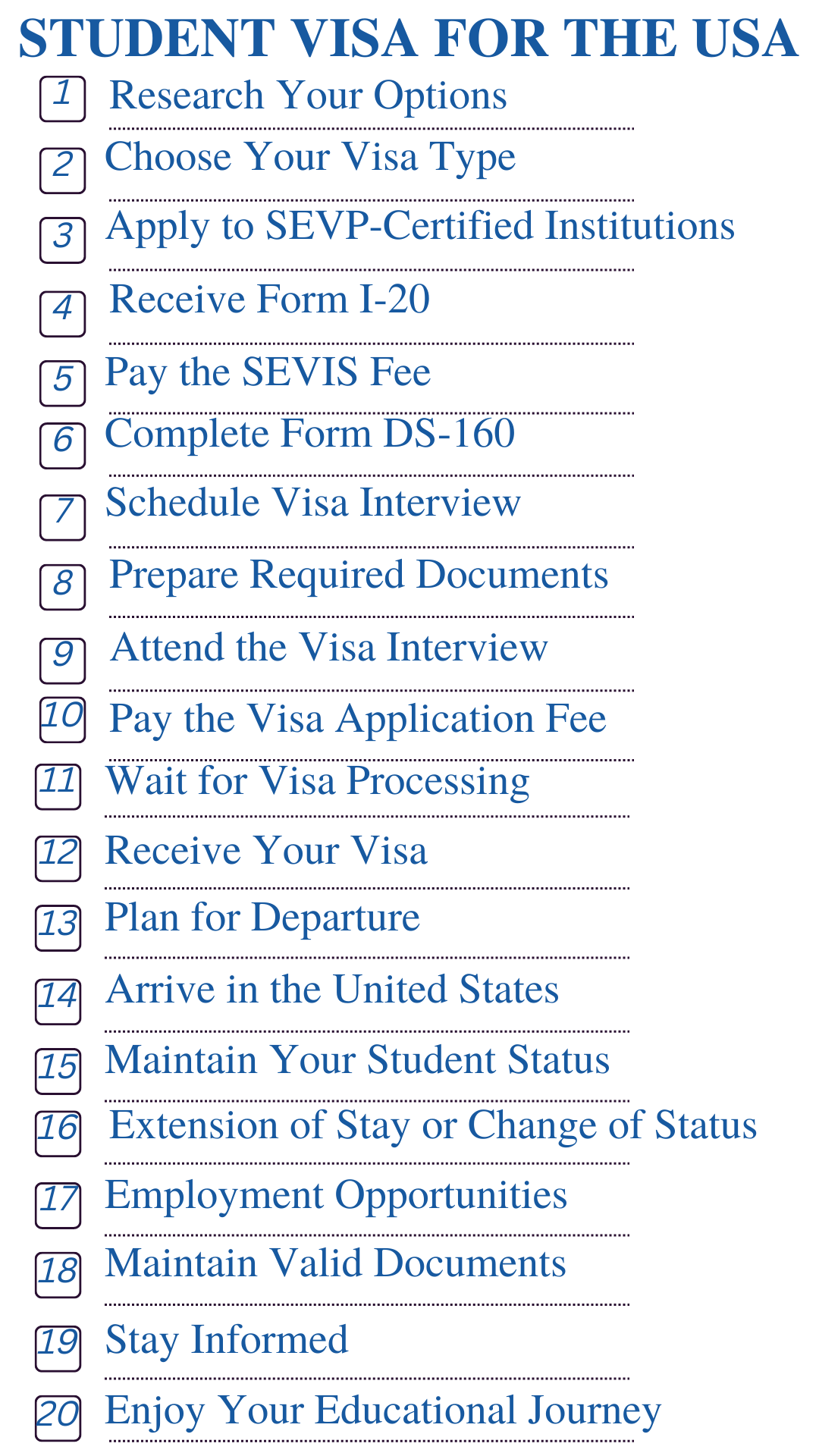
To get a student visa for the United States, choose a school approved to enroll international students, gain admission, receive Form I-20 if you need an F-1 or M-1 visa, pay the required SEVIS fee, complete Form DS-160, schedule a visa interview, and provide evidence that you qualify for student status.
For students living in the United States or applying from abroad, understanding the US student visa process is essential before making plans to attend a college, university, language school, or vocational program. International applicants generally need the correct immigration status before they can begin a qualifying course of study in the country. The process involves school admission, financial planning, government forms, and a visa decision by a US consular officer.
The right steps depend on your course, school, nationality, and personal circumstances. Most international students pursuing academic degrees apply for an F-1 visa, while students entering eligible vocational programs generally need an M-1 visa. Exchange students usually follow a separate J-1 process. This guide explains how to get a student visa for the USA, what documents to prepare, how to budget for application costs, and what to do if your appointment or application does not go as planned.
A student visa is a travel document that allows an eligible foreign national to seek entry into the United States for an approved educational purpose. The visa category must match the planned course or program. For many international students, getting the correct visa is a required step between receiving an admission offer and traveling to campus.
US immigration rules distinguish between academic study, vocational training, and exchange programs. A school acceptance letter alone does not give an international student permission to enter the country in student status. Applicants must follow the appropriate immigration process and meet the requirements for their visa category.
Source: megacoanalytika.com
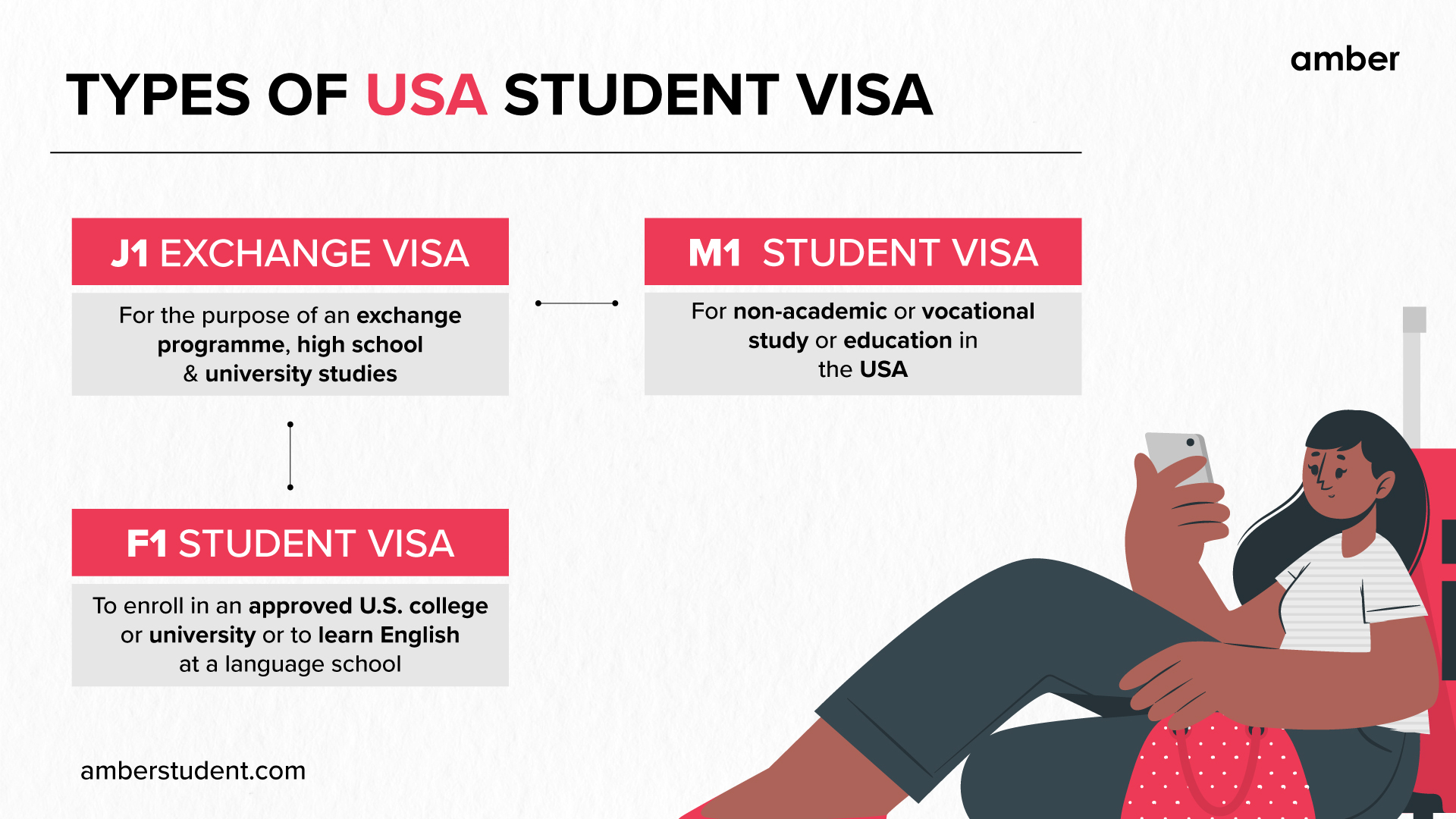
F-1 student visa
Generally applies to international students attending an approved academic institution, such as a university, college, high school, seminary, conservatory, or qualifying language training program.
M-1 student visa
Generally applies to students pursuing qualifying vocational or other recognized nonacademic training, excluding language training programs covered by the F category.
J-1 exchange visitor visa
Applies to eligible participants in approved exchange programs. The sponsoring organization normally provides Form DS-2019 rather than Form I-20.
Visitor visa limitations
A B-1 or B-2 visitor visa generally does not permit enrollment in a course leading to a US degree or academic certificate. Limited recreational, noncredit study may be allowed. Check the official rules before enrolling.
Can You Apply for a Student Visa From Inside the United States?
The answer depends on your current immigration status and the route available to you. Some people already in the United States may qualify to request a change of status through US Citizenship and Immigration Services. Others may need to leave the country and apply for a student visa at a US embassy or consulate.
A change of status is not the same as receiving a visa stamp in your passport. If you plan to travel abroad after changing status, you may need to apply for the appropriate visa before returning. Review your circumstances with USCIS or a qualified immigration attorney if you have an expiring status, a pending application, or a complicated immigration history.
Step 1: Choose an Eligible US School and Get Accepted
Your first practical step is to choose a school that is authorized to enroll international students in the relevant visa category. For an F-1 or M-1 application, check that the institution is certified by the Student and Exchange Visitor Program, commonly known as SEVP. Not every school or training provider qualifies.
Compare schools based on academic programs, tuition, location, entry requirements, and the cost of living. Consider whether the institution offers the degree or training you need and whether its schedule fits your goals. Admission requirements may include school transcripts, prior degrees, English proficiency results, recommendation letters, essays, or entrance examinations.
Once the school accepts you and you complete its required enrollment steps, its designated school official can guide you through the student record process. If you are unsure whether a school is eligible, use the official Department of Homeland Security school search tool rather than relying only on an advertisement or an agent’s claim.
Source: www.youtube.com, International Student
Verify school certification
Confirm that the institution is authorized to enroll students in the category you need before paying a deposit or making travel plans.
Keep your admission records
Save your admission letter, tuition details, scholarship award, and communications from the school’s international student office.
Ask about deadlines
Confirm your program start date, required deposits, orientation schedule, and the latest date you can arrive without delaying enrollment.
What If You Have Not Chosen a School Yet?
Start by deciding what you want to study, the level of education you need, and how much you can afford. Review several eligible institutions instead of choosing one based only on tuition or an agent’s recommendation. EducationUSA, a US Department of State educational advising network, is a useful starting point for researching study options and application planning.
Step 2: Receive Form I-20 and Pay the SEVIS Fee
After your school accepts you and collects the information it needs, it can create your student record in the Student and Exchange Visitor Information System, or SEVIS. For most F-1 and M-1 applicants, the school then issues Form I-20, the Certificate of Eligibility for Nonimmigrant Student Status. This document is a central part of your student visa application.
Check Form I-20 as soon as you receive it. Your name, date of birth, school details, program, funding information, and start date should match your records. Contact the school’s designated school official promptly if something is incorrect. You and the appropriate school official must complete the required signatures.
Most first-time F-1 and M-1 applicants must also pay the I-901 SEVIS fee. Pay through the official government payment service, follow the instructions for your record, and save the receipt. Do not confuse this payment with the visa application fee; they are separate charges.
Source: amberstudent.com
Form I-20
Shows your student record and key information about your eligible school and program. You will generally need it to complete the visa application and attend the interview.
SEVIS ID
A unique identifier printed on Form I-20. You will need it for relevant application steps, including Form DS-160.
I-901 SEVIS fee receipt
Keep proof of payment and check that the payment is associated with the correct student record. Follow official instructions if you need to correct or update information.
How Much Is the SEVIS Fee?
The SEVIS fee is separate from the visa application fee, and the amount depends on the category and applicable rules. Fee amounts can change, so verify the current I-901 amount on the official US Immigration and Customs Enforcement website before paying. Some applicants and categories have different requirements or exemptions.
Do not pay an unofficial service simply because it promises faster processing or guaranteed approval. Use the government payment system and retain the receipt with your visa documents.
Step 3: Complete Form DS-160 Online
Most applicants seeking an F-1 or M-1 visa from outside the United States must complete Form DS-160, the Online Nonimmigrant Visa Application. The form collects information about your identity, travel plans, education, background, and intended US stay. Complete it using accurate information and the instructions provided by the US Department of State.
Have your passport and Form I-20 available before starting. You may need your SEVIS ID, the school’s address, and details about your education and travel plans. Read every question carefully, answer truthfully, and review the completed information before submitting it.
After electronic submission, save and print the DS-160 confirmation page containing the barcode. You generally do not need to bring a printed copy of the entire application to the interview. However, keep a copy of your submitted information for reference and follow the instructions of the embassy or consulate where you apply.
Source: shuraaeducation.com
Use accurate details
Make sure your name, passport number, school information, and other answers agree with your supporting records.
Follow photo rules
Upload a photograph that meets the official requirements. If the online upload fails, follow the embassy’s instructions about bringing a printed photograph.
Save your confirmation
Store the barcode confirmation page somewhere safe and accessible for your appointment.
What If You Make a Mistake on DS-160?
Do not ignore an error in a submitted application. The correct way to fix it can depend on the nature of the mistake and the appointment system used by the embassy or consulate. Check the official DS-160 guidance and the local visa appointment instructions before submitting another form or changing an appointment.
A mismatch between the DS-160, passport, and Form I-20 can cause delays or require additional steps. If you are unsure how to correct a material error, contact the relevant consular section for instructions.
Step 4: Pay the Visa Fee and Schedule Your Interview
After completing Form DS-160, follow the appointment and payment process for the US embassy or consulate where you plan to apply. The usual nonimmigrant visa application fee for F and M student visas is $185. This fee is generally nonrefundable, even if the application is refused. A separate visa issuance fee may apply to some nationalities, and the SEVIS fee is separate.
Appointment systems, payment methods, document delivery arrangements, and interview availability differ by location. Read the official instructions for the embassy or consulate where you will apply instead of assuming that another country’s process is the same.
Book as early as practical. New F and M student visas can generally be issued up to 365 days before the program start date, but students cannot enter the United States in student status more than 30 days before that date. A visa appointment, processing delay, or passport return can affect your travel plans, so leave room for unexpected problems.
Source: edunirvana.in
Application fee
The standard F and M nonimmigrant visa application processing fee is $185. Confirm the amount and payment procedure before paying.
Appointment availability
Wait times depend on the embassy or consulate, season, visa category, and available appointment slots. Check official appointment information regularly.
Location of application
Applicants are generally encouraged to apply in their country of residence or nationality, subject to the applicable instructions. Applying elsewhere may make eligibility harder to establish or create practical delays.
How Long Does It Take to Get a Student Visa?
There is no single processing time that applies to every applicant. School admission, Form I-20 issuance, fee payments, interview availability, additional document requests, and administrative processing can each affect the total time.
Start preparing well before your course begins. Check current interview wait times and allow extra time for passport delivery or any further review. Avoid buying nonrefundable flights or making other costly commitments before you understand the risk of a delay.
Step 5: Prepare the Required Student Visa Documents
A well-organized document file helps you answer questions clearly and respond to requests from the consular officer. The required evidence depends on your circumstances, but most F-1 and M-1 applicants should prepare their core application documents before attending the interview.
Bring original documents when required and arrange supporting evidence so you can find it quickly. Do not assume that every document will be reviewed or that a large folder guarantees approval. The officer evaluates your eligibility under US immigration law, and additional evidence may be requested when needed.
Source: studyinfocentre.com
Valid passport
Check the passport validity rules that apply to your nationality and intended stay. A six-month validity period beyond the planned stay is generally required unless a country-specific exemption applies.
Form DS-160 confirmation
Bring the confirmation page with the barcode and follow local instructions about any other application records.
Form I-20
Bring the correct form issued by your eligible school, with the required signatures and matching program details.
Fee receipts
Keep proof of the visa application fee and I-901 SEVIS fee payments, as applicable.
Academic records
Prepare transcripts, diplomas, certificates, test scores, or other records that help explain your academic preparation.
Financial evidence
Gather credible proof that you can pay tuition, living costs, travel, and other relevant expenses, including scholarship documents or sponsor records.
Study plans and supporting details
Be ready to explain your chosen program, why it fits your goals, and your plans after completing your studies.
How Do You Prove You Can Afford to Study in the USA?
You need a realistic funding plan supported by evidence. Depending on your situation, this may include bank statements, scholarship letters, approved education loans, sponsor letters, income records, or other reliable financial documents. The evidence should support the costs shown in your school’s financial estimate and the period of study involved.
If a parent or another person will pay your expenses, explain the relationship and bring evidence that supports the sponsor’s ability and intention to provide the funds. Do not present borrowed money as long-term savings if that would misrepresent your actual finances. If your funding depends on a scholarship, verify the award amount, conditions, and duration.
Do You Need an English Language Test?
There is no single English test rule that applies to every US student visa applicant. Your school or program may require an English proficiency test or another way to demonstrate that you can complete the course. The consular officer may also assess whether your academic preparation and study plans are credible.
Follow the admission requirements of your institution and carry any relevant test results if they support your application. Never assume that a particular score alone guarantees visa approval.
Step 6: Attend the Student Visa Interview
The visa interview is an opportunity for a consular officer to assess whether you qualify for the student visa category. Interviews are generally required, although limited exceptions may apply. The officer may ask about your education, chosen institution, finances, reasons for studying in the United States, and plans after your course ends.
Answer each question honestly and directly. You do not need to memorize a speech or give long answers to simple questions. You should understand your program, know who will fund your education, and be able to explain how the course fits your background and future goals.
Bring the required documents and arrive according to the appointment instructions. Fingerprints are usually collected as part of the process, though the exact procedure can vary. Follow all security and entry rules provided by the embassy or consulate.
Source: studies-overseas.com
Why did you choose this school?
Explain the program’s real academic or vocational value and why it fits your needs. Be specific about your course rather than repeating general praise about the United States.
How will you pay for your education?
Explain your funding sources clearly and make sure your answer matches the financial documents you provide.
What will you do after graduation?
Describe your genuine plans and understand the conditions of your visa. Your answers must be truthful and consistent with your circumstances.
Why not study in your home country?
If asked, explain the educational reasons for your choice without making unsupported claims or criticizing other institutions.
Common Student Visa Interview Mistakes
Many avoidable problems begin before the interview. Applicants may submit inconsistent information, misunderstand their own program, rely on vague funding claims, or give answers that conflict with their documents. Review your application in advance and make sure you can explain any unusual facts or changes in your education history.
Do not use fake bank statements, altered certificates, false admission letters, or misleading claims. Fraud or willful misrepresentation of a material fact can have serious immigration consequences, including refusal and possible future ineligibility. If your records contain an error, address it honestly.
Step 7: Understand the Visa Decision and Prepare for Travel
After your interview, the consular officer may approve the application, refuse it, or explain that additional administrative processing is required. If approved, follow the local instructions for passport return and check the visa details as soon as you receive your passport. Review your name, passport information, visa category, and expiration date.
A visa allows you to travel to a US port of entry and request admission; it does not guarantee that you will be admitted. A Customs and Border Protection officer makes the final admission decision. Carry your passport, valid student visa when required, Form I-20, and other supporting records when traveling.
For a new F-1 or M-1 student, entry is generally not permitted more than 30 days before the program start date shown on Form I-20. Check the current rules before booking travel. After arrival, follow your school’s reporting and registration instructions so that your student record remains accurate.
Source: studies-overseas.com
Check your visa
Review the printed visa information and contact the appropriate consular office if you notice an error.
Keep your student documents accessible
Pack essential immigration documents in your carry-on luggage rather than placing them in checked baggage.
Report to your school
Follow the institution’s instructions for arrival, orientation, enrollment, and any required check-in with the designated school official.
Follow your status rules
Maintain the required enrollment and comply with employment restrictions and other conditions that apply to your student category.
Can You Work While Studying in the United States?
Some international students may work under specific conditions, but a student visa does not give unrestricted permission to take any job. F-1 students may qualify for certain on-campus employment and authorized training options, subject to applicable rules. M-1 students face different and more limited practical training provisions.
Before accepting work, speak with your school’s designated official and review the applicable immigration rules. Working without the required authorization can threaten your student status and future immigration options. Do not rely on an employer’s assurance that a job is permitted.
How Much Does a US Student Visa Cost?
The total cost of obtaining a student visa includes more than the visa application fee. Your budget should account for school application charges, admission deposits, required tests, document preparation, the SEVIS fee, travel to the interview, passport delivery, and possible visa issuance charges. Your tuition and living costs are separate and may be much larger than the government application fees.
The standard F and M visa application processing fee is $185 under the Department of State fee schedule checked for this guide in October 2026. Because fees and payment rules can change, verify the current amount before submitting payment. The SEVIS fee is a separate payment, and the amount depends on the relevant category and rules.
Source: shuraaeducation.com
Visa application fee
The standard fee for an F or M nonimmigrant visa application is $185. It is generally nonrefundable.
SEVIS fee
A separate government fee may be required to support the student tracking system. Confirm the current amount and exemptions through official channels.
School-related expenses
Budget for application fees, deposits, tuition, books, health insurance where required, housing, meals, and local transportation.
Travel and document expenses
Include transport to your interview, document delivery, translations when needed, and travel to your school.
A Simple Student Visa Budget Example
Suppose an applicant has a $185 visa application fee and must also pay the applicable SEVIS fee. The applicant should add the actual SEVIS charge, any applicable issuance fee, and personal travel expenses to calculate the total application budget. This is an illustration of the budgeting method, not a complete quote or a statement of every applicant’s fees.
Before paying, make a list of confirmed charges and check each one on an official website. Keep separate records for visa fees, school costs, and living expenses so that you know how much money is needed before departure and throughout the academic year.
What to Do If Your Student Visa Is Refused
A refusal does not always mean you can never receive a US student visa. The next step depends on the legal basis for the decision and the facts of your case. Read any explanation provided by the consular officer and review the official Department of State guidance on visa refusals before deciding whether to reapply.
If you were refused under section 214(b), you may apply again if you believe you have additional evidence of eligibility or your circumstances have changed. Reapplying without addressing the reason for the refusal may lead to the same result. There is no legitimate service that can guarantee approval or promise that a new application will succeed.
If the refusal involves a suspected misrepresentation, a prior immigration violation, or another complex legal issue, consider consulting a qualified US immigration attorney. A professional can help explain the applicable rules and whether additional steps are available.
Source: edunirvana.in
Review the reason
Understand the refusal basis and identify the issue that needs attention before submitting a new application.
Correct genuine problems
If your financial evidence, school details, or application information was incomplete or inconsistent, determine how to address the issue truthfully.
Check your school deadline
Contact the school’s international student office if a refusal or delay could affect your program start date or require a deferral.
Avoid guaranteed-approval promises
No agent, consultant, or school can control a consular officer’s decision. Be cautious of anyone who asks you to submit false documents.
What If Your Visa Is Still Under Administrative Processing?
Administrative processing means the application requires additional review. The duration varies by case, and there is no universal completion date. Follow the instructions given by the consular section and provide any requested information through the specified channel.
Avoid submitting repeated inquiries unless the embassy’s instructions support them. If your school start date is approaching, contact the school to discuss your options. The school may be able to explain deferral procedures or update your program dates when appropriate.
A Practical Student Visa Checklist
Use this checklist to track your application from school admission to departure. The exact process may vary by visa category and consular location, so treat the list as a planning aid rather than a replacement for official instructions.
Source: amberstudent.com
Before applying
Choose an eligible institution, secure admission, review the program start date, and estimate tuition and living expenses.
After admission
Receive Form I-20 when required, check all details, sign the form as instructed, and pay the applicable SEVIS fee.
During the application
Complete Form DS-160, save the confirmation page, pay the required visa fee, and book an appointment according to the local process.
Before the interview
Prepare your passport, Form I-20, fee receipts, academic records, funding evidence, and answers about your study plans.
After the decision
Check the visa details if approved, prepare travel documents, confirm your arrival window, and follow your school’s reporting instructions.
Official Websites to Check Before You Apply
Use the US Department of State’s student visa page for eligibility, application steps, fees, and interview information. Use the Department of Homeland Security’s Study in the States resources to verify eligible schools and understand student records. For Form DS-160, SEVIS payments, or local appointment procedures, rely on the relevant official government service rather than a third-party summary.
US Department of State
Student visa information: travel.state.gov/content/travel/en/us-visas/study/student-visa.html
USAGov
Student visa overview: usa.gov/student-visa
EducationUSA
Study planning and student visa guidance: educationusa.state.gov/your-5-steps-us-study/apply-your-student-visa
US Immigration and Customs Enforcement
SEVIS and I-901 fee information: ice.gov/sevis/i901
Frequently Asked Questions
Q
How long does it take to get a student visa for the USA?
The timeline varies by school, embassy or consulate, appointment availability, and individual circumstances. School admission and Form I-20 issuance come before the standard F-1 or M-1 visa application. Interview scheduling and additional administrative processing may add time, so start early and check current official wait-time information.
Q
Can I get a student visa without an admission letter?
For the usual F-1 or M-1 process, you must first be accepted by an eligible school and receive Form I-20. An admission letter alone is not a substitute for the required student eligibility document. Exchange students generally follow the J-1 process and use Form DS-2019 from their program sponsor.
Q
How much bank balance is required for a US student visa?
There is no single bank balance that guarantees approval for every student. You should show credible funding for the tuition and living costs relevant to your program, taking scholarships and other documented funding sources into account. Follow your school’s financial documentation requirements and be prepared to explain where the money comes from.
Q
Can I apply for a US student visa without IELTS?
Possibly. IELTS is not a universal US student visa requirement, but individual schools may require English proficiency evidence or an approved alternative. Check your institution’s admission rules and prepare any supporting language test results or other evidence that applies to your program.
Q
Can I work in the United States on a student visa?
Some students may work under specific immigration rules and authorization requirements. F-1 students may qualify for certain on-campus jobs or authorized practical training, while M-1 employment options are more limited. Speak with your designated school official before accepting work, and never assume that a student visa permits unrestricted employment.
Q
Can I bring my spouse or children with me?
Eligible spouses and unmarried minor children may be able to apply for F-2 or M-2 dependent visas, depending on the principal student’s category. Each dependent generally needs an individual Form I-20 and must meet the applicable visa requirements. The family should plan for living expenses and check the current rules for dependent study and employment.
Q
Can I enter the United States before my classes begin?
New F-1 and M-1 students generally cannot enter the United States more than 30 days before the program start date listed on Form I-20. Check the current official guidance and your program dates before booking travel. A student visa does not automatically authorize an earlier arrival.
Q
What happens if my student visa is denied?
Read the refusal explanation and determine the applicable legal basis before taking another step. Some applicants may reapply when they have new evidence or changed circumstances, but submitting another application does not guarantee approval. Contact your school about enrollment deadlines and seek qualified immigration advice if the refusal raises complex legal issues.
✦ Wrapping Up
Conclusion
Getting a student visa for the United States requires careful planning, accurate documents, and a clear understanding of your chosen program. Start by selecting an eligible school and securing admission. Then complete the required student record steps, pay the applicable fees, submit Form DS-160 when required, schedule your interview, and prepare evidence of your academic plans and financial support.
Do not wait until the last moment to begin. Appointment availability, school deadlines, and additional processing can affect your travel date. Check current rules through official US government websites, keep your information consistent, and ask your school or a qualified immigration professional for help when your situation is unclear.
💡 Key Takeaway
Your next step is to confirm that your chosen school is SEVP-certified and ask its international student office about admission deadlines and Form I-20. Once you have the required school documents, review the official US student visa instructions, check current fees and appointment availability, and build a realistic timeline before booking travel.