Thank you for reading this post, don't forget to subscribe!
A travel visa can cost nothing, less than $20, or several hundred dollars, depending on your destination, nationality, visa type, and application method. As of October 2026, examples include a $185 U.S. visitor visa application fee, a Canadian visitor visa fee of CAD $100, and a UK standard visitor visa fee of £135. Additional charges may apply.
For travelers in the United States, the cost of an international trip can rise quickly when visa fees, passport expenses, travel insurance, and document costs are added to the budget. The price of a travel visa is not the same for every country. Some destinations allow eligible visitors to enter without a visa, while others require an electronic travel authorization or a formal visa application with a government fee.
The amount you pay depends on where you plan to go, which passport you hold, how long you intend to stay, and why you are traveling. A tourist visa may cost less than a long-term visitor visa, while a visa application that requires fingerprints, a consular appointment, or a paid document service may cost more than the basic application fee. This guide explains common fees, compares popular destinations, and shows how to estimate your total cost before booking a trip. All prices should be checked against the destination government’s official website before payment because fees and eligibility rules can change.
A travel visa may cost anywhere from $0 to several hundred dollars in government fees. There is no reliable single average for every traveler because visa prices vary by destination and nationality. Some visitors can enter a country without a visa, while others must pay for a short-stay visa, an electronic authorization, or a more complex application.
For a U.S. citizen planning an international vacation, the first step is to check whether the destination requires a visa. For a foreign citizen traveling to the United States, the relevant fee depends on the visa category and any additional charges that apply. These two situations are different, even though both involve travel visas.
The following examples provide a useful starting point. They are published government fee examples, not a promise that every traveler will qualify for the same application or pay the same total amount.
Source: assets-wp.boundless.com
Visa-free travel
Eligible passport holders may enter certain destinations for permitted short visits without paying a traditional visa application fee. Entry conditions and permitted stays still apply.
Electronic travel authorization
An electronic travel authorization, or ETA, may be required for visa-exempt travelers. Its fee is often lower than a traditional visa, but eligibility depends on nationality and travel purpose.
Standard tourist visa
A short-stay visitor visa generally has a set government fee. The final amount may be higher if biometrics, service center appointments, or other services are required.
Long-term visitor visa
Some countries offer visitor visas with validity periods of two, five, or ten years. These often cost more than a short-term visa, and they do not necessarily allow a longer stay on each visit.
Why Visa Prices Differ
Governments set their own visa fees. They may charge different amounts for tourism, business visits, transit, medical treatment, or family visits. Some countries also use reciprocal fees, which means the amount can depend on the applicant’s nationality.
Processing arrangements matter, too. An application submitted through a visa application center may involve separate service charges. Applicants who need to travel to an interview location may also have transport and lodging costs. These expenses are not necessarily part of the official visa fee.
Nationality
The passport you hold may determine whether you need a visa and whether an additional issuance fee applies.
Length and type of visa
A single-entry tourist visa, a multiple-entry visa, and a long-term visitor visa may have different prices.
Travel Visa Fees for Popular Destinations
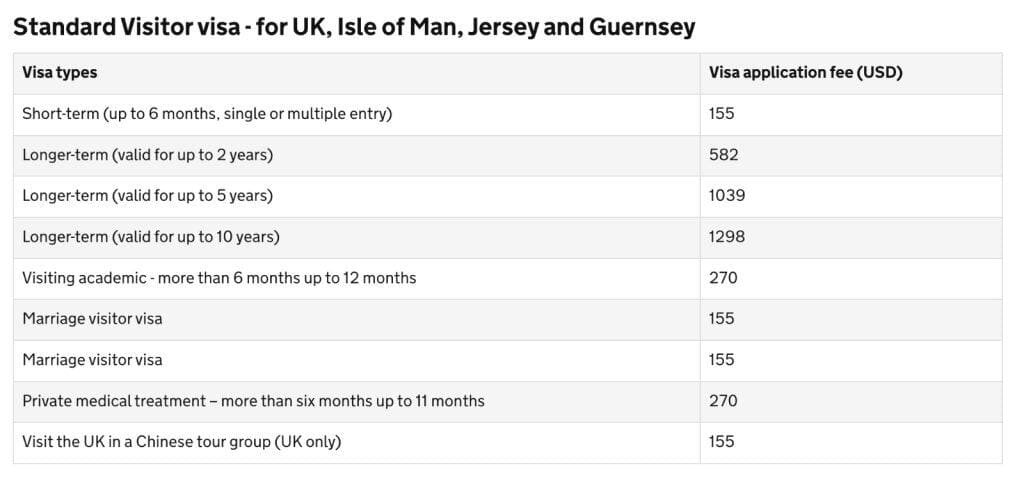
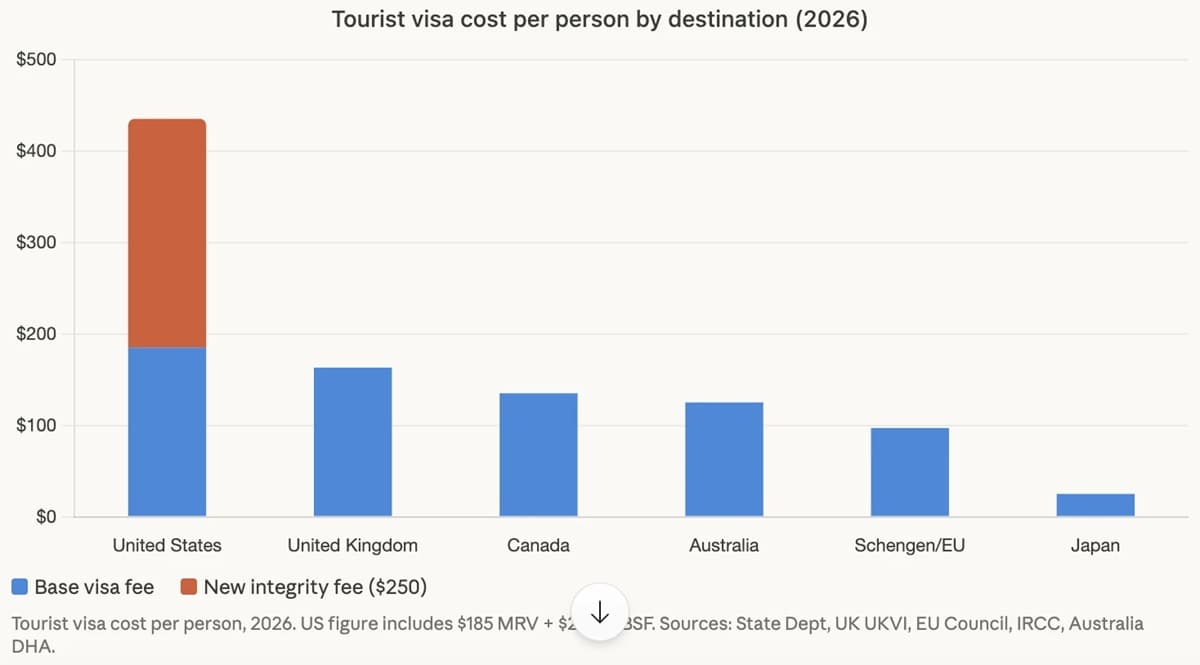
Travel visa prices are easiest to compare when the destination, visa category, currency, and application conditions are clear. The figures below provide examples from official government fee schedules available in October 2026. They are not direct currency comparisons because exchange rates change.
A traveler should also confirm whether the fee applies to a new application, whether biometrics are required, and whether the amount covers only the application or additional services. Some destinations distinguish between a visa and an electronic travel authorization, so compare the correct category.
Source: visasnews.com
United States visitor visa
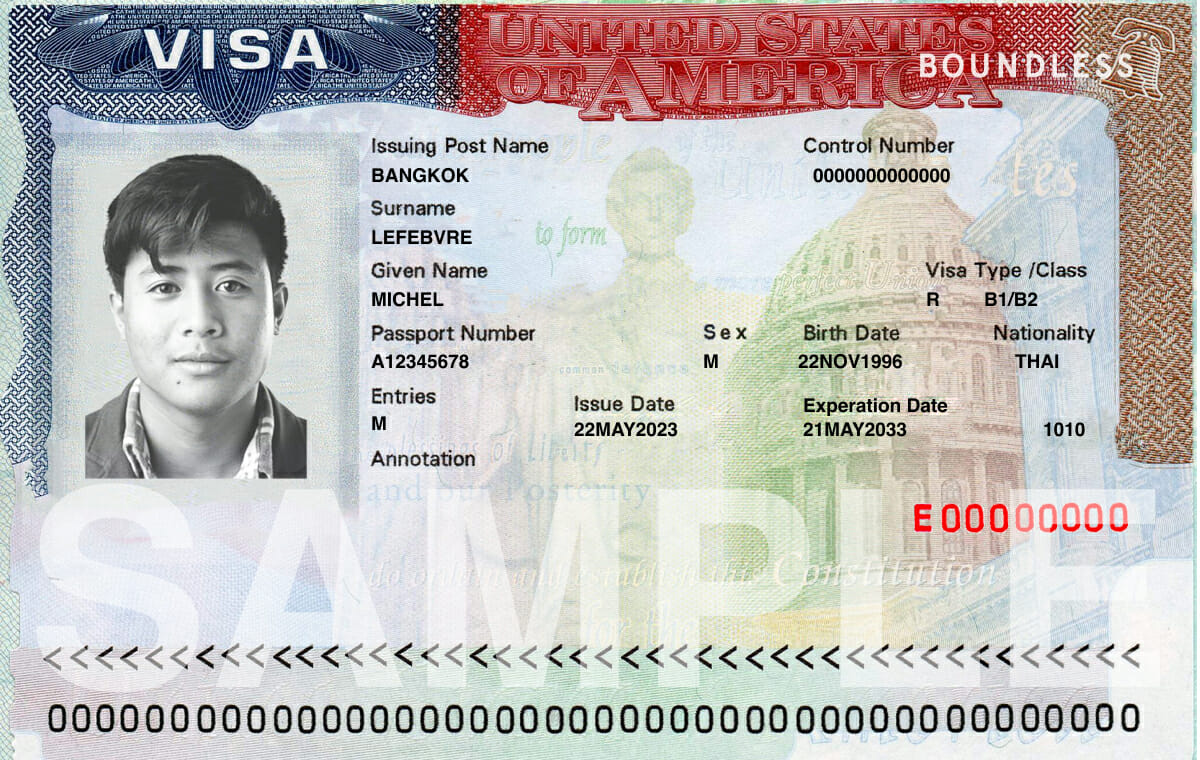
The standard application fee for a B-1/B-2 business or tourism visitor visa is $185. Some applicants may also face a nationality-based issuance fee or other applicable charges. Check the official U.S. Department of State guidance for the exact requirements.
Canada charges CAD $100 per person for a visitor visa. Applicants who must provide biometrics generally pay an additional CAD $85 individually, making the combined government fees CAD $185 before any other expenses.
United Kingdom visitor visa
The UK standard visitor visa for a stay of up to six months costs £135 under the fee schedule in force from April 8, 2026. A separate electronic travel authorization may apply to eligible travelers who do not need a traditional visitor visa.
Schengen Area short-stay visa
The standard Schengen short-stay visa fee is generally €90 for adults and €45 for children ages six through eleven. Children under six are generally exempt from the visa fee. Additional visa center service charges may apply, and specific exemptions or rules can affect individual cases.
India tourist visa
India’s visa cost depends on nationality, visa category, duration, and application route. Some travelers can apply for an electronic visa, while others must follow a different consular process. Check the official Indian visa portal for the fee that applies to your passport.
How to Compare Fees in Different Currencies
Do not compare a fee in euros, pounds, Canadian dollars, or another currency with a U.S. dollar price without converting it using a current exchange rate. Your bank or card provider may use a different exchange rate from the one displayed in a currency converter.
For budgeting, record the original fee in the currency requested by the government, estimate its U.S. dollar value, and leave room for exchange-rate changes and payment fees. The official payment page should take priority over an older travel article or a third-party fee chart.
Check the fee date
Make sure the amount reflects the current fee schedule rather than an older price.
Check the payment currency
Confirm whether payment is collected in U.S. dollars, local currency, or another specified currency.
What Is Included in the Cost of a Travel Visa?
The advertised visa fee usually covers the government’s processing of a particular application, not every cost connected with getting permission to travel. A complete budget should separate the official application fee from additional required charges and optional services.
Some applicants pay only the government fee. Others must provide fingerprints and a photograph, use an authorized visa application center, obtain certified documents, or pay to send a passport back after processing. The exact requirements depend on the destination and application type.
Source: quartzmountain.org
Government application fee
This is the amount charged by the relevant government to process the visa application. It is often nonrefundable if the application is refused.
Biometrics fee
Some visa systems require fingerprints and a photograph. The biometrics fee may be separate from the visa application fee.
Visa application center fee
A contracted service center may charge for handling documents, collecting biometrics, or offering optional services. Verify which charges are required.
Document costs
Passport photos, translations, certified copies, notarization, and other supporting records may create extra expenses.
Travel and delivery costs
Getting to an appointment, staying overnight, or arranging passport delivery can increase the total cost, especially for applicants who live far from a consulate.
Professional assistance
An immigration lawyer or authorized adviser may charge for help with a complex case. Hiring a professional is not automatically required for a standard tourist visa.
Mandatory Fees Versus Optional Services
A required government fee must be paid according to the official application instructions. An optional service, such as a premium appointment, courier delivery, or document review, may increase the price without improving the likelihood of approval.
Before buying an extra service, ask what it does, whether it is required, and whether the government or an authorized provider offers it. No legitimate service can guarantee that a visa officer will approve an application.
Pay required fees only
Follow the payment instructions on the official government portal or authorized application center website.
Review the final total
Check every line item before paying so you know which charges are government fees and which are service fees.
How to Calculate Your Total Travel Visa Cost
You can estimate the total cost by adding the official visa fee, required biometrics charges, mandatory service fees, document expenses, and travel costs associated with the application. If you are applying for several people, calculate the cost for each traveler and then check whether a family fee or group limit applies.
For example, suppose an individual applying for a Canadian visitor visa must pay CAD $100 for processing and CAD $85 for biometrics. The government fee total would be CAD $185, before document preparation, travel to an appointment, or other applicable expenses. This example applies only to someone who is required to pay both fees.
Source: applydubaivisa.com
Step 1: Confirm the visa category
Choose the correct category for tourism, business, transit, or another permitted purpose. Do not use a work or study visa fee as a substitute for a visitor visa fee.
Step 2: Check your nationality
Use your passport country to determine whether you need a visa, an electronic authorization, or no advance permission for the intended visit.
Step 3: Add required government fees
Include the application fee, biometrics fee, and any required issuance or reciprocity fee that applies to your case.
Step 4: Add other expenses
Estimate the cost of photographs, translations, travel to the application center, and required delivery services.
Step 5: Add a reasonable buffer
Leave room for exchange-rate movements and minor document expenses. Do not treat optional premium services as mandatory.
A Sample Travel Visa Budget
Consider a hypothetical traveler applying for a visa that costs $120, with a required $30 biometrics fee, $25 in document expenses, and $40 in local transport. The estimated total is $215. This is an arithmetic example, not a fee schedule for a specific country.
The calculation is $120 + $30 + $25 + $40 = $215. If the traveler also needs a passport renewal, an overnight stay, or a paid adviser, those costs must be added separately. Keeping the figures in a simple list helps prevent unexpected expenses.
Visa application
$120 in the hypothetical example.
Biometrics
$30 in the hypothetical example.
Documents
$25 in the hypothetical example.
Local transportation
$40 in the hypothetical example.
Does Your Nationality Affect the Price of a Travel Visa?
Yes. Your nationality can change both the visa requirements and the total price. Two people traveling to the same destination for the same length of time may face different rules because they hold different passports.
A U.S. citizen might qualify for visa-free entry to a destination where a citizen of another country must obtain a visa before departure. In other cases, both travelers need visas, but one may face an additional issuance fee or different document requirements. Residency in the United States does not automatically give a foreign national the same visa-free privileges as a U.S. citizen.
This distinction matters for lawful permanent residents and other noncitizens living in the United States. A green card is evidence of U.S. permanent resident status; it does not replace a passport or guarantee visa-free admission to another country. Travelers should check the rules for the passport they will actually use.
Source: traveltodubai.ae
U.S. passport holders
Check the destination’s rules for American citizens, including any limits on the purpose and length of the visit.
U.S. residents with foreign passports
Check the rules for your citizenship and passport, even if you have a U.S. green card or another U.S. immigration status.
Dual citizens
Review the destination’s rules for both nationalities and determine which passport must be used for entry or exit.
Children and family members
Check whether each person needs a separate application, whether child fees differ, and whether a family fee is available.
Visa-Free Entry Is Not the Same as a Free Visa
Visa-free entry means that a traveler who meets the relevant conditions does not need to obtain a traditional visa before traveling. It does not mean that every entry requirement disappears. A passport, proof of onward travel, an adequate visit purpose, or an electronic authorization may still be required.
Some countries also permit short visits only for tourism or certain business activities. Paid work, long-term study, or residence may require a different visa even when a short holiday would not. Check the permitted activities before deciding that a destination is visa-free for your trip.
Confirm permitted activities
Make sure your planned activities fit the visa-free or visitor category.
Check entry conditions
Review passport validity, electronic authorization, and border requirements before departure.
How to Apply for a Travel Visa Without Paying Unnecessary Fees
The best way to control visa costs is to use the correct application route from the start. A wrong category, incomplete application, or missed appointment can cause delays and may require extra spending. A careful check before payment can prevent many avoidable problems.
Start with the destination government’s official immigration or embassy website. If it directs applicants to an authorized visa application center, follow that link rather than choosing an unfamiliar service advertised in search results. The official instructions should explain the fee, payment method, documents, appointment process, and refund rules.
Source: assets-wp.boundless.com
Verify the official website
Use a government domain or an application center linked by the relevant embassy or consulate. Check the web address carefully before entering personal or payment information.
Read the document checklist
Prepare the passport, application form, photograph, travel details, financial records, and other documents required for your specific case.
Check payment rules
Confirm the accepted payment methods, currency, deadline, and whether a receipt must be presented at an appointment.
Submit accurate information
Use consistent names, dates, passport details, and travel information. Correct mistakes before submitting whenever the system allows it.
Keep proof of payment
Save receipts, confirmation numbers, application copies, and appointment details in a safe place.
What to Do If an Application Is Delayed or Refused
A delay does not always mean that an application has been refused. The government may need additional documents, further checks, or more time to review the case. Check the official status system and follow any request for additional information within the stated deadline.
If a visa is refused, read the decision notice carefully and check whether it explains review, appeal, or reapplication options. Do not submit a new application or pay another fee until you understand the reason for refusal and the available process. A second application is not guaranteed to succeed, and fees are commonly nonrefundable.
For a delayed application
Check the published processing time and use the official contact method if your case exceeds the relevant guidance.
For a refused application
Review the decision, identify any correctable issue, and seek qualified immigration advice if the case is complex.
Common Mistakes That Can Increase Visa Costs
Many unexpected visa expenses arise from applying too late, choosing the wrong visa, or paying an unofficial provider. These mistakes can cost money and disrupt travel plans, even when the basic government fee is affordable.
A visa application is a formal request, not a purchase that guarantees entry. Paying the fee does not ensure approval, and receiving a visa does not always guarantee admission at the border. Travelers should avoid nonrefundable bookings until they have considered the risk of delay or refusal.
Source: applydubaivisa.com
Using an outdated fee
A fee displayed in an older article may no longer be correct. Confirm the current amount before making payment.
Confusing visa types
A tourist visa, business visitor visa, transit visa, work visa, and electronic authorization can have different rules and fees.
Buying unnecessary premium services
A faster appointment or courier service may cost extra without changing the government’s decision on the application.
Assuming the fee will be refunded
Many governments do not refund application fees after processing begins, including when an application is refused.
Trusting guaranteed-approval claims
No private agent can guarantee a government’s visa decision. Be cautious of demands for unusual payments or claims of special access.
Ignoring passport validity
A passport that fails the destination’s validity rules may prevent travel and create extra renewal or rescheduling expenses.
How to Avoid Visa Scams
Use official government websites to confirm fees and identify authorized service providers. A private website may charge a legitimate assistance fee, but it should explain its role and total price clearly. Paying a private company does not mean that it can approve a visa.
Do not send passport scans, financial records, or payment details to an unknown person who contacts you unexpectedly. Check the provider’s identity and terms before sharing sensitive information. If you suspect fraud, contact your payment provider and the relevant government or consumer protection authority.
Check the domain
Look for the official government site or an authorized provider named by the relevant consulate.
Question unusual guarantees
Treat guaranteed approval, secret government contacts, and unexplained extra fees as warning signs.
When Should You Pay for a Travel Visa?
Pay the visa fee when you have confirmed that you need the correct visa and are ready to submit the application under the official instructions. The ideal timing depends on the destination’s application window, appointment availability, processing times, and your travel date.
Some countries allow applications months before departure, while others have shorter application windows. Processing times can vary by location, season, nationality, and individual circumstances. Apply early enough to handle requests for extra documents, but do not submit before the permitted application window opens.
Before paying, check whether the fee is refundable, whether the application can be changed after submission, and whether you must attend an appointment. Keep enough time between the expected decision and your departure to avoid relying on an uncertain processing estimate.
Source: traveltodubai.ae
Check the application window
Use the official guidance to learn how early you may apply and whether any deadline applies.
Review processing times
Use current government estimates for the location where you will apply. Treat them as estimates, not guaranteed decision dates.
Plan around your departure
Allow time for appointments, document requests, passport return, and possible administrative processing.
Avoid rushed decisions
An optional expedited service may be available in limited circumstances, but it can add a substantial charge and may not be offered at every consular post.
Should You Buy Flights Before Visa Approval?
There is no universal rule requiring every traveler to wait for a visa before buying flights, but doing so can reduce financial risk. If your visa is refused or delayed, a nonrefundable ticket or hotel reservation may be difficult to recover.
Read the destination’s official advice and the airline’s fare conditions before booking. If you must make reservations as part of the application, follow the actual instructions and avoid submitting false documents. A visa application should contain accurate information about your intended trip.
Prefer flexible bookings
When practical, choose reservations that allow changes or refunds if a decision is delayed.
Do not assume approval
Budget for the possibility of refusal or delay, especially when the visa is essential to the trip.
Frequently Asked Questions
Q
How much does a travel visa cost for a U.S. citizen?
The cost depends on the destination and the type of permission required. Some destinations allow eligible U.S. citizens to enter without a traditional visa, while others charge for a visitor visa or electronic travel authorization. Check the destination government’s official website for the current fee and entry requirements.
Q
How much is a travel visa to the United States?
The standard application fee for a U.S. B-1/B-2 business or tourism visitor visa is $185. Additional charges may apply depending on the applicant’s nationality and the rules in effect when the visa is issued. Check the U.S. Department of State’s official visitor visa guidance for current requirements.
Q
Are travel visa fees refundable if my application is denied?
Many visa application fees are nonrefundable, even if the application is refused. Refund rules depend on the destination and fee type. Read the official payment terms before submitting your application, and do not assume that a refusal or change in travel plans will qualify for a refund.
Q
Do children have to pay the same travel visa fee as adults?
Not always. Some destinations charge reduced fees or waive the visa fee for children below a certain age. Other systems require each child to submit a separate application and pay the standard fee. Check the destination’s official age rules and any family application limits.
Q
Can I get a travel visa for free?
You may be able to travel without a traditional visa if your passport qualifies for visa-free entry. Some countries also waive fees for certain applicants or travel purposes. However, visa-free entry may still require an electronic authorization, a valid passport, and compliance with border conditions.
Q
Does a visa service charge guarantee approval?
No. A visa service charge generally pays for assistance with forms, documents, appointments, or application handling. The destination’s authorized government officials make the decision. Be wary of any private company that promises guaranteed approval or claims that paying extra will ensure a visa.
Q
How can I find the exact travel visa fee for my trip?
Identify your destination, passport nationality, travel purpose, and intended length of stay. Then visit the official immigration or embassy website, choose the correct visa category, and review the fee schedule. Add any required biometrics, application center, document, and delivery costs to estimate the total.
✦ Wrapping Up
Conclusion
The answer to how much a travel visa costs depends on your passport, destination, and travel plans. Some travelers pay no traditional visa fee, while others pay a government application charge plus biometrics, service center, document, or delivery costs. Examples from current fee schedules show why it is better to check the exact category than rely on a single worldwide price.
For travelers planning a trip from the United States, the most reliable approach is to confirm the entry rules for the passport they will use, review the official fee schedule, and calculate the full cost before booking nonrefundable travel. Use government websites for final amounts because currency values, fee schedules, and visa rules can change.
💡 Key Takeaway
Before applying, confirm your passport nationality and destination, identify the correct visa or electronic authorization, check the official fee and refund policy, add all required extra charges, and save your payment receipt. If the case involves a refusal, unusual immigration history, or complex eligibility issue, consider advice from a qualified immigration professional.