Thank you for reading this post, don't forget to subscribe!
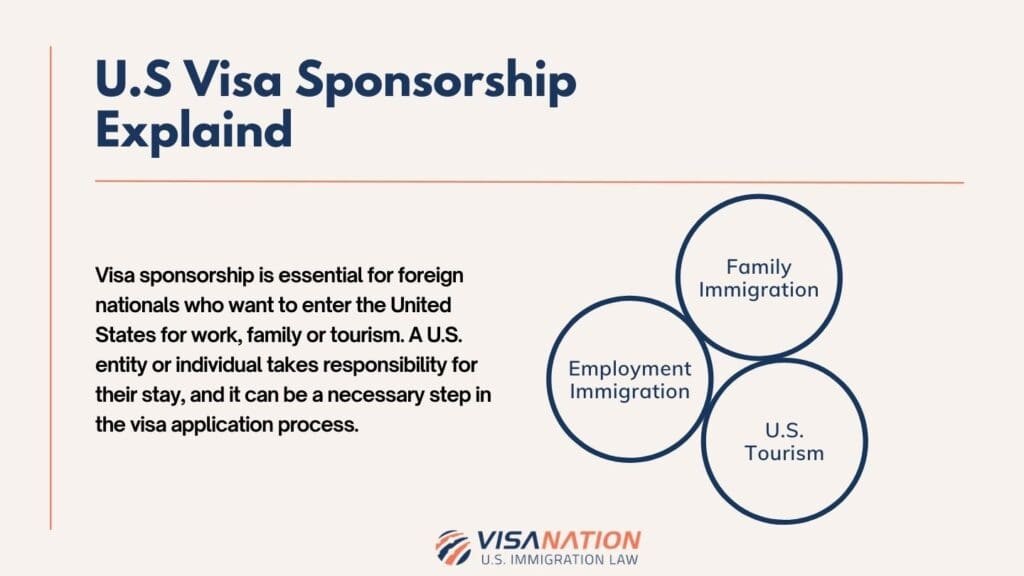
Work sponsorship is a process in which a U.S. employer supports a foreign worker’s application for permission to work in the United States under an eligible immigration category. Depending on the visa, the employer may need to file a petition, obtain labor certification, or complete other legal steps.
In the United States, work sponsorship helps employers hire people who do not already have the immigration status or work authorization needed for a particular job. It can apply to temporary work visas, such as the H-1B visa for certain specialty occupations, and employment-based immigrant categories that may lead to permanent residence. The process depends on the worker’s qualifications, the position, the employer, and the immigration category.
A job offer alone does not grant permission to work in America. In many cases, the employer must submit documents to U.S. Citizenship and Immigration Services (USCIS), while the worker may need to complete additional steps with a U.S. consulate or after entering the country. Some categories require Department of Labor involvement, and some are subject to annual numerical limits. Understanding these differences helps job seekers avoid misleading offers and focus on employers and positions that fit their circumstances.
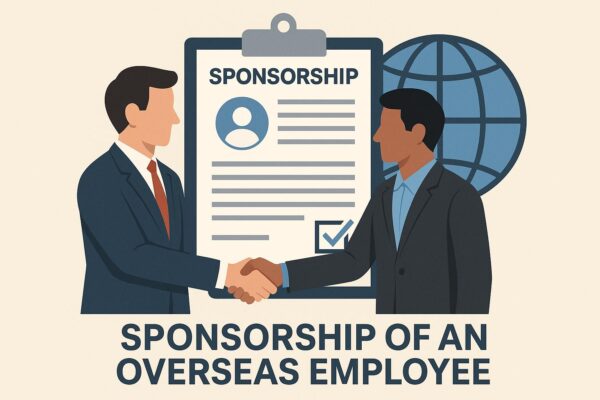
Work sponsorship is an arrangement in which a U.S. employer takes the required immigration steps to hire a foreign national for an eligible position. The exact legal process varies by visa category. For some workers, sponsorship involves a temporary employment petition; for others, it involves an employment-based immigrant petition and potentially a green card application.
The term employer sponsorship is commonly used in job advertisements, recruiter conversations, and immigration discussions. It is a general term rather than the name of one specific visa. The employer cannot simply grant a visa or guarantee approval. Government agencies review the relevant application and decide whether the legal requirements have been met.
For example, a U.S. technology company may seek an H-1B worker for a qualifying specialty occupation. A business hiring certain seasonal workers may consider an H-2A or H-2B program. An employer recruiting a permanent worker may explore an employment-based immigrant category. Each route has its own eligibility rules and limits.
Source: batrakovalaw.com
Employer support
The employer completes the steps required for the relevant category, which may include submitting forms, supplying job details, and providing evidence.
Worker eligibility
The worker must meet the category’s requirements, which can include education, professional experience, occupation-specific qualifications, or other conditions.
Government approval
USCIS, the Department of Labor, the Department of State, or other relevant authorities handle different parts of the process, depending on the case.
What Does Visa Sponsorship Mean for a Job Seeker?
For a job seeker, visa sponsorship usually means that an employer is willing to consider and support the immigration process needed for the position. It does not necessarily mean the employer will sponsor every applicant or pay every expense. The vacancy, hiring policy, timing, and legal requirements all matter.
When an advertisement says that sponsorship is available, ask which visa category the employer uses, whether the role qualifies, and whether the company is willing to start a new case. Some employers only consider candidates who already have U.S. work authorization, while others may sponsor eligible applicants when business and legal conditions allow.
Sponsorship available
The employer may consider sponsoring a suitable candidate, subject to the role and applicable rules.
Sponsorship not available
The employer generally expects applicants to have the work authorization required for the position without new employer-sponsored immigration steps.
How Does Employer Work Sponsorship Work?
The work sponsorship process starts by identifying a genuine job and an immigration category that fits both the position and the worker. There is no single application process for every sponsored worker. Some categories require employer petitions, labor certification, or recruitment steps, while others have different eligibility and filing rules.
The employer and worker should confirm the category before spending money or making plans to move. A position that sounds suitable may not meet the legal definition of a qualifying occupation. Likewise, a worker’s education or experience may satisfy one category but not another.
Source: nordictrans.com
Step 1: Find a suitable employer and job
Identify a real U.S. vacancy and ask whether the employer considers candidates who need immigration sponsorship.
Step 2: Identify the correct category
The employer assesses the job duties, qualifications, intended employment period, and applicable immigration rules.
Step 3: Complete required labor steps
Where required, the employer obtains a labor certification or completes other Department of Labor procedures before filing the relevant petition.
Step 4: Submit the immigration petition
The employer files the required petition with USCIS or follows the process specified for the category.
Step 5: Complete the worker’s required procedures
Depending on the case, the worker may need consular processing, a visa application, an interview, or a change or adjustment of immigration status.
Step 6: Confirm authorization before starting work
The worker must have the necessary authorization and comply with its terms before beginning employment.
What Happens After an Employer Files a Petition?
Filing a petition begins or advances a legal review; it does not automatically authorize the worker to start a job. USCIS may approve the petition, request additional evidence, or deny the case. Other steps may remain even after approval, depending on the immigration category and the worker’s location.
A worker outside the United States may need to apply for the appropriate visa through a U.S. consulate and meet admission requirements. A worker already in the country may need an approved change of status or another valid basis for employment authorization. Petition approval and visa issuance are distinct decisions.
Keep copies of records
Save the job offer, petition details where available, approval notices, visa documents, and written communications.
Check the authorized employment
Review the employer, job, dates, and other conditions attached to the approved status or employment authorization.
Common Types of U.S. Work Sponsorship
The right sponsorship route depends on the job, the worker’s qualifications, and whether the employer needs temporary or permanent employment. The following categories illustrate common options, but they are not interchangeable and do not cover every possible immigration route.
Some visas allow employment for a defined period or under specific conditions. Employment-based immigrant categories are designed for permanent immigration, although the worker must still complete all applicable steps before becoming a lawful permanent resident.
Source: reoplus.org
H-1B visa
For qualifying specialty occupations that generally require the theoretical and practical application of specialized knowledge and at least a bachelor’s degree in a directly related specific specialty, or its equivalent. The program has statutory and regulatory rules, including applicable registration and numerical limits.
H-2A visa
For qualifying temporary or seasonal agricultural work. Employers must meet program requirements, including applicable labor-related obligations.
H-2B visa
For qualifying temporary nonagricultural jobs when the employer satisfies program rules and the temporary labor need is established. Applicable numerical limits can affect availability.
L-1 visa
For eligible intracompany transferees who meet the qualifying relationship, employment history, and position requirements for transfer to a related U.S. entity.
O-1 visa
For individuals who meet the applicable extraordinary-ability or extraordinary-achievement standard in a qualifying field. Evidence requirements are specific to the category.
Employment-based immigrant categories
Categories such as EB-2 and EB-3 may provide a route to permanent residence for qualifying workers. Many cases involve an employer petition and labor certification, although exceptions and different procedures apply to some cases.
Temporary Work Visa Sponsorship vs. Green Card Sponsorship
Temporary work visa sponsorship supports employment under a nonimmigrant category and its conditions. The permitted period, eligible work, and rules for extending or changing status depend on that category. A temporary visa does not by itself provide permanent resident status.
Employment-based green card sponsorship seeks permanent residence through an immigrant category. In a common employer-sponsored case, the employer completes the required labor certification process, files an immigrant petition, and the worker completes the remaining immigrant visa or adjustment-of-status steps when eligible. Some categories permit different procedures, such as a qualifying self-petition, so employer sponsorship is not required in every employment-based case.
A sponsored employee should not assume that a temporary job will automatically lead to a green card. Ask whether the employer intends to support permanent residence, which category may apply, and what conditions could affect the process.
Temporary route
Usually supports employment under a defined nonimmigrant classification and its conditions.
Permanent route
Can lead to lawful permanent residence if the worker and employer meet all applicable requirements and the process is completed.
Who Qualifies for Work Sponsorship in the USA?
Eligibility depends on the immigration category rather than a single universal rule. An employer may be willing to sponsor a worker, but the position and the worker must still satisfy the legal requirements. A strong résumé or a job offer alone cannot overcome an unmet statutory requirement.
Employers also need to establish that the job is genuine and that they can comply with the relevant program rules. Depending on the category, the government may examine job duties, wage terms, education, experience, the temporary nature of the need, the employer’s business, and other supporting evidence.
Source: shutterstock.com
Relevant qualifications
The worker must meet the education, experience, licensing, ability, or other requirements of the selected category and position.
A qualifying position
The role must fit the immigration category. Certain jobs require a specific level or type of education, a temporary labor need, or other defined conditions.
A willing and eligible employer
The employer must be prepared to take the required legal steps and meet its obligations.
Compliance with immigration rules
The worker and employer must meet the applicable requirements, including any relevant status, admissibility, documentation, or labor conditions.
Can Someone Without a College Degree Get Work Sponsorship?
Yes, some U.S. work sponsorship categories do not require a four-year college degree. The answer depends on the occupation and the visa route. Certain temporary agricultural and nonagricultural programs, for example, focus on qualifying temporary employment rather than a universal bachelor’s-degree requirement.
Other categories may require a degree, equivalent qualifications, specialized experience, or proof of exceptional ability. Applicants should check the exact requirements before assuming that a job title or general work history qualifies them.
Check the specific category
Use the official eligibility rules rather than a general claim that all sponsored jobs require or do not require a degree.
Verify regulated occupations
A professional license or state-specific credential may be needed even when an immigration category does not impose a universal degree rule.
How to Find Jobs With Visa Sponsorship
The most useful way to find a sponsored job is to focus on employers and vacancies that match your qualifications and clearly address work authorization. Searching broadly for any job that promises sponsorship can waste time because employers differ in their hiring policies and the legal options available for each role.
Start with the occupation, the employer’s hiring needs, and the immigration category that may fit. Then verify the opening directly with the employer and confirm whether it is prepared to sponsor a new applicant rather than only consider candidates who already have authorization to work in the United States.
Source: agma.com.au
Search precise phrases
Try terms such as H-1B sponsorship, employer-sponsored jobs, temporary agricultural work, or employment-based green card sponsorship alongside your occupation.
Use official employer information
Review the company’s career page and contact its recruiting team to confirm that the position is current and that sponsorship is possible.
Check public records where relevant
For applicable programs, review official government disclosure data or records to understand an employer’s prior participation. Past filings do not guarantee sponsorship for a new vacancy.
Tailor your application
Present relevant qualifications, measurable work achievements, licenses, and experience that match the advertised position.
Ask early about sponsorship
Confirm whether the employer supports the required category, the likely filing timeline, and any conditions that affect the role.
What Should You Put on Your Résumé?
Use a clear U.S.-style résumé that focuses on skills, work history, education, and results relevant to the job. State your current work authorization accurately if the application asks about it. Do not claim that you already have permission to work in the United States if you do not.
Prepare records that may help establish eligibility, such as diplomas, transcripts, employment letters, professional licenses, and a detailed list of job duties. The documents required vary by category, and some may need formal translations or additional verification.
Be accurate
Ensure that dates, qualifications, job titles, and work history match your supporting documents.
Explain your fit
Show how your skills meet the actual requirements of the advertised role rather than relying on general claims.
How Much Does Work Sponsorship Cost?
There is no single price for U.S. work sponsorship. Costs depend on the visa category, government filing fees, whether labor certification is required, the number of applications, any premium processing request, and whether the worker needs consular processing or other services.
Employer and worker payment responsibilities also differ by category. Some employer-related recruitment and labor certification expenses must be paid by the employer, and certain H-1B costs cannot lawfully be shifted to the worker. Other fees may be the worker’s responsibility or may depend on the facts and applicable rules. The parties should verify the current requirements before agreeing to any payment.
Government fees can change, and special rules may apply to certain petitions or employers. Check the current USCIS fee schedule, Department of Labor guidance, and relevant consular instructions rather than relying on an old online estimate. Attorney fees, document translation, travel, and credential evaluation can be separate expenses.
Source: neuronerecruitment.com.au
Government filing fees
Fees vary by petition and application type. Confirm the current amount and any applicable exemptions or additional charges using official government sources.
Employer compliance expenses
Recruitment, labor certification, and other required business expenses may need to be paid by the employer under the relevant rules.
Worker-related expenses
Depending on the case, the worker may have visa application, travel, document, translation, or other permitted expenses.
Legal assistance
Optional or required professional help can add costs. Confirm who is responsible for each charge and obtain a written breakdown.
Should a Worker Pay an Employer for Sponsorship?
Be cautious if a recruiter or employer demands a large payment in exchange for a job offer or promises guaranteed visa approval. Some legitimate immigration and application expenses may be payable by a worker, but other charges must be borne by the employer under the applicable program rules. The correct answer depends on the fee and the immigration category.
Do not pay an unexplained recruitment fee or agree to repay expenses without understanding the legal basis. Ask for an itemized list, written terms, and confirmation of the visa category. If the payment concerns labor certification, H-1B filing costs, recruitment charges, or a repayment clause, seek qualified immigration or employment-law advice before agreeing.
Request written details
Ask what each fee covers, who receives the payment, and which legal rule makes the worker responsible for it.
Avoid guaranteed outcomes
No private recruiter can guarantee that the government will issue a visa or approve an immigration petition.
How Long Does Work Sponsorship Take?
Processing time varies by category, filing location, workload, case complexity, and whether additional review is needed. Some temporary work cases move through several stages, while employment-based permanent residence may involve labor certification, an immigrant petition, and a wait for an immigrant visa number.
An approved petition does not always mean the worker can start immediately. A person applying from abroad may still need a visa appointment and admission to the United States. Someone already in the country must confirm that the required change of status or employment authorization is approved and effective.
Source: immi-usa.com
Labor certification
Where required, recruitment and Department of Labor processing can add time before the employer files an immigrant petition.
Petition processing
USCIS processing times vary by form type, service center, and other factors. Eligible petitions may have a premium processing option, subject to its rules and fee.
Visa availability
Some employment-based immigrant categories are subject to annual limits and per-country limits, which can create a wait after earlier steps are completed.
Consular or status procedures
Appointments, background checks, document review, and the worker’s current immigration status can affect the final timeline.
How Can You Check Your Case Status?
Use the official USCIS case status service when you have a receipt number for a USCIS filing. For a visa application handled by a U.S. consulate, follow the relevant Department of State instructions. The appropriate system depends on the stage and type of application.
Processing-time estimates are not guarantees for an individual case. If a case exceeds the relevant published timeframe, review the agency’s inquiry instructions or ask the employer or authorized legal representative to investigate.
Keep receipt information secure
Store notices and reference numbers safely and share them only with appropriate representatives.
Follow official updates
Check the responsible agency’s current guidance rather than relying on unofficial predictions or social media claims.
Common Work Sponsorship Mistakes and Scams
The biggest risks are assuming that a job offer grants work authorization, paying a fraudulent recruiter, and relying on incorrect information about visa eligibility. Immigration rules are specific, so an offer that sounds promising still needs to be checked against the actual category and employer.
Treat requests for secrecy, unusual payment methods, guaranteed approvals, and pressure to sign unclear contracts as warning signs. A genuine employer should be able to identify the company, explain the role, and clarify the proposed immigration process.
Source: img.legalvision.com.au
Mistake: Starting work too early
Do not begin employment until you have the authorization required for that job and your immigration category.
Mistake: Assuming all visas are the same
A visa may restrict the employer, occupation, dates, or type of work. Verify the terms before changing jobs or duties.
Warning sign: Guaranteed approval
Employers and recruiters cannot promise that a government agency will approve a petition or issue a visa.
Warning sign: Suspicious payments
Be wary of requests for money through gift cards, cryptocurrency, personal accounts, or unexplained fees.
Mistake: Ignoring deadlines
Late filings, expired authorization, and missed appointments can affect employment or immigration status.
What Should You Do If Sponsorship Is Denied?
Read the official decision notice to understand the stated reason for denial. The next step may involve correcting a problem in a new filing, considering a different category, responding to an available procedural option, or deciding not to proceed. The available options depend on the decision and the applicable deadlines.
Do not submit another application with inconsistent facts or assume that changing employers will resolve every problem. Ask the employer or a qualified immigration attorney to review the decision and determine whether a lawful alternative exists. If your current status or work authorization is affected, get advice promptly.
Review the reason
Identify the specific eligibility, evidence, procedural, or legal issue described in the decision.
Check the deadline
Determine whether the notice provides a response, appeal, motion, or other time-sensitive option.
Choose the next step carefully
Compare a corrected filing, another eligible category, or a different lawful employment plan with qualified guidance.
What Rights and Duties Come With Work Sponsorship?
Sponsored workers remain protected by applicable U.S. employment laws. Immigration sponsorship does not give an employer unlimited control over a worker, and workers should not assume they must tolerate unlawful treatment to protect an immigration case. Wage, workplace safety, discrimination, and other legal protections may apply based on the facts and relevant law.
At the same time, a worker’s immigration status may be tied to a specific employer, petition, occupation, or period of authorized employment. Losing a job, changing duties, or moving to a new employer can affect immigration status and may require a new petition or other action. The rules depend on the category, so seek advice before making a change that could affect authorization.
Employers must follow the duties that apply to their sponsorship category. These may include paying required wages, maintaining records, meeting reporting obligations, and complying with labor or immigration conditions. Failure to meet the rules can create consequences for the employer and may also affect the worker’s plans.
Source: i.ytimg.com
Understand your work authorization
Know which employer and employment the authorization covers and when it expires.
Keep employment records
Save pay statements, contracts, approval notices, and relevant communications about job duties and work conditions.
Get advice before changing jobs
Confirm whether a new petition, transfer, amendment, or other immigration step is needed.
Report serious concerns appropriately
If you face wage theft, coercion, unsafe conditions, or suspected fraud, consider contacting the relevant government agency or a qualified legal professional.
Does Work Sponsorship Guarantee a Green Card?
No. Temporary work sponsorship does not automatically lead to a green card. An employer may later agree to support an employment-based immigrant case, but that is a separate process with separate requirements.
Even when an employer begins a permanent residence case, approval depends on the applicable category, the employer’s obligations, the worker’s eligibility, and visa availability where relevant. Ask the employer to distinguish between support for a temporary visa and a commitment to pursue permanent residence.
Confirm the intended route
Ask whether the offer concerns a temporary visa only or whether permanent residence sponsorship is also being considered.
Understand that conditions may change
Business needs, eligibility, legal requirements, and visa availability can affect whether a later green card case can proceed.
Practical Checklist Before Accepting a Sponsored Job
Before accepting an offer, confirm that the employer is real, the job is genuine, and the proposed immigration route fits the position. A written offer should explain the role, compensation, location, and other key terms, while the immigration plan should identify the category and the steps that remain.
A careful review can help prevent avoidable delays and financial losses. If a detail is unclear, ask for an explanation before paying fees, resigning from another job, buying a ticket, or making plans to relocate.
Source: immi-usa.com
Verify the company
Check its official website, contact information, business presence, and the identity of the person making the offer.
Confirm the visa category
Ask for the exact category and determine whether the role and your qualifications appear to meet its requirements.
Get a written job offer
Review duties, salary, work location, start date, and any conditions attached to the offer.
Clarify the costs
Obtain an itemized explanation of government fees, legal fees, recruitment expenses, and who is responsible for each cost.
Check current official guidance
Review the relevant USCIS, Department of Labor, or Department of State requirements before relying on an advertised timeline or eligibility claim.
Protect your documents
Do not hand over original passports or other identity documents to an unverified recruiter, and avoid sending sensitive information through unsecured channels.
Where Can You Find Reliable U.S. Immigration Information?
Use official government sources for eligibility, filing procedures, fees, forms, and case status. USCIS provides information on employment-based immigration and nonimmigrant worker petitions. The Department of Labor publishes information about labor certification and temporary worker programs, while the Department of State explains visa application and consular procedures.
For a complicated case, a qualified U.S. immigration attorney or an accredited representative authorized to provide immigration legal services can help assess the available options. Verify credentials and understand the scope of any service before paying.
USCIS
Use uscis.gov for immigration forms, employment-based categories, petition guidance, filing fees, and case status.
U.S. Department of Labor
Use dol.gov for applicable labor certification requirements, wage rules, and temporary worker program information.
U.S. Department of State
Use travel.state.gov for visa application procedures, consular information, and the Visa Bulletin.
Frequently Asked Questions
Q
What is work sponsorship in simple terms?
Work sponsorship means that a U.S. employer supports the immigration process needed to hire an eligible foreign worker under a specific visa or employment-based immigration category. The employer may need to file petitions or complete labor-related steps, and the worker must meet the applicable requirements. A job offer alone does not grant permission to work.
Q
Can I get a U.S. job with visa sponsorship from outside America?
Yes, it may be possible to obtain a U.S. job with employer sponsorship while living abroad. You must find an employer willing to sponsor a qualifying position, meet the requirements of the relevant category, and complete the required petition and visa procedures. Availability depends on the occupation, employer, visa category, and any applicable limits.
Q
Is work sponsorship the same as a work permit?
No. Work sponsorship describes the employer’s role in an immigration process, while a work permit commonly refers to an Employment Authorization Document or another form of authorization to work. Some workers are authorized through a particular nonimmigrant status and do not use an Employment Authorization Document for that job. The correct document or status depends on the individual’s circumstances.
Q
Can I change employers after receiving a sponsored visa?
Sometimes, but the rules depend on the visa category and the worker’s status. Certain workers may be able to move to a new employer through a new petition or a category-specific procedure, while others face different restrictions. Confirm the required steps before leaving a job or starting work for another employer.
Q
Does a sponsored job automatically make me a permanent resident?
No. Temporary work sponsorship does not automatically grant lawful permanent residence. A worker may be eligible to pursue a separate employment-based green card process, but that process has its own legal requirements, filing steps, and possible visa-number waits.
Q
Can an employer sponsor a worker without a bachelor’s degree?
Yes, depending on the visa category and job. Some categories require a specific degree or equivalent qualifications, while others do not impose a universal bachelor’s-degree requirement. The worker must still satisfy the exact rules of the selected category and any professional licensing requirements that apply to the occupation.
Q
How do I know whether a visa sponsorship offer is genuine?
Verify the employer using its official contact details, confirm that the vacancy exists, and request a written offer that explains the job and proposed immigration category. Be wary of guaranteed approvals, unexplained upfront payments, pressure tactics, and requests to send money through unusual methods. Check government guidance and seek qualified legal advice if the offer or fees seem suspicious.
✦ Wrapping Up
Conclusion
Work sponsorship is one way U.S. employers can hire eligible foreign workers when the position and worker meet the requirements of a particular immigration category. The process may involve an employer petition, labor certification, visa procedures, or other legal steps. The exact requirements depend on whether the worker seeks temporary employment or permanent residence.
For job seekers, the safest approach is to identify a suitable category, apply to genuine employers, confirm sponsorship policies in writing, and check current government rules before making financial or relocation decisions. Sponsorship can create a path to lawful employment, but it does not guarantee approval, immediate work authorization, or a future green card.
💡 Key Takeaway
Start by reviewing the official USCIS employment-based immigration guidance at https://www.uscis.gov/working-in-the-united-states and identifying the visa category that matches your intended job. Then verify the employer, confirm the sponsorship terms, and seek qualified immigration advice if your eligibility or payment obligations are unclear.