Thank you for reading this post, don't forget to subscribe!
A US green card package usually contains your permanent Resident Card (Form I-551) and may arrive with a USCIS welcome notice or other case-related information. The exact contents depend on how you became a permanent resident. Your Social Security card, work permit, and other government documents are not guaranteed to be inside the same package.
If you have been approved for permanent residence in the United States, you may be waiting for one of the most important documents in your immigration journey. The green card shows that you are a lawful permanent resident and can serve as proof of your status when you work, travel, or complete certain official tasks. Knowing what to expect can help you spot missing documents, protect your personal information, and take the right next steps.
The contents of a green card package can vary. Someone who adjusted status inside the United States may receive a card by mail after USCIS approves Form I-485. Someone who received an immigrant visa through a US embassy or consulate abroad generally enters the United States first and then receives the card after the required processing, including payment of the USCIS Immigrant Fee when applicable. Some people also receive a welcome notice or other correspondence separately.
This guide explains what normally arrives, which documents may come separately, how to check your delivery, and what to do if something is missing or incorrect. It focuses on the US immigration system and uses general guidance that may not cover every individual case. For unusual cases, rely on the instructions from US Citizenship and Immigration Services (USCIS) or consult a qualified immigration attorney.
The main item you should expect is your physical US Permanent Resident Card, commonly called a green card. It is an official immigration document issued by USCIS to eligible lawful permanent residents. The card contains identifying information and security features that help establish your identity and immigration status.
You may also receive a welcome notice or other written information, but these documents do not necessarily arrive in the same envelope as your card. The exact delivery depends on your application type, how you obtained permanent residence, and the status of your case. There is no single package checklist that applies to every new permanent resident.
A useful way to understand the package is to separate the physical card from other documents you may need after approval. Some documents are issued by USCIS, while others come from the Social Security Administration, the Department of State, or another agency. Receiving one does not mean the others will automatically arrive with it.
Source: nepyork.com
Permanent Resident Card
This is the main item. It provides official evidence of lawful permanent resident status and contains your identifying details.
Welcome notice or written correspondence
USCIS may send a welcome notice or other information about your new status separately. The timing and format can vary.
Additional case documents
Depending on your case, you may have separate approval notices, temporary evidence of status, or other immigration correspondence. These are not guaranteed package contents.
No guaranteed bundle of extra cards
A Social Security card, employment authorization card, driver’s license, and passport are not standard items in every green card package.
The green card is the most important item
Your Permanent Resident Card is the document most people mean when they talk about a green card package. It records important information about you and your permanent resident classification. Keep it in a safe place when you are not using it.
The card is not the same as a passport or an immigrant visa. A passport is issued by a country, while a green card is issued by the US government to document permanent resident status. An immigrant visa is used during the process of seeking admission to the United States as an immigrant.
Check the printed details
Make sure your name, date of birth, and other identifying information appear correct.
Check the expiration date
Look at the card’s expiration date and note whether you have a regular or conditional permanent resident card.
A welcome notice may be delivered separately
USCIS may send a welcome notice before or separately from the physical green card. The notice can confirm that you have been granted permanent residence and provide information about your status. Do not assume that a missing welcome notice means your application has been denied if your case status shows approval.
If you receive a notice but the card does not arrive, check your USCIS account and case status. Follow the official instructions for reporting a delayed card rather than submitting a replacement application without first checking the correct procedure.
What Information Is Printed on Your Green Card?
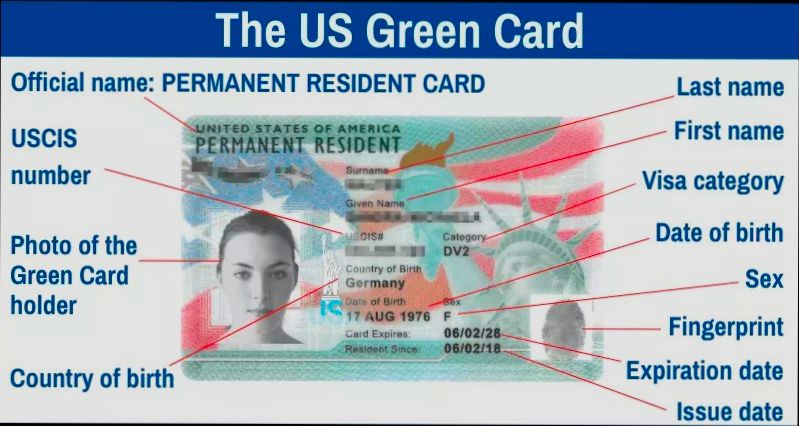
Your green card contains several fields that help identify you and describe your permanent resident classification. Review them as soon as the card arrives, because a printing error can create problems when you prove your status, complete employment paperwork, or prepare for travel.
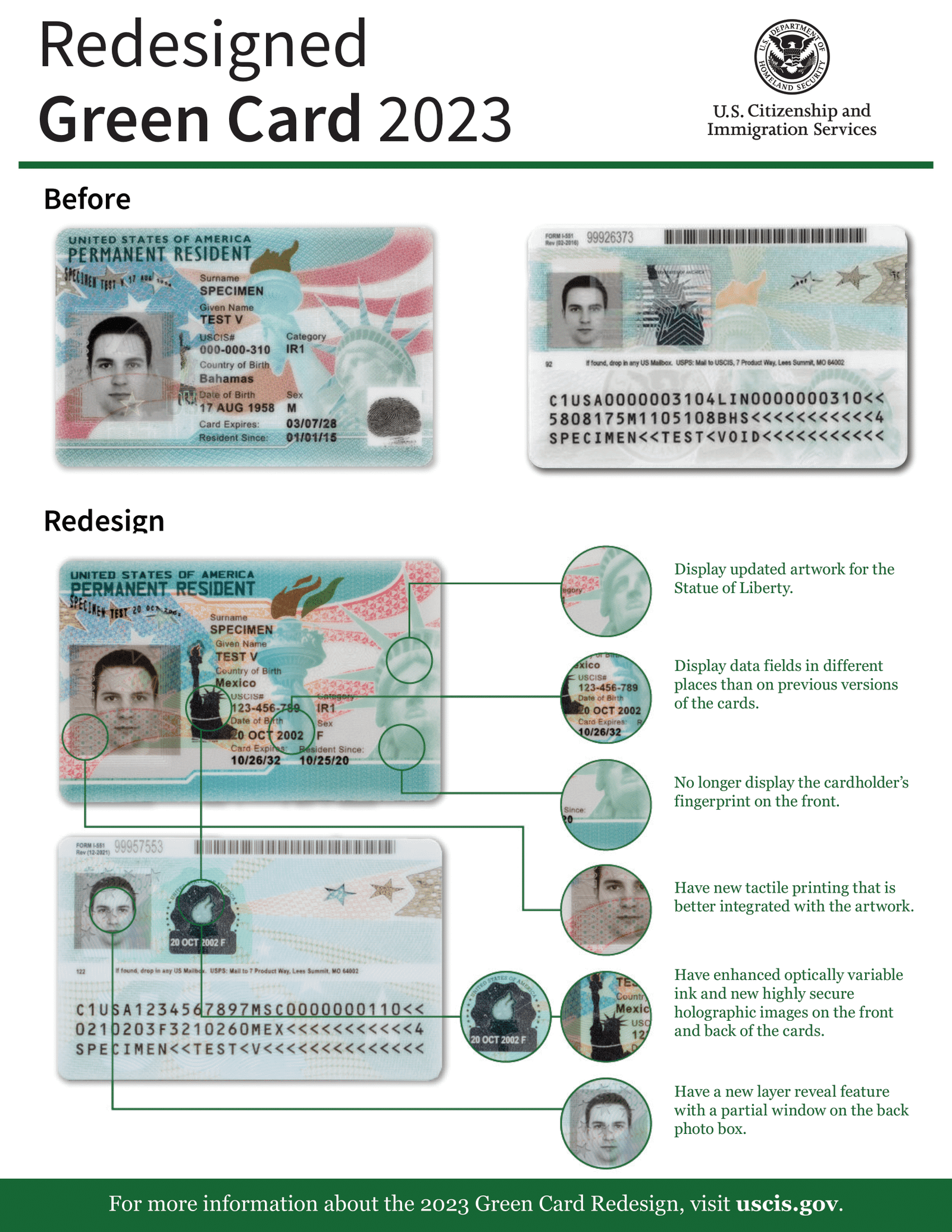
The card’s layout and security features may change as USCIS updates its design. Older cards may look different from newer cards, so a difference in appearance does not automatically mean a document is invalid. Use official USCIS information if you are unsure whether a card is genuine or whether a particular field should appear on your version.
Source: imagility.co
Name
Check that your name matches the information USCIS should have used for your case. If it is misspelled or arranged incorrectly, review the official process for correcting a card.
Date of birth
Confirm that the date is accurate. A wrong date can cause identity verification problems.
Photograph
Check that the photograph is yours and is printed clearly enough to identify you.
USCIS identification number
The card includes an identifying number used in immigration records. Keep this information private and share it only when needed for a legitimate purpose.
Category and resident status information
The card records a classification associated with your immigration case. The category can help distinguish different types of permanent residence.
Card expiration date
Check when the card expires. The expiration date on the physical card does not always mean that permanent resident status itself expires on that date.
Security features
Modern cards include features designed to help prevent fraud and counterfeiting. Do not rely on one visual feature alone to judge authenticity.
Does the green card expire?
Many regular permanent resident cards are issued for 10 years, while conditional permanent resident cards are commonly issued for two years. The rules for renewing or replacing a card depend on the type of card and your immigration circumstances.
For a conditional resident, the expiration date is especially important because the person generally must take the required steps to remove the conditions on residence. This often involves Form I-751 for certain marriage-based cases or Form I-829 for qualifying investor cases. These are different processes from simply renewing a regular 10-year card.
An expired physical card does not automatically mean that a person has lost permanent resident status. However, an expired card can make it harder to prove status or complete certain transactions. Check the rules that apply to your case before taking action.
What if your card has a spelling mistake?
Do not ignore an error in your name, date of birth, or other key information. Compare the card with your approved application and supporting records, then consult the USCIS instructions for correcting a card issued with an error. The correct filing method may depend on whether the mistake was caused by USCIS or by information submitted with your application.
Keep the envelope, the card, and any related notices until you have confirmed the appropriate correction process. Avoid altering the card yourself, because it is an official secure document.
What Is Not Usually Included in the Green Card Package?
Many new permanent residents expect one envelope to contain every document they need for life in the United States. In practice, different agencies issue different records, and their delivery schedules may not match. You may receive your green card without receiving your Social Security card, passport, or any other identification document at the same time.
Knowing what comes separately can save you from waiting for a document that was never meant to be included. If you need a particular record for employment, travel, or a government service, check which agency issues it and whether you must apply separately.
Source: housenix.com
Social Security card
The Social Security Administration issues Social Security cards. If you requested a Social Security number through the relevant immigration application process, the card may be mailed separately. If you did not request one or do not receive it, check the Social Security Administration’s instructions.
Employment Authorization Document
An Employment Authorization Document, often called an EAD or work permit, is a separate document. Permanent residents generally have authorization to work based on their status, so they do not need an EAD simply to replace the green card.
Passport
Your passport remains a separate travel document issued by your country. USCIS does not normally include a passport in a green card mailing.
Driver’s license or state ID
State motor vehicle agencies issue driver’s licenses and state identification cards. Eligibility and required documents vary by state.
Immigrant visa packet
A person who immigrates through a US consulate may have received an immigrant visa and, when required, a sealed or electronically processed immigration packet before traveling. These are part of the entry process, not a standard set of items that arrives with the physical green card.
Original civil documents
Birth certificates, marriage certificates, police certificates, and other supporting records are generally handled during the application or interview process. They are not standard contents of the green card mailing.
Will your Social Security card arrive with your green card?
Not necessarily. If you asked for a Social Security number through your immigration application, the Social Security Administration may use the information provided by USCIS to issue your card separately. The two cards may arrive on different days, even if the agencies have processed the related information.
If your Social Security card does not arrive within the applicable period, check the Social Security Administration’s current guidance. You may need to contact the agency or apply through the appropriate process. Do not assume the green card package is incomplete merely because the Social Security card is absent.
Do you need a work permit after getting a green card?
Lawful permanent residents generally have authorization to work in the United States because of their immigration status. A separate EAD is not normally required to establish work authorization once permanent residence has been granted. Employers must still follow the applicable employment eligibility verification rules.
If your permanent residence has been approved but you have not yet received the physical card, the documents you can use to establish work authorization may depend on your situation. Check official USCIS guidance before deciding which documents to present.
Does Your Green Card Package Differ by Immigration Category?
Yes. The process leading to your green card can affect what you receive and when it arrives. The physical card serves the same broad purpose for lawful permanent residents, but the steps before delivery can differ between applicants who adjust status in the United States and immigrants who obtain a visa through a US embassy or consulate.
Your immigration category can also determine whether you receive a conditional card, whether a separate fee must be paid, and which notices are relevant to your case. The following comparison shows the main differences without assuming that every applicant receives identical paperwork.
Source: immi-usa.com
Adjustment of status inside the United States
An applicant who becomes a permanent resident through Form I-485 generally receives the physical card by mail after approval. USCIS may also send an approval notice or welcome correspondence.
Consular processing outside the United States
An applicant approved for an immigrant visa abroad generally uses the visa to seek admission as a permanent resident. USCIS then processes and mails the physical card after entry and completion of applicable requirements, including the USCIS Immigrant Fee when required.
Marriage-based conditional residence
Some people who obtain permanent residence through marriage receive a two-year conditional card. They must follow the applicable process to remove the conditions rather than treating the card as an ordinary 10-year card.
Employment-based permanent residence
An employment-based applicant may receive a regular permanent resident card after approval. The physical package does not automatically include employment records, a job contract, or an employer-sponsored work permit.
Refugee or asylee adjustment
People who become permanent residents through refugee or asylum-related processes may have different underlying records and eligibility dates. The card itself remains evidence of permanent resident status, but case-specific documents and timelines may differ.
What happens if you immigrate from outside the United States?
If you complete immigrant visa processing at a US embassy or consulate, you generally receive an immigrant visa in your passport after approval. Depending on the case and the government’s processing method, you may also receive instructions or a sealed packet for presentation to US immigration authorities. Some cases are processed electronically and do not require a physical sealed packet.
After you enter the United States and are admitted as a lawful permanent resident, USCIS processes your Permanent Resident Card. In cases where the USCIS Immigrant Fee is required, the fee must be paid before the card can be issued. The fee is separate from any other visa or application fees.
Keep your passport, immigrant visa records, entry information, and payment confirmation until you have received your card and checked your records. If you need to travel before the physical card arrives, review official guidance for your particular circumstances instead of assuming that a copy of the visa or a payment receipt is enough for every trip.
What happens after adjustment of status?
When USCIS approves Form I-485, the applicant generally becomes a lawful permanent resident under the applicable rules. USCIS then produces and mails the green card to the address on file. A welcome notice may arrive before the card, and the case status may change as the card moves through production and delivery.
If you recently moved or expect to move, check that USCIS has the correct mailing address. A card sent to an old address can be difficult to recover, and an incorrect address may delay delivery. Follow the official address-change procedure promptly.
How Long Does It Take to Receive the Green Card Package?
The delivery time depends on your immigration process, whether you must pay the USCIS Immigrant Fee, and how quickly USCIS produces and mails your card. Approval does not always mean the physical card will arrive immediately. You may see a status update about approval or card production before the package reaches your mailbox.
For immigrants who entered the United States using an immigrant visa, USCIS provides a processing-time guide that explains when the card may be expected based on the entry date and payment date. The published guidance has used a period of up to 90 days in the relevant situations, but this is not a guarantee for every case. Check the current USCIS estimate rather than relying on an old deadline.
For people who adjusted status inside the United States, use the case status and any current USCIS instructions that apply to your approved application. Do not assume that the same timeline applies to every immigration category.
Source: estudykit.com
Step 1: Check the approval notice
Confirm that your case has been approved and review any instructions or conditions included in the notice.
Step 2: Confirm the mailing address
Make sure USCIS has your current and complete US mailing address. Update it through the official process if necessary.
Step 3: Check the USCIS case status
Use the official Case Status Online service or your USCIS online account to see whether the card is being produced or has been mailed.
Step 4: Look for tracking information
If USCIS provides a USPS tracking number, use it to check delivery progress. You can also consider USPS Informed Delivery if the service is available for your address.
Step 5: Follow up when the applicable period has passed
Use the USCIS card-delivery inquiry process when you meet its requirements. The appropriate waiting period depends on the notice, the case type, and the current official guidance.
What if your green card has not arrived?
Start by checking your USCIS account and the case status. A card may still be in production, awaiting mailing, or moving through the postal system. Check the address on file and review any notice about the USCIS Immigrant Fee if your case requires that payment.
USCIS provides a non-delivery inquiry process for eligible cases. Its instructions set waiting periods and other conditions, so read the current guidance before submitting a request. An inquiry about a recently approved application may be premature if the required waiting period has not passed.
If tracking shows delivery but you cannot find the card, check with household members, building management, or the postal service as appropriate. Keep records of your checks and any delivery information. If the card appears to be lost or stolen, follow the official USCIS procedure for your situation.
What Should You Do After Receiving Your Green Card?
Once your green card arrives, check it before storing it away. Confirm that the card belongs to you, that the identifying details are correct, and that the card category and expiration date match your situation. Keep the envelope and related notices until you are satisfied that the delivery is complete and no correction is needed.
Your green card is valuable proof of immigration status. Protect it from damage, avoid sharing photographs of it publicly, and keep a secure record of the information you may need for official forms. A digital copy can help with your personal records, but it does not replace the original card when an agency or employer requires the official document.
Source: translateday.com
Store the card safely
Keep the card in a secure place when you are not carrying it. Do not laminate it or alter it.
Check your other records
Make sure you have the relevant approval notice, passport, Social Security information, and other documents needed for your circumstances.
Understand your work rights
Lawful permanent residents generally may work in the United States, subject to applicable legal restrictions and employment verification requirements.
Plan travel carefully
A green card is important for returning to the United States after temporary travel abroad, but it does not replace your passport or guarantee admission in every circumstance. Review travel rules before leaving.
Track the expiration date
Set a reminder well before the card expires. Conditional residents should pay particular attention to the separate deadline for removing conditions.
Report address changes
Permanent residents generally must notify USCIS of a change of address within the required period. Follow the current USCIS instructions so that future notices reach you.
Can you travel while waiting for the physical card?
The answer depends on how you became a permanent resident and what temporary evidence you hold. A person admitted to the United States with an immigrant visa may have a passport endorsement that serves as temporary evidence of permanent resident status for a limited period, subject to the rules that apply to that document. Other applicants may have different evidence.
Before leaving the United States without a physical green card, verify what documents you need to return and whether your evidence remains valid for the planned trip. Airlines and border officials may have specific document requirements. Do not rely on an approval notice alone unless official guidance confirms that it is sufficient for your circumstances.
What if your green card is damaged or contains an error?
A damaged card or incorrect printed detail may require a replacement or correction. USCIS uses Form I-90 for many permanent resident card replacement and renewal requests, but not every problem should be handled in the same way. Read the current form instructions to determine the correct procedure and whether a fee applies.
If the error resulted from a government printing mistake, the correction process may differ from a case where the original application contained incorrect information. Keep the card and supporting records until USCIS tells you what to submit. Never attempt to repair, rewrite, or change official information on the card yourself.
Frequently Asked Questions
Q
Does a green card package include the original approval notice?
Not always. USCIS may mail an approval notice or welcome notice separately from the physical green card. The documents you receive depend on your case and the agency’s processing steps. Keep any notice you receive and check your case status if an expected document is missing.
Q
Will I receive my Social Security card in the same envelope?
Usually, you should not expect the Social Security card to be inside the green card package. The Social Security Administration issues that card separately, even when you requested a number through your immigration application. If it does not arrive, check the agency’s official instructions.
Q
Do I have to pay a fee before receiving my green card?
Some immigrants who receive an immigrant visa through consular processing must pay the USCIS Immigrant Fee before USCIS can issue the physical card. Certain categories are exempt. People adjusting status inside the United States follow a different process, so check the fee rules that apply to your case.
Q
What should I do if my green card arrives with the wrong name?
Compare the card with your approved application and supporting records. Do not alter the card yourself. Review the current USCIS instructions for correcting an incorrectly issued card, because the procedure may depend on whether the error was made by USCIS or came from information in your application.
Q
Can I work in the United States as soon as my green card is approved?
Lawful permanent residents generally have authorization to work in the United States. The documents you can use to prove your status and work authorization may depend on whether you already have the physical card or other valid evidence. Follow the applicable employment verification rules and official guidance for your situation.
Q
What should I do if my green card never arrives?
Check your USCIS case status, confirm your mailing address, and look for any required fee or outstanding instruction. If the applicable waiting period has passed, submit a non-delivery inquiry through the official USCIS process. If the card was delivered but is missing, document what happened and follow the instructions for your case.
Q
Is a green card valid forever?
No physical green card should be assumed to be valid forever. Many regular cards are issued for 10 years, while conditional cards are generally issued for two years. The expiration of a physical card does not automatically mean permanent resident status has ended, but renewal, replacement, or removal-of-conditions requirements may apply.
✦ Wrapping Up
Conclusion
A US green card package mainly provides your Permanent Resident Card, Form I-551, which serves as official evidence of lawful permanent resident status. You may also receive a welcome notice or other case correspondence, but the exact contents and delivery schedule depend on how you obtained permanent residence. Your Social Security card, passport, work permit, and other records are separate documents and should not be assumed to be included.
After your card arrives, check every important detail, store it securely, and keep your immigration records organized. If the card is late, damaged, lost, or incorrect, use the official USCIS instructions to find the right next step. For questions involving travel, conditional residence, or a complicated immigration history, seek guidance from USCIS or a qualified immigration attorney.
💡 Key Takeaway
When your green card package arrives, verify your personal details and expiration date, confirm that USCIS has your correct address, and keep the card and related notices in a safe place. If anything is missing or incorrect, check your USCIS account and follow the official instructions before filing another application.