Thank you for reading this post, don't forget to subscribe!
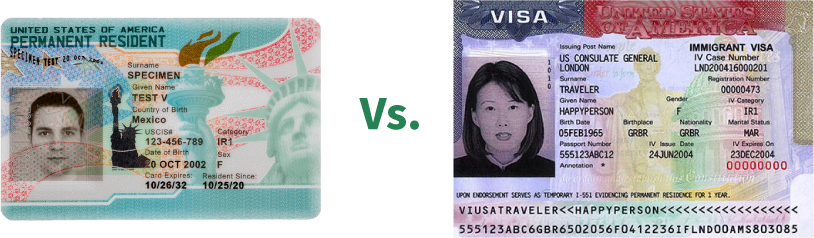
No. A U.S. green card is not a visa. It is a permanent Resident Card, officially known as Form I-551, that serves as proof of lawful permanent resident status in the United States. A visa generally allows a foreign national to travel to a U.S. port of entry and request admission for a specific purpose. An immigrant visa can lead to permanent residency after the holder is admitted as a permanent resident.
For people living in, working in, or planning to move to the United States, understanding the difference between a visa and a green card can prevent costly mistakes. U.S. immigration law treats these documents differently because they serve different purposes. A visitor visa, student visa, work visa, immigrant visa, and green card each have distinct rules.
A green card holder is generally authorized to live and work permanently in the United States, subject to immigration law. A person holding a temporary visa usually has permission to stay for a limited period and must follow the conditions of that visa. An immigrant visa is a separate document used in the process of becoming a permanent resident through consular processing abroad.
The key distinction is between a document and an immigration status. A visa is a travel and admission document, while a green card provides evidence of lawful permanent resident status. This guide explains how the two differ, what each allows, how an immigrant visa leads to a green card, and what these distinctions mean for work, travel, and future U.S. citizenship.
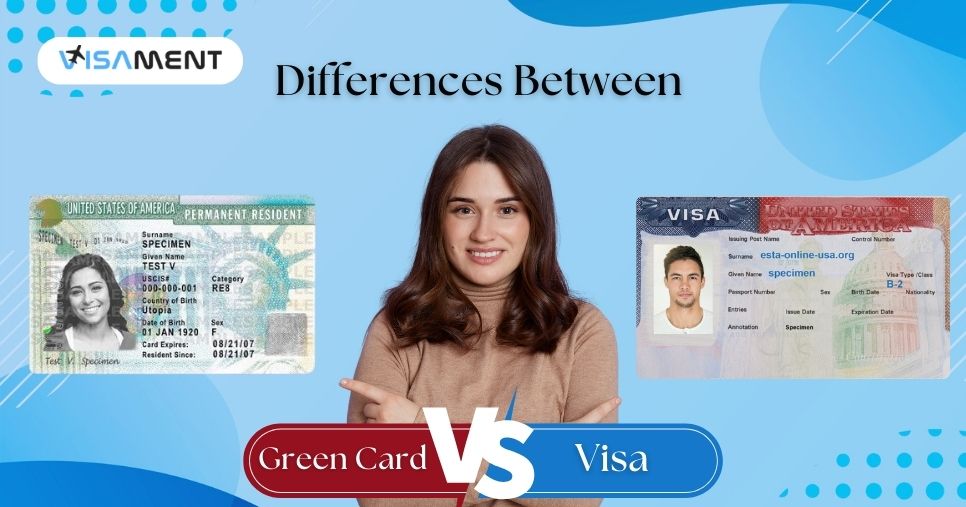
No, a green card and a visa are different under U.S. immigration law. A green card is proof that a person has lawful permanent resident status. A visa is generally issued by a U.S. embassy or consulate and allows a foreign national to travel to a U.S. port of entry to seek admission under the terms of the visa.
The difference matters because the documents serve different legal purposes. A person with a valid tourist visa may be allowed to seek entry for a temporary visit, but that visa does not grant permanent residence. A person with a green card has already obtained permanent resident status and is generally authorized to live and work in the United States.
The terms can cause confusion because both documents are connected to immigration. Some people receive an immigrant visa abroad and later receive a green card after entering the United States as permanent residents. However, the immigrant visa and the green card are not interchangeable documents.
Source: immigration-residency.com
Green card
A Permanent Resident Card, Form I-551, that provides evidence of lawful permanent resident status in the United States.
Visa
A document generally issued by a U.S. embassy or consulate that allows its holder to travel to a U.S. port of entry and request admission under a particular visa classification.
Immigrant visa
A visa for a person seeking to immigrate to the United States. Admission with the appropriate immigrant visa can establish lawful permanent resident status.
Nonimmigrant visa
A visa for a temporary purpose, such as tourism, study, or certain types of employment, subject to the classification’s rules.
Why the Difference Matters
Imagine that a traveler from another country receives a U.S. visitor visa. The visa may allow the traveler to seek admission for a temporary trip, but it does not give the traveler an unrestricted right to live or work in the United States. The authorized stay is determined by the admission decision and applicable immigration rules.
Now consider someone who has a green card. That person is generally permitted to live and work permanently in the United States, even though the physical card has an expiration date. The person must still comply with immigration law and maintain permanent resident status.
What Is a U.S. Green Card?
A U.S. green card is the common name for the Permanent Resident Card, officially designated Form I-551. The card serves as evidence that its holder is a lawful permanent resident, often called an LPR. This status generally allows a person to live and work permanently in the United States.
The U.S. Citizenship and Immigration Services, or USCIS, handles many green card applications and card-related services. A person may become a permanent resident through an eligible family relationship, employment, certain humanitarian programs, or another immigration category established by law. The requirements depend on the specific category and the applicant’s circumstances.
A green card is more than permission to enter the country. It documents an immigration status that carries rights and responsibilities. Permanent residents must obey U.S. laws, comply with applicable tax obligations, and avoid conduct that could make them removable or otherwise jeopardize their status.
Source: veeza.com
Permanent residence
A green card holder generally has permission to live in the United States permanently, subject to immigration law.
Employment
Permanent residents are generally authorized to work in the United States without needing a separate employment authorization document for ordinary employment.
Official proof
Form I-551 provides evidence of permanent resident status and is commonly used for employment verification and other administrative purposes.
Conditional residence
Some residents receive conditional permanent resident status, often for two years. They must follow the rules for removing those conditions to retain permanent residence.
Does a Green Card Expire?
Yes, the physical card generally has an expiration date. Many standard green cards are issued with a 10-year validity period, while conditional green cards are generally valid for two years. The exact document and status rules depend on the person’s category.
An expired card does not automatically mean that a person’s lawful permanent resident status has ended. However, the card may no longer be acceptable as current proof for certain purposes. Eligible permanent residents should follow USCIS instructions to renew or replace their cards, usually by filing Form I-90 when applicable.
Conditional residents must pay special attention to the deadline for filing the correct petition to remove conditions. Filing a routine card renewal form is not a substitute for the required process.
Who Issues a Green Card?
USCIS issues Permanent Resident Cards. A person applying from within the United States may become a permanent resident through an approved adjustment of status application. A person applying from abroad generally completes immigrant visa processing through the U.S. Department of State and becomes a permanent resident after being admitted to the United States in that status.
What Is a U.S. Visa?
A U.S. visa is generally a document placed in a foreign national’s passport or issued in an authorized format by a U.S. embassy or consulate. It indicates that the person has been found eligible to seek admission to the United States under a particular classification. It does not, by itself, guarantee that the person will be admitted.
U.S. visas fall into two broad groups: nonimmigrant visas for temporary purposes and immigrant visas for people seeking permanent immigration. The classification determines the applicable requirements and permitted activities. The length of visa validity is not necessarily the same as the period a traveler may stay in the United States.
For example, a visitor visa may be valid for several years, depending on the applicant’s nationality and applicable rules. That does not mean the traveler may remain in the country for that entire period. The authorized stay is determined separately when the person is admitted, and the traveler must follow the conditions of that admission.
Source: grahamadair.com
B-1 or B-2 visitor visa
Generally covers qualifying business visits or tourism and other permitted temporary visitor activities. It does not ordinarily authorize employment.
F-1 student visa
Is used by eligible academic students. Study and employment are subject to specific immigration rules and restrictions.
H-1B work visa
Is associated with qualifying specialty-occupation employment and has specific eligibility, employer, and status requirements.
K-1 fiancé(e) visa
Allows an eligible foreign fiancé(e) of a U.S. citizen to seek entry for marriage under the applicable rules. It is not itself a green card.
Immigrant visa
Is intended for an eligible person seeking permanent immigration. Admission as a permanent resident can lead to issuance of a green card.
Does a Visa Guarantee Entry Into the United States?
No. A visa generally permits its holder to travel to a U.S. port of entry and request admission. U.S. Customs and Border Protection officers determine whether the traveler may enter, subject to applicable law and the circumstances of the case.
A traveler should check the visa’s expiration date, passport validity, admission requirements, and permitted activities before departure. A visa that remains valid does not authorize activities prohibited by its classification or override a separate limit on the authorized stay.
Green Card vs. Visa: Key Differences
The main difference between a green card and a visa is the legal purpose of each document. A green card is evidence of permanent resident status, while a visa generally supports a request for admission under a particular immigration classification. The comparison below highlights the most useful distinctions.
These general differences do not replace the rules for a specific immigration category. For example, an immigrant visa is different from a tourist visa, and some visa classifications allow certain employment while others do not. The exact rights of an individual depend on the person’s status and the applicable law.
Source: taxuni.com
Purpose
A green card documents lawful permanent residence. A visa generally allows a foreign national to travel to a U.S. port of entry and seek admission for a defined purpose or immigration category.
Length of stay
Permanent residents may generally live in the United States indefinitely while maintaining their status. Temporary visa holders must follow their classification’s rules and authorized period of stay.
Employment
Green card holders are generally authorized to work for U.S. employers. Visa holders may work only when their classification and individual circumstances permit it.
Issuing authority
USCIS issues green cards. U.S. embassies and consulates generally issue visas abroad, while U.S. Customs and Border Protection makes admission decisions at ports of entry.
Travel
A visa is generally used to seek admission to the United States. A green card is evidence of permanent resident status and is generally used with the required travel documents for returning residents.
Citizenship
Neither a visa nor a green card automatically grants U.S. citizenship. Certain permanent residents may later qualify to apply for naturalization.
Comparison Table: Green Card vs. Visa
Use this table as a quick reference when deciding which document or immigration status applies to a situation.
Green card
Permanent resident status; generally permits permanent residence and employment; issued by USCIS; physical card usually expires after a set period.
Temporary visa
Supports travel and a request for admission for a temporary purpose; activities and length of stay are restricted by the classification and admission rules.
Immigrant visa
Used in the process of immigrating from abroad; can lead to permanent resident status after admission as an immigrant.
Which Document Gives More Freedom?
For a person who wants to live and work permanently in the United States, lawful permanent resident status generally provides broader rights than a temporary visa. A permanent resident is not normally tied to one temporary purpose, such as tourism or a particular course of study.
However, permanent residence is not the same as citizenship. Green card holders cannot vote in federal elections, do not receive U.S. passports solely because they hold green cards, and may lose their status under certain circumstances. Some jobs also require U.S. citizenship.
Can an Immigrant Visa Become a Green Card?
An immigrant visa can lead to a green card, but the two documents are not the same. An eligible applicant usually completes the required immigrant visa process abroad, receives an immigrant visa if approved, and travels to the United States before the visa expires. The person must then be admitted in the appropriate immigrant classification to become a lawful permanent resident.
After admission, USCIS processes the Permanent Resident Card. An immigrant fee may be required before the card is produced, subject to applicable exceptions. The physical card is generally mailed to the U.S. address provided during the process.
A person who is already in the United States may qualify to apply for adjustment of status instead. This process commonly involves Form I-485, Application to Register Permanent Residence or Adjust Status, and requires the applicant to meet the eligibility rules for the relevant category. Not everyone holding a temporary visa qualifies to adjust status.
Source: glennimmigration.com
Step 1: Establish eligibility
The applicant must qualify under a recognized immigrant category, such as an eligible family-based or employment-based category or another available pathway.
Step 2: Complete the applicable process
Applicants processing abroad generally complete immigrant visa procedures with the Department of State. Eligible applicants in the United States may pursue adjustment of status through USCIS.
Step 3: Obtain the required approval
The relevant agency must approve the application and determine that the applicant meets the applicable legal requirements.
Step 4: Become a permanent resident
For consular processing, the applicant generally becomes a permanent resident after admission to the United States in the immigrant classification. In an adjustment case, permanent resident status is established when USCIS approves the adjustment application.
Step 5: Receive proof of status
The Permanent Resident Card is issued as evidence of the person’s status. Applicants should follow USCIS instructions about fees, delivery, and any temporary proof of status.
Can You Get a Green Card Without a Visa?
Yes. Some people become permanent residents without first receiving an immigrant visa abroad. For example, an eligible person already in the United States may be able to adjust status through USCIS. Eligibility depends on the immigration category, the person’s entry and immigration history, and any applicable restrictions.
Other pathways may apply to refugees, asylees, certain special immigrants, and other eligible applicants. Each category has its own rules, filing requirements, and deadlines. A person should not assume that having a U.S. citizen relative, holding a temporary visa, or living in the United States for a long time automatically creates eligibility for a green card.
Can You Apply for a Green Card While on a Tourist Visa?
Some people who entered on a tourist visa may later qualify for adjustment of status, but a tourist visa does not itself provide a right to obtain a green card. Eligibility depends on the applicable immigration category and other legal requirements.
Intent and conduct at the time of visa application and entry can matter. Misrepresenting the purpose of a trip or concealing material facts may create serious immigration problems. Anyone considering a change from a temporary visit to permanent immigration should obtain reliable legal guidance before taking action, especially if the person made plans to immigrate before entering the country.
Can Green Card Holders Work and Travel Freely?
Green card holders generally have broad permission to work in the United States, but permanent residence does not remove every restriction. Certain jobs require U.S. citizenship, and professional licensing or other employment requirements may still apply. Permanent residents must also continue to comply with U.S. immigration law.
Travel outside the United States is generally allowed, but extended absences can create problems. Immigration officials may examine whether a permanent resident has maintained the United States as their permanent home. A long trip abroad, especially one involving work or establishing a residence in another country, may raise questions about abandonment of permanent residence.
A green card is not a universal travel document. A permanent resident generally needs a valid passport or other appropriate travel document and must satisfy the entry requirements of the destination country. The destination may require a visa even when the traveler holds a U.S. green card.
Source: visament.com
Employment rights
Permanent residents can generally work for most U.S. employers without obtaining a separate employment authorization document, subject to applicable restrictions.
International travel
Permanent residents can generally travel abroad and seek to return with the required documents, but lengthy absences can affect their status.
Reentry documents
A valid green card is commonly used as evidence of permanent resident status when returning from a temporary trip, together with other required travel documents.
Travel to other countries
A green card does not automatically grant visa-free entry to every country. Check the destination’s rules for the passport you hold and your individual circumstances.
What Happens If You Stay Outside the United States for a Long Time?
There is no single rule that makes every trip abroad harmless until a fixed date. An absence of one year or more can create serious reentry problems for a permanent resident who has not obtained the appropriate documentation. Even shorter absences can raise questions when the person’s conduct suggests that the United States is no longer their permanent home.
A reentry permit may help certain permanent residents demonstrate that they intended to return after a planned extended absence, but it is not an absolute guarantee of admission or a permanent solution to every residency issue. People planning long stays abroad should review current USCIS and Customs and Border Protection guidance before leaving.
If you have already remained abroad for an extended period, review your documents and circumstances carefully before traveling. An immigration attorney can help assess whether a reentry permit, returning resident visa, or another process may be relevant.
Does a Green Card Make You a U.S. Citizen?
No. A green card gives a person lawful permanent resident status, not U.S. citizenship. Permanent residents generally have the right to live and work in the United States, but citizenship provides additional rights, including the right to vote in federal elections and eligibility for a U.S. passport.
Many permanent residents may eventually qualify to apply for naturalization. The common route requires at least five years as a lawful permanent resident, while certain eligible spouses of U.S. citizens may qualify under a three-year statutory period. Other requirements apply, including continuous residence, physical presence, good moral character, and English and civics requirements unless an exception applies.
Meeting the required number of years does not automatically grant citizenship. The applicant must satisfy the applicable eligibility criteria, submit the required application, complete the naturalization process, and take the oath of allegiance when required. Some circumstances can affect eligibility or the calculation of the relevant time period.
Source: immigration-residency.com
Green card holders
Generally may live and work permanently in the United States, subject to immigration law, but cannot vote in federal elections merely because they are permanent residents.
U.S. citizens
Have citizenship rights, including the right to vote in federal elections, eligibility for a U.S. passport, and the ability to apply for certain federal jobs that require citizenship.
Naturalization applicants
Must meet the applicable statutory requirements. Holding a green card for a particular number of years is only one part of the process.
How Long Must You Have a Green Card Before Applying for Citizenship?
Many permanent residents can apply for naturalization after five years as permanent residents if they meet all other requirements. Certain spouses of U.S. citizens may qualify after three years when the applicable marriage, residence, and other conditions are satisfied.
Some applicants may be able to file Form N-400 shortly before reaching the required residence period under the early-filing rule. That rule does not waive the other naturalization requirements. Because travel, tax history, criminal issues, and other facts can affect eligibility, applicants should use the current USCIS instructions rather than relying on a simple calendar calculation.
Common Mistakes About Green Cards and Visas
Many immigration mistakes begin with treating every document as proof of the same rights. A visa, an admission record, an employment authorization document, and a green card have different legal functions. Understanding which document controls a particular issue can help prevent missed deadlines, unauthorized employment, and travel complications.
Source: grahamadair.com
Mistake: A visa guarantees entry
A visa generally allows a person to travel to a U.S. port of entry and request admission. Customs and Border Protection makes the admission decision under applicable law.
Mistake: Visa validity equals permitted stay
The visa’s expiration date is not the same as the authorized period of stay. Check the admission record and the rules that apply to your classification.
Mistake: A green card is citizenship
Permanent residents are not U.S. citizens. Citizenship requires a separate legal basis, such as birth or successful naturalization.
Mistake: An expired green card always ends status
The physical card can expire while permanent resident status continues. However, a person should follow the correct renewal or replacement process and maintain acceptable evidence of status.
Mistake: A green card permits work anywhere
A green card generally authorizes employment in the United States, not employment in every other country. Foreign employment and residence rules remain separate.
Mistake: Any visa can be changed into a green card
A person must qualify under a specific immigration pathway. Holding a visa or living in the United States does not automatically create eligibility for permanent residence.
Mistake: Leaving the United States cannot affect permanent residence
Long absences and conduct showing an intention to live abroad may create abandonment concerns or other reentry problems.
When Should You Seek Immigration Legal Advice?
Consider consulting a qualified U.S. immigration attorney when your situation involves a prior visa denial, alleged misrepresentation, a criminal record, an overstay, unauthorized employment, a complicated family petition, a long absence from the United States, or uncertainty about adjustment of status.
These matters can have consequences that are difficult to reverse. General articles can explain common rules, but they cannot determine eligibility without the relevant facts and documents. Use official USCIS, Department of State, and Customs and Border Protection information to verify current procedures, and seek individualized legal advice when the stakes are high.
Frequently Asked Questions
Q
Is a green card considered a visa?
No. A green card is a Permanent Resident Card, Form I-551, that provides evidence of lawful permanent resident status in the United States. A visa is generally a document that allows a foreign national to travel to a U.S. port of entry and request admission under a specific classification.
Q
Can I live in the United States permanently with a visa?
A temporary visa generally does not grant permanent residence. It permits certain activities for a limited period under the applicable rules. An immigrant visa can lead to permanent residence after the holder is admitted as an immigrant, while some eligible people in the United States may qualify for adjustment of status.
Q
Can I work in the United States with a green card?
Yes. Green card holders are generally authorized to work in the United States without obtaining a separate employment authorization document for ordinary employment. Certain jobs require U.S. citizenship, and professional licensing or other job-specific requirements may still apply.
Q
Can I travel outside the United States with a green card?
Generally, yes. Permanent residents can usually travel abroad and seek to return using a valid green card and the required travel documents. Long absences can raise concerns about abandonment of permanent residence, and a green card does not automatically provide visa-free entry to other countries.
Q
Does an expired green card mean I am no longer a permanent resident?
Not necessarily. The expiration of the physical card does not automatically terminate lawful permanent resident status. However, you may need valid proof of status for employment, travel, or other purposes. Follow current USCIS instructions to renew or replace the card, or to address conditional residence requirements when applicable.
Q
Can a green card holder apply for U.S. citizenship?
Yes, if the person meets the naturalization requirements. Many permanent residents may qualify after five years, while certain eligible spouses of U.S. citizens may qualify after three years. Residence, physical presence, good moral character, and other statutory requirements apply.
Q
Is an immigrant visa the same as a green card?
No. An immigrant visa is used by an eligible person seeking to immigrate to the United States through consular processing. After the person is admitted as a permanent resident, the Permanent Resident Card is issued as evidence of that status.
Q
Can I apply for a green card while holding a tourist visa?
Possibly, but a tourist visa does not automatically make someone eligible for a green card. The person must qualify under an available immigration category and satisfy the applicable legal requirements. Misrepresentation about travel purpose or immigration intent can create serious consequences, so individualized legal advice may be appropriate.
✦ Wrapping Up
Conclusion
A green card is not a visa. It is the Permanent Resident Card, Form I-551, which serves as evidence of lawful permanent resident status in the United States. A visa generally allows a foreign national to travel to a U.S. port of entry and request admission under the rules of a specific immigration classification.
The most important difference is the status each document represents. A temporary visa usually covers a limited purpose and period, while a green card generally allows a person to live and work permanently in the United States. An immigrant visa can lead to permanent residence after the required process is completed and the person is admitted in the appropriate status.
Permanent residents must still follow immigration law, maintain their status, and meet the separate requirements for naturalization if they want to become U.S. citizens. They should also plan international travel carefully and keep acceptable evidence of their status. For current forms and procedures, USCIS and the U.S. Department of State are the primary sources to consult.
💡 Key Takeaway
If you are deciding whether you need a visa or a green card, first identify your goal: a temporary visit, study, authorized employment, or permanent residence. Then review the official requirements for the relevant immigration category on USCIS.gov or Travel.State.gov. If your case involves a prior immigration violation, complicated travel history, or uncertainty about eligibility, consult a qualified U.S. immigration attorney before filing an application or making travel plans.