Thank you for reading this post, don't forget to subscribe!
To get sponsorship in the UK, find a job with an employer approved by the UK Home Office, confirm that the role meets the visa rules, receive a valid Certificate of Sponsorship, and apply for the correct work visa. Your job, salary, qualifications, and personal circumstances will affect your eligibility.
For U.S. citizens planning to work in the United Kingdom, visa sponsorship is a key part of the immigration process. A job offer alone does not give an American the right to work in Britain. In most cases, the person must qualify for a suitable immigration route and meet its requirements before starting the job. The same basic principle applies to applicants from other countries, including Bangladesh, India, Nigeria, and Pakistan.
The main route for many overseas professionals is the Skilled Worker visa. Eligible healthcare professionals may qualify for the Health and Care Worker visa, while other routes serve specific types of temporary work, business activity, and international transfers. Each route has its own rules, so the first step is to identify which one fits your planned job.
The most useful approach is to work backward from the visa requirements. Check the occupation, salary, employer, and required qualifications before spending time on an application. Then target employers that can sponsor your role and prepare a focused application that shows why your skills fit the vacancy.
This guide explains how to find a sponsor, apply for jobs, obtain a Certificate of Sponsorship, prepare your visa application, and avoid misleading recruitment offers. Immigration rules can change, so check the latest official UK government guidance before making payments, resigning from a job, or booking travel.
UK visa sponsorship means that an approved employer supports a foreign worker’s immigration application for an eligible job. The employer must follow the rules for its sponsorship license and the immigration route. The worker must also meet the visa requirements.
For most Skilled Worker applicants, sponsorship starts with a genuine job offer. The employer assigns a Certificate of Sponsorship, or CoS, containing details about the job, salary, and employment. The applicant uses its reference number when applying for a visa.
Sponsorship does not mean that the employer can bypass immigration rules. A company cannot make an ineligible job eligible simply by offering it to a foreign applicant. The Home Office may refuse an application if the job, salary, documents, or other requirements do not meet the rules.
It is also useful to separate employer sponsorship from the visa application. The employer handles its sponsorship duties, while the applicant submits the visa application and provides the required evidence. Both sides must complete their part correctly.
Source: cdn6.slideserve.com
Sponsor license
Official permission for an eligible organization to sponsor workers under specified immigration routes.
Certificate of Sponsorship
An electronic record assigned to a worker for a particular sponsored role. The applicant needs its reference number.
Work visa
Immigration permission that allows the applicant to work under the conditions of the approved route.
Eligible vacancy
A job that meets the relevant occupation, salary, sponsor, and other route-specific requirements.
Who Needs Sponsorship?
Many people who do not already have permission to work in the UK need an appropriate work visa. A U.S. citizen visiting Britain as a tourist, for example, cannot use visitor status to take an ordinary job. A job offer does not change that restriction.
Some people can work without employer sponsorship because of their immigration status. This may include British and Irish citizens, people with indefinite leave to remain, and eligible people with settled status. Some visa holders also have work rights that do not require a separate employer-sponsored visa.
Before searching for sponsored jobs, check whether you need sponsorship at all. Your nationality, current visa, residence history, and intended work can change the answer.
Check your status
Use official UK government guidance to identify your work rights and any restrictions.
Which UK Visa Sponsorship Route Should You Choose?
Choose the immigration route that matches your actual job and circumstances. The Skilled Worker visa is a common route for eligible professional and skilled roles, but it is not suitable for every vacancy. Other routes may fit healthcare professionals, seasonal workers, religious workers, or employees transferring within an international company.
Do not assume that every job advertised by a licensed sponsor qualifies for every visa. A sponsor may hold permission for several routes, and each route has separate conditions. The exact duties of the role matter more than a broad job title.
Use the following comparison to narrow your options. Treat it as a starting point, then verify the current official rules for your circumstances.
Source: rkycareers.com
Skilled Worker visa
For applicants with an eligible job offer from an approved sponsor who meet the occupation, salary, English-language, and other applicable requirements.
Health and Care Worker visa
For eligible medical and health professionals, and other qualifying roles under the specific route, with an approved employer and a suitable job offer.
Global Business Mobility routes
For certain employees, specialists, and other eligible workers moving through qualifying international business arrangements.
Temporary Worker routes
For specified forms of temporary work, such as eligible charity, creative, religious, seasonal, or exchange-related work.
Graduate or other unsponsored work permission
Some people already in the UK may have permission to work without an employer-sponsored visa, subject to the conditions of their current route.
Important Changes for Care Workers
Do not rely on old articles claiming that anyone can obtain a new overseas care worker sponsorship offer. The UK closed the overseas application route for new care workers and senior care workers on July 22, 2025. Transitional arrangements may allow certain eligible people already in the UK to apply under specified conditions.
Applicants considering care work should read the latest Health and Care Worker visa guidance and the official rules for the relevant occupation code. A care provider’s presence on a sponsor list does not mean that it can recruit every overseas applicant for every care role.
Verify eligibility first
Check the current occupation rules and any transitional provisions before applying or paying for recruitment services.
Step 1: Check the Eligibility Requirements
Start by checking whether your intended job can support the visa you want. This step can save weeks of effort by helping you rule out vacancies that cannot meet the immigration rules. Use official guidance rather than relying only on a recruiter or a job advertisement.
For the Skilled Worker route, you generally need an offer from an approved sponsor, an eligible occupation, the required salary, and evidence of English-language ability. Other requirements may apply depending on your personal situation and the visa route.
The occupation code is especially important. The UK government groups jobs under occupation codes, and similar job titles can have different codes. Compare the actual duties listed in the vacancy with the official occupation description rather than selecting a code based only on the title.
Source: s3.nationbetter.uk
Check the job
Confirm that the occupation and duties qualify under the route you intend to use.
Check the salary
Compare the offered pay with the applicable minimum and occupation-specific going rate. Some applicants may qualify for different salary provisions.
Check English requirements
Review the current English-language requirement and accepted evidence for your route. Do not assume that a university degree automatically meets every condition.
Check professional registration
For regulated jobs, confirm whether you need UK registration, recognition of qualifications, or other professional approval.
Check your documents
Make sure your passport, education records, employment history, and other required evidence are available and consistent.
Understand the Salary Rules
Salary eligibility is not determined by a single figure for every applicant. Under the standard Skilled Worker rules, the usual threshold is £41,700 per year or the occupation’s applicable going rate, whichever is higher. Exceptions and different salary options may apply to qualifying applicants, so check the rules in force when you apply.
For example, suppose a vacancy offers £42,000 a year, but the applicable going rate for that occupation is £45,000. If the standard salary rules apply, the offer would not meet the usual salary requirement. A lower-paying role might qualify only if the applicant meets a specific permitted salary option or exception.
The salary must be genuine and must comply with the rules for the job. Do not accept an offer that lists one salary on paper but expects you to return part of it to the employer. Such arrangements can create serious immigration and employment problems.
Use the official salary table
Check the current rate for the correct occupation code and account for the hours and salary provisions that apply to the role.
Step 2: Find UK Employers That Can Sponsor You
The most reliable way to build a sponsorship job list is to start with the official Register of Licensed Sponsors: Workers. This register identifies organizations approved to sponsor workers and indicates the relevant sponsorship categories. It is updated over time, so use the latest version rather than an old downloadable copy.
Search the register for employers in your field, then check their career websites for current vacancies. A company appearing on the register is a useful starting point, not proof that every vacancy it advertises is eligible. Confirm the role and route before applying.
Focus on employers that regularly recruit your occupation and can explain their sponsorship process. Hospitals, universities, engineering firms, technology companies, financial services organizations, and other large employers may recruit international staff, but sponsorship depends on the role and the employer’s current authorization.
You do not need to apply to every company on the register. A short list of employers whose vacancies fit your experience and visa eligibility is more useful than hundreds of unrelated applications.
Source: i.ytimg.com
Use the official sponsor register
Find the current government register and search for employers by name, then verify the license category.
Search employer career pages
Look for current openings and details about visa sponsorship, work location, salary, and required experience.
Use reputable job boards
Search established recruitment sites with phrases such as visa sponsorship, Skilled Worker sponsorship, and sponsorship available.
Contact recruiters carefully
Ask whether the specific employer and vacancy support your intended visa route before sharing sensitive documents.
Track each application
Record the employer, vacancy, occupation code if available, date applied, contact person, and follow-up date.
How to Search for Sponsorship Jobs Online
Use search terms that describe both your profession and the visa route. For example, an engineer might search for mechanical engineer Skilled Worker sponsorship, while a nurse could search for registered nurse Health and Care Worker visa jobs.
Read the full vacancy before applying. Some employers sponsor only certain departments, senior roles, or candidates who already have the right to work in the UK. Others may consider sponsorship but require the applicant to meet all salary and qualification rules.
When an advertisement is unclear, contact the employer’s official recruitment team. Ask whether the specific role is eligible for sponsorship, whether the employer holds the required license, and whether the stated salary meets the applicable visa rules.
A useful question
Does this vacancy support sponsorship under the Skilled Worker route, and can you confirm the occupation code and salary range?
Step 3: Prepare a Strong UK Job Application
A well-targeted application gives an employer clear reasons to interview you. Your resume should show the skills, qualifications, and results that match the vacancy. It should also make your work history easy to understand.
A UK resume is often called a CV. For many private-sector roles, a concise CV of about two pages is a practical starting point, although academic, medical, technical, and senior positions may need a different format. Follow the employer’s instructions and avoid adding unnecessary personal information.
Do not make sponsorship the only reason for applying. Employers want to know whether you can perform the work and meet the job’s requirements. Explain how your experience matches the role, then answer questions about your work authorization honestly.
Source: rkycareers.com
Match the vacancy
Use relevant skills and terms from the job description when they accurately reflect your experience.
Show measurable results
Describe achievements such as projects completed, systems improved, clients supported, or work targets met, where you can substantiate them.
List qualifications clearly
Include relevant degrees, professional licenses, certifications, and training without claiming credentials you do not hold.
Explain employment gaps when needed
Give a brief and truthful explanation if a gap is relevant to the employer’s questions.
Use a focused cover letter
Connect your experience to the employer’s needs and state your work authorization position accurately.
How to Answer Sponsorship Questions
If an application asks whether you have the right to work in the UK, answer based on your actual status. Do not say that you have unrestricted work rights if you need an employer-sponsored visa.
You can explain that you would require sponsorship under the relevant route. If you have an existing visa or other permission, describe its conditions accurately and state whether a change of employer or visa would be required.
Prepare to discuss your qualifications, availability, relocation plans, and understanding of the role. Employers may also ask whether you can meet professional registration requirements or provide documents that verify your work history.
Be clear and honest
A direct answer helps the employer assess eligibility early and reduces the risk of misunderstandings later.
Step 4: Apply, Interview, and Confirm the Job Offer
Apply through the employer’s official website or the application channel stated in the vacancy. Follow the requested format, provide accurate details, and submit all required documents. Save a copy of the job description and your application for reference.
If you receive an interview invitation, prepare examples that demonstrate your technical ability, judgment, communication, and knowledge of the role. For regulated or specialist work, be ready to discuss relevant professional standards and registration requirements.
When an employer offers you a job, confirm the terms in writing before moving to the sponsorship stage. The job title, duties, salary, work hours, location, and start date should be clear. Ask the employer to confirm the occupation code and whether it intends to sponsor you under the appropriate route.
An offer is a positive step, but it is not the final immigration decision. The employer must complete its sponsorship duties, and you must submit a valid visa application and meet the relevant requirements.
Source: ghanaeducation.org
Confirm the employer
Use official contact details and check the organization’s identity before sending documents or making decisions.
Review the written offer
Check salary, duties, location, working hours, employment conditions, and any relocation terms.
Ask about the sponsorship timeline
Find out who manages the application, when the employer expects to assign the certificate, and which documents you need.
Keep records
Save correspondence, the contract, the vacancy details, and any documents provided by the sponsor.
What Is a Certificate of Sponsorship?
A Certificate of Sponsorship is an electronic record that the employer assigns through the sponsorship system. It contains information about the sponsored job and provides a reference number for the worker’s visa application.
You do not normally receive a paper certificate that acts as your visa. Instead, the employer gives you the reference number and the information you need to complete your application.
Check that the details match your job offer. If your salary, occupation code, or other key information appears incorrect, ask the employer to resolve the issue before you submit the visa application.
Check the reference number
Make sure you have the correct Certificate of Sponsorship reference and follow the deadline that applies to your route.
Step 5: Apply for Your UK Work Visa
Once your employer has assigned the required Certificate of Sponsorship, use the official government application process for your visa route. Do not submit an application under a route that does not fit your job or immigration circumstances.
For a Skilled Worker application, you will generally need your certificate reference number, passport or other accepted identity document, job title, annual salary, occupation code, employer details, and evidence of English-language ability. Depending on your circumstances, you may need further documents.
Additional evidence can include proof of personal funds, a tuberculosis test certificate where required, certified translations, or documents about eligible family members applying with you. The exact list depends on your circumstances and the current rules.
Review every entry before submitting the application. The information in the application should match your passport, certificate, job offer, and supporting records. If a detail is wrong, ask the employer or the relevant authority how to correct it rather than guessing.
Source: s3.nationbetter.uk
Use the official application page
Start from the UK government’s visa guidance and follow the application link for the correct route.
Pay the applicable fees
Check the current visa application fee and any required health surcharge or other costs. Some routes have different fee arrangements.
Complete identity checks
Follow the instructions for proving your identity, which may involve an approved application center or a digital process.
Attend appointments if required
Provide biometrics or other requested evidence according to the instructions for your application.
Wait for the decision
Use the official processing guidance as a planning reference and avoid making irreversible travel or employment plans before permission is granted.
How Long Does Sponsorship Take?
There is no single timeline for obtaining UK sponsorship. The job search may take weeks or months, depending on the field, experience, employer, and availability of suitable vacancies. An employer may also need time to complete recruitment and assign a certificate.
Visa processing time depends on the application route, where you apply, whether additional checks are needed, and whether a priority service is available. Sponsor license applications also have separate processing times when an employer needs approval before recruiting.
Ask the employer for its expected sponsorship timeline and check the government’s current processing estimates. Treat estimates as planning guidance, not a promise that your case will be decided by a particular date.
Plan in stages
Allow time for recruitment, sponsorship administration, document preparation, and the visa decision.
How Much Does UK Visa Sponsorship Cost?
The total cost depends on the visa route, the length of permission, the applicant’s circumstances, and which expenses the employer agrees to cover. You should separate the employer’s sponsorship costs from the worker’s visa application costs.
Employers generally pay their own sponsor license fees and the required Certificate of Sponsorship fee. For a Skilled Worker, the employer may also need to pay the Immigration Skills Charge unless an exemption applies. Rules restrict employers from passing certain sponsorship costs to workers.
Applicants may need to budget for their visa fee, required health surcharge where applicable, travel to an application center, document translation, professional registration, and relocation. The Health and Care Worker route has different fee and health surcharge treatment from many other work routes.
Check the official fees immediately before applying. Amounts can change, and a fee quoted by a recruitment agency may include optional services rather than a government charge.
Employer costs
These can include sponsor license fees, the Certificate of Sponsorship fee, and any applicable Immigration Skills Charge.
Applicant costs
These may include the visa fee, required health surcharge where applicable, evidence costs, travel, and relocation.
Family costs
If eligible family members apply with you, check the separate fees and evidence requirements for each person.
Optional services
Translation, document handling, or professional advice may cost extra. Confirm the price and the service before agreeing.
Can You Get Sponsorship Without Paying a Recruiter?
Yes. You can search for jobs and apply directly to licensed employers without paying a recruitment agency to find you a sponsor. Many employers publish vacancies on their own career websites.
You may choose to hire a qualified immigration adviser for advice on a complex case, but this is different from paying someone to guarantee a job or visa. No recruiter can guarantee that the Home Office will approve an application.
Be cautious if someone asks you to pay for a Certificate of Sponsorship or to return wages to the employer. Verify the legal responsibilities and the official fees before sending money.
Verify all charges
Check whether a charge is an official applicant fee, an optional service, or an employer cost that should not be transferred to you.
Can You Sponsor Yourself Through a UK Company?
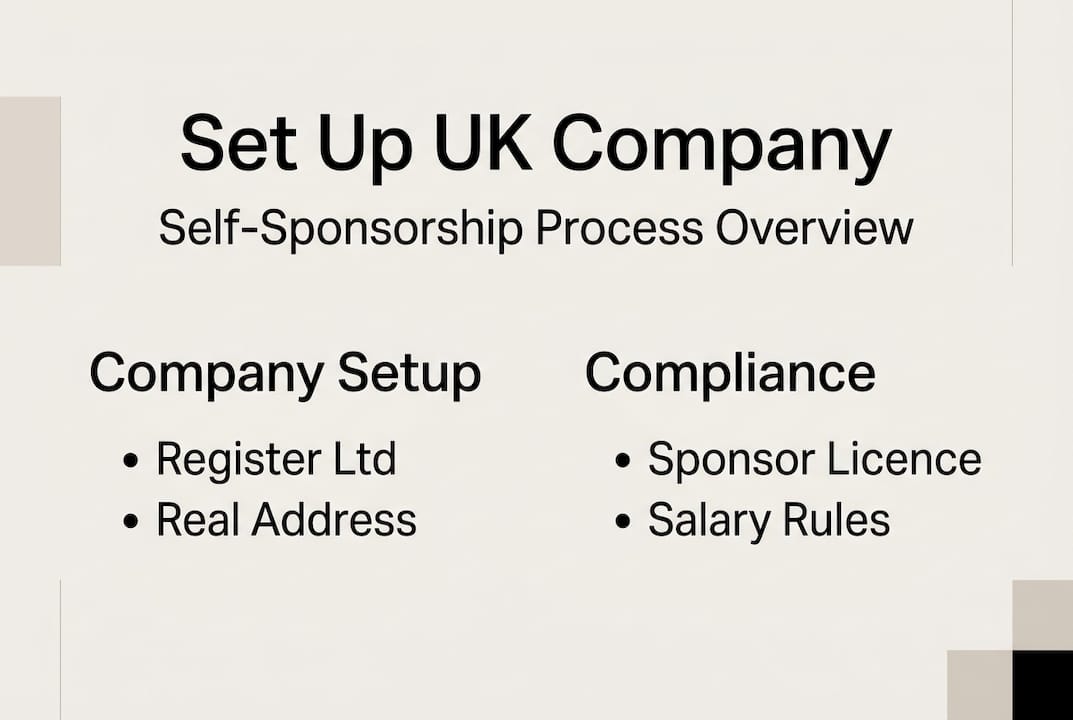
Some business owners explore setting up or using a UK company to employ themselves under an eligible sponsored work route. This is often called self-sponsorship, but it is not a separate visa category and it does not create an automatic right to live or work in the UK.
The business must be genuine, meet the applicable sponsor license requirements, and have a real eligible role that satisfies the immigration rules. The company must also meet its sponsor duties, maintain the required records, and pay the required salary from a legitimate business arrangement.
Registering a company or buying a ready-made business does not by itself make an individual eligible for sponsorship. The Home Office may examine whether the role is genuine, whether the business is operating lawfully, and whether the proposed employment meets the route requirements.
This route can involve complex company, tax, employment, and immigration issues. Before investing money, obtain advice from a qualified UK immigration professional who understands both business sponsorship and the relevant visa rules.
Establish a genuine business
Be prepared to demonstrate lawful business activity, real operations, and a legitimate need for the role.
Check sponsor license requirements
Confirm that the company can qualify for a license and can meet all ongoing sponsorship duties.
Verify the role and salary
The proposed position must meet the current route requirements; company ownership does not remove them.
Assess the financial risk
Account for business setup, operating expenses, professional advice, sponsorship fees, and the possibility that an application may be refused.
Is Self-Sponsorship Better Than Applying for a Job?
For a qualified applicant who wants to work for an established employer, applying for an existing sponsored vacancy is often the more direct route. It avoids the need to build and operate a company solely to create an employment arrangement.
A business route may be worth investigating for someone with a genuine commercial plan, sufficient resources, and a real need to establish UK operations. The deciding factor is whether the business and job meet the rules, not whether the approach sounds easier.
Choose based on eligibility
Compare the requirements, costs, risks, and practical work involved before deciding which route to pursue.
Common Mistakes That Can Delay or Prevent Sponsorship
Most avoidable problems begin before the visa application. Applicants may apply for ineligible jobs, trust an unverified recruiter, misunderstand the salary rules, or provide information that does not match the employer’s records.
You can reduce these risks by checking the official requirements at each stage. If the employer cannot explain the route, the occupation code, or the sponsorship process, pause and seek clarification before committing money or making travel plans.
Applying for jobs that cannot qualify
Check the occupation code, duties, salary, and route before spending time on the application.
Assuming every licensed employer sponsors every vacancy
Confirm that the specific role and proposed salary meet the rules and that the employer intends to sponsor it.
Using an outdated salary threshold
Review the latest official salary table and any exceptions that may apply to your situation.
Submitting inconsistent information
Check that your passport, CV, employment records, job offer, and visa application use accurate and consistent details.
Ignoring professional registration
Find out whether your profession requires registration, recognition, exams, or additional training before you can work.
Paying for a guaranteed job or visa
Treat guaranteed sponsorship claims as a warning sign and verify the employer through independent official channels.
How to Recognize a Sponsorship Scam
A fraudulent recruiter may promise a visa without a proper interview, demand payment for a job offer, or pressure you to transfer money quickly. Other warning signs include email addresses that do not match the employer’s official domain, fake contracts, and requests to return part of your wages.
Verify the vacancy using the employer’s official website and contact the organization through independently obtained contact details. Check the sponsor register, but remember that a scammer can misuse the name of a genuine licensed business.
Do not send money or sensitive documents until you understand who is requesting them and why. If you believe you have been targeted, preserve messages and payment records and report the matter to the relevant authorities or platform.
Never buy a CoS
Do not pay a recruiter or employer for a promise to issue a Certificate of Sponsorship.
Protect your identity
Share passport and financial documents only through verified, appropriate channels.
Seek qualified help
If you have paid money or received suspicious immigration documents, get advice on the safest next steps.
What to Do If You Cannot Find a Sponsoring Employer
If your applications are not producing interviews, review your target roles before sending more applications. The problem may be an occupation that does not qualify, a salary below the required level, missing professional registration, or a CV that does not clearly match the job.
If you receive interviews but no offers, practice explaining your skills with specific examples. Make sure you understand the employer’s work, the position’s requirements, and the practical steps needed to relocate and obtain permission to work.
If employers say they cannot sponsor you, ask whether the issue is the vacancy, the salary, the license category, or their recruitment policy. Their answers can help you decide whether to change the type of role you target or explore another immigration route.
Do not assume that repeated rejections mean you can never qualify. Instead, identify the barrier and address it. Some applicants may benefit from gaining more experience, completing a required qualification, improving their English, or targeting a different eligible occupation.
Narrow your search
Focus on vacancies that match your actual skills and the immigration requirements.
Improve your evidence
Use clear examples of work results, relevant training, and professional achievements.
Explore related occupations
Consider roles that genuinely match your qualifications and have their own verified eligibility.
Review alternative routes
Check whether another work or immigration route fits your circumstances without assuming that it will be easier.
Frequently Asked Questions
Q
How can I get sponsorship in the UK from the USA?
Start by checking whether your intended job qualifies for a UK work visa. Search the official Register of Licensed Sponsors, find a suitable vacancy, and apply directly to the employer. If you receive an eligible offer, the employer can assign the required Certificate of Sponsorship, after which you can apply for the relevant visa.
U.S. citizenship does not by itself give you the right to take an ordinary job in the UK. You must have the immigration permission required for the work you plan to do.
Q
Can I get a UK sponsorship job without experience?
It depends on the occupation and the employer. Some entry-level vacancies may not qualify for the relevant sponsored route, while others may qualify if all applicable requirements are met. The job’s duties, occupation code, salary, and route rules matter more than the label entry-level.
Check eligibility before applying, and consider gaining relevant training or experience if the roles available to you do not meet the requirements.
Q
Do I need a job offer before applying for a Skilled Worker visa?
Yes. You generally need a confirmed job offer from an approved sponsor and a valid Certificate of Sponsorship for the Skilled Worker route. You must also meet the occupation, salary, English-language, and other applicable requirements.
You can search for jobs before receiving an offer, but you cannot use an ordinary job application or an interview invitation as a substitute for sponsorship.
Q
How do I know whether a UK employer is licensed to sponsor workers?
Check the latest Register of Licensed Sponsors: Workers published by the UK government. Search for the organization’s legal name and confirm that the relevant sponsorship category is listed.
Then verify the specific vacancy with the employer. A license alone does not mean that every role qualifies or that the employer will sponsor every applicant.
Q
Can I get UK sponsorship without paying an agency?
Yes. You can search official sponsor records, visit company career websites, and apply directly to employers. Recruitment agencies may be useful for some vacancies, but paying an agency is not a general requirement for obtaining sponsorship.
Avoid anyone who promises guaranteed visa approval in exchange for money or asks you to buy a Certificate of Sponsorship. Verify the employer and check the official rules before paying for any optional service.
Q
How long does it take to get a UK sponsorship visa?
The total time varies. You must first find a suitable job and complete the recruitment process, and the employer must carry out the required sponsorship steps. The visa application then has its own processing period.
Check the current official processing estimates for your route and application location. Do not treat an advertised approval time as a guarantee.
Q
Can a small business sponsor a foreign worker in the UK?
A small business may be able to sponsor a worker if it meets the Home Office’s sponsor license requirements and the job meets the relevant immigration rules. The organization must have the required systems and be able to meet its ongoing duties.
A business must not treat a sponsor license as a way to create a job that does not genuinely exist or to bypass salary and occupation requirements.
Q
Can I get sponsorship for a care worker job from outside the UK?
The UK closed the overseas application route for new care workers and senior care workers on July 22, 2025. Certain transitional arrangements may apply to eligible people already in the UK, subject to specific conditions.
Check the current official Health and Care Worker visa guidance before accepting a care job offer. Do not rely on older advertisements or claims that all care roles remain open to overseas applicants.
Q
Can my family join me if I get a UK sponsored work visa?
Dependent partners and children may be eligible under some work routes, but the rules depend on the visa category, occupation, and individual circumstances. Restrictions apply to some categories and job types.
Check the current dependent rules before making plans. Each eligible family member may need a separate application and supporting documents.
Q
What should I do if my UK sponsorship visa is refused?
Read the refusal notice carefully and identify the reason for the decision. The correct next step depends on the facts, the route, and whether any review or appeal option is available.
Do not submit another application without addressing the problem. For a complex refusal, consider advice from a qualified UK immigration adviser or solicitor who is authorized to provide the relevant service.
✦ Wrapping Up
Conclusion
Getting sponsorship in the UK starts with finding a job that genuinely fits your skills and meets the current immigration rules. The most practical approach is to check your eligibility, search the official sponsor register, target suitable vacancies, and prepare a strong application.
Once you receive an eligible offer, confirm the employment terms and make sure your employer completes the required sponsorship steps. Then apply for the correct visa with accurate documents and current information. Remember that a job offer, sponsor license, and Certificate of Sponsorship do not guarantee visa approval.
Keep your search focused, protect your money and personal information, and verify important details through official government sources. If your situation involves business ownership, a previous refusal, complicated immigration history, or uncertain eligibility, seek qualified advice before making major commitments.
💡 Key Takeaway
Start today by checking the official UK Register of Licensed Sponsors, choosing an occupation that matches your qualifications, confirming the current visa and salary rules, and applying to suitable vacancies through verified employer websites.