
Applying for an Italy visa online can seem like a complex puzzle, especially when you're not sure where to begin. Many people wonder, "how can I apply for Italy visa online" and rightly so, as the process involves several steps and specific documentation. Getting it right from the start can save you a lot of stress and potential delays.
Thank you for reading this post, don't forget to subscribe!This guide is designed to break down that process for you, step by step. We'll cover everything from determining if you need a visa at all to understanding the documents you'll need for a smooth application. For example, accurate and complete Schengen visa applications are crucial; per European Union directives, travel medical insurance must cover at least €30,000 for emergency medical expenses and repatriation.
Determine if You Actually Need an Italy Visa

Before you even begin thinking about forms or appointments, the very first step is to figure out if you need a visa to enter Italy. Italy is part of the Schengen Area, a zone comprising 27 European countries that have officially abolished all types of passport and other types of border control at their mutual borders. This means that if you are a citizen of one Schengen country, you can generally travel freely to another, like Italy, without needing a visa for short stays.
Who Needs a Visa?
If you're not a citizen of an EU or Schengen Area country, you likely need to check the visa requirements before planning your trip. The rules depend on your nationality and the purpose of your visit. Our research indicates that individuals from a significant number of countries require a visa for stays exceeding 90 days in any 180-day period within the Schengen Area. This also applies if you intend to work or study in Italy, regardless of your citizenship.
Visa Exempt Countries vs. Requirement
Many countries have agreements with the Schengen Area that allow their citizens to enter for short stays (usually up to 90 days within a 180-day period) for tourism or business without a visa. You'll want to consult the official list published by the Italian government or the European Union to see if your country is on this visa-exempt list. If your passport is from a country not on the visa-exempt list, or if your planned stay is longer than 90 days, then you will need to apply for the appropriate visa type. This initial check is vital to avoid wasted effort or complications later on.
Choosing the Right Italy Visa Type

Once you've confirmed that you do indeed need a visa, the next crucial step is identifying the correct type of visa for your specific travel plans. Italy, like other Schengen countries, offers different visa categories based on the duration and purpose of your stay. Applying for the wrong type can lead to your application being rejected, so understanding these distinctions is key.
Short-Stay Schengen Visa (Type C) for Tourism & Business
This is the most common type of visa for visitors. A Short-Stay Schengen Visa, often simply called a Schengen Visa or Type C visa, allows you to stay in any of the Schengen member states for a maximum of 90 days within any 180-day period. If your visit to Italy is for tourism, visiting family or friends, or for short business purposes (like attending meetings or conferences) and your stay is less than three months, this is likely the visa you’ll need. The application process for this visa is generally more straightforward than for long-stay visas.
- Purpose of Visit: This visa is perfect for tourism, visiting family or friends, attending conferences or short business meetings, or participating in cultural or sporting events.
- Duration Limit: Crucially, the 90-day limit is a cumulative total across all Schengen countries during any rolling 180-day period. So, if you spend 30 days in Italy, you have 60 days remaining for other Schengen countries within that specific 180-day window.
- Application Focus: The application for this visa type generally focuses on demonstrating your intention to visit for the stated short-term purpose and that you have the financial means and accommodation sorted for that duration, along with a clear plan to return to your home country. You'll typically apply through the Italian embassy or consulate in your country of residence, or an authorized visa application center.
Long-Stay National Visa (Type D) for Residency, Study, Work
If your plans involve spending more than three months in Italy, or if you intend to live, work, or study there, you’ll need to apply for a Long-Stay National Visa, or Type D visa. This is a different category from the Schengen visa and is specifically for longer-term stays, serving as a gateway to residency or specific long-term activities in Italy. It allows you to enter Italy and then, once there, you generally apply for a residence permit with the local Italian authorities.
- Purpose of Stay: This visa is for individuals intending to study at an Italian institution for an academic year, take up employment, reunite with family members who are already residents, or establish residency.
- Duration: As the name suggests, the Type D visa is for stays exceeding 90 days. The visa itself will have a specific validity period, and upon arrival in Italy, you’ll need to complete the necessary procedures to obtain your residence permit (Permesso di Soggiorno).
- Application Complexity: Applications for National Visas are typically more detailed and require stronger evidence of your long-term intentions. This often includes acceptance letters from educational institutions, employment contracts, proof of sufficient financial means to support yourself for an extended period, and sometimes even language proficiency certificates. The process is managed more directly by the Italian consulate with jurisdiction over your home region.
The "Online" Part: What to Expect in the Application Process
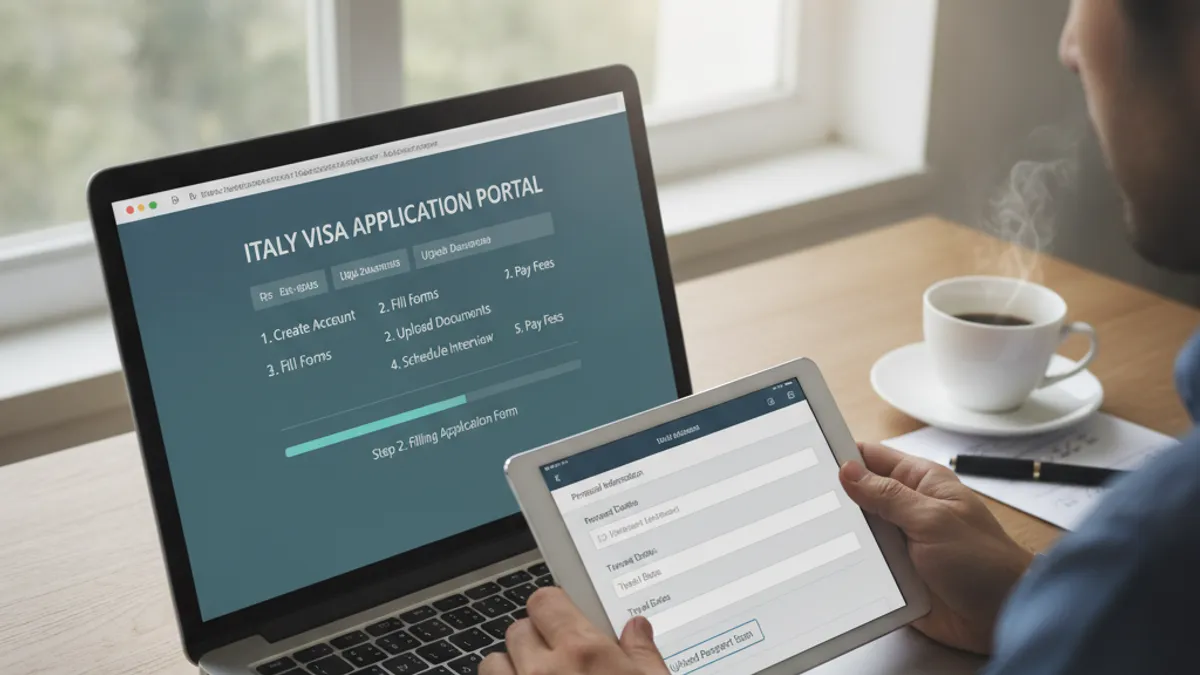
When you hear "apply for Italy visa online," it's important to understand what that actually means in practice. It's not usually a fully remote, digital process from start to finish. Instead, the online component is a crucial first step that integrates with an in-person requirement. This hybrid approach is common for most visa applications globally, designed to balance the convenience of digital forms with the necessity of verifying identity and original documents.
Understanding the Hybrid Application: Online Form & In-Person Visit
For an Italy visa, the "online" aspect typically refers to accessing information, filling out preliminary application forms, and booking an appointment through a designated web portal. However, submitting your actual visa application, your passport, supporting documents, and providing biometrics (fingerprints and photograph) nearly always requires a physical visit. You'll usually book a specific date and time slot through the online system to attend this appointment at an authorized visa application center, or sometimes directly at the Italian Embassy or Consulate, depending on your location and the visa type.
Where to Start: The Official Embassy/Consulate Portal
Your very first digital stop should be the official website of the Italian Embassy or Consulate responsible for processing visa applications in your country of residence. These official government sites are the most reliable source for understanding the exact requirements, available visa types, required documentation, fee structures, and crucially, where to find the link to the online application portal or appointment booking system. For instance, if you reside in the United States, you need to navigate to the website of the Italian Embassy and Consulates in the USA, not a general EU site. This ensures you get country-specific instructions and avoid misinformation.
Essential Documents for Your Italy Visa Application

Gathering the correct and complete set of documents is perhaps the single most important factor in ensuring your Italy visa application is successful. This stage requires meticulous attention to detail, as even a minor omission or error can lead to delays or outright rejection. Always refer to the specific checklist provided by the Italian Embassy or Consulate in your country of residence, as requirements can vary slightly.
Your Passport: Validity and Blank Pages
Your passport serves as your primary identification document throughout the visa process. For an Italy visa, your passport must have a validity period extending at least three months beyond your intended date of departure from the Schengen Area. This buffer period is standard across Schengen visas to account for unforeseen travel delays. Additionally, your passport needs to contain at least two blank pages.
These pages are used for the visa sticker itself and for official entry and exit stamps by border control officers. If your passport is nearing its expiry date or lacks blank pages, you must renew it before submitting your visa application.
Proof of Purpose: Travel Itinerary, Invitations
You must clearly articulate and provide evidence for the reason behind your visit to Italy. If you are traveling for tourism, a detailed itinerary outlining your planned activities, cities, and dates of stay is essential. For those visiting family or friends, an official invitation letter from your host, accompanied by proof of their legal residency in Italy, is typically required. Business travelers must present a formal invitation letter from the Italian company they intend to visit, specifying the purpose and duration of the business engagement.
This documentation helps immigration officials understand and verify your travel plans.
Financial Means: Bank Statements and Solvency
Demonstrating that you have sufficient financial resources to cover your expenses during your stay in Italy is a critical requirement. This often involves submitting recent bank statements, typically for the last three to six months, that showcase a stable and adequate balance. As of 2026, financial requirements are generally assessed based on a daily amount mandated by Italian immigration law, plus the cost of your return ticket. Aggregate user reviews suggest maintaining a balance that comfortably exceeds these minimums helps strengthen your application.
You may need to provide officially stamped bank statements; check the specific requirements for your region.
Accommodation Proof: Bookings or Host Declarations
You are required to prove where you will be staying throughout your trip to Italy and the Schengen Area. This usually means providing confirmed hotel bookings for the entire duration of your stay. If you plan to stay with friends or family, you will need to submit an official invitation letter from your host, which often carries a declaration that they will provide you with accommodation and potentially support you financially. This evidence reassures authorities that you have a safe and planned place to reside during your visit and are not intending to overstay.
Travel Medical Insurance: Key Requirements
Securing adequate travel medical insurance is a mandatory component of any Schengen visa application. This insurance policy must be valid across all Schengen countries and provide a minimum coverage of €30,000 for emergency medical expenses, hospitalization, and repatriation in case of illness or accident. The policy document must clearly state these coverage details and its validity dates. Without this essential insurance, your visa application will likely be rejected, as it ensures you won't be a financial burden on the healthcare systems of the member states.
Step-by-Step: Navigating Your Italy Visa Application

This section lays out the actual pathway you'll follow to apply for your visa. Think of it as your action plan, designed to move you smoothly from understanding the requirements to submitting your application. It’s a process that requires careful attention to detail at each stage, ensuring you don't miss any critical steps.
Step 1: Visit Your Country's Official Italian Embassy/Consulate Website
Your journey begins by digitally heading to the official website of the Italian Embassy or Consulate that serves your region. This is the absolute authoritative source for all visa-related information. Here, you'll find precise details tailored to your nationality, including the specific types of visas offered, the current documentation requirements, application fees, and how to book an appointment. Always use the official government domain to avoid outdated or incorrect information from unofficial sources.
Step 2: Complete the Online Pre-Application Form
Most Italy visa applications start with an online form. This isn't the final submission, but rather an initial data gathering step where you provide your personal details, travel information, and basic answers related to your visa type. The system will use this information to help you understand which visa category best fits your needs and to generate a preliminary application that you’ll later print. Ensure all information entered is accurate and matches your supporting documents exactly.
Step 3: Schedule Your Visa Application Center Appointment
After completing the initial online form, the next critical step is to book an appointment. For most applicants, this appointment will be at an authorized visa application center (like VFS Global or TLScontact) that partners with the Italian Consulates. You'll use the online portal to select a date and time that works for you. Appointment slots can fill up quickly, especially during peak travel seasons, so it's advisable to book as early as possible, well in advance of your intended travel date.
Step 4: Gather All Required Documentation
With your appointment booked, your focus shifts to meticulously collecting all the necessary supporting documents. This includes your passport, the printed and signed application form, passport-sized photos meeting specific criteria, proof of financial means, accommodation bookings, travel insurance, and any other documents pertinent to your visa type (like invitation letters or employment verification). Organize these documents logically, preferably in chronological order or by category, as specified by the consulate or application center. Having everything ready will make your in-person appointment much smoother.
Step 5: Attend Your In-Person Appointment (Biometrics & Submission)
Your scheduled appointment is where your application becomes tangible. You must attend this appointment in person at the designated visa application center or consulate. Here, you will submit your completed application form, passport, and all supporting documents. You will also be required to provide your biometric data, which typically includes fingerprints and a digital photograph.
Visa application fees and any service charges are usually paid at this stage. Arrive on time, dressed appropriately, and with all your documents in order.
Step 6: Track Your Visa Application Status
After submitting your application and attending your appointment, you can usually monitor the progress of your visa application online. The visa application center or consulate will provide you with a tracking number or reference code. You can use this to check the status of your application on their respective websites. This feature allows you to see if your application has been processed, if a decision has been made, or if further action is required.
It provides peace of mind and helps you plan your travel arrangements accordingly.
Common Mistakes to Avoid When Applying for Your Italy Visa
Navigating the visa application process can sometimes feel like walking a tightrope, and a few common missteps can easily lead to problems. Recognizing these potential pitfalls in advance can significantly increase your chances of a successful application. Our research indicates that many rejections or delays stem from preventable errors that applicants often overlook.
Submitting Late or Incomplete Applications
This is a big one. Applying too close to your travel date is a frequent mistake that can cause immense stress and, more often than not, lead to your visa not being processed in time. Visa processing times can vary, but it’s generally recommended to apply at least 60 days before your intended travel date for Schengen visas. Furthermore, submitting an application without all the required documents is considered incomplete.
This includes missing signatures, outdated financial statements, or insufficient insurance coverage. An incomplete application will almost certainly be rejected or significantly delayed.
Providing Inaccurate or Misleading Information
Honesty and accuracy are paramount in visa applications. Any discrepancies or false information provided on your application form or in your supporting documents can have serious consequences, including immediate rejection and potential bans from future travel to the Schengen Area. Double-check names, dates, passport numbers, and any other personal details against your official identification documents. Misrepresenting your purpose of visit or your financial situation are particularly serious errors that immigration authorities scrutinize carefully.
Choosing the Wrong Visa Type
As we discussed earlier, selecting the correct visa type is fundamental. If you apply for a short-stay Schengen visa but your intention is to live in Italy long-term, your application will be rejected. Similarly, if you apply for a national visa for work but your purpose is purely tourism, you will also face rejection. It’s essential to thoroughly evaluate the nature and duration of your planned stay and align this with the specific visa categories offered by Italian authorities.
Always verify the criteria for each visa type on the official embassy or consulate website.
Forgetting to Book an Appointment
Many applicants, especially those new to the process, mistakenly believe that filling out the online form is the extent of the online part. However, a face-to-face appointment is almost always mandatory for submitting your application, providing biometrics, and paying fees. Failing to book an appointment, or showing up without a confirmed booking, will mean you cannot proceed with your application on that day. This oversight can cause significant delays, especially if appointment slots are scarce closer to your travel dates.
Expert Tips for a Smooth Italy Visa Application

Drawing from extensive experience with visa application processes, there are several strategies that can significantly smooth your path. These aren't necessarily official requirements, but rather practical insights that can prevent common headaches and ensure your application is viewed favorably. Think of them as adding an extra layer of polish to your submission, demonstrating diligence and preparedness.
- Start Early and Be Patient: As mentioned, timing is everything. Begin the process 2-3 months before your planned departure for Schengen visas. Understand that processing can take time, and unforeseen issues can arise. Patience is key.
- Use the Official Websites as Your Bible: Stick strictly to the information provided on the official Italian Embassy/Consulate website for your country and the designated visa application center portal. Avoid relying on generic travel forums or less authoritative blogs, which might have outdated or incorrect information.
- Organize Your Documents Meticulously: Create a checklist and tick off each document as you gather it. Place them in a clear folder, ideally in the order specified by the application center. A well-organized presentation reflects your attention to detail.
- Be Consistent with Your Information: Ensure that all information provided across your application form, supporting documents, and any correspondence is identical. Any contradictions, such as different dates of birth or passport numbers, can raise red flags.
- Understand Your Financial Proof: Don't just submit bank statements; briefly understand what they are showing. If you have significant but unexplained transactions, consider providing a letter of explanation. For sponsored trips, ensure the sponsor’s documentation is equally robust.
- Proofread Everything: Before printing and submitting, carefully proofread your application form and any cover letters. Errors in names or dates are easily spotted and can cause unnecessary delays.
- Have Copies Ready: While not always explicitly required, having photocopies of essential documents, including your passport and application form, can be useful in case of any queries or if requested by officials.
These practical tips, combined with a thorough understanding of the official requirements, will help you submit a strong and complete application, increasing your chances of a timely approval.
Italy Visa Application Costs and Timelines
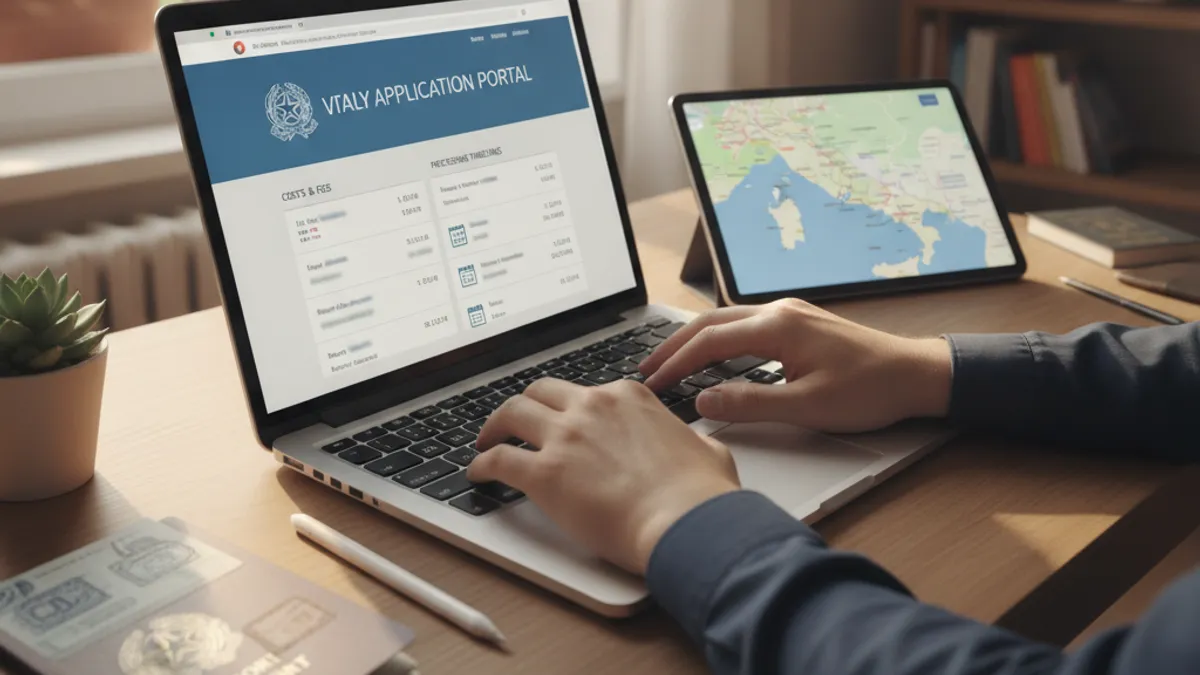
Understanding the financial commitment and the expected waiting period is crucial for effective planning. Applying for an Italy visa involves both fees and a significant time investment. These factors can influence your travel budget and the timing of your trip, so it’s wise to be informed from the outset.
Visa Fees:
The standard fee for a short-stay Schengen visa is €80 for adults. However, this fee is subject to change and may differ for certain nationalities or visa types. Children between the ages of six and twelve typically pay €40, and children under six are usually exempt. It's important to note that these are governmental fees and do not include the service charges levied by third-party visa application centers, which can add an additional amount, often ranging from €20 to €40 per applicant.
These service fees cover the administrative costs of submitting your application through their centers.
Processing Timelines:
Processing times for Italy visas can vary considerably. For a short-stay Schengen visa, the standard processing time is typically around 15 calendar days. However, this can be extended up to 45 days if further scrutiny is required or during peak travel seasons. For long-stay National Visas, processing times can be significantly longer, often taking several weeks or even months, as these applications may involve more extensive checks and decisions made by the consulates directly.
It is highly recommended to apply well in advance of your intended travel date to account for these potential variations and to avoid any last-minute stress. As of 2026, applicants should anticipate these general timelines, but always check the current estimates on the official Italian consulate website for your specific jurisdiction.
When to Seek Help: Specific Scenarios

While this guide provides a comprehensive overview, there are certain situations where seeking professional assistance or direct consulate advice is highly recommended. These scenarios often involve complex personal circumstances, a history that might raise concerns for immigration authorities, or when official information is unclear. Knowing when to ask for help can save you considerable time and prevent potential application issues.
- Complex Travel History: If you have previously been denied a visa for any country, have overstayed a visa, or have any issues with immigration authorities in the past, it’s wise to consult with a visa specialist or contact the consulate directly. They can advise on how to best address these issues in your current application.
- Unusual Employment or Financial Situations: If your employment status is unconventional (e.g., self-employed with fluctuating income, freelance work not easily documented) or if your financial situation involves large, infrequent transactions or third-party funding not covered by standard sponsorship letters, seeking advice is beneficial. Clarity and proper documentation are paramount.
- Family Reunification or Complex Family Ties: Applications involving family reunification on a National Visa (Type D), or complex family structures, often have very specific legal requirements. Consulting with a legal advisor specializing in immigration or directly with the consulate's immigration department is advisable.
- Need for Long-Term Residency or Work Permits: When your intention is to live, work, or study long-term in Italy, the process can be intricate and legally nuanced. Understanding the specific requirements for residency permits, work authorizations, or study visas and navigating the application for these can benefit greatly from expert guidance or direct consultation with the relevant Italian authorities.
- Unclear Requirements or Conflicting Information: If, after thoroughly reviewing the official websites, you find the requirements unclear, or if you encounter conflicting information, reaching out to the consulate or an authorized visa application center is the best course of action. They can provide definitive clarification tailored to your exact situation.