
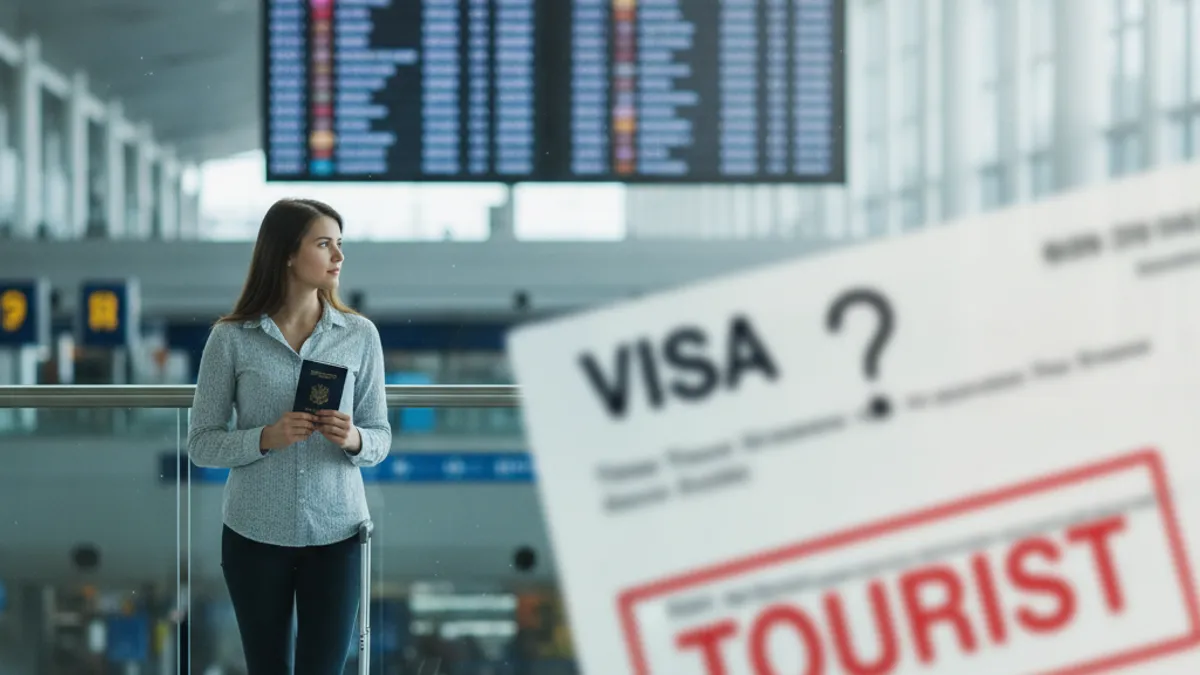
You're asking, "can I work in the USA with a tourist visa?" It's a question many people ponder when considering travel or opportunities in the United States. The straightforward answer is no; a tourist visa is not intended for employment. Attempting to work on this visa can lead to significant legal problems.
Thank you for reading this post, don't forget to subscribe!Our research confirms that the U.S. Department of State strictly defines visa categories by their intended purpose. The B-2 visa, commonly used for tourism, is for temporary stays for pleasure, visiting family, or seeking medical treatment. In accordance with U.S. immigration law, engaging in employment requires specific authorization through a work visa, not a visitor status.
As of 2026, these distinctions remain critical for compliance.
Why a Tourist Visa Isn't for Work

A tourist visa, officially known as a B-2 visa, is designed for temporary visits for specific, non-work-related purposes. Its core function is to allow individuals to enter the U.S. for activities like sightseeing, visiting relatives and friends, attending social events, or receiving medical care. The fundamental principle behind this visa type is its non-immigrant intent, meaning you must intend to depart the U.S. at the end of your authorized stay and not seek employment during that visit.
The U.S. has a robust system of work visas, like the H-1B for specialty occupations or the L visa for intra-company transfers, each with its own set of requirements and application processes. This structured approach is in place to manage foreign labor effectively and legally. Allowing individuals to work on a tourist visa would bypass this entire system and create chaos in the labor market.
What "Working" Really Means (and What It Doesn't)

To understand why working on a tourist visa is problematic, we need to define what constitutes "work" in the eyes of U.S. immigration law. It's not always as clear-cut as being on a company payroll.
Definitely NOT Allowed by Law
Engaging in any activity that generates income for yourself or provides services for remuneration is considered unauthorized employment. This includes:
- Taking a job with a U.S. employer, whether full-time, part-time, or temporary.
- Performing services for a U.S. company that is paying you, even if the payment is handled remotely from your home country.
- Operating a business or selling goods for profit within the U.S.
- Freelancing for U.S. clients while physically present in the United States, if it's for payment.
- Any role that would typically require a work visa.
The key is whether you are receiving compensation or engaging in activities that would displace a U.S. worker or are primarily for economic gain.
Activities That Are Often Grey Areas
There are some activities that can blur the lines, and it's crucial to approach them with caution.
- Attending Business Meetings: If your primary purpose is to attend meetings, consult with business associates, or negotiate contracts for a foreign employer, this might fall under the B-1 (business visitor) category, which often shares visa requirements with the B-2. However, you cannot be paid by a U.S. source for these activities.
- Giving Unpaid Lectures or Seminars: In some limited cases, you might be able to give a one-off, unpaid lecture or seminar as part of a conference, provided your primary purpose remains as a visitor and you are not receiving payment from a U.S. entity for your expertise. This is highly specific and often requires careful validation.
- Professional Conferences: Attending a conference as an observer or participant is generally fine. However, if you are presenting research that is part of your employment abroad, there are specific rules to follow.
The critical distinction is whether the activity is incidental to your visit or the main reason for your presence. If you're unsure, it's best to assume it's not permitted without explicit authorization.
What's Generally Okay for Tourists
When you're in the U.S. on a B-2 visa, your activities should align with typical tourist pursuits. This includes:
- Visiting national parks and landmarks.
- Spending time with friends and family who reside in the U.S.
- Attending cultural events, concerts, or sporting events as a spectator.
- Undergoing medical treatment at a U.S. facility, with plans to return home afterward.
- Taking short, non-degree courses or educational programs for personal enrichment, as long as they do not grant academic credit and you are not being paid.
These activities are considered legitimate tourist pursuits and do not constitute unauthorized employment.
The Real Risks of Working Illegally

The consequences of being caught working in the U.S. on a tourist visa are severe and can have long-lasting repercussions on your ability to travel or immigrate to the United States in the future. U.S. immigration authorities take unauthorized employment very seriously.
Facing Deportation and Bans
If U.S. Customs and Border Protection (CBP) or other immigration officials determine that you have engaged in unauthorized employment, you could face immediate deportation. This means being removed from the country. Beyond deportation, you could be subject to an "entry/exit ban," which prohibits you from re-entering the United States for a specified period, often several years.
In some cases, this ban can be permanent, making future visits impossible.
This isn't a minor issue; it's a direct violation of the terms of your visa, and the penalties are designed to deter such actions. The enforcement of these rules is consistent across ports of entry and within the country.
Impact on Future U.S. Travel and Visas
A record of unauthorized employment or deportation creates a significant black mark on your immigration history. Applying for any future U.S. visas, whether for tourism, business, or even family visits, becomes exceptionally difficult. Immigration officers will scrutinize your application much more closely, and the burden of proof will be on you to demonstrate that you will comply with visa terms.
Furthermore, if you ever hope to immigrate to the United States permanently, such violations can severely complicate or even disqualify your application. The U.S. immigration system prioritizes individuals who have a history of following its laws and regulations.
What If You Want to Work in the U.S.?
If your ultimate goal is to work in the United States, a tourist visa is not the pathway. You must pursue the correct immigration channels that are specifically designed for employment. This typically involves a U.S. employer wanting to hire you and sponsoring the necessary work visa.
Exploring Official Work Visa Options
The United States offers various work visa categories, each tailored to different skill sets, professions, and employment situations. Some of the most common include:
- H-1B Visa: For professionals in specialty occupations that require theoretical or technical expertise, often in fields like IT, engineering, finance, or medicine. Employers must have a specific need for the foreign worker's skills.
- L-1 Visa: For employees of international companies transferring from an overseas office to a related U.S. office. This is for managers, executives, or individuals with specialized knowledge.
- O-1 Visa: For individuals with extraordinary ability in sciences, arts, education, business, or athletics. This visa requires substantial evidence of high achievement.
- TN Visa: For Canadian and Mexican citizens under the North American Free Trade Agreement (NAFTA), now the United States-Mexico-Canada Agreement (USMCA), in designated professional fields.
Each of these visas has strict eligibility criteria, application procedures, and duration limits, often requiring extensive documentation and employer involvement.
The Role of Employer Sponsorship
For most U.S. work visas, a U.S. employer must initiate the process by petitioning on your behalf. This means the employer has to prove that:
- They have tried to recruit U.S. workers for the position and were unsuccessful.
- The position requires the specific skills or qualifications you possess.
- They will pay you at least the prevailing wage for that job in the intended geographic area.
This sponsorship is a significant commitment for the employer, involving legal fees, administrative work, and a genuine need for your labor. Without an employer willing to sponsor you, obtaining a work visa is generally not possible, unless you qualify for a self-petitioning category (which is rare for most work visas).
Expert Legal Guidance Is Crucial

Navigating U.S. immigration law, especially concerning employment and visa status, can be incredibly complex. Rules can change, and interpreting the nuances of specific visa categories requires specialized knowledge. This is where seeking professional legal advice becomes essential.
An experienced immigration attorney can assess your individual circumstances, explain your options clearly, and guide you through the application process. They can help you understand which visa category might be most appropriate, prepare the necessary documentation, and represent you in dealings with U.S. Citizenship and Immigration Services (USCIS) or the Department of State.
- Identifying Eligibility: An attorney can determine if you meet the criteria for any work visas your potential employer might sponsor.
- Explaining Risks: They can detail the specific risks involved if you misunderstand or violate visa terms.
- Navigating the Process: Legal professionals streamline the application, reducing the chance of errors that could lead to denial or delays.
- Understanding Waivers: In certain situations, if you have prior immigration violations, an attorney might be able to advise on potential waivers or alternative pathways.
Relying on unofficial advice or trying to "figure it out" yourself for complex immigration matters involving work authorization is a risky strategy. The stakes are too high, and the potential for error is significant.
Risks and Common Mistakes When Visa Status is Unclear

When you're in the U.S. on a visa, maintaining your correct status is paramount. Mistaking permitted activities for work, or vice versa, can lead to serious complications. It's easy to misinterpret the rules, especially if you're hearing conflicting information or trying to adapt.
One of the most common errors people make is assuming that any kind of arrangement for payment is acceptable if it's outside of a formal job offer. For example, agreeing to do freelance work for a U.S. client while on a tourist visa, even if the payment is processed through a third-party or from your home country, is generally considered unauthorized employment. Immigration officials look at the activity itself, not just the payment method.
Are There Workarounds or Loopholes?
Let's be direct: there are no legitimate "workarounds" or "loopholes" that allow you to legally work in the U.S. on a tourist visa. Trying to find one is like trying to drive a car without an engine; it just won't work as intended and will likely cause damage. Immigration laws are specific, and they are enforced.
Any advice suggesting you can "secretly" work, take "cash jobs," or perform services without formal authorization is dangerous. These methods not only violate your visa terms but also put you at risk of deportation, future travel bans, and significant legal penalties. U.S. immigration enforcement agencies are diligent in identifying individuals who are not complying with their visa status.
What Happens If You're Denied Entry at the Border?
If immigration officials at a U.S. port of entry suspect you intend to work or have a history of unauthorized employment, they can deny you entry. This is a common scenario if your online presence, stated travel plans, or possessions suggest work activities. For example, carrying business cards, brochures for a U.S. business you intend to work for, or having a significant amount of professional equipment could trigger suspicion.
Being denied entry means you will be immediately sent back to your country of origin. This denial is recorded and can make future attempts to enter the U.S. much more difficult, even if you have a valid visa for a different purpose. It's a clear signal to future immigration adjudicators that you may not comply with visa regulations.
How Can You Legally Earn Income While Visiting?
If your visit to the U.S. is for tourism or visiting family, you generally cannot earn income from U.S. sources. However, there are situations where you can continue to receive income from your home country while you are visiting the U.S.
- Remote Work for a Foreign Employer: If you are employed by a company based outside the U.S. and your job allows you to work remotely, you might be able to continue working from the U.S. temporarily. This is permissible as long as your primary purpose for being in the U.S. remains as a tourist and you are not performing work for a U.S.-based entity or client. You must still maintain your foreign employment and be paid by your foreign employer.
- Receiving Passive Income: Income from investments, pensions, or royalties that do not require your active presence or management in the U.S. is typically considered passive and acceptable. This is income generated from assets you own, not from services you actively provide.
It's crucial to understand that the U.S. government is concerned with preventing unauthorized labor within its borders. If your activities indicate you are essentially "working" in the U.S., even remotely, you could face scrutiny.
How to Prepare for Immigration at the Port of Entry
When you arrive at a U.S. port of entry, you will be interviewed by a CBP officer. Being prepared and honest is key to a smooth process.
- State Your Purpose Clearly: Be ready to explain why you are visiting, who you will see, where you will stay, and how long you intend to remain.
- Have Supporting Documents: Carry any documents that support your stated purpose, such as hotel reservations, an itinerary, invitation letters from family or friends, and proof of onward travel.
- Show Proof of Funds: Have evidence that you have sufficient funds to cover your expenses during your stay, such as bank statements or credit card statements. This demonstrates you won't need to work to support yourself.
- Be Honest: Never lie or provide misleading information to CBP officers. Honesty is always the best policy, and any deception can lead to severe penalties.
If your purpose is purely tourism, your documents and answers should consistently reflect that. If you are undergoing medical treatment, have documentation from your doctor and the U.S. hospital ready.
What If Your Visa Application is Denied?
If your visa application is denied, the consular officer will usually explain the reason. Common reasons include insufficient proof of non-immigrant intent, criminal history, or failing to meet other eligibility requirements. Depending on the reason for denial, you may be able to reapply after addressing the specific concerns.
For example, if you were denied due to a lack of sufficient financial ties to your home country, you might strengthen your next application with more robust documentation of employment, property ownership, or family responsibilities that compel you to return. If the denial was for a more serious immigration violation, reapplying might be significantly more challenging and likely require the assistance of an immigration attorney. It's important to understand the exact section of immigration law under which you were denied.