
So, you're wondering, "Can I apply for a visa without a passport?" It's a question that usually pops up when your travel plans hit a snag or feel super complicated. Here's the straightforward truth: almost always, no. Your passport is the universal key for international travel, and most countries expect it to be in tip-top shape for any visa application.
Thank you for reading this post, don't forget to subscribe!Think of your passport as your primary citizenship document and ultimate form of identification on the global stage. It contains vital information that immigration officials need to verify your identity and nationality. International standards, like those outlined by the International Civil Aviation Organization (ICAO), dictate the security features and data included in machine-readable passports, underscoring their critical role. If your passport is missing, expired, or damaged, this typically puts your visa application on hold until that document is sorted.
The Passport: Your Undisputed Travel ID
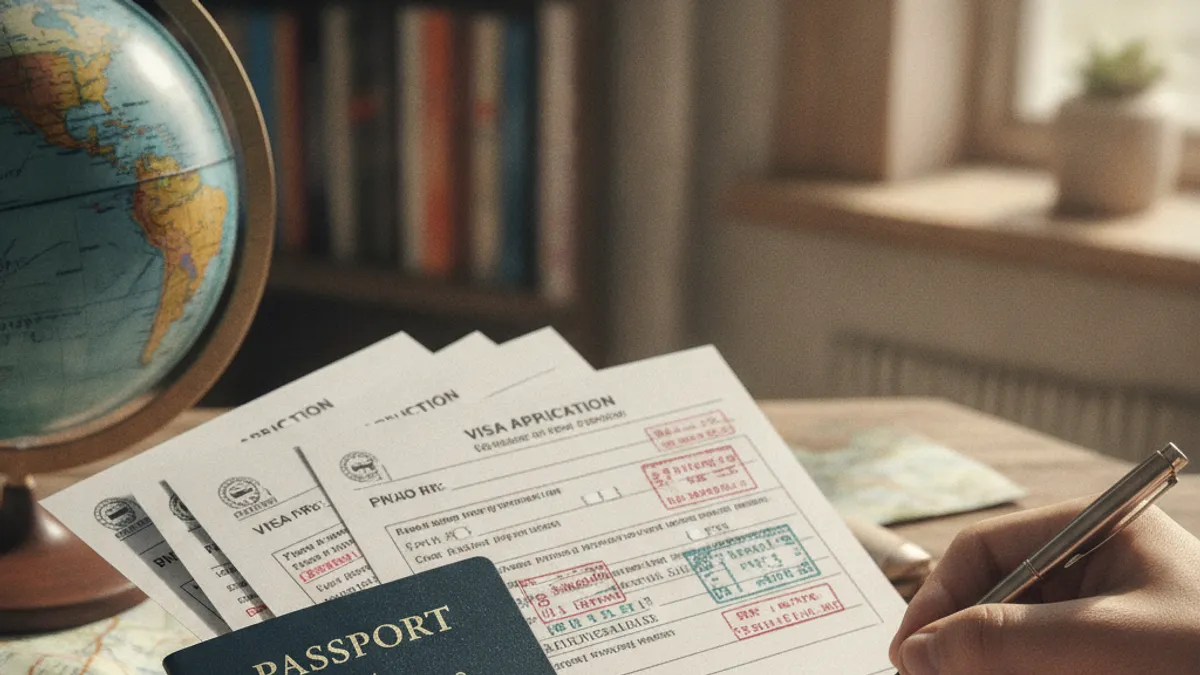
Your passport is more than just a booklet with stamps; it's a legally recognized document issued by your country of citizenship that certifies your identity and nationality. It's your primary credential when crossing international borders. This document is issued by a national government and contains essential details such as your full name, photograph, date of birth, and a unique identifying number. The ink, paper, and embedded microchips are all designed for security and authenticity, meeting strict international standards.
When applying for a visa, the passport serves several critical functions:
- Identity Verification: It's the most definitive proof of who you are.
- Nationality Confirmation: It confirms your citizenship, which is often a requirement for specific visa types or entry permissions.
- Travel History: While not always explicitly part of the application, a well-maintained passport can indirectly show your travel history and compliance with immigration laws.
- Entry and Exit Control: It is scanned and stamped by border officials upon entry and exit, and this is cross-referenced with your visa status.
Without a valid passport, the entire foundation of your visa application is shaky because the core elements of verification are missing.
When is a Passport Absolutely Required for a Visa?

Let's be clear: for the overwhelming majority of visa applications worldwide, a valid, unexpired passport is a non-negotiable requirement. This applies whether you're applying for a tourist visa, a student visa, a work permit, or any other type of entry authorization for a foreign country. The issuing authorities need that established proof of identity and nationality.
Consider the standard international norms. Your passport shows your country of origin, which allows the destination country to assess potential immigration risks and reciprocate travel agreements. If you're trying to enter a country like Canada as a visitor, for example, you'll need a passport that's valid well beyond your intended stay. This isn't just a suggestion; it's a fundamental step in the process.
If your passport is:
- Expired: You cannot use it to apply for a new visa.
- Lost or Stolen: You must report it immediately and obtain a replacement before proceeding with your visa application.
- Severely Damaged: Even minor damage to the photo page or chip can render it invalid, leading to application rejection.
In essence, if you're asking "can I apply for visa without passport?" and you mean "without any passport at all," the answer is almost certainly no.
Rare Exceptions: Can Anything Else Work?
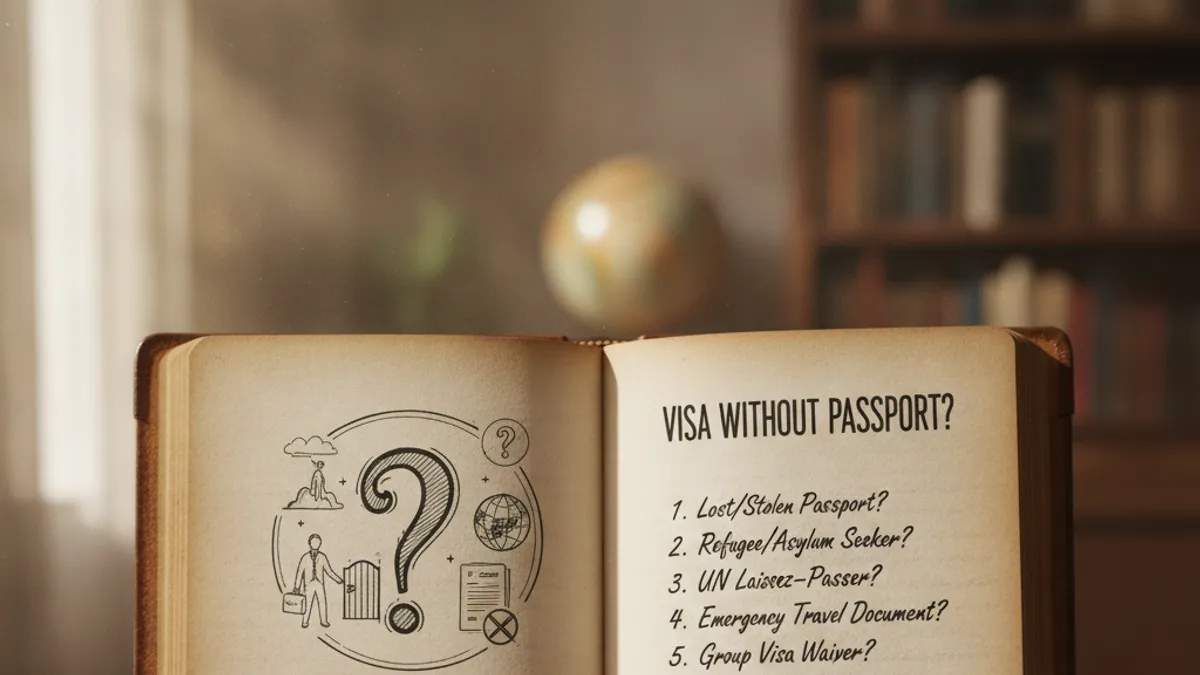
While the rule is ironclad for most scenarios, there are a few very specific, niche situations where an alternative document might be considered, or where a different form of travel authorization is used instead of a traditional visa requiring a passport. These are not loopholes, but rather pre-existing agreements or unique circumstances.
Traveling on Specific National Identity Cards
In certain regions, bilateral or multilateral agreements allow citizens of member countries to travel using only their national identity cards, bypassing the need for a passport. This is most commonly seen within regional blocs. For example, within the European Union and the Schengen Area, citizens of member states can typically travel between participating countries using just their national ID card. If such a traveler needed an additional permit or specific authorization (which might function like a visa in concept, though not always termed as such), the rules might differ.
However, this usually applies to movement between participating countries only. If a citizen of these blocs wanted to travel to a country outside of these agreements, they would still need their passport. And importantly, for individuals who are not citizens of these participating nations but reside within them, a passport is still essential for most visa applications. This exception is generally for citizens of specific countries traveling within their designated travel zones.
Emergency Replacements and Temporary Documents
If your passport is lost or stolen while you are abroad, your immediate step is to contact your country's embassy or consulate. They can help you obtain an emergency travel document or a replacement passport. An emergency travel document is typically valid for a single journey back to your home country or sometimes to a specific destination.
In some very limited and often urgent cases, you might be able to initiate certain visa application processes using this emergency travel document, particularly if you need to depart the country quickly. However, this is highly context-dependent. The destination country's immigration policies, the reason for your travel, and the type of visa you're seeking all play a role. It's not a standard pathway but a measure to facilitate a return or urgent departure when your primary document is unavailable.
Real-World Scenarios: Navigating Passport Issues for Visas
Let's look at a few situations to make this clearer. Imagine Sarah wants to visit South Korea for a holiday. Her passport is valid for another two years, so she heads to the official embassy website. The requirements clearly state a valid passport with at least six months of validity remaining.
Sarah's passport meets this, so she proceeds with her visa application, listing her passport number.
Now, consider Mike, who’s working abroad and his passport expires next month. He needs to apply for a work permit renewal. He finds out that the foreign country requires passports to be valid for at least a year for renewal applications. Mike’s current passport won't cut it.
He needs to go through the process of getting a new passport from his home country's consulate before he can even submit his renewal application. His visa process is paused until his passport situation is resolved.
These scenarios highlight the direct link between your passport's status and your ability to secure a visa. It’s not an optional document; it’s foundational.
How to Confirm Visa Document Requirements
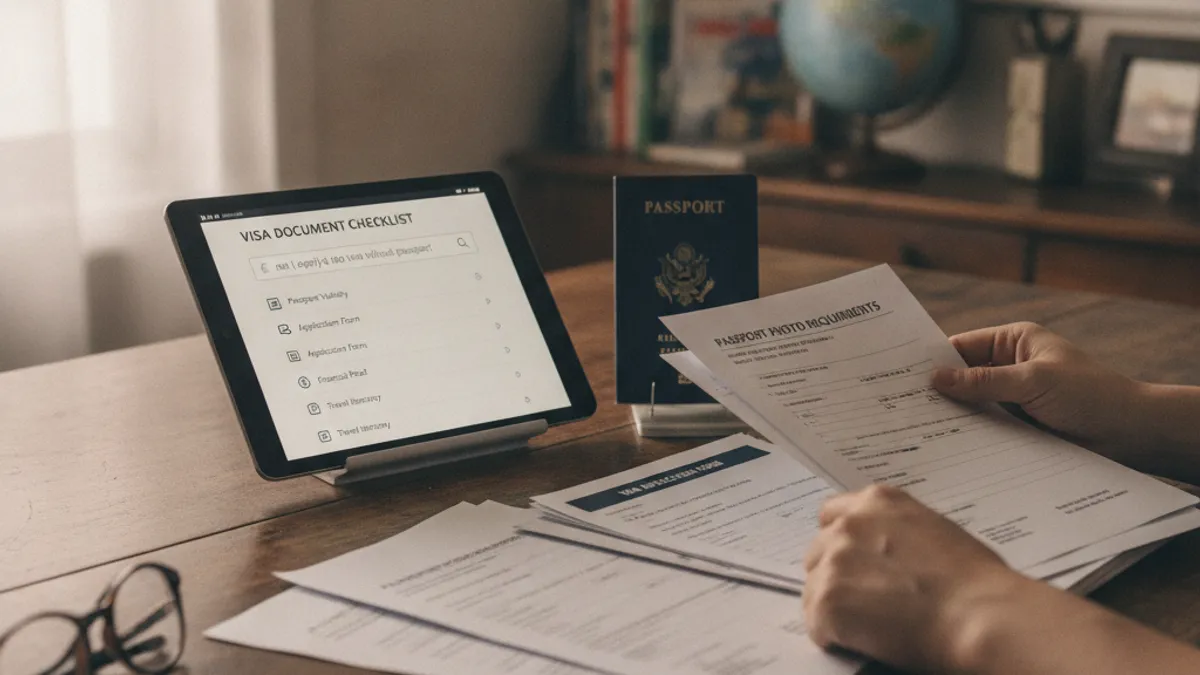
The best way to know exactly what documents you need for a visa application is to go straight to the source. Don't rely on forums or secondhand advice. You should always consult the official website of the embassy or consulate of the country you intend to visit. These sites are updated regularly and provide the most accurate and current information.
When you visit the official site, look for sections like "Visa Information," "Required Documents," or "Application Process." You'll typically find a checklist detailing every item needed. Pay close attention to these specifics:
- Passport Validity: Exactly how long must your passport be valid from your application date or your intended entry date? Some common requirements include 6 months, but some countries might ask for 3 months or even up to a year.
- Blank Passport Pages: Some countries require a certain number of blank pages for stamps.
- Type of Document: Are they asking for a passport, or in very rare cases, a specific alternative travel document?
For example, if you are a U.S. citizen looking to enter Australia, the Department of State website will direct you to Australian government sources for visa information. These sources will confirm that a valid U.S. passport is required, and often specify the minimum validity period.
The Pitfalls: Mistakes That Derail Your Visa Application
Trying to sneak around the passport requirement, or simply overlooking its importance, can lead to significant problems. These aren't minor errors; they can result in your visa application being rejected outright, leading to wasted fees and delayed or canceled travel plans.
Here are common mistakes people make:
- Assuming an Expired Passport is Fine: Believing that an expired passport with a valid visa stamp inside is still usable is a critical error. Once the passport expires, the visa's validity is often compromised.
- Using a Damaged Passport: Thinking that minor tears or wear and tear won't matter is risky. Smudged text, a damaged photo page, or a non-functioning chip can all lead to rejection. You wouldn't try to use a credit card with a severely scratched magnetic stripe, and the same principle applies here.
- Not Checking Validity Requirements: Many applicants assume any valid passport will suffice. However, missing the six-month validity rule or other specific duration requirements is a common reason for denial.
These mistakes often stem from a misunderstanding of how crucial the passport is as the core identity and nationality document for immigration purposes.
Expert Tips: Your Best Move for Visa Applications
Based on how immigration systems operate worldwide, the undisputed best advice is to treat your passport as your top priority. If there is any doubt about its validity or condition, address it before you even start filling out visa forms. This proactive approach saves immense time, money, and stress.
Here are some actionable tips:
- Regularly Check Your Passport's Expiration Date: Note it down in your calendar and set reminders for renewal well in advance of any travel plans. Processing times for new passports can vary significantly by country. As of 2026, renewal processing can sometimes take several weeks or even months depending on demand.
- Handle Your Passport with Care: Keep it in a protective sleeve or a secure folder. Avoid exposing it to liquids, extreme heat, or bending it excessively.
- Understand Country-Specific Rules: Always refer to the official embassy or consulate website for the destination country. Their requirements are the definitive guide.
- If in Doubt, Renew: If your passport is close to its expiry date, or if you have any concerns about its condition, it's almost always better to renew it proactively. The cost of a new passport is trivial compared to a rejected visa application and the potential loss of non-refundable travel bookings.
This methodical approach ensures you're starting your visa journey on solid ground.
When to Seek Official Guidance

There are specific situations where you absolutely need to reach out to official channels for clarification, rather than guessing or relying on unofficial advice. If you find yourself in any of the following scenarios, contacting the embassy or consulate of your destination country, or your own country's passport issuing authority, is your next logical step.
This is particularly true if:
- Your passport was lost or stolen while abroad: You need immediate guidance on obtaining emergency travel documents.
- You have non-standard identification: Perhaps you are a stateless person or have a refugee travel document that is not a national passport. The rules for these can be complex and vary wildly.
- The embassy website information is unclear or contradictory: If you've read the requirements multiple times and still have questions about specific document validity or types, direct communication is key.
- You are applying for a visa or travel document from a country with very strict or unusual entry requirements: Some nations have unique, stringent rules that are best clarified by their official representatives.
Never hesitate to contact the relevant government bodies. They are the ultimate authorities on immigration and travel documentation.