
Applying for a work visa can feel like navigating a complex maze, especially when it's for another country. If you’re dreaming of working in Romania, understanding the precise steps for how to apply for a Romania work visa is your first and most critical move. This process isn't a one-off; it involves distinct stages, both for you and your potential employer, and getting it right means a smoother transition and less stress.
Thank you for reading this post, don't forget to subscribe!Our research shows that the entire application process, from initial employer engagement to receiving your long-stay visa, can take anywhere from 4 to 12 weeks, depending on the efficiency of different Romanian consulates and the completeness of your submitted documents. This guide breaks down exactly what you need to do, who needs to do what, and what pitfalls to watch out for.
Are You Eligible for a Romania Work Visa?

This is the absolute first hurdle. Not everyone needs a Romania work visa for employment, and your eligibility hinges on two massive factors: your nationality and the type of job you've secured. If you already hold citizenship in an EU or EEA country, you’ll find yourself in a much simpler situation. However, for those of us from outside these blocs, the process is more involved.
Understanding EU/EEA vs. Third-Country Nationals
If you are a citizen of an EU or EEA member state, you generally have the right to live and work in Romania without needing a specific work visa. You might still have some registration requirements once you arrive, typically with local authorities or your employer, but the initial visa application barrier is removed. This is a significant advantage that streamlines the relocation process considerably.
For citizens of countries outside the EU/EEA, often referred to as third-country nationals, a work visa and an employment permit are almost always a prerequisite for legal employment in Romania. The specific requirements can vary, but the core principle remains: you'll likely need prior authorization before you can start working.
The Employer's Crucial Role
Here’s a key point that trips many people up: you typically cannot initiate the work visa process on your own. Your future Romanian employer plays the central role. They must first demonstrate to the Romanian authorities, specifically the Romanian Office for Immigration, that they have a genuine need for your skills and that they couldn't find a suitable candidate from within Romania or the EU/EEA. This means the employer must apply for and obtain an employment permit on your behalf before you can apply for your actual work visa.
Think of the employment permit as the employer’s green light, allowing you to proceed with your visa application. Without this permit, your visa application for work purposes will not be successful.
The Essential Documents for Your Romania Work Visa Application
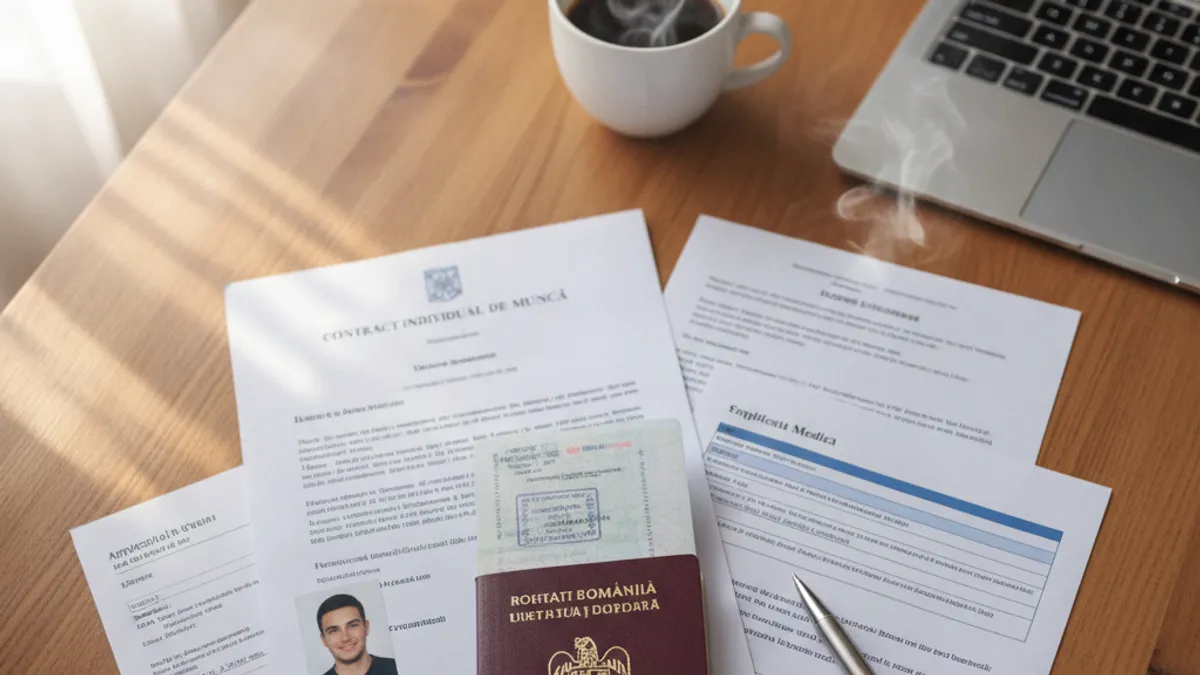
Once your employer has successfully secured the employment permit, your focus shifts to gathering a comprehensive set of personal documents. This is where meticulous attention to detail is paramount. Missing a single document, or having one that isn't correctly formatted, can lead to significant delays or even a rejection of your application. It's all about proving your identity, your right to work, and your ability to support yourself during your stay.
Passport Requirements
Your passport is your primary identification document for any international travel. For a Romania work visa application, your passport must be valid for at least six months beyond your intended period of stay in Romania. It also needs to have at least two blank pages for visa stamps. Ensure there are no physical damages, as this can lead to the passport being invalidated for travel.
It’s a good practice to have a copy of your passport's main page and any previous Romanian visas, if applicable.
The Official Application Form
You’ll need to complete a specific visa application form for the long-stay visa (Type D) for work purposes. This form is usually available from the Romanian embassy or consulate in your country of residence. Make sure you download the most current version of the form from the official website, as these can be updated periodically. Fill it out completely and accurately, using block capitals, and be sure to sign it.
Double-check all details about your personal information, your employer’s details, and the intended duration of your stay.
Employment Permit Proof
This is the cornerstone document that proves your employer has met the initial requirements. You will need the original or a certified copy of the employment permit issued by the Romanian Office for Immigration to your employer. This document confirms that a job has been offered and that the Romanian labor market needs have been considered. It’s essential that the details on the employment permit directly match the information in your visa application, including your name, the employer’s name, and the job title.
Supporting Documents (Accommodation, Finance, Insurance, etc.)
Beyond the core documents, you’ll need to provide evidence that you can sustain yourself and have proper arrangements in Romania. This typically includes:
- Proof of Accommodation: This could be a rental contract, a letter from your employer confirming accommodation provision, or a hotel booking for your initial arrival period.
- Proof of Financial Means: You may need to show bank statements or other evidence to demonstrate you have sufficient funds to support yourself and any dependents during your stay. The exact amount required can vary, so check with the embassy.
- Medical Insurance: A valid medical insurance policy that covers your stay in Romania is mandatory. It should cover emergency medical care and repatriation. Policies often need to be valid for the entire duration of your intended stay, or at least for the initial period as specified by the consulate.
- Criminal Record Certificate: You’ll typically need to provide a criminal record certificate from your home country, often translated and legalized. This demonstrates that you do not have a criminal history that would prevent your entry.
- Other Certificates: Depending on your situation, you might need marriage certificates, birth certificates for dependents you plan to bring, or even specific professional qualifications. Always confirm the exact requirements with the specific Romanian embassy or consulate.
Your Step-by-Step Visa Application Process
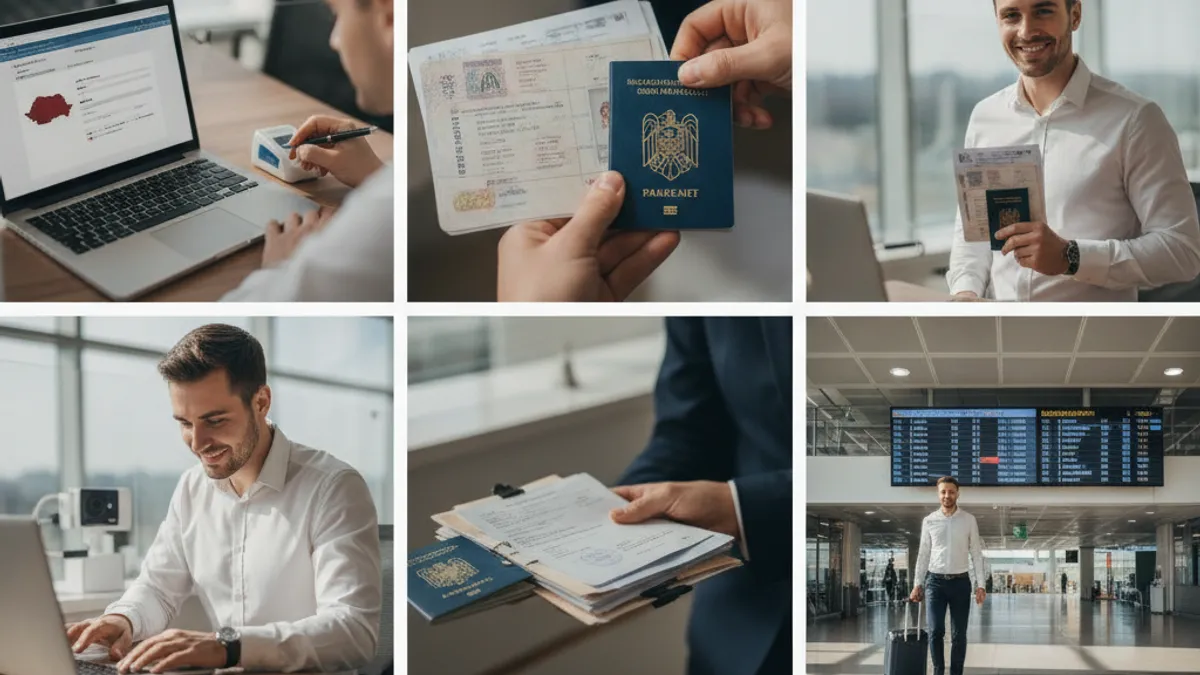
Applying for a Romania work visa is structured and sequential. It’s not just about filling out forms; it's a multi-stage journey that requires coordination and patience. Understanding this flow will help you manage expectations and prepare for each phase effectively.
Step 1: Securing the Employment Permit (Employer's Task)
This is where your employer takes the lead. They must submit an application for an employment permit to the Romanian Office for Immigration. The employer will need to provide extensive documentation about their company, the job offer, and why they need to hire a foreign national. This process can take several weeks, as the authorities assess the necessity and validity of the job offer against the local labor market.
You won't be able to proceed with your visa application until this permit is officially granted to your employer.
Step 2: Gathering Your Personal Documentation
While your employer works on the employment permit, you should start preparing your personal documents. This includes ensuring your passport meets the validity requirements, obtaining a criminal record certificate, gathering proof of accommodation and financial means, and arranging for appropriate medical insurance. It’s crucial to get these documents ready in advance, as some, like criminal record checks, can take time to process in your home country. If documents are not in Romanian, you'll likely need professional translations, and they may require legalization or an apostille, depending on agreements between your country and Romania.
Step 3: Submitting Your Visa Application Abroad
Once the employment permit is secured and you have all your personal documents in order, the next step is to submit your visa application. You will typically do this in person at the Romanian embassy or consulate located in your country of legal residence. You will likely need to schedule an appointment well in advance, as slots can fill up quickly. Be prepared with all your original documents and multiple copies as requested.
Step 4: The Visa Interview
As part of the application process, you will usually be required to attend an interview at the embassy or consulate. The purpose of this interview is for the consular officer to verify the information provided in your application, understand your intentions for working in Romania, and assess your eligibility for the visa. Be honest, clear, and concise in your responses. You should be ready to answer questions about your job offer, your employer, your qualifications, and your plans while living in Romania.
Step 5: Travel to Romania
If your visa application is approved, the consular officer will affix the long-stay visa (Type D) sticker into your passport. This visa permits you to travel to Romania. It’s important to note that this visa is usually valid for a specific period, often 90 days, allowing you entry into Romania to finalize your residency. Your actual right to work and stay long-term is contingent on the next steps once you arrive.
After You Arrive: Registering and Getting Your Residence Permit
Receiving your work visa allows you to enter Romania, but it’s not the final step for legal long-term stay and employment. Once you’ve arrived, there are crucial administrative procedures to complete to gain the official right to reside and work in the country. This phase involves interacting with Romanian government agencies and obtaining your residence permit.
Navigating Romanian Immigration Authorities
Upon your arrival in Romania, your immediate priority is to register your presence. The process and specific office you need to report to can depend on your intended place of residence within Romania. Your employer should provide guidance on this immediate registration, which might involve notifying local police or specific immigration offices. This initial registration is a prerequisite for applying for your long-stay residence permit, which will formally allow you to stay and work for longer than your initial visa permits, typically one year, renewable.
The Residence Permit Application
The residence permit is the document that legally allows you to live and work in Romania beyond the initial duration of your entry visa. You will need to apply for this permit through the General Inspectorate for Immigration (GII), often referred to locally as the "Immigrare". The application process for the residence permit requires submitting various documents, often including your passport with the entry visa, the employment permit, proof of employment contract, proof of address in Romania, evidence of sufficient financial means, and valid medical insurance. The exact requirements can be quite detailed, and it's vital to consult the GII’s official guidelines or seek assistance from your employer or a relocation specialist.
The residence permit is typically issued for a period of one year and can be renewed.
Common Mistakes to Avoid When Applying

Applying for a work visa can feel straightforward, but small errors can snowball into big problems, causing frustrating delays or even outright rejection. Our research into common visa application issues shows that applicants often overlook specific details that consulates and immigration offices consider critical. Avoiding these pitfalls is key to a smooth and successful application process.
Incomplete or Incorrect Paperwork
This is by far the most frequent reason for application delays or denials. Failing to include all the required supporting documents, or providing information that contradicts itself across different forms, raises red flags. For instance, if the dates on your employment permit don't align with the dates on your visa application, or if your proof of financial means is insufficient for the stated duration of your stay, officers will likely request clarification or reject the application. Always double-check the official checklist provided by the Romanian embassy or consulate.
Missing Translation or Legalization Needs
Documents not originally issued in Romanian (or sometimes English, depending on the consulate) usually need to be officially translated. Furthermore, many foreign documents require legalization, often through an apostille, to be recognized by Romanian authorities. Failing to get the correct translator or to legalize documents properly can render them invalid. For example, a Czech birth certificate might need an apostille and then a certified Romanian translation before it’s accepted for an immigration application.
Do not assume your document will be automatically accepted; verify specific requirements for your home country.
Rushing the Process
Applying under tight deadlines is a recipe for disaster. Many steps, like obtaining a criminal record certificate or getting an employment permit approved, take a predictable amount of time. If you leave these tasks to the last minute, you risk missing crucial deadlines or having to submit incomplete information. A typical timeline for an employment permit can be several weeks, and visa processing can add another few weeks on top of that.
Planning ahead is essential.
Key Entities for Your Romania Work Visa Journey

Understanding the primary players and documents involved in the Romania work visa process makes the entire endeavor much clearer. These are the core components you'll interact with or need to obtain throughout your application.
Who Needs What: A Quick Reference
This table helps clarify responsibilities regarding the essential documents and permits.
| Entity/Document | Primary Responsibility | Purpose |
|---|---|---|
| Employment Permit | Employer | Authorizes hiring a foreign national. |
| Long-Stay Visa (Type D) | Applicant (You) | Allows entry into Romania for work purposes. |
| Residence Permit | Applicant (You) | Authorizes long-term stay and work in Romania. |
| Passport | Applicant (You) | Confirms identity and nationality. |
| Application Forms | Applicant (You) | Provides detailed information for the visa/permit application. |
| Proof of Accommodation | Applicant (You) | Confirms you have a place to live. |
| Proof of Financial Means | Applicant (You) | Demonstrates ability to support yourself. |
| Medical Insurance | Applicant (You) | Covers potential medical expenses. |
| Criminal Record Cert. | Applicant (You) | Confirms a clean legal background. |
Where to Find Official Information
Relying on official sources is crucial for accurate and up-to-date information. The primary bodies you’ll need to consult are:
- The Romanian Embassy or Consulate in Your Home Country: They handle visa applications and can provide specific checklists and advice relevant to your nationality.
- The Romanian Office for Immigration (part of the General Inspectorate for Immigration, GII): This agency oversees employment permits and residence permits within Romania. Their official website is a valuable resource for detailed regulations and procedures.
- The Romanian Ministry of Foreign Affairs (MFA): The MFA website often provides general information on visa requirements and consular services.
Always cross-reference information, as requirements can sometimes vary slightly between consulates or change over time. The official government sources are your most reliable guides.
Expert Tips for a Smoother Application

Navigating the visa process can be daunting, but a few proactive strategies can significantly ease your journey. These tips are based on common challenges faced during applications and highlight areas where a bit of foresight makes a big difference. Think of these as shortcuts to avoiding unnecessary stress.
- Start Early, Really Early: Don't underestimate the time it takes. Begin gathering documents and speaking with your employer about the employment permit process months in advance of your desired start date. This buffer allows for unforeseen delays.
- Keep Digital and Physical Copies: Once you start gathering documents, make multiple photocopies and digital scans. Keep them organized in a dedicated folder. This is invaluable if original documents are requested again, or if you need to resubmit anything.
- Confirm Translation and Legalization Requirements: Before getting documents translated, verify exactly which documents need translation and whether they require an apostille or other form of legalization by the Romanian consulate. This prevents paying for services you don't need or missing crucial steps.
- Use Your Employer as a Resource: Your employer in Romania is your most significant ally. They understand the local system and have experience with the employment permit process. Lean on them for guidance, clarification, and support.
- Be Prepared for Fees: There are application fees for both the employment permit and the visa itself. Be sure to check the exact amounts and accepted payment methods with the relevant authorities or your employer, as these fees are usually non-refundable.