
Do Canadians Need a Visa to Visit the USA?
Thank you for reading this post, don't forget to subscribe!Planning a trip across the border from Canada to the United States often brings up questions about entry requirements, and the big one is usually: do Canadians need a visa for the USA? The good news is that for most short, typical visits, Canadians don't need to go through the formal visa application process. Your valid Canadian passport is often all you'll need.
However, that "often" is key. The U.S. Customs and Border Protection (CBP) officers at the port of entry have the final say, and their decision depends on your specific situation. This means understanding the nuances of U.S. entry rules for Canadian citizens is crucial for a smooth trip.
For example, most Canadian visitors are admitted for a period of up to 180 days under general visitor status.
Quick Answer: Usually Not for Short Visits

For the vast majority of Canadians planning a typical visit, the answer is no, you won't need a visa. This applies if you're heading south for tourism, visiting family, or for short business trips like attending meetings or conferences. Your valid Canadian passport is generally your primary travel document for these kinds of trips.
Think of it as a streamlined process for frequent and short-term travel between two closely linked countries. The U.S. recognizes its strong ties with Canada and has established a system that facilitates this cross-border movement for legitimate, temporary purposes. However, this ease of passage for short stays relies heavily on your compliance with U.S. immigration laws.
When You Might Need More Than Just a Passport

While a passport usually does the trick for many Canadian travelers, there are definite situations where you'll need more than just your standard travel document to enter the United States. The U.S. Customs and Border Protection (CBP) officers at the border carefully assess everyone, and if your intentions stray from typical tourist or business visits, or if you plan to stay longer, a visa becomes a real possibility.
They're looking for specific assurances about your trip. This includes whether you meet all the U.S. immigration and admissibility criteria, essentially proving you have a valid reason to enter and that you intend to leave as required. If your plans involve work, you'll almost certainly need a work visa, and if you're planning to study, a student visa is typically required.
Why Your Reason for Visiting Matters
The purpose of your visit is one of the most significant factors determining whether you need a visa or can enter with just your passport. U.S. Customs and Border Protection (CBP) categorizes visitors based on what they intend to do in the United States, and each category has its own set of rules.
- Tourism: If you're visiting for pleasure, sightseeing, or to see friends and family, you're generally considered a "B-2 visitor." In most cases, Canadians can enter for up to 180 days with just their passport for this purpose.
- Business: For short business trips, like attending meetings, consulting with associates, or participating in a conference, you're usually a "B-1 visitor." Again, for Canadians, this often requires only a passport for short stays.
- Study: If your goal is to enroll in a U.S. educational institution, you will very likely need a student visa (like an F-1 visa). This process involves more steps and specific documentation from the school.
- Work: Any intention to work in the U.S., even temporarily, almost always requires a specific work visa (e.g., H-1B, O-1). Entry for employment is strictly regulated.
How Long You Plan to Stay
The length of your intended stay in the United States is another critical piece of the puzzle when determining entry requirements for Canadians. While many Canadians are admitted for up to 180 days on a tourist or business visit, this isn't automatic and is at the discretion of the CBP officer. If you plan to stay longer than the standard authorized period, or if your trip's purpose suggests a much longer duration than typical tourism, you may face more scrutiny.
U.S. immigration law is designed to ensure temporary visitors don't overstay their welcome or attempt to work illegally. You'll need to convince the immigration officer that your visit is truly temporary and that you have strong ties to Canada that will compel your return, such as family, employment, or property. A long stay, even for a seemingly legitimate reason, could prompt questions about your intentions.
What About Working or Studying?
This is where the "visa-free" assumption for Canadians often breaks down. If your plans involve employment or formal study in the United States, you will almost certainly need a specific visa. U.S. immigration law is very clear on entry for labor or education; it's not something you can typically do on a standard visitor status. For instance, if you've accepted a job offer from a U.S. employer, that employer will usually need to sponsor you for a work visa before you can legally begin working.
Similarly, enrolling in a U.S. college or university requires a student visa, most commonly the F-1 visa. This involves getting accepted by an academic institution, receiving a specific form (I-20), and then applying for the visa at a U.S. embassy or consulate. Trying to work or study on a visitor's waiver or just a passport entry can lead to serious legal trouble, including denial of entry, deportation, or future bans.
Your Passport is Often Enough (But Here's What CBP Looks For)

For many Canadians, a valid passport is the only document needed for entry into the United States for short visits. However, the U.S. Customs and Border Protection (CBP) officers at the border aren't just looking at your passport; they're assessing your entire situation to ensure you meet admissibility requirements and that your stated purpose of visit aligns with U.S. immigration law.
They need to be satisfied that you are entering for a legitimate temporary purpose and that you intend to depart the U.S. at the end of your authorized stay. This involves a brief interview, and sometimes officers may ask for supporting documentation. Having your ducks in a row helps make this process as smooth as possible.
Documenting Your Purpose of Visit
While a formal visa application might not be needed for typical Canadian visitors, CBP officers have the authority to ask for documentation to support your stated reason for visiting the U.S. Not having appropriate proof can lead to delays or even denial of entry. It's always better to be prepared.
Here’s what might be helpful depending on your reason for travel:
- For Tourism: While not always asked for, having proof of your itinerary, such as hotel reservations or a general outline of places you plan to visit, can be useful. This shows you have a plan and aren't just entering indefinitely.
- For Business: If you're attending a conference, bring a copy of your registration and any event schedule. For meetings, a letter from your Canadian employer detailing your trip's purpose and who you are meeting with, or an invitation from the U.S. company, can be invaluable.
- For Visiting Family/Friends: While less formal, having the contact information of the people you’re visiting, or even a general understanding of your visit’s duration and activities, can help.
- For Medical Treatment: Documentation from your doctor in Canada and a letter from the U.S. medical facility confirming your appointment, treatment plan, and estimated costs is essential. You'll also need to demonstrate you have funds to cover the treatment.
The key is to look prepared and honest. CBP officers are trained to identify genuine travelers, so providing clear, concise answers and relevant documents speeds up the process.
Proving You'll Leave the US
A crucial part of entering the United States, even for Canadians who don't need a visa, is demonstrating "non-immigrant intent." This means convincing the CBP officer that you have substantial ties to Canada and that you fully intend to return home after your visit. If an officer isn't convinced of your intent to depart, they can deny your entry.
What constitutes strong ties to Canada can vary but generally includes factors like:
- Employment: A stable job in Canada, especially if you require time off and have a return to your position secured.
- Family: Immediate family members (spouse, children) who remain in Canada.
- Property: Owning a home or significant assets in Canada.
- Financial Obligations: Ongoing financial commitments in Canada, such as mortgages, loans, or business interests.
- Education: If you are a student, proof of enrollment and ongoing studies in Canada.
Presenting these facts clearly, often through simple answers to an officer's questions or by having supporting documents like a letter of employment, can significantly ease your passage. For example, a letter from your employer stating your vacation dates and expected return to work is a strong indicator of non-immigrant intent.
Common Border Crossing Situations for Canadians
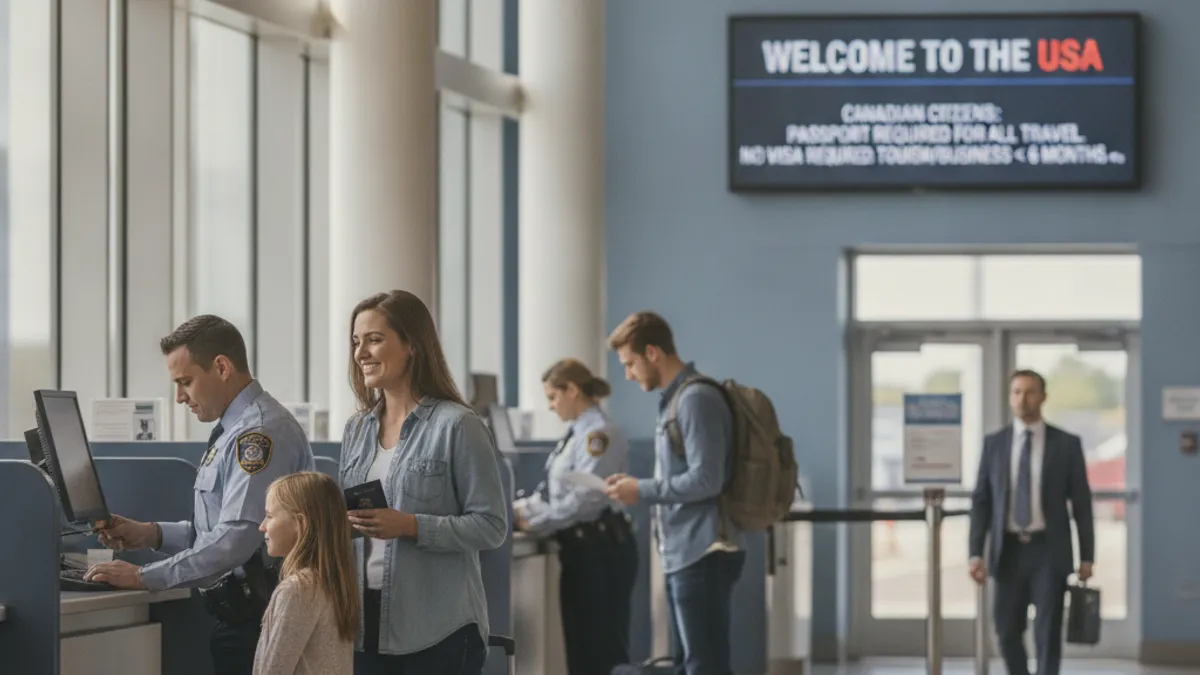
Navigating the U.S. border as a Canadian citizen involves understanding how different travel scenarios are treated. While the core requirement is often just a passport, the specific details of your trip can influence what the U.S. Customs and Border Protection (CBP) officer looks for. Here, we break down a few of the most frequent reasons Canadians travel to the U.S. and what you should be aware of.
It’s important to remember that at the end of the day, the CBP officer has the final authority to grant or deny entry. Your goal is to present yourself clearly and honestly, with any supporting documentation that reinforces your stated purpose and intent to return to Canada.
Tourist Trips
If your reason for crossing into the U.S. is for leisure, sightseeing, or simply to enjoy a vacation, you're classified as a tourist. For Canadians, this typically means you can enter the country with just your valid Canadian passport. U.S. immigration regulations generally allow for a stay of up to 180 days for tourists.
This authorization lets you explore popular destinations, visit national parks, or attend events. However, the CBP officer will still inquire about the nature and duration of your visit. They are looking to confirm that you are not attempting to work illegally or establish residency. Having a general idea of your itinerary, like booked accommodations or planned activities, can be helpful in answering their questions.
Business Travel
When Canadians travel to the U.S. for professional reasons, such as attending meetings, participating in conferences, or conducting negotiations, this is considered business travel. In most cases, this type of short-term business visit does not require a visa, and a valid passport suffices for entry. This provision allows for the smooth continuation of cross-border commerce and professional collaboration.
It is advisable to carry documentation that supports your claim of business travel. This could include an invitation letter from the U.S. company you are meeting, evidence of conference registration, or a letter from your Canadian employer detailing the purpose and expected duration of your trip. Such documents help the CBP officer verify that your visit aligns with the permitted business activities for temporary visitors.
Visiting Family or Friends
Connecting with relatives or friends living in the United States is a very common reason for Canadians to make the trip across the border. Since these visits are primarily social, they fall under the umbrella of tourism. Thus, for visiting family or friends, Canadians generally only need their valid passport to enter the U.S.
When speaking with a CBP officer, be prepared to state who you are visiting and where they reside. Providing the contact information for your hosts can also be beneficial. The officer's main concern is ensuring that your visit is temporary and that you possess strong ties to Canada that will ensure your return, such as employment or family responsibilities.
What If You Need a Visa?
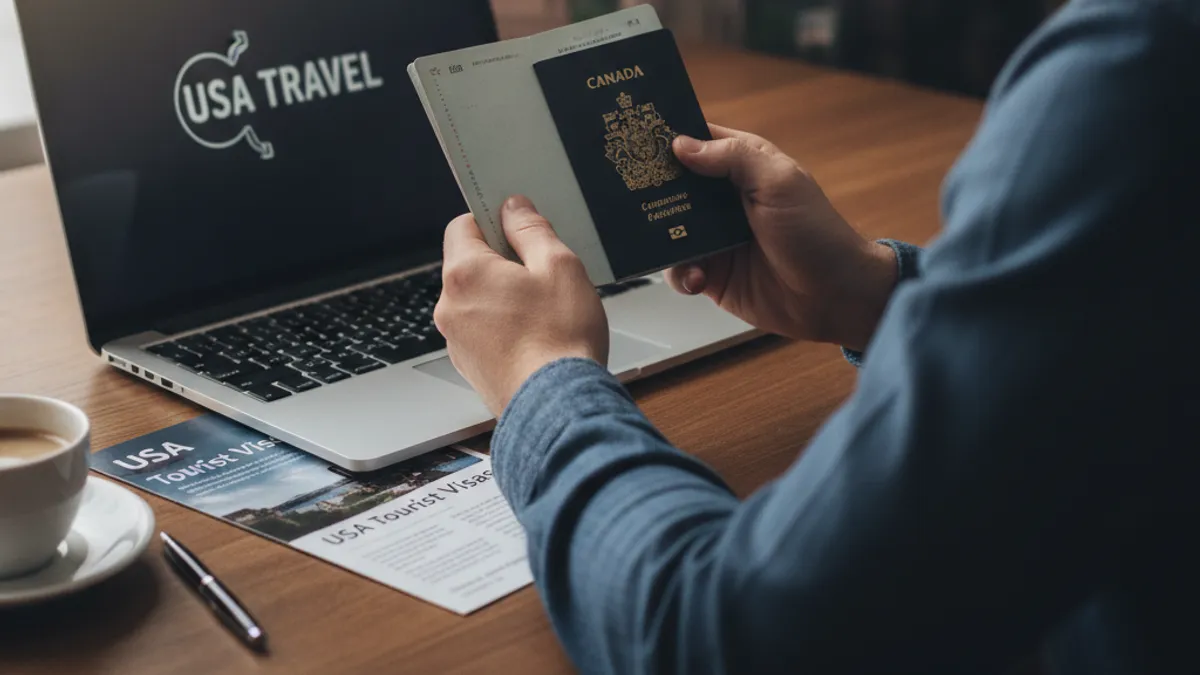
While most Canadians enjoy visa-free entry for short trips, there are specific circumstances where a visa is absolutely necessary. If your travel plans go beyond typical tourism or short business meetings, or if you intend to work, study, or live in the U.S., you'll need to navigate the U.S. visa application process. This is a critical step to ensure you comply with U.S. immigration laws and avoid serious consequences.
The U.S. Department of State manages the visa application system, and the requirements can vary significantly based on your purpose of travel. It’s not a one-size-fits-all process, so understanding which visa category applies to you is the first and most important step.
Types of US Visas for Canadians
For Canadians, the need for a visa typically arises when their purpose of visit is not covered by the standard visitor entry provisions. Several common visa categories exist for those who intend to work, study, or engage in other specific activities in the United States. Understanding these categories is key to knowing if you need to apply.
- Work Visas: These are essential if you have a job offer from a U.S. employer. Examples include the H-1B visa for specialty occupations, the O-1 visa for individuals with extraordinary ability, and others for temporary agricultural or non-agricultural work. Your U.S. employer usually initiates the process.
- Student Visas: If you plan to enroll in a U.S. academic institution (university, college, or even high school), you'll need either an F-1 (academic) or M-1 (vocational) visa. This requires an I-20 form from your school and proof of financial support.
- Immigrant Visas: If your intention is to live permanently in the U.S., you'll need an immigrant visa, which is a much more complex and lengthy process, often involving family sponsorship or employment-based petitions.
- Other Non-Immigrant Visas: Various other visas exist for specific purposes, such as transit (C visa), crewmembers (D visa), or exchange visitors (J visa).
Essentially, if your trip involves earning money in the U.S. or pursuing long-term education or residency, a visa is almost certainly required. As of 2026, these categories and their requirements remain consistent for official entry purposes.
The Application Process (When Necessary)
If your travel plans necessitate a U.S. visa, the process generally begins with identifying the correct visa type and then submitting an online application. This is typically done through the U.S. Department of State's Consular Electronic Application Center (CEAC). You'll fill out the DS-160 form, which is the most common application for non-immigrant visas.
After submitting the form and paying the required application fee (which is non-refundable), you'll schedule an interview at a U.S. embassy or consulate. Be prepared to attend this interview, where a consular officer will ask questions about your background, travel plans, and ties to Canada. You'll also need to provide supporting documents, which can include your passport, photos, financial statements, and any evidence related to your visa category. The processing times can vary, so it's wise to apply well in advance of your intended travel date.