
Planning a trip to Europe often sparks excitement, and with it, important questions about where you can go. A common query is: can I visit Schengen countries with a UK visa? The short answer is usually no, but understanding why and what your options are is crucial for smooth travel planning.
Thank you for reading this post, don't forget to subscribe!The United Kingdom and the Schengen Area are distinct entities with separate border control policies. Your UK visa grants you rights within the UK, but it doesn't automatically extend those rights to the 27 Schengen member states. As of 2026, these distinctions remain firm, requiring a clear understanding of each system.
Your UK Visa vs. Schengen Access: The Core Difference

Think of your UK visa and a Schengen visa as separate keys for separate doors. A UK visa is specifically issued by the United Kingdom to permit entry and stay within the UK's borders. It's governed by UK immigration law, which operates independently of the Schengen Agreement. The Schengen Area, on the other hand, is a zone comprising 27 European countries that have collectively abolished passport and immigration controls at their mutual borders.
This means travel between these countries is, in principle, like moving between regions within a single country. However, to enter the Schengen Area initially, most nationalities require a Schengen visa. Your UK visa has no bearing on this entry requirement.
Key Factor: Your Nationality and Visa-Free Status

Here’s the most important piece of the puzzle: your nationality primarily dictates whether you can visit Schengen countries without a visa. The Schengen Area has agreements with many countries that allow their citizens to enter for short stays (typically up to 90 days in any 180-day period) without a visa for tourism or business. If your nationality falls into this category, you likely don't need a visa for Schengen regardless of your UK visa status. Your UK visa is relevant for entering the UK, but for Schengen, it's your passport and the visa-free agreements attached to your nationality that matter.
Does Your Nationality Qualify You for Schengen Visa-Free Travel?
If you're wondering whether you can travel visa-free to Schengen, the answer hinges on your passport's country of origin. Many nations, including the United States, Canada, Australia, New Zealand, Japan, and South Korea, have agreements allowing their citizens visa-free entry into the Schengen Area for short visits. These agreements are part of broader diplomatic arrangements and are administered by the Schengen member states. For these fortunate nationalities, a separate Schengen visa is not needed for tourist or business trips under 90 days.
Your UK visa would still be required for entry into the UK, but once in the UK, you could then fly to a Schengen country and enter simply with your passport, provided you met the standard entry conditions for that specific Schengen country. For all other nationalities not on the visa-exempt list, a Schengen visa application is a mandatory step before travel.
When a UK Visa DOESN'T Work for Schengen
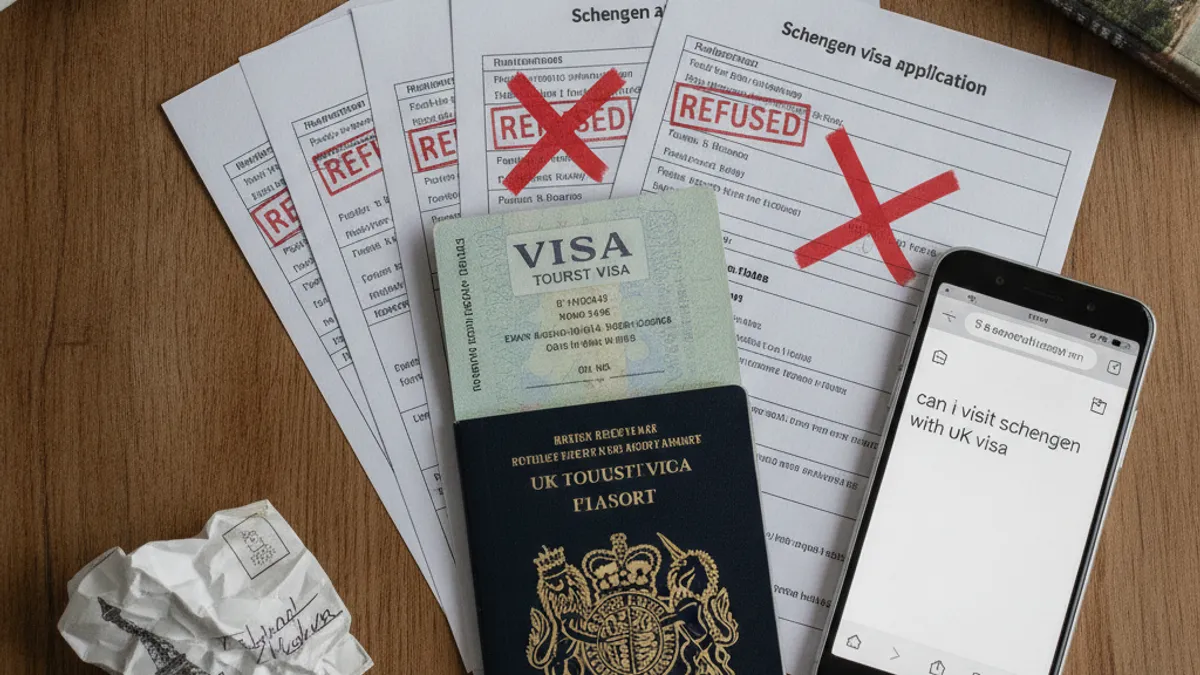
It’s critical to understand that holding any type of UK visa, whether it's a standard visitor visa, a work visa, or a student visa, does not grant you automatic entry into the Schengen Area. The UK’s departure from the European Union meant it also opted out of the Schengen Agreement. This separation means that immigration policies are entirely separate. If your nationality requires a visa to enter the Schengen Area, your UK visa status will not excuse you from this requirement.
You'll still need to apply for and obtain a Schengen visa before you travel. Trying to enter Schengen countries relying on a UK visa would likely result in being denied boarding or entry at the border.
The Specifics: UK Visas That Might Matter (But Usually Don't)

While a standard UK visa won't get you into Schengen, there are rare edge cases involving certain long-term UK residence permits where limited visa-free travel might be possible for very short stays. These are not universal and depend heavily on your nationality and the specific type of UK residence document you hold. For instance, some holders of very specific types of UK long-term visas or permanent residency permits might find that their status allows for visa-free transit or very short tourist stays within Schengen, again, provided their nationality isn't already subject to Schengen visa requirements. This is a complex area, and these exceptions are quite narrow.
Long-Term UK Residency vs. Short-Term UK Visitor Visa
For most travelers, the distinction between a long-term UK residence permit and a short-term UK visitor visa is academic when it comes to Schengen entry. A standard UK visitor visa is explicitly for visiting the UK and offers no privileges for entering the Schengen Area. If you hold a long-term UK residence permit, such as a Tier 1 visa or a Skilled Worker visa, it indicates a more established status in the UK. However, even these statuses generally do not grant automatic visa-free access to the Schengen Area.
The critical factor remains your nationality and whether it appears on the Schengen visa-exempt list. If your nationality requires a Schengen visa, possessing a UK residence permit will not change that requirement. Attempting to rely on your UK status for Schengen entry is a common pitfall.
When You Definitely Need a Schengen Visa

You definitely need a Schengen visa if your nationality is listed as requiring one for short stays and you do not possess another visa or permit that grants you entry into the Schengen Area. This is the most common scenario for many travelers worldwide. The Schengen visa permits you to travel freely within all Schengen member states for tourism or business purposes for up to 90 days within any 180-day period. The application process typically involves providing documentation like your passport, proof of accommodation, travel insurance that meets specific coverage requirements (often at least €30,000), and evidence of sufficient financial means to cover your stay.
You must apply for the visa through the consulate or embassy of the Schengen country that is your main destination, or the country where you will spend the longest period. If you plan to visit multiple Schengen countries for an equal amount of time, you apply at the embassy of your first point of entry.
How to Apply for a Schengen Visa (Your Checklist)
Applying for a Schengen visa requires careful preparation and attention to detail. The process generally starts by identifying the correct consulate or embassy to apply through, this is usually the country where you'll spend the most time, or your first point of entry if stays are equal. Next, you'll need to gather your documents. Essential items usually include your passport (valid for at least three months beyond your intended departure from the Schengen Area and with at least two blank pages), completed visa application form, passport-sized photographs meeting specific requirements, proof of travel insurance with a minimum coverage of €30,000 for medical emergencies and repatriation, evidence of accommodation (like hotel bookings or an invitation letter), and proof of sufficient funds for your trip (bank statements, pay slips).
Some nationalities may also need to provide flight bookings. Once all documents are prepared, you'll schedule an appointment at the embassy or consulate to submit your application and possibly attend an interview. It’s wise to start this process at least six weeks before your intended travel date, as processing times can vary.
Common Mistakes Travelers Make

One of the biggest errors people make is assuming their UK visa automatically allows for Schengen travel, much like a national ID card might allow movement within different regions of a single country. This is rarely the case. Another frequent mistake involves misunderstanding the difference between a Schengen visa and an entry stamp. You need the visa before you arrive, not just a promise of a stamp upon arrival.
Many travelers underestimate the importance of having proof of sufficient funds and comprehensive travel insurance that meets the specific Schengen requirements, often a minimum of €30,000 coverage. Failing to have these documents readily available can lead to stressful questioning or even refusal of entry, even if you have the correct visa.
You might also incorrectly assume that because you are flying from the UK, you are covered. However, border control checks happen at the entry point to the Schengen Area, not when you board your flight from London. Immigration officers at your Schengen destination will verify your nationality and visa status independently of your UK entry. Many also forget to check if their passport itself meets the Schengen criteria, which usually requires it to be valid for at least three months beyond your intended departure date and to have at least two blank pages.
Planning Your Multi-Country European Trip

When you're planning to visit multiple countries within the Schengen Area, a bit of strategic planning upfront can save a lot of headaches. Your first step should always be to identify your main destination. This is the country where you'll spend the most time, or if you're spending an equal amount of time in several countries, it's the country you'll enter first. This decision dictates which country's embassy or consulate you'll apply to for your Schengen visa.
For instance, if you're planning a trip to France, Germany, and Italy, spending four days in each, you would apply to the French embassy because it's your first point of entry.
Beyond identifying your primary destination, consider the total duration of your stay. The Schengen visa typically allows for up to 90 days of stay within any 180-day period. If your trip exceeds this, you'll need a different type of visa. It's also wise to consider your travel within the Schengen Area.
While internal border checks are abolished, you still need to be able to prove your itinerary, including accommodation bookings and onward travel plans, to immigration officials, especially upon your initial entry. Having these documents organized digitally or in a travel folder makes presentation much smoother.
Why Internal Border Checks Matter (and Don't Matter)
The removal of internal border controls within the Schengen Area is its most celebrated feature, transforming travel across Europe. This means that once you have legally entered the Schengen zone, you can typically travel between member countries without further immigration checks at those borders. Think of it like driving from California to Nevada; your passport isn't checked at the state line. This facilitates seamless journeys, making it easy to explore diverse cultures and landscapes without the constant pause for border formalities.
However, this doesn't mean there’s no border control whatsoever. While regular checks at internal borders are gone, authorities can and do conduct random checks within border regions or on transportation like trains and ferries. Additionally, if you are traveling from a non-Schengen country (like the UK) into a Schengen country, you will experience a full border control check upon arrival. You must present your passport and any required visa or proof of visa-free status.
The absence of internal checks is for movement between Schengen countries, not for initial entry into the zone.
When to Consult Official Sources

Given the complexities and the potential consequences of errors, consulting official sources is paramount. For specific visa requirements, the most reliable information will come directly from the embassy or consulate of the Schengen country you intend to visit. Their websites will detail the exact documentation needed, application forms, fees, and processing times, which can vary slightly between countries. Similarly, for UK visa information, the official UK government website is the definitive source.
Don't rely on outdated blogs, forums, or advice from friends, as immigration rules can change. For example, as of 2026, new digital traveler registration systems are expected to be in place for some non-EU visitors to the Schengen Area, such as ETIAS (European Travel Information and Authorisation System), though its exact rollout and applicability to all nationalities are still being finalized. Always cross-reference information, especially regarding visa validity, duration of stay limits, and required travel insurance policies, with government immigration portals or official diplomatic representations. This diligence ensures your travel plans align with current regulations.