
Ever wondered what exactly an ESTA “visa” is, or if you even need one? It’s a common question for many international travelers planning a trip to the United States. Essentially, it’s not a traditional visa but a crucial travel authorization that allows citizens of specific countries to enter the U.S. for tourism or business without needing a full visa appointment.
Thank you for reading this post, don't forget to subscribe!This system streamlines entry for eligible visitors. For instance, eligibility criteria remain tied to specific passport nationalities and recent travel history, with applications needing at least 72 hours for processing.
What Exactly is the ESTA “Visa”?

The Electronic System for Travel Authorization, or ESTA, is a digital pre-screening system. It’s used by the U.S. government to determine your eligibility to travel to the United States under the Visa Waiver Program (VWP). Think of it as a gatekeeper, it checks if you meet the requirements to enter the U.S. for short stays without a formal visa.
It’s important to remember that ESTA is NOT a visa. A visa is a formal document issued by a U.S. embassy or consulate, granting permission to enter the country. ESTA, on the other hand, is an electronic authorization that confirms you are allowed to board your flight or ship to the United States from a VWP-eligible country. The primary purpose of the Visa Waiver Program is to facilitate short, temporary visits for tourism or business.
Who Needs an ESTA and Who Doesn’t?

Whether you need an ESTA boils down to a few key factors. If you’re a citizen of a country participating in the Visa Waiver Program and intend to visit the U.S. for tourism or business for 90 days or less, you’ll likely need an ESTA. It’s designed to simplify the entry process for these specific travelers.
However, if you’re not from a VWP country, plan to stay longer than 90 days, intend to study or work in the U.S., or have traveled to certain countries recently (like Iran, Iraq, Sudan, Syria, Libya, Somalia, Yemen, Cuba, or North Korea), you will generally need to apply for a traditional U.S. visa instead. It’s a decision tree where your personal circumstances dictate the path.
VWP Country Eligibility
The core of ESTA’s function is tied to the Visa Waiver Program. This program allows citizens of about 40 participating countries to travel to the U.S. for tourism or business for up to 90 days without obtaining a visa. Countries in this program are selected based on security cooperation and immigration practices shared with the United States.
If your passport is issued by a country that’s part of the VWP, you are likely eligible for ESTA. You can usually find the official list of VWP participating countries on government immigration websites. It’s crucial to check this list as participation can change, and it’s the first hurdle in determining if you need ESTA.
Purpose of Visit Matters
Your ESTA application is specifically for short-term trips for tourism or business. This means activities like visiting family, vacationing, attending conferences, or consulting with business associates. If your reason for travel involves entering the U.S. for longer than 90 days, pursuing education (academic or vocational), or engaging in employment, you are not eligible for ESTA.
For those purposes, you would need to apply for the appropriate U.S. visa, such as a student visa (F-1) or a work visa (H-1B), which involves a more detailed application process through a U.S. embassy or consulate. Trying to use ESTA for purposes it wasn’t designed for can lead to significant travel disruptions and denial of entry.
Recent Travel to Certain Countries
This is a critical point that can unexpectedly disqualify many travelers from using ESTA. If you have traveled to or been present in any of the following countries on or after March 1, 2011, you are generally no longer eligible to travel under the Visa Waiver Program and therefore cannot obtain an ESTA:
- Iran
- Iraq
- Sudan
- Syria
- Libya
- Somalia
- Yemen
- Cuba
- North Korea
There are very narrow exceptions, such as official government or military duty for a VWP country, or travel that was undertaken before March 1, 2011. If you fall into this category, you must apply for a U.S. visa. This rule was put in place to enhance security and prevent individuals who have traveled to state-sponsored terrorism-list countries from being admitted under the VWP.
The ESTA Application: What You Need to Know
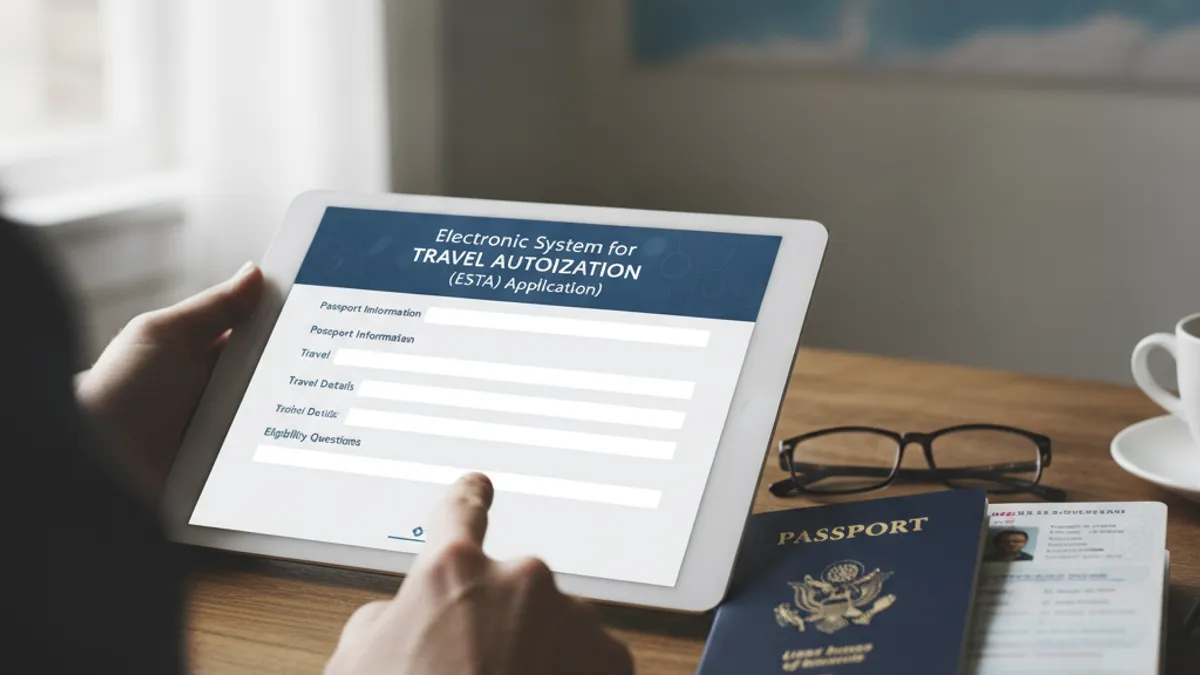
Applying for ESTA is entirely an online process and is generally straightforward, but precision is key. You’ll need to visit the official U.S. government website for ESTA. Be very wary of third-party websites that might appear similar; they often charge significantly higher fees for the same application and can even be scams.
The application form requires you to provide accurate personal information, passport details, and answer questions related to your background, health, and travel history. Honesty and completeness are paramount, as any inaccuracies or omissions can lead to your application being denied or even future travel restrictions.
Official ESTA Application Process
The official application for ESTA is available only on the U.S. Customs and Border Protection (CBP) website. This is the most secure and cost-effective way to apply. The system is designed to be user-friendly, guiding you through each step.
You’ll typically need to create an account or proceed as a guest, then fill out the application form fields.
The process involves providing basic biographical information, passport details (including the passport number, country of issuance, and expiration date), and answering a series of yes/no questions about your background, such as criminal history, previous visa denials, and health concerns. The application fee is modest and charged at the end of the submission.
Required Information and Documents
To complete your ESTA application, you’ll need a few key items readily available. The most important is your valid e-passport. An e-passport is an electronic passport that has a small microchip embedded in it, containing your biographical information and a digital photograph. In many cases, you’ll also need your contact information, including an email address, and potentially your address in the United States if you have one already planned.
Some questions might ask about your employer or your parents’ information. While not always strictly mandatory, providing as much accurate detail as possible helps ensure a smooth processing experience. Make sure your passport is valid for at least six months beyond your intended stay in the U.S. Per CBP guidance, a new ESTA is required if you obtain a new passport, change your name, or change your gender.
Common Application Mistakes to Avoid
One of the most frequent mistakes is applying through unofficial websites. These sites can look legitimate but charge inflated fees for the same application and can even be scams. Always ensure you are on the official U.S. government portal.
Another common pitfall is providing inaccurate personal information. Even minor typos in your name, passport number, or date of birth can cause your ESTA application to be denied or delayed. Double-checking every field before submission is essential. Finally, forgetting to update your ESTA if your passport information changes (like getting a new passport) is a common oversight that can cause issues upon arrival.
What Happens After You Apply?

Once you’ve submitted your ESTA application and paid the fee, the system will process your request. You’ll typically receive a response within minutes, though it can sometimes take up to 72 hours. It’s crucial to check the status via the official ESTA website using your application number and passport details.
Don’t wait until the last minute to apply, as unexpected issues can arise, and you’ll need time to address them. The outcome of your application will significantly impact your ability to travel to the U.S. under the Visa Waiver Program.
Understanding Your ESTA Status (Approved, Denied, Pending)
Your ESTA application will result in one of three primary statuses. “Approved” means you are authorized to travel to the U.S. via the Visa Waiver Program. This is the outcome most travelers hope for, and it typically allows for multiple entries within the authorization’s validity period.
“Denied” means you are not eligible to travel under the Visa Waiver Program. This often occurs if you’ve had prior immigration violations, have traveled to specific countries not permitted by the VWP, or if there are other security concerns. If denied, your only option is usually to apply for a non-immigrant visa at a U.S. embassy or consulate. “Authorization Pending” is a less common status that means your application requires further review, and you’ll need to check back later for an update.
Validity and Reapplication Rules
An approved ESTA is generally valid for two years from the date of authorization or until your passport expires, whichever comes first. This means you can travel to the U.S. multiple times within that period without needing to reapply each time, as long as each stay is for 90 days or less and for eligible purposes. However, there are key conditions that require you to reapply for a new ESTA:
- You obtain a new passport.
- You change your name.
- You change your gender.
- You change your country of citizenship.
- Your previous ESTA is about to expire.
Even if your ESTA is still valid, if any of these personal details change, you must submit a new application. Failure to do so can result in being denied boarding or admission to the United States.
Key Things to Remember for a Smooth Trip
To wrap up the initial understanding, the ESTA system is a vital tool for visa-exempt travelers heading to the U.S. for short trips. Its main purposes are to enhance security and facilitate smoother travel. Understanding the eligibility requirements, correctly filling out the application, and being aware of its validity are the most critical steps.
Always use the official government website, double-check all your entered information for accuracy, and apply well in advance of your travel dates. If your ESTA is denied, don’t give up; explore the option of applying for a traditional U.S. visa.