Thank you for reading this post, don't forget to subscribe!
Work authorization is legal permission to work in the United States. Depending on a person’s citizenship, immigration status, or visa category, that permission may come from their status or require approval from U.S. Citizenship and Immigration Services (USCIS). An employment Authorization Document (EAD) is one common way to prove this permission.
In the United States, a person generally must have the legal right to work before accepting a job. U.S. citizens and lawful permanent residents usually have broad work rights, while some foreign nationals must meet specific immigration rules before they can work. The rules depend on the person’s status and the type of employment they plan to accept.
The words work authorization, work permit, and employment authorization document often appear together, but they do not mean exactly the same thing. Work authorization refers to the legal right to work. A work permit commonly means an EAD card issued by USCIS, while an employer may also accept other approved documents to verify work eligibility. Knowing this difference can help you avoid delays when applying for a job or an immigration benefit.
What Does Work Authorization Mean in the United States?
Work authorization means a person has legal permission to perform employment in the United States under the rules that apply to them. For some people, this permission comes from citizenship or permanent resident status. For others, it depends on a temporary immigration category, an approved application, or permission tied to a particular employer.
For example, a U.S. citizen generally does not need an EAD to work for an ordinary private employer. A person with a qualifying temporary immigration status may need an EAD, while another person may be allowed to work only for the employer or under the conditions listed in their immigration status. These differences matter because permission to enter the country does not always include permission to work.
Work authorization also does not guarantee that a person qualifies for every job. Employers may still apply lawful job-related requirements, such as professional licenses, education, or training. A worker must meet both the applicable employment rules and any immigration-related limits.
Source: www.youtube.com > Connetics USA Nursing
Legal permission
Work authorization establishes whether a person may legally accept employment under the rules that apply to their circumstances.
Proof of eligibility
A document, such as an EAD or another acceptable Form I-9 document, may be used to show that a person is allowed to work.
Possible restrictions
Some work permission applies broadly, while other permission is limited by employer, job type, time period, or immigration status.
Is Work Authorization the Same as a Work Permit?
Not exactly. Work authorization is the legal permission itself, while a work permit usually refers to the physical Employment Authorization Document issued by USCIS. People often use both terms to describe the same general topic, but the distinction matters when completing forms or checking eligibility.
A person may have the legal right to work without holding an EAD. For instance, lawful permanent residents can generally work without applying for a separate EAD. Certain temporary workers may also have employment permission connected to their immigration status and employer.
Work authorization
The legal right to work under the applicable U.S. immigration and employment rules.
Work permit or EAD
A card that provides evidence of employment authorization for eligible individuals.
Does a Visa Automatically Allow You to Work?
No. A U.S. visa generally relates to travel to a U.S. port of entry and a request for admission in a particular category. Permission to work depends on the immigration status and the rules for that category. A visitor visa for tourism or business visits does not normally authorize ordinary employment in the United States.
Before accepting a job, check the conditions of your admission, immigration status, and any required work authorization. If the rules are unclear, a qualified immigration attorney can help you assess your circumstances.
Who Needs Work Authorization in the USA?
Whether someone needs a separate work permit depends on their citizenship, immigration status, and the type of work they plan to do. U.S. employers must verify that new employees are authorized to work, but not every worker needs an EAD card to meet that requirement.
U.S. citizens generally have broad permission to work. Lawful permanent residents, commonly called green card holders, can usually work for most employers without a separate EAD. Noncitizens with temporary immigration status may need an EAD or may be restricted to employment with a particular employer.
Some immigration categories provide employment authorization based on status or circumstances. Others require the person to submit an application and obtain approval before starting work. A pending application alone does not always grant permission to work.
Source: docs.cholonautas.edu.pe
U.S. citizens
Generally have broad work rights and do not need an EAD to accept ordinary employment.
Lawful permanent residents
Can generally work for any U.S. employer without a separate employment authorization application.
Certain temporary workers
May have employment authorization tied to a specific employer, status, or approved work petition.
Eligible noncitizens seeking an EAD
May need to apply through USCIS when their category requires an EAD or when they must request employment permission.
Common Immigration Categories That May Qualify
Several immigration categories may provide a route to employment authorization. The exact requirements differ, and eligibility should be checked against current USCIS instructions rather than assumed from a category name alone.
Pending adjustment of status
Some people with a pending Form I-485 may qualify to request an EAD through Form I-765.
Asylum applicants
Certain applicants may request employment authorization after meeting the applicable filing and waiting-period rules. Filing an asylum application does not by itself grant permission to work.
Asylees and refugees
These groups generally have employment authorization based on their status, although they may need acceptable documents to establish work eligibility.
Certain parolees or deferred action recipients
Some individuals in these categories may apply for an EAD if they meet the requirements that apply to their case.
Certain students and exchange visitors
Some may qualify for limited employment under specific rules, such as eligible practical training or other authorized activities. Not all student or exchange visitor employment requires an EAD, and restrictions can apply.
Who May Not Need a Separate Work Permit?
A separate EAD is not required for every person who is legally allowed to work. U.S. citizens, lawful permanent residents, and some nonimmigrants whose employment is authorized through their status may be able to work without obtaining an EAD.
The key question is not simply whether you are a citizen or noncitizen. It is whether the law permits your proposed work and what documents you may use to prove eligibility. If your permission is employer-specific, accepting a second job may require additional authorization.
What Is an Employment Authorization Document (EAD)?
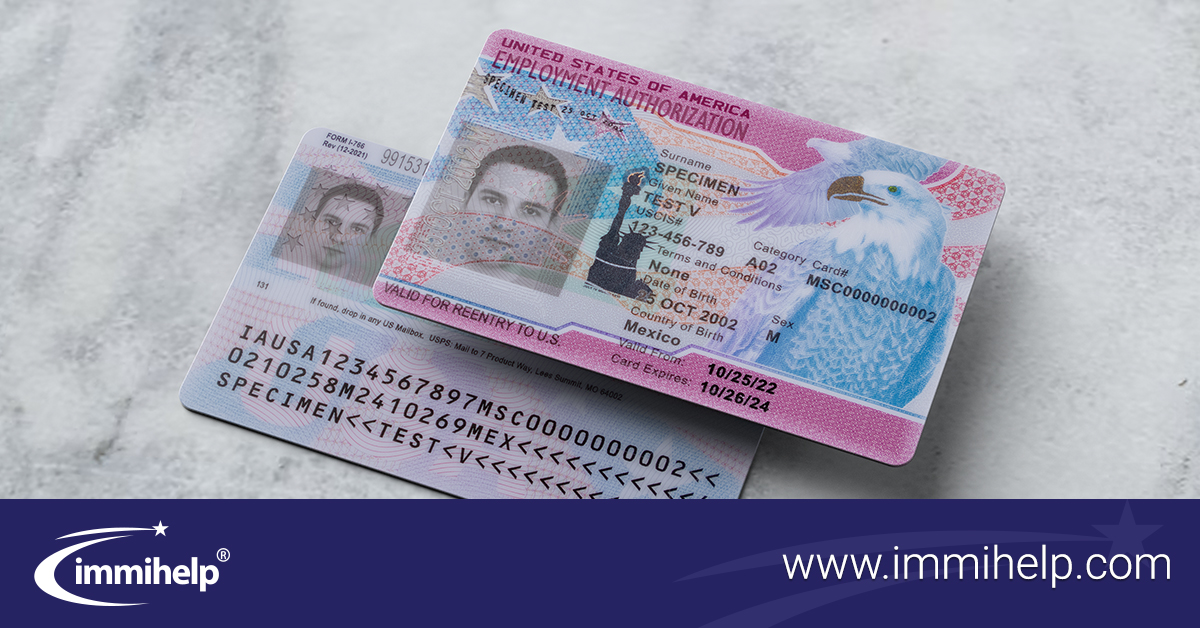
An Employment Authorization Document, or EAD, is a card issued by the U.S. Department of Homeland Security through USCIS. It is commonly known as a work permit and serves as evidence that the holder is authorized to work under the applicable conditions.
The card is generally issued on Form I-766. It includes identifying details and information relevant to the holder’s employment authorization, such as an eligibility category and a validity period. The precise effect of the card depends on the person’s status and the rules attached to that category.
An EAD is not the same as a green card, visa, or Social Security card. It does not automatically grant permanent residence, extend an immigration stay, or create permission beyond its applicable terms. A person should check both the card and the underlying immigration status when making decisions about work.
Source: carrollprinting.com
Identity details
The card generally displays the holder’s photograph, name, and other identifying information.
Eligibility category
The category code helps identify the basis for the employment authorization.
Validity dates
The dates help show the period covered by the card, subject to any applicable legal extension or other rule.
How Long Does Work Authorization Last?
The length of an EAD varies by eligibility category and the rules in effect when USCIS issues it. Some cards are issued for a limited period, and eligible holders may need to renew them before they expire. There is no single expiration period that applies to every worker.
An expiration date should not be read in isolation. Some categories have specific extension rules or other documents that may affect a person’s ability to keep working. Those rules can change, so workers should review current USCIS guidance before relying on an extension.
If your EAD is approaching its expiration date, check whether you qualify to renew it, when you may file, and whether your category has any applicable extension provisions. Do not assume that submitting a renewal application automatically lets you continue working.
Can You Work Without an EAD Card?
Yes, some people can work legally without an EAD card. A U.S. passport may establish both identity and work eligibility for Form I-9 purposes, while a permanent resident card is another acceptable example. Some noncitizens may also establish eligibility through other documents allowed by the Form I-9 rules.
However, a person who is required to obtain employment authorization before working cannot treat the absence of a card as permission to start. The answer depends on the person’s specific category and whether the applicable requirements have been met.
How to Apply for Work Authorization in the United States
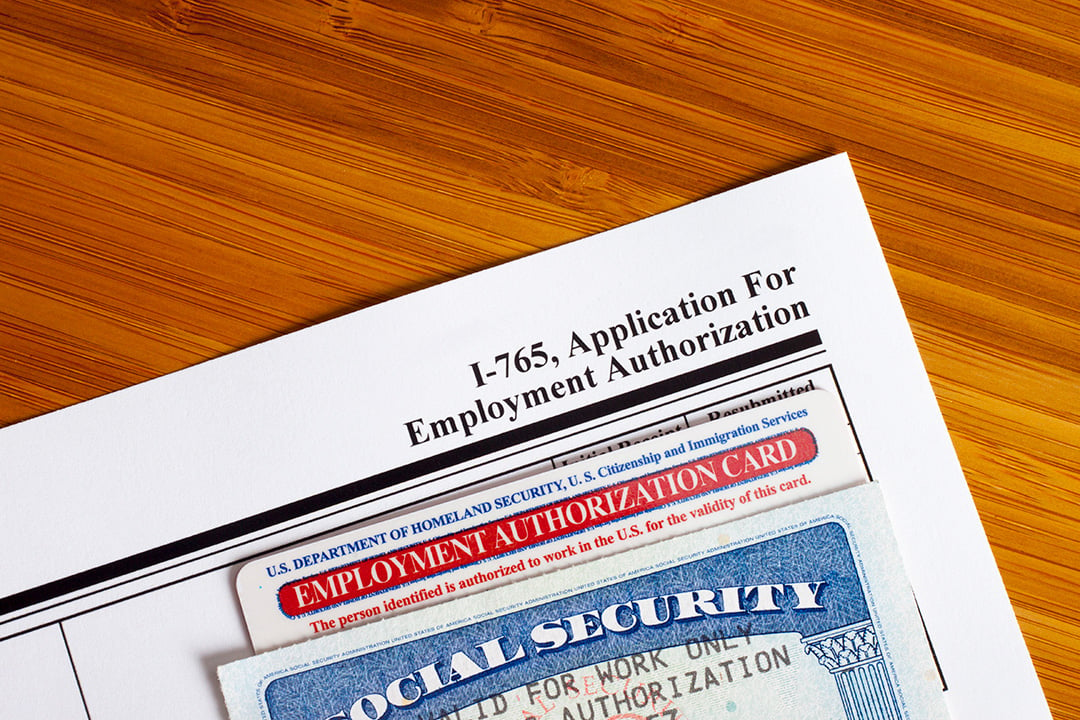
Eligible people who need an EAD generally apply by filing Form I-765, Application for Employment Authorization, with USCIS. Before filing, confirm that your immigration category allows you to apply and determine whether you are requesting initial authorization, a renewal, or a replacement card.
The application process is not identical for every applicant. The correct filing category, supporting evidence, fee, filing method, and timing depend on the reason for the request. Using the wrong category or leaving out required evidence can delay the decision.
Source: workpermitcheck.com
Step 1: Confirm eligibility
Read the current Form I-765 instructions and verify that your immigration status or circumstances qualify for the type of authorization you are requesting.
Step 2: Gather the required documents
Collect the identity records, immigration documents, photographs if required, and other evidence listed for your category.
Step 3: Complete Form I-765
Provide accurate information and select the correct eligibility category. Make sure your name, dates, and immigration details match the relevant records.
Step 4: Check the fee and filing method
Review the current USCIS fee schedule and filing instructions. Fees and available filing methods may vary by category, and some applicants may qualify for a fee exemption or waiver.
Step 5: Submit the application
File through the permitted online or paper method for your category and retain a copy of the application and proof of submission.
Step 6: Track the case
Use the receipt notice and USCIS case tools to monitor progress. Respond to any request for evidence by the stated deadline.
Step 7: Review the decision
If approved, check the card and its details when it arrives. If denied, read the decision carefully to understand the reason and any available next steps.
What Documents May Be Needed?
The supporting documents depend on the eligibility category and whether the application is an initial request, renewal, or replacement. The current USCIS instructions for Form I-765 provide the controlling checklist for the application you are filing.
Identity evidence
Documents such as a passport or other identity records may be needed, depending on the category and instructions.
Immigration records
Relevant records may include an I-94 arrival or departure record, notices of action, prior authorization documents, or evidence of the underlying immigration filing.
Photographs or prior EAD
Photographs or a copy of a prior card may be required in some cases. Follow the specific checklist rather than assuming every applicant needs the same items.
Fee or waiver evidence
Pay the correct fee or provide an allowed fee waiver request with the required evidence when applicable.
How Much Does a Work Permit Cost?
There is no single fee that applies to every work authorization application. The cost depends on the filing category, the current USCIS fee schedule, and whether an exemption or waiver is available. Some immigration cases may also involve separate legal, translation, or document preparation costs.
Check the official USCIS Form I-765 page and fee schedule immediately before filing. Avoid relying on an old article or a third-party service that does not clearly explain its fees. Paying a service provider does not guarantee approval or faster processing.
How Long Does Approval Take?
Processing time varies with the application category, case workload, and any additional review USCIS needs to complete. A general estimate from another person’s case may not predict your result.
Check USCIS processing-time information for the relevant form and category. If USCIS requests more evidence, follow the deadline in the notice. Do not begin work merely because you have filed an application or received a receipt notice unless a rule specifically authorizes you to work.
How Employers Verify Work Authorization
Most U.S. employers must complete Form I-9, Employment Eligibility Verification, for each new employee covered by the rules. The form helps the employer verify identity and employment eligibility. It is a separate process from applying for an EAD through USCIS.
Employees generally complete their part of Form I-9 after accepting a job offer, and employers must complete their portion within the required time. The employee may choose which acceptable documents to present from the official lists. An employer should not demand an EAD from every noncitizen or insist on a particular document when the rules allow other options.
Form I-9 recognizes documents in three lists. List A documents establish both identity and employment authorization, while List B documents establish identity and List C documents establish employment authorization. An employee can generally present one acceptable List A document or a valid combination of one List B and one List C document.
Source: detroitchinatown.org
List A
Examples include a valid U.S. passport or passport card, a qualifying permanent resident card, and an EAD that meets the requirements.
List B
Examples include certain state-issued driver’s licenses or identification cards that establish identity.
List C
Examples include certain unrestricted Social Security cards and qualifying U.S. birth certificates or other listed documents that establish employment authorization.
Can an Employer Choose Which Documents You Must Show?
Generally, no. During Form I-9 verification, employers must allow workers to choose from the acceptable documents that apply to them. Requiring a particular document because of a worker’s citizenship, immigration status, or national origin can violate federal anti-discrimination rules.
Employers also should not demand extra documents beyond those required or reject documents that reasonably appear genuine and relate to the worker. If an employer insists that you must show an EAD even though another acceptable document combination is available, you may seek guidance from the Department of Justice’s Immigrant and Employee Rights Section.
What Is the Difference Between Form I-9 and Form I-765?
Form I-9 is used by employers and employees to verify employment eligibility during hiring. Form I-765 is an application that eligible individuals submit to USCIS to request an EAD or employment authorization when their category requires it.
Completing Form I-9 does not grant immigration status or create work permission. Likewise, filing Form I-765 is not a substitute for the employer’s Form I-9 duties. Each form serves a different purpose in the U.S. employment system.
Expiration, Renewal, and Common Work Authorization Problems
A work authorization problem can arise when a person uses the wrong application category, misunderstands the limits of their status, misses a filing deadline, or assumes a pending case permits employment. Checking the rules early can help prevent gaps in work eligibility.
If you already have an EAD, review its expiration date and any rules that apply to your category. Some people may qualify to renew their cards, but an application filed before expiration does not always extend permission to work. Automatic extension rules and eligibility conditions can change, so use current official guidance.
Source: conneticsusa.com
Expired EAD
Check whether your status or an applicable extension rule allows you to keep working. If no rule applies, do not assume that the old card remains valid.
Pending application
A receipt notice confirms that a filing was received; it does not by itself establish permission to work in every category.
Lost or damaged card
Review USCIS replacement procedures and determine what evidence you can use for Form I-9 while a replacement is pending.
Incorrect information
If a card contains a name or other error, follow USCIS guidance for correcting or replacing it.
Employer-specific limits
Check whether your authorization permits work for the proposed employer and whether a second job or change of employer requires additional approval.
What Should You Do If Your EAD Is About to Expire?
Start by confirming your eligibility category and the expiration date on your card. Then check the current USCIS renewal instructions to find out when you may file and whether any extension rule applies to your specific category.
Keep copies of your application, receipt notice, and relevant immigration records. If you are employed, discuss the document verification process with your employer’s authorized staff without assuming that the employer can decide your immigration eligibility. If your right to work is uncertain, seek qualified immigration advice before continuing employment.
What Happens If You Work Without Required Authorization?
Working without required permission can create serious immigration problems. Depending on the person’s circumstances, unauthorized employment may affect a future immigration application or other benefits. The consequences are not identical for every immigration category, so a person’s individual facts matter.
If you think you have worked without the required authorization, avoid guessing about your legal position or submitting inaccurate information on a future form. A qualified immigration attorney can review the dates, status, work history, and possible legal options.
Frequently Asked Questions
Q
Is work authorization the same as citizenship?
No. Work authorization is permission to work under applicable law, while citizenship is a legal status that generally provides broad employment rights. A person may have work authorization without being a U.S. citizen, and having an EAD does not automatically lead to citizenship or permanent residence.
Q
Can I apply for work authorization while my green card application is pending?
Some people with a pending Form I-485, Application to Register Permanent Residence or Adjust Status, may qualify to apply for an EAD through Form I-765. Eligibility and filing requirements depend on the case. A pending green card application alone should not be treated as permission to work.
Q
Can I work while my EAD application is pending?
Not automatically. Some applicants may already have work authorization through their status, while others must wait for approval. Certain extension rules may apply to eligible renewal applicants, but they have specific conditions. Confirm your category and current USCIS guidance before starting or continuing work.
Q
Does an EAD allow me to work for any employer?
Many EADs provide broad permission to work for different employers, but you should not assume every work authorization has the same scope. Some immigration categories have employer, activity, or other limits. Check your status and the rules for your category before accepting a new position or second job.
Q
Can I renew my work authorization after it expires?
You may qualify to renew an EAD, depending on your eligibility category and current rules. Filing deadlines, fees, and any extension of work permission vary. Review the latest Form I-765 instructions and do not assume an expired card or pending renewal automatically authorizes continued employment.
Q
Can I get a Social Security number with my work authorization application?
Some eligible applicants can request a Social Security number or card through Form I-765 by completing the relevant section and following the instructions. Not every applicant or immigration category follows the same process. Check the current form instructions and Social Security Administration guidance for your circumstances.
Q
Where can I check official work authorization rules?
Start with the USCIS website at https://www.uscis.gov for Form I-765, EAD eligibility, filing instructions, and case information. For employer verification, consult https://www.uscis.gov/i-9-central. For questions about unfair document demands or discrimination during verification, visit the U.S. Department of Justice at https://www.justice.gov/crt/iers-frequently-asked-questions-faqs.
✦ Wrapping Up
Conclusion
Work authorization is the legal permission a person needs to work in the United States under the rules that apply to their situation. Some people have broad work rights through citizenship or permanent resident status, while certain noncitizens need an EAD or other specific authorization before accepting employment.
The safest approach is to confirm your eligibility, understand any limits on your status, and use the correct documents for your situation. If you need an EAD, read the current Form I-765 instructions, check the fee and filing requirements, and track your application through USCIS. Employers must also follow Form I-9 rules and cannot improperly restrict workers’ choice of acceptable documents.
💡 Key Takeaway
Before accepting a U.S. job, confirm that your immigration status permits the proposed work. If you need an EAD, check your eligibility and the latest USCIS Form I-765 instructions at https://www.uscis.gov/i-765. If your status, expiration date, or right to keep working is unclear, consult a qualified U.S. immigration attorney.