Thank you for reading this post, don't forget to subscribe!
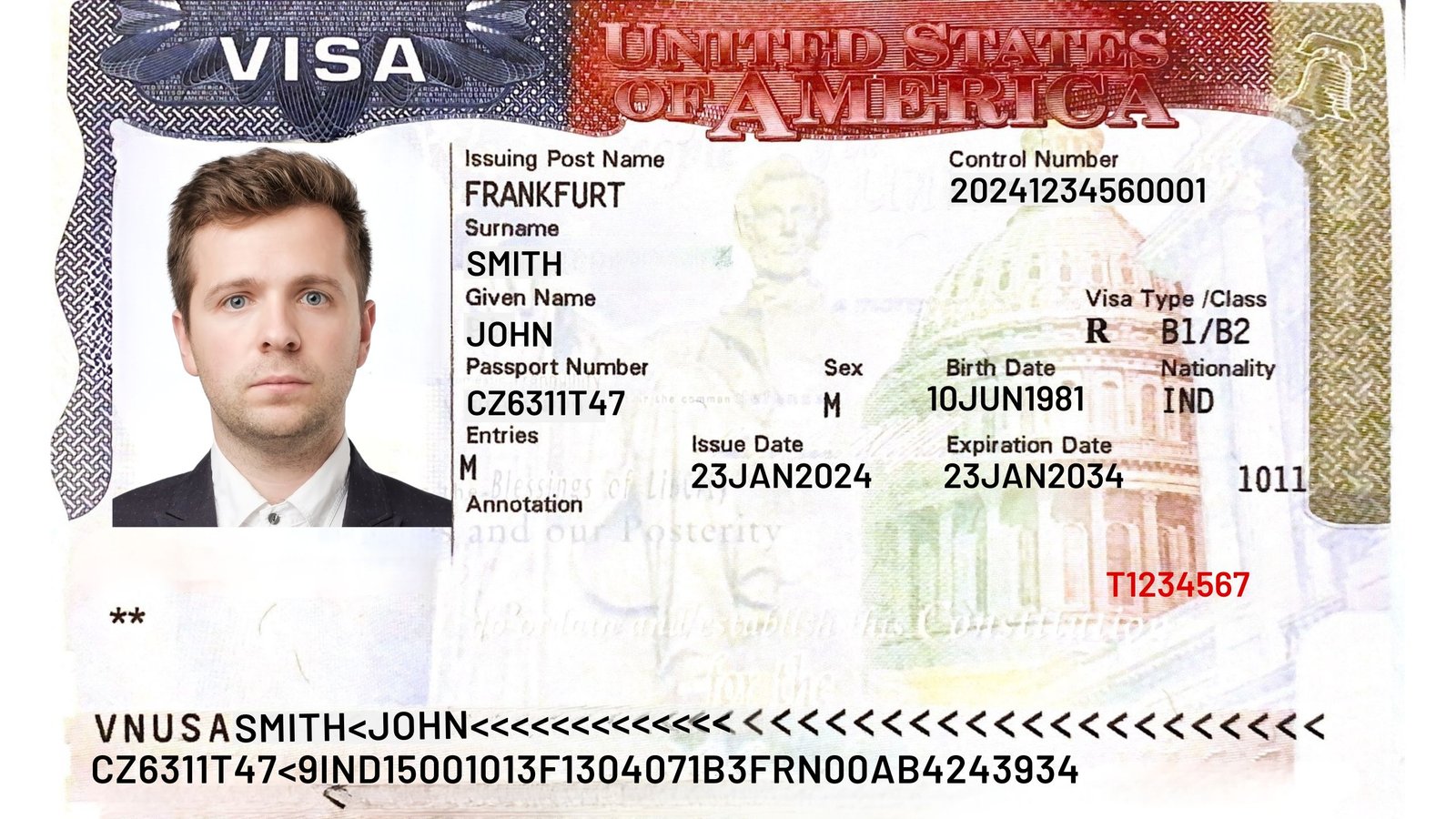
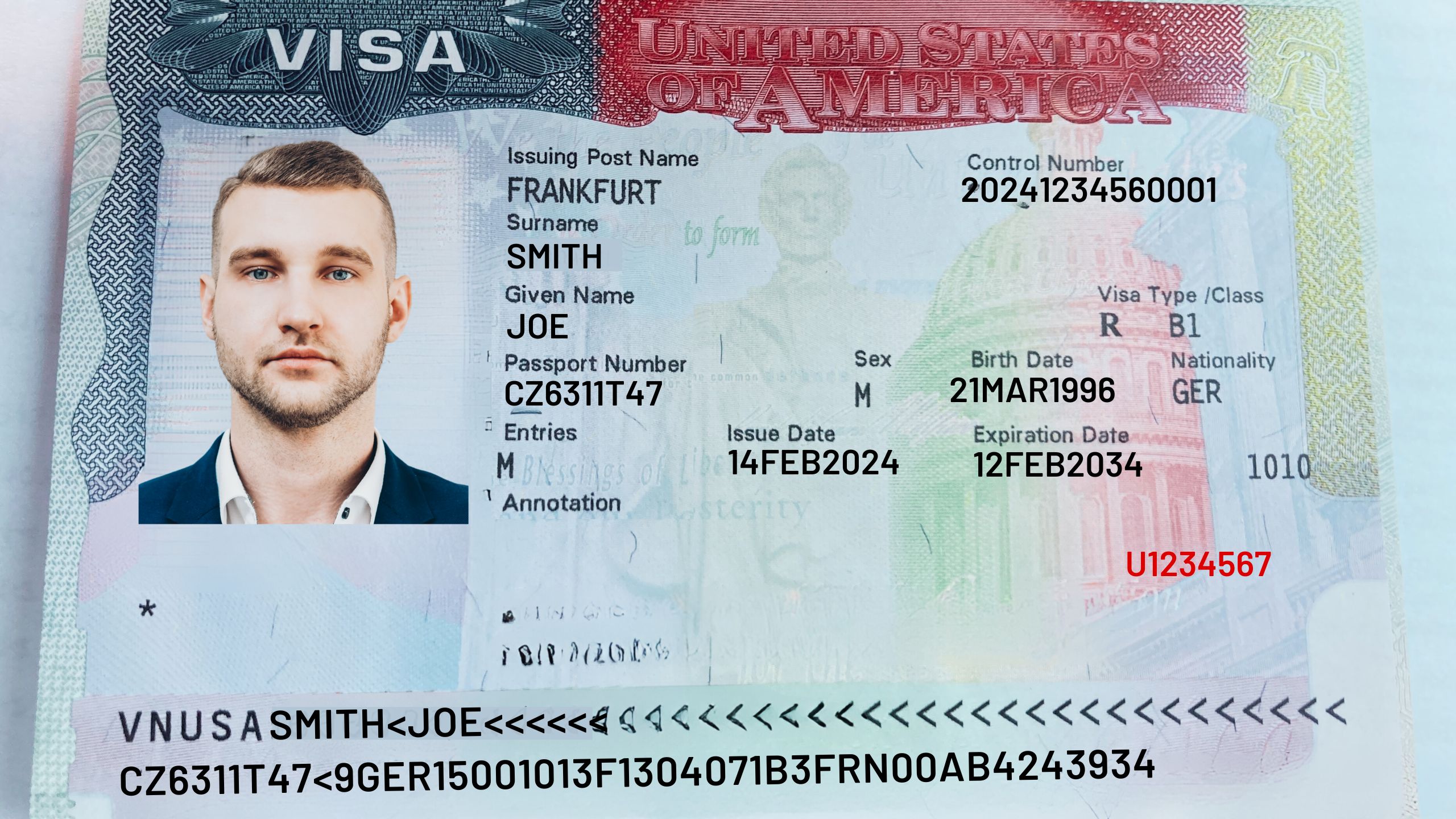
A U.S. visa usually looks like a printed, full-page or partial-page label placed inside a passport. It has a photograph, personal details, a visa category, a visa number, and an expiration date. Its exact design depends on the visa type and issuing process.
For travelers planning a trip to the United States, knowing what a visa looks like can make it easier to check travel papers before leaving home. A typical U.S. visa is a printed document attached to a page in a foreign passport. It often contains colored security patterns, the words United States of America, a photograph of the visa holder, and several lines of printed data. The layout may look complex, but the main details are easy to identify once you know where to look.
A visa is not the same as a passport, an entry stamp, or a green card. A passport identifies the traveler and is issued by a government. A visa is issued by a country that allows a traveler to seek entry for a stated purpose, subject to its rules. For U.S. travel, the visa normally appears as a visa foil in the passport, although some travelers qualify for visa-free entry under a separate program. A visa also does not guarantee admission at the border. U.S. Customs and Border Protection officers make the admission decision when the traveler arrives.
A typical U.S. visa looks like a colorful printed label attached to a page inside a passport. It may include a portrait photo, the holder’s name, passport number, date of birth, nationality, visa type, and other identifying details. The background often contains intricate designs and security features intended to make unauthorized copying more difficult.
The visa is commonly called a visa foil because it is printed on a special document label. It is not usually a loose paper card that travelers carry separately. The appearance can vary by visa class, issuing location, and document version, so there is no single visual template that applies to every U.S. visa.
When checking a visa, focus on the information printed on it rather than relying only on its colors or layout. Designs can change, and visas issued in different periods may not look exactly alike. The most useful check is whether the personal details, classification, passport information, and validity dates match the traveler’s documents and plans.
Source: visaguide.world
Photograph
The visa generally includes a photograph used to help identify the person who received it.
Personal information
Printed details commonly include the holder’s name, date of birth, and nationality.
Visa classification
A letter or combination of letters and numbers identifies the visa category, such as B1/B2 for certain business and tourism visits.
Validity information
The visa shows dates and other details that help establish its period of validity and permitted classification.
Security printing
Fine patterns and other visual features help distinguish an official document from an ordinary printed page, but appearance alone cannot prove authenticity.
Where Is the Visa Located in a Passport?
In most cases, the U.S. visa is attached to a blank visa page inside the passport. It may appear among pages reserved for visas and entry stamps, rather than on the passport’s main identity page. The passport identity page usually contains the passport holder’s photograph, nationality, passport number, and passport validity dates.
Open the passport and look for a printed label that identifies the United States and includes a separate visa category and visa number. Do not confuse this label with an immigration stamp added by a border officer. The stamp records a border-related event, while the visa is the document used to seek entry.
Passport identity page
Identifies the traveler and provides passport details.
Visa page
Contains the visa label issued by the destination country’s authorities.
Entry or admission record
May be added or recorded when a traveler arrives and is processed at the border.
Are All U.S. Visas the Same Color and Shape?
No. The exact appearance may differ across document versions and visa classifications. Many U.S. visas use a rectangular printed format with a photograph and security artwork, but color alone does not establish which visa category a person holds or whether the document remains valid.
A tourist visa, student visa, and employment-related visa may share basic identifying fields while showing different classification codes. Travelers should read the printed category and official records instead of guessing the visa type from the background design.
Do not judge by color alone
Colors and background designs are not a reliable way to determine visa rights.
Read the classification
The category printed on the visa is more useful than its general appearance.
What Information Appears on a U.S. Visa?
The printed fields on a U.S. visa help connect the document to its holder and explain the visa classification and validity. Some field labels may use abbreviations, so travelers should understand the common terms before checking their documents. A small typing error or a mismatch between documents can create questions during travel.
Not every visa displays every field in precisely the same place. Use the actual label as your reference, and consult the U.S. Department of State or the issuing consular section if an item is unclear.
Source: imagedelivery.net
Surname and given name
These fields identify the visa holder. Check the spelling against the passport, allowing for the document’s naming conventions.
Passport number
Connects the visa to the passport used during the application. If the passport is later replaced, check the applicable travel rules before departure.
Nationality
Shows the nationality associated with the visa record.
Date of birth
Provides another identity detail that should match the traveler’s records.
Visa type or class
Indicates the classification under which the visa was issued.
Visa number
A printed identifying number associated with the visa. Its location and visual treatment may vary.
Issue date and expiration date
Show when the visa was issued and the date through which it may generally be used, subject to applicable rules.
Entries
Indicates the permitted entry count or uses a code such as M for multiple entries, where shown.
Issuing post
Identifies the consular location associated with issuance.
Annotation
May contain additional information relevant to the visa or the circumstances of issuance.
How to Read the Visa Number
The visa number is an identifying number printed on the visa foil. Travelers may need it when completing certain forms or discussing an existing visa with an official. It is distinct from the passport number, application confirmation number, and any immigration case number.
Do not assume that every number on the visa serves the same purpose. If a form asks for a visa number, follow the form’s instructions and compare its description with the printed document. Avoid sharing a full visa image publicly because it contains personal and travel-related information.
Visa number
Identifies the issued visa document.
Passport number
Identifies the travel document issued by the passport authority.
Application number
Tracks an application and may appear on a separate confirmation or case record.
What Does the Entries Field Mean?
The entries field describes how many times the visa may generally be used to seek admission during its validity. A code of M commonly indicates multiple entries, while a numerical value can indicate a limited number of entries. The exact meaning should be read alongside the visa class and applicable rules.
An entry count does not mean a traveler may remain in the United States indefinitely. Each arrival is subject to inspection, and the authorized period of stay is determined through the U.S. admission process.
Single entry
Generally permits one use to seek admission under the visa.
Multiple entries
May allow repeated requests for admission while the visa remains valid, subject to its terms and immigration rules.
What Do Different Types of U.S. Visas Look Like?
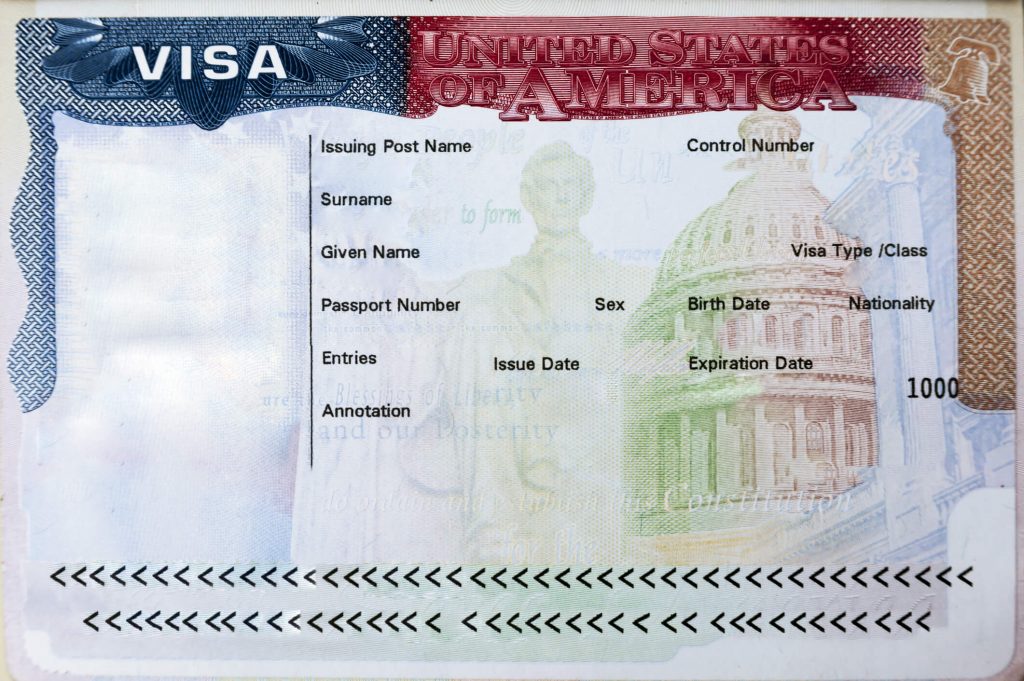
Different U.S. visa categories serve different travel purposes, but many share the same basic visual structure. The category printed on the visa matters more than the general design because it helps define the activities allowed under the applicable immigration rules.
U.S. visas fall into two broad groups: nonimmigrant visas for temporary visits and immigrant visas for people seeking to immigrate to the United States. The distinction affects the purpose of travel and the next steps after visa issuance.
Source: c8.alamy.com
Tourist and business visas
B-1, B-2, and combined B-1/B-2 classifications may be used for qualifying business visits, tourism, or other permitted temporary activities.
Student visas
F and M classifications are associated with different types of study or vocational programs, subject to the relevant requirements.
Exchange visitor visas
J classification is used for qualifying exchange visitor programs.
Employment-related visas
Categories such as H, L, O, and other classifications apply to specific work or professional circumstances.
Immigrant visas
These are issued to eligible applicants in immigrant classifications who are proceeding through the U.S. immigration process.
What Does a U.S. Tourist Visa Look Like?
A U.S. tourist visa usually looks like the standard printed visa foil, with the holder’s photo, identity details, visa number, and validity information. A B-2 classification generally relates to tourism and certain other permitted visitor activities. A combined B-1/B-2 visa may cover qualifying business and tourism purposes.
The document does not normally look like a separate tourist card. It is generally attached to a passport page. Travelers should verify the classification and the permitted activities rather than assuming that every visitor visa allows every kind of work, study, or long-term stay.
B-1
For qualifying temporary business activities, not ordinary employment in the United States.
B-2
For tourism and other activities permitted under the visitor classification.
B-1/B-2
A combined classification commonly used for qualifying business and tourism visits.
What Does a U.S. Work Visa Look Like?
A U.S. work visa often shares the printed format used for other nonimmigrant visas. Its classification identifies the relevant employment or professional category. For example, some qualifying temporary workers use H classifications, while certain intracompany transferees use L classifications.
The visa alone does not tell the whole story of a person’s work authorization. The permitted activity depends on the classification, the person’s approved circumstances, and applicable immigration rules. A visitor visa should not be treated as general permission to take a job in the United States.
Check the category
Read the classification and any annotations rather than relying on the visa’s visual design.
Review supporting approval
Where required, keep the relevant petition approval or program documents available for travel.
What Does a U.S. Student Visa Look Like?
A U.S. student visa typically uses the same general printed label format and displays a student-related classification. F-1 visas are commonly associated with academic study, while M-1 visas relate to qualifying vocational study. The specific program and individual circumstances determine which category applies.
A student should also keep required supporting records, such as the appropriate student documentation, and follow the rules that apply to the program. Possessing a student visa does not remove the need to meet entry and enrollment requirements.
F-1
Generally used for qualifying academic students.
M-1
Generally used for qualifying vocational students.
J-1
Used for qualifying exchange visitor programs rather than as a general substitute for every student visa.
Visa vs. Passport, Entry Stamp, and Green Card
A visa, passport, entry stamp, and green card are different documents or records. They can appear in the same travel or immigration process, but each serves a different role. Knowing the difference helps travelers avoid mistaking a border record for a visa or assuming that a visa proves permanent residence.
The passport identifies the traveler, the visa supports a request for admission, an entry stamp or electronic record documents border processing, and a green card is evidence of lawful permanent resident status in the United States.
Source: visatraveler.com
Passport
A travel document issued by a country to identify its citizen or eligible holder for international travel.
Visa
A destination country’s authorization document that generally allows its holder to seek admission under a specific classification.
Entry stamp
A mark placed in a passport during border processing, where applicable. It is not the same as the visa itself.
Green card
A card used as evidence of U.S. lawful permanent resident status, not a temporary visitor visa.
ESTA
An electronic travel authorization for eligible travelers using the Visa Waiver Program. It is not a visa.
Does a Visa Guarantee Entry Into the United States?
No. A visa generally allows its holder to travel to a U.S. port of entry and request admission, but it does not guarantee that admission will be granted. A Customs and Border Protection officer reviews the traveler and determines whether the person may enter and, where applicable, the conditions of admission.
This is why the visa’s expiration date and the permitted length of stay are not interchangeable. A visa can remain valid while a person’s circumstances or admissibility require further review. Travelers should answer border questions truthfully and keep supporting documents relevant to their stated purpose of travel.
Before departure
Check the visa, passport validity, travel purpose, and any required supporting documents.
At the border
Follow the officer’s instructions and provide truthful answers.
After admission
Check the official admission record for the authorized period of stay.
How to Check Whether Your U.S. Visa Is Correct
The safest way to check a U.S. visa is to compare its printed details with the passport and the traveler’s intended trip. Do this before booking nonrefundable travel where possible, and allow time to resolve any mismatch with the issuing consular section.
A document that looks official may still contain an error or may no longer be usable for the planned trip. Visual appearance is only one part of the check; the visa’s printed details, validity, classification, and applicable rules all matter.
Source: passportindex.org
Step 1: Check your identity details
Compare the name, date of birth, nationality, and passport number with your passport and application records.
Step 2: Confirm the visa category
Make sure the classification fits your planned activities and immigration circumstances.
Step 3: Review the dates
Read the issue and expiration dates carefully. Do not confuse visa validity with the authorized period of stay.
Step 4: Check the entries field
Confirm whether the visa indicates a single entry, a limited number of entries, or multiple entries.
Step 5: Read annotations
Review any additional text and check the official instructions if an annotation is unclear.
Step 6: Verify travel requirements
Check current guidance from the U.S. Department of State and U.S. Customs and Border Protection for your specific situation.
What Should You Do If Your Visa Has a Mistake?
If a name, date of birth, passport number, or other important detail appears incorrect, contact the U.S. embassy or consulate that issued the visa. Follow its instructions for correcting a printing error or determining whether a new application is needed. Do not alter the visa yourself or assume that a small error will be ignored.
Keep your passport, visa, and relevant application or appointment records available when requesting help. Explain the exact field that appears wrong and provide clear information through the official process. The consular section can advise what action is appropriate for the particular case.
Do not edit the label
Handwritten changes, removed sections, or unofficial repairs may create serious document problems.
Contact the issuing post
Use official embassy or consulate contact information and follow the stated correction procedure.
Delay travel if necessary
If the error could affect boarding or admission, resolve it before traveling whenever possible.
What If Your Passport Expires Before Your Visa?
An expired passport does not automatically mean that an otherwise valid U.S. visa has expired. In some circumstances, a traveler may be able to use a valid visa in an expired passport together with a new valid passport, provided the applicable requirements are met.
The passports and visa generally need to meet specific conditions, including requirements about damage, nationality, visa validity, and document type. Do not remove the visa from the old passport. Check the official U.S. Department of State guidance and confirm the requirements with the relevant airline or authorities before departure.
Keep the old passport
Retain the passport containing the valid visa if official rules allow it to be used with a new passport.
Carry both documents when required
Present the old passport with the visa and the new valid passport if the applicable rules permit this arrangement.
Check exceptions
Some circumstances require additional steps, so verify your situation before travel.
How to Spot Possible Visa Fraud
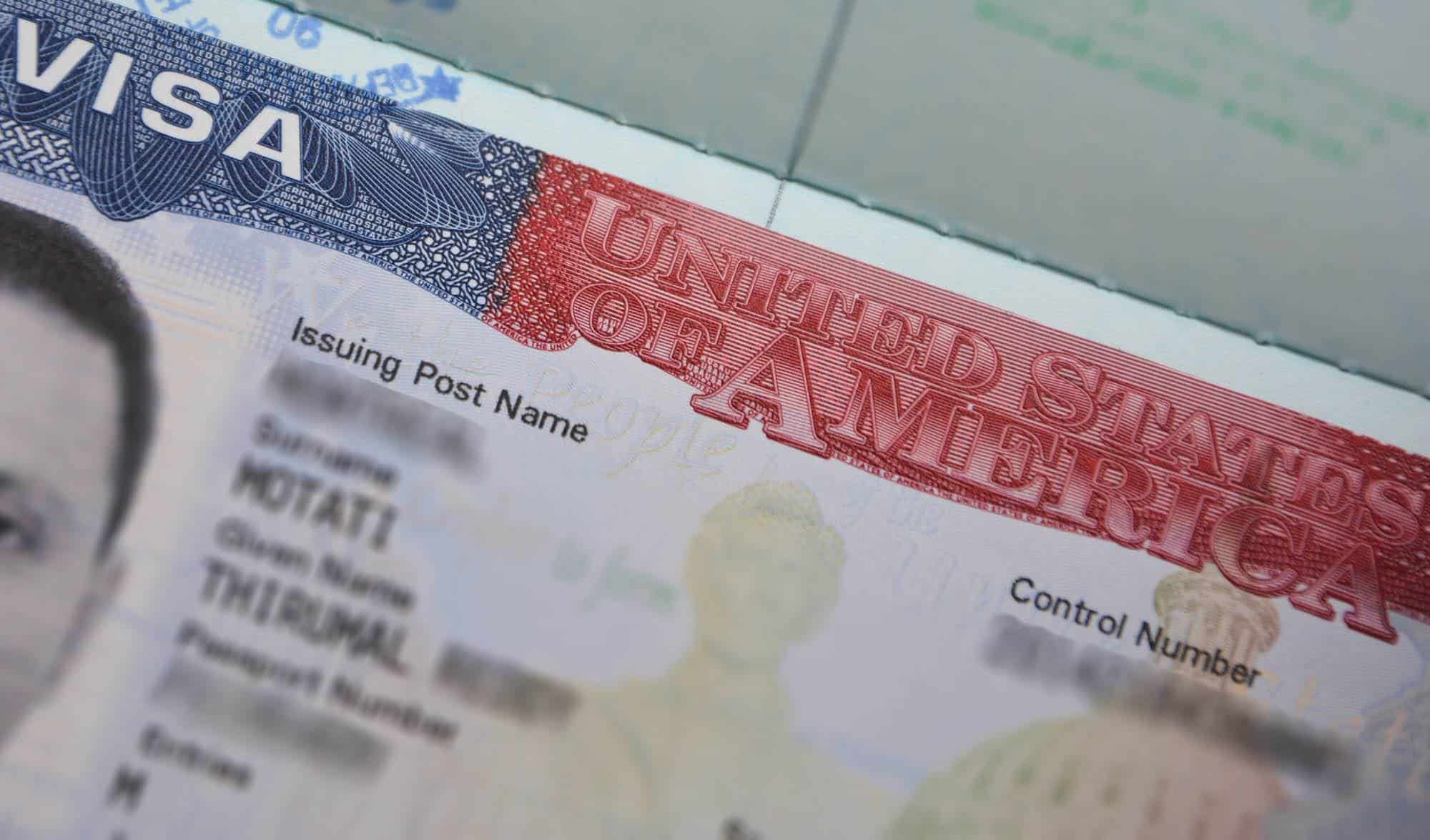
A U.S. visa should be treated as a sensitive official document. A photograph or online sample can help explain its general layout, but it cannot establish that a particular visa is genuine. Security features, printing methods, and document records cannot be fully checked from an ordinary image.
Be cautious if someone offers a guaranteed U.S. visa, promises approval without the official process, or asks you to alter a document. No private agent can guarantee that the U.S. government will issue a visa or admit a traveler.
Source: thumbs.dreamstime.com
Avoid unofficial alterations
Do not change names, dates, photographs, classifications, or numbers on a visa.
Use official channels
Start with U.S. Department of State and embassy or consulate websites for application and document questions.
Protect personal information
Do not post an unredacted visa or passport image on social media or send it to an unknown person.
Be skeptical of guaranteed approval
A legitimate service cannot promise a favorable decision from a consular officer or a border officer.
Can You Identify a Fake Visa From a Photo?
Usually, a photo alone is not enough to confirm whether a visa is genuine. Images may hide security features, and legitimate documents can vary in appearance. A convincing design does not prove that the document was issued by the government or remains valid.
If you suspect fraud, do not try to test the document by changing it or presenting it as genuine. Seek guidance from the relevant U.S. embassy or consulate and use official reporting channels where appropriate.
Treat samples as illustrations
Online images can show common features but are not a definitive authentication tool.
Check the source
Use government sources for current application procedures and questions about official documents.
Frequently Asked Questions
Q
What does a visa look like in a passport?
A visa commonly appears as a printed label attached to a passport page. A U.S. visa generally includes a photograph, the holder’s personal details, a visa classification, a visa number, and validity information. Its exact design can vary.
Q
Is a visa a stamp or a sticker?
A typical modern U.S. visa is a printed visa foil attached to a passport page, rather than an ordinary entry stamp. Other countries may use different visa formats, including labels, stamps, or electronic records.
Q
What does a U.S. tourist visa look like?
A U.S. tourist visa generally has the same basic printed format as other U.S. nonimmigrant visas. A B-2 or B-1/B-2 classification may appear on it, along with personal details, a photograph, a visa number, and validity dates.
Q
Where is the visa number on a U.S. visa?
The visa number is printed on the visa foil and is separate from the passport number and application confirmation number. Its precise location can vary by document version, so check the printed field labels and official instructions.
Q
Does a visa expiration date tell me when I must leave the United States?
No. The expiration date generally relates to the period during which the visa may be used to seek admission. The authorized period of stay is determined during the admission process and should be checked in the official admission record.
Q
Can I travel with a valid visa in an expired passport?
In some circumstances, yes. U.S. rules may permit a valid visa in an expired passport to be presented with a new valid passport, if the required conditions are met. Keep the visa in the old passport and check official guidance before traveling.
Q
Can I enter the United States just because I have a visa?
No. A visa allows a traveler to seek admission, but it does not guarantee entry. U.S. Customs and Border Protection officers determine admissibility at the port of entry.
Q
What should I do if my visa details are wrong?
Contact the U.S. embassy or consulate that issued the visa and follow its instructions. Do not change or repair the document yourself, and resolve significant errors before traveling whenever possible.
✦ Wrapping Up
Conclusion
A U.S. visa usually looks like a printed label inside a passport, with a photograph, personal information, a visa classification, a visa number, and validity dates. Although the design may vary, these details help travelers understand what kind of visa they hold and check whether the document matches their travel plans.
The most useful step is to read the visa carefully and distinguish its expiration date from the period of stay authorized after admission. A visa is not a passport, an entry stamp, or a green card, and it does not guarantee entry into the United States. For unclear details, suspected errors, or unusual passport situations, rely on official U.S. government guidance rather than online images or informal advice.
💡 Key Takeaway
Before traveling, compare your visa with your passport, verify the visa category and dates, check the applicable U.S. entry requirements, and contact the issuing U.S. embassy or consulate if any important detail appears incorrect.