
Figuring out if your IELTS Academic results will work for a UK visa can be daunting. You've put in the work to pass the test, and now you need to be absolutely sure it meets the strict requirements of the UK government for your application. Getting this wrong could mean delays, or worse, your visa being refused.
Thank you for reading this post, don't forget to subscribe!Thankfully, the UK Visas and Immigration (UKVI) system is pretty clear on this. Generally, your IELTS Academic test is acceptable, but it absolutely must be the correct version, taken at an approved centre, and meet specific score thresholds. For instance, many study visas require evidence of English proficiency equivalent to a CEFR B2 level, which often translates to specific scores across listening, reading, writing, and speaking modules.
Is IELTS Academic Okay for My UK Visa?

This is the big question, and we're going to break it down so you know exactly what you need. The short answer is yes, your IELTS Academic test can be perfectly acceptable for a UK visa application. However, and this is a massive "however," it's not just any IELTS Academic test. The UK government has specific criteria that your test must meet to be considered valid for visa purposes.
Quick Answer: Yes, But It Needs to Be the Right Kind
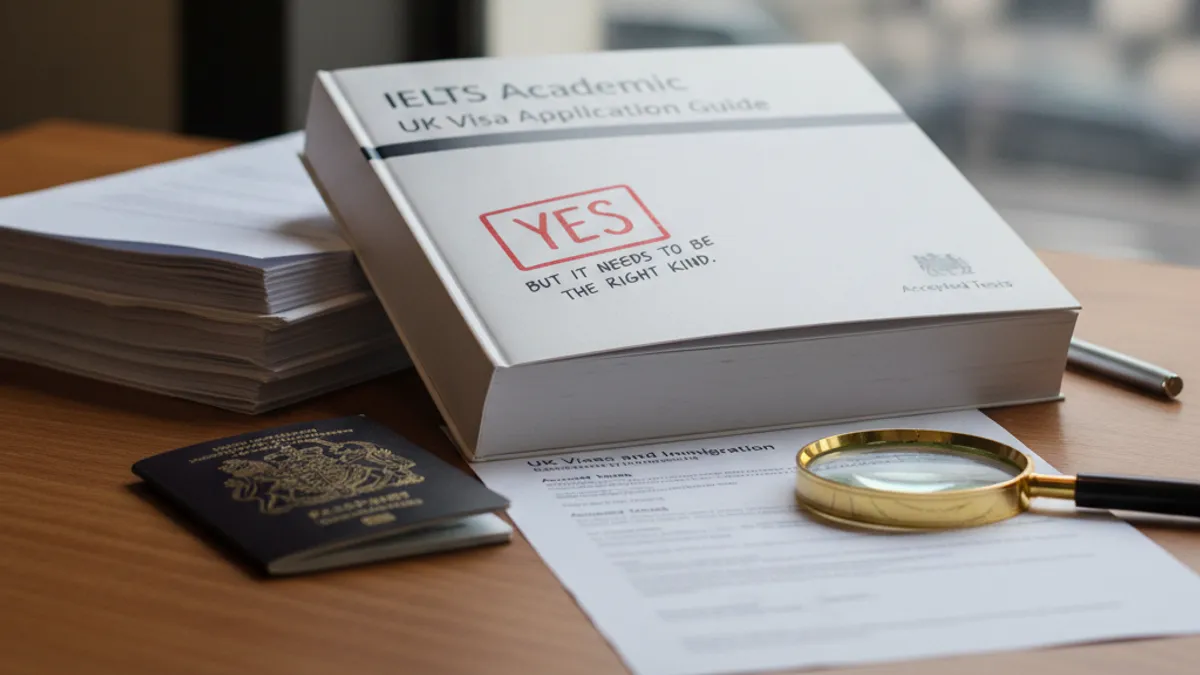
So, can you use your IELTS Academic scores for a UK visa? Yes, you can, but only if it's the IELTS for UK Visas and Immigration (UKVI) version. This is a crucial distinction. Think of it like needing a specific type of screwdriver for a particular screw, a regular Phillips head might not work if you need a Torx.
You need to make sure your test booking and results align precisely with what the UKVI requires. Missing even one detail, like taking the test at an unapproved centre or not hitting the exact minimum scores, can cause significant problems for your visa application.
Core Explanation: IELTS for UKVI vs. Standard IELTS Academic

The International English Language Testing System (IELTS) is offered in different formats to suit various needs. For UK visa applications, the specific version you need is called "IELTS for UK Visas and Immigration," often shortened to IELTS for UKVI. This isn't a different test in terms of content difficulty, but it is administered and registered in a way that the UKVI recognizes for immigration and visa purposes.
A standard IELTS Academic test taken for university admissions might look identical on paper, but if it wasn't logged through an approved UKVI registration channel, it might not be accepted by immigration officers. The UKVI uses a secure, verified system to confirm the validity of your English language test results, and this is facilitated by the IELTS for UKVI registration process.
What "Right Kind" Actually Means for Your UK Visa
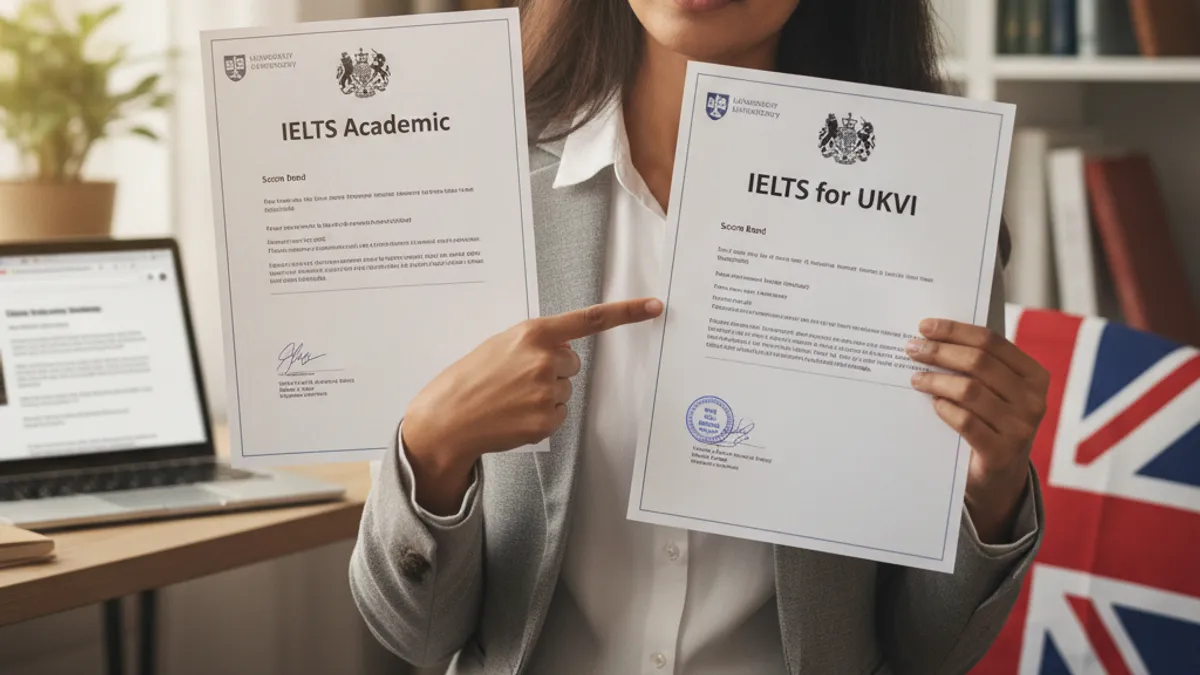
The term "right kind" boils down to three critical elements: the specific visa you're applying for, the minimum scores you need to achieve, and importantly, where and how you took the test. Each of these plays an equally vital role in ensuring your IELTS Academic results are accepted by UK Visas and Immigration.
The Specific Visa Type Matters
Different visas have different demands. For example, the English language requirements for a Student visa if you're going to study a degree-level course will likely differ from those for a Skilled Worker visa. The UKVI lays out these requirements clearly for each visa category on their official government website. It's essential you identify your exact visa type before looking at test scores.
Minimum Score Requirements for Your Application
It's not enough to just pass IELTS Academic. You must achieve specific minimum scores in all four modules: Listening, Reading, Writing, and Speaking. These scores are often benchmarked against the Common European Framework of Reference for Languages (CEFR). For instance, many university-level study visas require an overall score of CEFR B2, which typically means achieving a certain score in each skill.
As of 2026, these benchmarks remain a primary consideration for visa offices.
Is Your Test Centre Approved by UKVI?
This is one of the most frequent and costly mistakes. If you book an "IELTS Academic" test that isn't explicitly designated as "IELTS for UK Visas and Immigration" (IELTS for UKVI), it likely won't be accepted. Even if the test content is identical, the registration and reporting procedures differ. Always confirm that your test centre is on the official UKVI list of approved providers.
Key Features to Check for UK Visa Acceptance

Once you know your test must be the IELTS for UKVI type, you need to understand the specific components that matter most to the immigration officials. These aren't just abstract scores; they represent your ability to function in an English-speaking environment. Think of these as the vital signs of your English language proficiency that UKVI needs to see.
Score Breakdown: Listening, Reading, Writing, Speaking
IELTS Academic tests your English across four core skills. For a UK visa, UKVI will look at your scores for each of these individually. It's not just about an overall band score; each module score is important. For example, immigration rules might specify a minimum score of 6.0 or 6.5 in each section, not just an average.
This ensures you have a balanced level of competency across all communication areas.
CEFR Levels and What They Mean
The Common European Framework of Reference for Languages (CEFR) is an international standard for describing language ability. UK Visas and Immigration aligns its English language requirements with these levels. Most study and work visas require a minimum of CEFR Level B2. This level signifies that you can understand the main ideas of complex text, interact with a degree of fluency, and produce clear, detailed language on a wide range of subjects.
Your IELTS score will be directly mapped to a CEFR level, and this mapping is what UKVI uses to assess your eligibility.
Common Mistakes That Can Get Your Application Rejected

You've prepared diligently for the IELTS Academic test, but even with a great score, certain oversights can derail your visa application. These are often small details that are easy to miss if you're not fully aware of the UKVI's specific demands. Understanding these common errors is your first line of defense against having your application sent back.
Not Meeting the Exact Score for Your Visa
Sometimes, applicants focus only on achieving an overall band score, assuming it covers all bases. However, UKVI often requires a minimum score in each of the four modules. For instance, falling just 0.5 short in the writing section, even with a high overall score, can lead to rejection. You must meet the specific band score requirements for every skill as outlined for your particular visa type.
Relying on Old or Incorrect Info
Visa requirements can and do change. Information found on unofficial forums or outdated blog posts might not reflect the latest rules. The most up-to-date and reliable source for English language requirements is always the official UK government website. Don't risk your application based on advice that isn't current.
Step-by-Step: Ensuring Your IELTS Academic is Acceptable

Following a clear process can prevent many common issues when using your IELTS Academic results for a UK visa. This systematic approach ensures you cover all the necessary bases before and after you take your test. It's about meticulous preparation to align with UKVI's expectations.
1. Identify Your Exact Visa Type
Before anything else, you must know precisely which UK visa you are applying for. Are you coming to study at a university, work for a specific company, or join family members? Your visa category dictates the exact English language requirements. This piece of information is fundamental and usually found in the Title of the visa you are seeking.
2. Find the Official UKVI English Language Requirements
Once you know your visa type, navigate to the official UK government's immigration website. Search for the English language requirements specific to your chosen visa. This official source will provide the definitive minimum scores needed across Listening, Reading, Writing, and Speaking, as well as the required CEFR level. This is your benchmark.
3. Book an IELTS for UKVI Test at an Approved Centre
With the requirements in hand, book your test. Crucially, select "IELTS for UK Visas and Immigration" (IELTS for UKVI) when you register. You must also ensure the test centre you choose is on the UKVI's approved list. You can usually find this list on the official IELTS UKVI website or by searching the government’s immigration pages.
4. Aim for the Required Scores in All Modules
During your preparation and test, focus on achieving the specific scores mandated for your visa. Remember that some visas may require a higher score in a particular module, such as speaking or writing, if that skill is deemed more critical for the role or course. Paying attention to each module's score is as important as the overall band score.
Expert Tips for IELTS Academic and UK Visas

Navigating the intersection of English language tests and UK visa applications requires a keen eye for detail. Drawing from research into immigration requirements and educational standards, here are some best practices to ensure your IELTS Academic results smooth your path to the UK. These tips are designed to help you avoid common pitfalls.
Double-Checking with Your University or Employer
If you're coming to the UK for study or a specific job, your sponsoring institution or employer often has a dedicated team that handles visa support. They are usually very familiar with the precise IELTS requirements their international students or employees need to meet. It’s always wise to cross-reference the official UKVI guidelines with any advice provided by your university’s admissions office or your future employer's HR department. They can offer specific guidance tailored to their particular programs or positions.
Where to Find the Most Current UKVI Information
The most reliable source for visa requirements, including English language proficiency, is always the official UK government's immigration website. Regularly check this site for any updates or changes to the testing requirements or score thresholds. Websites like the UK government's GOV.UK pages are regularly updated. Relying on this official information helps ensure accuracy and avoids issues stemming from outdated advice.