
Dreaming of European architecture, vibrant culture, or just a change of scenery? If you're in Bangladesh and eyeing a trip to the Schengen Area, the big question on your mind is probably: which Schengen visa is easy to get from Bangladesh? It's a common concern, and we're here to break down what actually makes an application smoother.
Thank you for reading this post, don't forget to subscribe!The truth is, there isn't a single magical visa type that's universally "easy." Instead, the ease of your application hinges on your personal circumstances, the clarity of your travel purpose, and how well you prepare your documents. Think of it as building a case, with your financial stability and ties to Bangladesh forming the bedrock. For any travel to the Schengen Area, you'll need adequate travel insurance, typically with a minimum coverage of €30,000, as stipulated by Schengen regulations.
What Actually Makes a Schengen Visa "Easier"? (It's Not What You Think)

Many people ask about the "easiest" Schengen visa, expecting a simple answer. But here’s the real picture: the Schengen visa application process is designed to assess genuineness and compliance, not to be inherently difficult or easy for any single nationality.
The "Easy" Visa Myth: Dispelling Common Misconceptions
When you hear about an "easy" visa, it's usually a misunderstanding of how consulates evaluate applications. What might appear straightforward for one person could be complex for another, entirely based on their individual profile and the strength of their documentation. There's no country that issues visas without thorough scrutiny, especially for first-time applicants from outside the EU. Each embassy aims to ensure that you have a legitimate reason for your visit and that you will depart the Schengen Area before your visa expires.
Key Factors: Your Situation is the Real Driver
Instead of focusing on a mythical "easy" visa, we should look at the concrete elements that contribute to a successful application. These are the things that consulates look for, regardless of the specific visa category or country you're applying to:
- Clear Purpose of Visit: Why do you want to go to the Schengen Area? Is it for tourism, visiting family, a business meeting, or something else? Your stated purpose must be logical and supported by evidence.
- Financial Means: Can you afford to travel and support yourself during your stay without becoming a burden on the state? This is typically demonstrated through bank statements and proof of income.
- Ties to Bangladesh: What convinces the authorities that you will return to Bangladesh after your trip? This could be your job, family responsibilities, property ownership, or ongoing business interests.
- Documentation Accuracy: Every piece of paperwork must be accurate, complete, and correspond to reality. Any inconsistencies raise red flags.
Our research indicates that applicants who focus on meticulously preparing these core areas significantly increase their chances of approval, making the process feel easier, even if the visa type itself isn't inherently less scrutinized.
Your Visa Type: Matching Your Travel Reason to the 'Easiest' Path
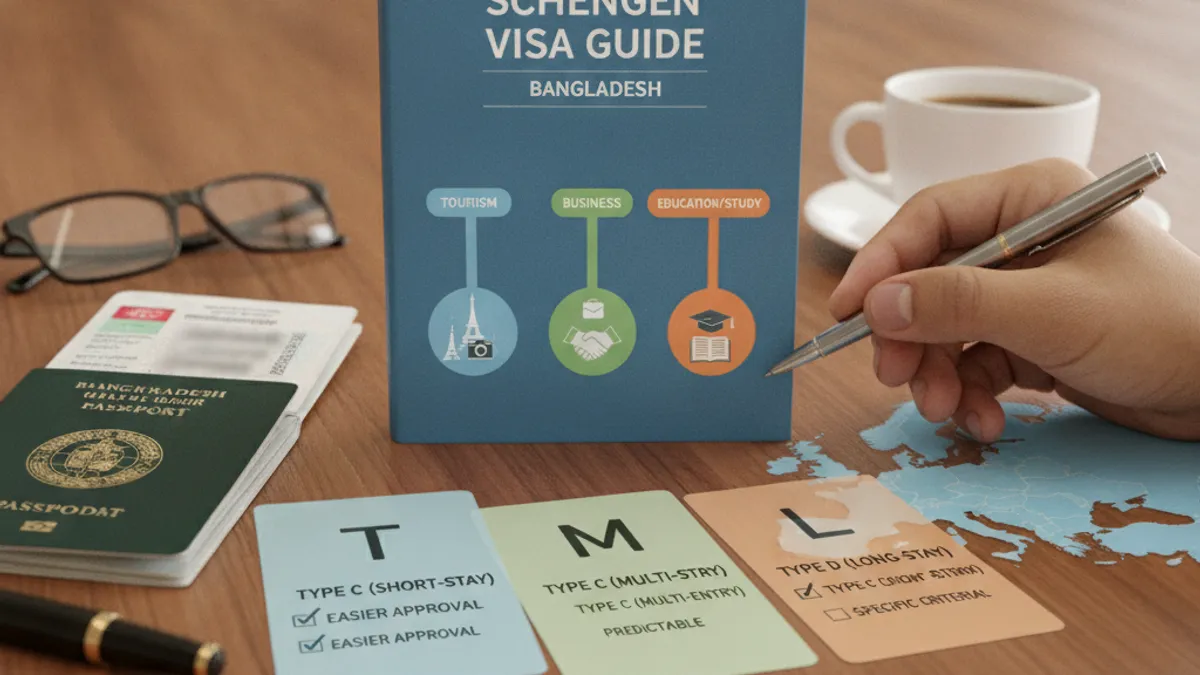
The type of Schengen visa you apply for directly influences the documentation required and the emphasis placed on certain aspects of your application. While no visa type bypasses essential requirements like financial proof and ties to home, some align more closely with a straightforward presentation of your intentions. Understanding these nuances helps you choose the visa category that best suits your situation and documentation.
Tourist Visas: Exploring Europe with a Solid Plan
A tourist visa, or a short-stay visa for tourism, is perhaps the most common. If your primary goal is to see sights, experience culture, and enjoy your vacation, this is your category. For this visa, a detailed travel itinerary is crucial. This means showing a day-by-day plan of what you intend to do, where you'll stay, and how you'll travel between places.
Your bank statements need to reflect that you can fund this exploration comfortably, and a clear return flight reservation confirms your intention to leave the Schengen Area. It's essential to show that your holiday plans are well-researched and financially covered.
Visiting Family or Friends: Leveraging Your Connections
If you're heading to Europe to visit family or friends, this significantly strengthens your application’s ties to a specific reason for travel. You will need an official invitation letter from your host. This letter should clearly state their relationship to you, the purpose of your visit, the duration of your stay, and where you will be hosted. Your host might also need to provide proof of their legal status in the Schengen country and potentially demonstrate financial capacity to support you if you cannot fully fund yourself.
This type of visa clearly shows a reason to depart, as you are returning to established relationships.
Business Visas: The Official Approach
For those traveling for business purposes, like attending meetings, conferences, or trade fairs, the application process requires specific documentation. This usually involves an official invitation letter from the company or organization you are visiting in the Schengen Area. This letter typically needs to detail the business purpose, dates, and individuals involved. You’ll also need to provide evidence of your own company's existence and your role within it, such as business registration documents and your employment contract.
If your employer is covering the costs, their financial statements and a letter of guarantee will be necessary. This visa category often requires more formal documentation but is well-defined.
Other Visa Types: Study, Medical, and Beyond
Beyond the most common categories, there are visas for specific purposes like short-term study programs, language courses, or medical treatment. Applying for a study visa typically requires an acceptance letter from a recognized educational institution, proof of paid tuition fees (if applicable), and evidence of your academic background. For medical treatment, you'll need extensive documentation from both your current doctor and the receiving hospital or clinic, confirming the necessity and plan for treatment. These specialized visas require very precise documentation related to the activity itself.
Building Your Strongest Schengen Visa Application from Bangladesh

When you're applying for a Schengen visa from Bangladesh, preparing thoroughly is key. Your application needs to paint a picture of a responsible traveler with genuine intentions and the means to support their trip. This isn't about finding a loophole, but about presenting your case clearly and comprehensively.
Essential Proof: Financial Stability and Income Streams
One of the biggest hurdles for any applicant is demonstrating sufficient financial means. Consulates want to see that you won't overstay your visa because you've run out of money. Typically, you'll need to provide bank statements for the past three to six months. These statements should show not just a healthy balance, but also a consistent flow of income.
If you're employed, this means regular salary deposits. For business owners, it involves showing consistent business revenue and personal income. If a sponsor is covering your costs, their financial documents and a sponsorship letter are essential.
Proving You'll Return: Ties to Your Home Country
This is absolutely critical. The authorities need assurance that you intend to return to Bangladesh after your trip.
- Employment: A letter from your employer confirming your position, salary, length of service, and approved leave dates is vital. This shows you have a job to return to.
- Business Ownership: If you own a business, provide registration documents, tax records, and evidence of ongoing operations. This demonstrates a significant commitment to Bangladesh.
- Family: For married individuals, a marriage certificate and family details can help. For those with dependents like children or elderly parents, this responsibility can be a strong tie.
- Property: Owning real estate or other significant assets in Bangladesh further solidifies your ties.
The more compelling evidence you can present of your roots in Bangladesh, the stronger your application will appear.
Crafting Your Itinerary: Clarity and Intent
A well-structured travel itinerary is more than just a list of places; it's your narrative for the trip. For a tourist visa, this means outlining your destinations, planned activities for each day, and how you'll travel between them. If you have booked your flights, include the reservation details. Similarly, hotel bookings (or confirmation of accommodation with friends/family) are important.
A clear, logical itinerary shows foresight and that your travel plans are concrete, not just a vague idea.
Travel Insurance: The Non-Negotiable Requirement
This is a mandatory requirement for all Schengen short-stay visas. Your travel insurance must cover medical emergencies, hospitalization, and repatriation to your home country at a minimum of €30,000. It needs to be valid for the entire duration of your stay in the Schengen Area. Ensure you obtain a policy from a reputable provider that meets these specific requirements.
This is not an area where you can cut corners; it's a fundamental part of ensuring your safety and preventing potential financial strain on member states.
Which Schengen Countries Might Offer a Smoother Process for Bangladeshi Applicants?

It's important to approach this question with realistic expectations. There's no single Schengen country that universally guarantees an easier visa approval for all applicants from Bangladesh. The ease of a visa application is predominantly determined by the preparedness of the applicant and the specific consul's interpretation of the provided evidence. However, some countries, due to their volume of tourism and established processing systems, may feel more straightforward if your application is in order.
High-Volume Tourist Destinations
Countries that are popular tourist hubs, such as Spain, Italy, or Greece, process a vast number of visa applications annually. Their consulates and external visa application centers are generally well-equipped to handle this volume, with standardized procedures. If your primary intention is tourism, and you have a solid itinerary and robust financial documentation, applying to these countries can be a viable path. The key is that the sheer volume of applications means their systems are geared towards efficiency, provided your submitted documents are complete and verifiable.
Targeting Your Main Destination
A crucial aspect of Schengen visa applications is determining which country's consulate you should apply through. This is usually the country where you will spend the most time (your main destination) or, if you're spending equal time in multiple countries, the country of first entry. Applying to the consulate of your main destination country can sometimes lead to a more direct evaluation, as they are most concerned with your activities within their borders and your adherence to their visa stipulations. If your trip has a clear primary focus on one country, concentrating your application there is often the most logical and potentially smoothest route.
Common Pitfalls: Schengen Visa Mistakes to Absolutely Avoid
Even with a seemingly straightforward visa type and a strong personal profile, certain mistakes can derail your application entirely. Understanding these common pitfalls is just as important as preparing your documents. Avoiding these errors is paramount to a successful outcome.
Incomplete or Inaccurate Documentation
This is, by far, the most frequent reason for Schengen visa rejection. Consulates expect every document requested to be submitted, and for all information to be accurate and up-to-date. This includes ensuring dates match across different documents, names are spelled identically, and all pages of bank statements are provided. If a document is missing, or if there's a discrepancy (e.g., your flight reservation date doesn't align with your hotel booking), the consulate may refuse your application on the grounds of insufficient information or lack of credibility.
Always double-check the official requirements for the specific country you are applying to.
Misrepresenting Your Intentions
Your stated purpose of visit must align perfectly with your travel plans and your application. If you apply for a tourist visa but your application suggests you intend to work, or if your itinerary seems vague for a business trip, this can raise serious red flags. Consulates are vigilant for any signs of deception, whether it's misstating your address, providing false employment details, or claiming to visit someone you have no verifiable connection with. Honesty and transparency are your greatest assets in the visa application process.
Issues with Financial Proof
As discussed, financial stability is a cornerstone of visa approval. Common mistakes here include providing statements with insufficient funds, showing recent large deposits that look like borrowed money rather than consistent income, or submitting statements from accounts that aren't clearly linked to you. If you're relying on a sponsor, their financial proof must be solid, and their sponsorship letter needs to be detailed and clear. A sudden influx of cash right before applying, without a clear explanation of its source, is often viewed with suspicion.
Neglecting Ties to Bangladesh
Failing to adequately demonstrate your ties to Bangladesh is another major reason for visa refusal. This is what reassures the consulate that you are a genuine visitor who will return home. If your employment letter is vague, if you haven't shown evidence of dependents, property, or ongoing business, the authorities may deem you a flight risk. They might conclude you intend to seek employment or settle in the Schengen Area, which is grounds for refusal.
Ensure your application clearly articulates and supports your reasons for returning to your home country.
Navigating the Application Process Step-by-Step

Applying for a Schengen visa involves a structured process. By understanding each stage, you can manage your application effectively and reduce stress. This is the general workflow you can expect when applying from Bangladesh.
Gathering Your Documents: The Definitive Checklist
This stage is critical and requires meticulous attention. Before you even think about booking an appointment, you must compile all required documents. The exact list can vary slightly depending on the Schengen country's consulate you're applying to, but generally includes:
- Completed Schengen Visa Application Form.
- Valid Passport (with at least two blank pages and validity extending at least three months beyond your intended departure date).
- Passport-sized photographs meeting Schengen specifications (e.g., white background, specific dimensions).
- Proof of travel medical insurance with a minimum coverage of €30,000, valid in all Schengen states.
- Flight reservation(s) showing entry and exit dates.
- Proof of accommodation (hotel bookings or invitation letter if staying with family/friends).
- Financial proof: bank statements (typically 3-6 months), payslips, tax returns, sponsorship letter if applicable.
- Proof of ties to Bangladesh: employment letter, business registration, property documents, etc.
- For specific visa types: invitation letters (business/family), acceptance letters (study), etc.
Always consult the official website of the embassy or consulate for the most up-to-date and country-specific document requirements.
Booking Your Appointment and Submitting Your Application
Once you have your documents in order, the next step is to schedule your visa appointment. In many cases, this is done through an outsourced visa application service center that represents the respective embassies. These appointments can be in high demand, especially during peak travel seasons, so it's advisable to book well in advance. During your appointment, you will submit your application form and all supporting documents, and your biometrics (fingerprints and photo) will usually be taken.
Be Prepared for the Interview
While not all Schengen visa applications require a formal interview, some consulates may request one. If an interview is scheduled, it’s usually a brief session to clarify information in your application or to assess your intentions. The consular officer might ask about your travel plans, your financial situation, your job, and your ties to Bangladesh. It's important to answer truthfully, confidently, and concisely, referring back to the information you've provided in your application.
Your demeanor and the consistency of your answers are key.