Thank you for reading this post, don't forget to subscribe!
For U.S. citizens, countries such as China, India, Brazil, Russia, Ghana, and Nigeria generally require a visa for many types of visits. Other destinations, including Australia, the United Kingdom, and Kenya, require an electronic travel authorization or similar advance approval for many short-term visitors. Requirements depend on your passport, travel purpose, and length of stay.
For Americans planning a trip abroad, knowing what countries require a visa is a key part of travel planning. A U.S. passport allows entry to many destinations without a traditional tourist visa, but it does not grant automatic access to every country. Some governments require a visa before departure, while others offer an online application or a visa at the border.
The correct answer also depends on why you are traveling. A short vacation may qualify for visa-free entry, while paid work, long-term study, or a move abroad may require a different permit. Even travelers who qualify for visa-free entry may need to meet passport validity rules, show a return ticket, or complete an online authorization.
This guide focuses on U.S. citizens traveling with ordinary U.S. passports for tourism or short visits. It explains which destinations commonly require advance approval, how to check official rules, and what to do before booking flights. Since immigration policies can change, use the examples as a starting point and confirm the latest requirements with the destination country’s government.
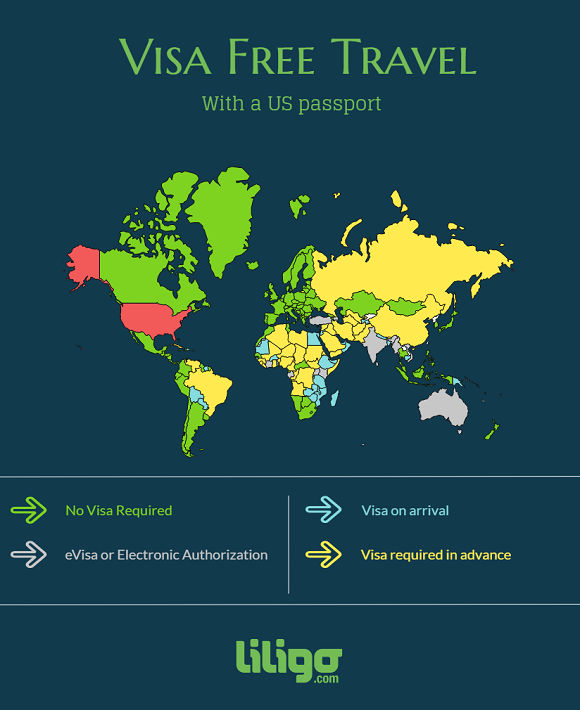
Several countries require U.S. citizens to obtain a visa before traveling for tourism or other short visits. The exact list depends on the destination’s current policy and the conditions of the trip. Some countries issue traditional visas through an embassy or consulate, while others use an online application system.
China, India, and Brazil are useful examples of destinations where Americans generally need advance visa approval for ordinary tourist visits. Russia, Ghana, Nigeria, and Turkmenistan also have visa requirements that travelers should review carefully. Some countries have special transit, group travel, or limited visa-exemption rules, so do not assume that one rule covers every traveler.
There is no single permanent list that answers the question for every U.S. passport holder. A country may waive visas for certain nationalities, permit short stays under a special agreement, or change its rules with little notice. The most reliable approach is to verify each destination separately before buying nonrefundable travel arrangements.
Source: i.pinimg.com
China
U.S. tourists generally need a visa before arrival in mainland China. Limited visa-free entry and transit exceptions may apply under specific conditions. Check the current rules, permitted travel areas, passport requirements, and application process.
India
U.S. citizens generally need a valid Indian visa or an eligible Overseas Citizen of India card. An electronic tourist visa may be available for qualifying travelers. Use the official Indian visa system to confirm eligibility and application requirements.
Brazil
U.S. citizens generally need a visa for tourism and other covered visits. Brazil offers an electronic visa process for eligible travelers, but approval must be obtained according to the applicable rules before departure.
Russia
A visa is generally required for U.S. citizens. Application procedures, permitted routes, local conditions, and travel restrictions require careful review before making plans.
Ghana and Nigeria
These countries generally require U.S. citizens to arrange a visa for ordinary tourist visits. Applicants should check the relevant embassy or official immigration portal for the correct visa type and supporting documents.
Turkmenistan
Travelers should expect specific visa and entry procedures. Requirements may include advance approval or additional documentation, so verify the current process with official authorities before booking.
Does Every Country Require the Same Type of Visa?
No. A country may offer several visa classes, including tourist, business, student, employment, and transit visas. The correct class depends on what you plan to do and how long you intend to stay.
A tourist visa does not normally authorize local employment. A business visitor may be allowed to attend meetings but not take a paid position with a local employer. If you plan to work, study, volunteer in a regulated role, or stay beyond the standard visitor period, check the specific immigration category before applying.
Tourist visa
For approved leisure visits and other activities allowed under the destination’s visitor rules.
Business visa
For permitted business activities, which may include meetings or conferences but not necessarily paid local work.
Student visa
For qualifying education programs that require formal student immigration status.
Work visa
For employment or other authorized work, often with a sponsoring employer or additional approval.
Countries That Require an eVisa or Online Travel Authorization
Some countries let travelers complete all or part of the visa process online. An electronic visa, often called an eVisa, is a visa issued through an electronic application system. An electronic travel authorization is a separate form of permission that may be required even when a traditional visa is not.
These systems can save a trip to an embassy, but they do not remove the need to meet entry conditions. Applicants may need a passport scan, a photograph, travel details, accommodation information, or payment. Approval may be linked to the passport used in the application.
Australia, the United Kingdom, and Kenya are examples of destinations that use electronic pre-travel permission for many U.S. visitors. India and Brazil also provide electronic visa options for eligible travelers. The precise system and eligibility conditions vary, so identify the document required by the destination rather than searching only for a generic visa application.
Source: runawayguide.com
Australia
Many U.S. passport holders visiting for tourism or eligible business activities need an Electronic Travel Authority or another appropriate permission. Check the official Australian immigration website or authorized application channel.
United Kingdom
U.S. citizens visiting for eligible short stays generally need an Electronic Travel Authorisation under the applicable rules. An ETA is not the same as a traditional visa, and it does not guarantee admission at the border.
Kenya
Many visitors, including U.S. citizens, must obtain an Electronic Travel Authorisation before travel. Confirm the latest eligibility rules and complete the application through the official Kenyan system.
India
Eligible U.S. travelers can use the Indian electronic visa system for certain visit types. The application must match the planned purpose of travel and meet the country’s requirements.
Brazil
An electronic visa may be available for eligible U.S. visitors. Travelers should verify the application portal, required documents, approval status, and entry conditions before departure.
What Is the Difference Between an eVisa and an ETA?
An eVisa is a visa granted through an electronic process. Depending on the country, the approval may arrive by email or be linked electronically to the passport. Travelers should save the approval notice and follow any instructions about printing or presenting it.
An ETA is an electronic permission to travel under a destination’s specific immigration system. It may allow an eligible traveler to board a flight and seek entry without obtaining a traditional visitor visa. It does not guarantee that border officials will admit the traveler.
Always use the exact document named by the destination government. A valid U.S. passport alone may not be enough when an ETA, eVisa, or other advance approval is mandatory.
Check the document name
Determine whether the destination requires a visa, eVisa, ETA, or a different electronic entry document.
Use the official portal
Avoid unofficial websites that imitate government application services or add unclear service fees.
Wait for approval
Do not assume that submitting an application means it has been approved.
How Visa Requirements Differ by Region
Visa rules differ across regions, and neighboring countries may have very different policies for American visitors. A traveler who can enter one country without a visa should not assume the same permission applies to the next country on the itinerary.
Regional agreements can simplify travel within certain areas, but they do not create universal entry rights. Passport validity, permitted stay, the purpose of the trip, and any electronic authorization remain important. The examples below illustrate common patterns rather than a complete or permanent country list.
Source: passport-photo.online
Asia
Asia includes countries with visa-free entry, electronic visas, visas on arrival, and traditional visa requirements. Japan and South Korea generally allow eligible U.S. tourists to visit for limited periods without a traditional tourist visa, subject to current entry rules and any required authorization.
China generally requires advance visa approval for ordinary tourist travel, while India generally requires a visa or qualifying OCI status. Vietnam, Cambodia, Laos, and other destinations may offer electronic visa options or different procedures depending on nationality and travel purpose. Check each country individually, especially if you plan to cross borders overland.
Japan and South Korea
Eligible U.S. tourists generally have access to short-term visa-free entry, but travelers should confirm current authorization and entry conditions.
China and India
Advance visa arrangements are generally needed for U.S. tourists, with limited exceptions and specific eligibility rules.
Vietnam and Cambodia
Electronic visa options may be available. Check the permitted entry points, length of stay, and number of entries allowed by the approved document.
Europe
Many European countries allow eligible U.S. citizens to visit for short tourism or business trips without a traditional visa. The Schengen Area generally permits qualifying U.S. visitors to stay for up to 90 days within any 180-day period across the area, subject to the applicable rules.
Visa-free travel does not mean that every European destination has identical procedures. The United Kingdom has its own immigration system and requires an ETA from many visa-exempt visitors under current rules. Travelers should also check official announcements about new European electronic travel authorization systems before departure rather than assume that an announced program is already operational.
Schengen Area
Eligible U.S. tourists generally do not need a traditional short-stay visa, but the 90-days-in-any-180-day limit and other entry conditions apply.
United Kingdom
Eligible U.S. visitors generally need an approved ETA for covered trips. Verify the current requirements before boarding.
Long stays
Employment, study, residence, or visits beyond the short-stay limit may require a national visa or residence permit.
Africa
African countries use a wide range of visa systems. Some offer visa-free access to U.S. visitors, while others require a visa, an eVisa, an electronic travel authorization, or a visa issued at arrival under specific conditions.
Ghana and Nigeria generally require U.S. tourists to arrange visas. Kenya uses an electronic travel authorization system for many visitors, while Tanzania and other destinations may offer electronic visa applications or visa-on-arrival procedures for eligible travelers. Requirements can include proof of accommodation, onward travel, sufficient funds, or health documentation.
Ghana and Nigeria
Check the official embassy or immigration website for visa categories, supporting documents, processing times, and current application procedures.
Kenya
Confirm whether an approved electronic travel authorization is required for your trip and passport.
Tanzania
Review current tourist visa options, entry requirements, and any rules tied to the port of entry.
South America
South America has a mix of visa-free and visa-required destinations for U.S. citizens. Argentina, Chile, Colombia, and Peru generally permit eligible American tourists to visit without a traditional tourist visa for limited stays, subject to current entry rules.
Brazil requires U.S. citizens to obtain the appropriate visa for covered visits, with an electronic application option available to eligible travelers. Other destinations may set different limits or ask for additional documents. If your itinerary includes multiple countries, verify every border crossing separately.
Brazil
Obtain the required visa before travel and confirm the rules for your intended visit.
Argentina and Chile
Eligible U.S. tourists generally have short-term visa-free access, but passport and entry conditions still apply.
Multi-country itineraries
Check the entry rules for every destination, including transit countries and any land-border crossings.
Visa, Visa-Free Entry, and Visa on Arrival Explained
The terms used in travel guidance describe different legal processes. Understanding them helps you avoid buying the wrong document or arriving without the approval required for boarding or entry.
A traditional visa is usually issued by the destination country’s embassy, consulate, or authorized visa service. It may be placed in a passport or issued electronically. A visa-free exemption means that an eligible traveler can enter for a permitted purpose and period without obtaining a visa, but other entry conditions still apply.
Source: images.mapsofworld.com
Traditional Visa
A traditional visa may require an online form, supporting documents, a fee, and sometimes an appointment or interview. Processing times vary by country, visa category, application location, and individual circumstances.
Some visas permit one entry, while others allow multiple entries during a stated validity period. Visa validity and permitted length of stay are not necessarily the same. Read the visa and accompanying instructions carefully before traveling.
Best practice
Apply early and use the application route identified by the destination government’s official website.
Visa on Arrival
A visa on arrival is issued at an approved entry point rather than fully arranged before departure. Eligibility can depend on nationality, airport or land crossing, purpose of travel, and the documents presented.
This option carries risks if travelers misunderstand the rules. An airline may require proof of eligibility before boarding, and immigration officials may refuse the visa if conditions are not met. When advance application is available and recommended by the destination government, it may reduce uncertainty.
Confirm the entry point
Check that the specific airport or border crossing issues the visa you need.
Prepare supporting documents
Carry any required passport, photo, payment method, accommodation details, return ticket, or proof of funds.
Visa-Free Travel
Visa-free entry is a limited permission, not an unrestricted right to stay. A destination may allow a short visit for tourism but require a separate visa for work, long-term study, residence, or other activities.
Travelers must also meet the destination’s passport, security, health, and border requirements. A visa exemption can be changed or withdrawn, so verify the rule close to the departure date.
Track the time limit
Calculate how many days you may stay and whether the limit applies to one country or a wider travel area.
How to Check Whether Your Destination Requires a Visa
The safest way to confirm visa requirements is to start with the destination country’s official immigration service or embassy and compare the information with the U.S. Department of State’s country-specific guidance. Third-party visa websites can help explain procedures, but official government instructions should determine what you must submit.
Check the rules for your exact nationality and passport type. A U.S. citizen traveling with an ordinary passport may have different requirements from a permanent resident of the United States who holds another country’s passport. Dual nationals may also face special rules about which passport they must use.
Source: liligo.com
Step 1: Confirm Your Passport and Nationality
Identify the passport you will use for the trip. Visa requirements are usually based on nationality and travel document, not simply the country where you live or the place from which your flight departs.
Check the passport expiration date and the number of blank pages available. Some countries require a passport to remain valid for a set period after arrival or departure. Do not assume that a passport valid on the day of travel automatically meets every destination’s rules.
Check validity
Review the required period of passport validity and any blank-page requirements.
Check dual nationality
If you hold more than one nationality, confirm which passport must be used for entry and exit.
Step 2: Identify the Purpose and Length of Travel
Choose the category that matches your plans, such as tourism, business, study, employment, or transit. A visa-free tourist allowance may not cover work, an extended stay, or a course of study.
Calculate the planned duration, including any time spent in a regional travel area. For example, the Schengen short-stay limit is generally 90 days in any 180-day period for eligible U.S. visitors. Trips to multiple Schengen countries count toward the same area-wide limit rather than giving you a new allowance in each country.
Match the visa category
Apply for permission that covers the actual activities you plan to undertake.
Count the days correctly
Review the destination’s rules for stay limits, repeat visits, and regional travel.
Step 3: Use Official Government Sources
Visit the U.S. Department of State’s international travel website and open the country-specific information page. Review the section on entry, exit, and visa requirements, then follow the links to the destination’s embassy or immigration authority.
Confirm whether an eVisa, ETA, visa appointment, or other pre-travel approval is required. Review the permitted entry points and whether the rules differ for air, land, or sea travel. Save the official instructions so you can refer to them during the application process.
Primary U.S. resource
Use travel.state.gov to find country-specific travel information and links to relevant official authorities.
Destination government
Use the destination’s official immigration website or embassy for the final application requirements.
Step 4: Prepare and Submit the Application
If a visa or electronic authorization is required, gather the requested documents before starting the application. These may include a passport, photograph, itinerary, accommodation details, invitation letter, financial evidence, or proof of onward travel.
Enter your passport details carefully. Errors in names, passport numbers, dates, or travel purposes can delay an application or cause problems at boarding. Pay through the authorized channel and retain the receipt and application reference.
Apply early
Allow time for processing, appointments, additional document requests, and unexpected delays.
Check the result
Wait for formal approval when required and confirm that the issued permission covers your planned dates and activities.
Step 5: Recheck Before Departure
Review the entry rules again shortly before departure. Check that your passport and approval remain valid, that your travel details match the application, and that no new authorization has become mandatory.
Keep copies of your visa or authorization, return or onward ticket, accommodation details, and other required documents. Airlines may check these before boarding, and border officials may request them on arrival.
Keep digital and paper copies
Store approval documents securely and carry a copy if the destination recommends or requires one.
Verify airline requirements
Confirm document rules with your carrier, especially when a journey includes transit through another country.
Common Visa Mistakes and How to Avoid Them
Many travel document problems happen because travelers rely on old information or confuse permission to travel with permission to enter. A careful document check can help prevent denied boarding, refused entry, unexpected costs, and missed connections.
The following mistakes are especially important to avoid when traveling internationally from the United States.
Source: brilliantmaps.com
Assuming every country accepts a U.S. passport without a visa
A U.S. passport provides access to many destinations, but some countries require a traditional visa or electronic approval. Check every destination before departure.
Confusing visa validity with the allowed stay
A visa may remain valid for months or years while permitting only a limited stay per visit. Follow the stated entry and duration rules.
Using an unofficial application website
A private service may charge extra fees or provide outdated information. Begin with the official government portal and confirm any authorized third-party provider.
Booking before checking processing times
Some visa applications require an appointment, supporting documents, or additional review. Allow enough time and avoid assuming that approval will arrive by a particular date.
Choosing the wrong visa category
A tourist visa may not permit employment, formal study, or an extended stay. Match the application to the actual purpose of travel.
Ignoring transit requirements
A connection may require a transit visa or other authorization even if you do not plan to leave the airport. Check the rules for each transit country and your itinerary.
Assuming approval guarantees entry
A visa or electronic authorization usually allows you to travel and seek entry. Final admission remains subject to the destination’s border rules and the decision of its officials.
What If Your Visa Application Is Delayed or Denied?
If processing is delayed, check the official application portal for status updates and instructions. If the authority requests more documents, respond through the approved process and retain copies of everything submitted. Avoid submitting duplicate applications unless the relevant authority directs you to do so.
If your application is denied, read the notice to understand the stated reason and whether review or a new application is possible. Do not assume that changing a minor detail will resolve the issue. If the case involves complex immigration history, prior overstays, criminal matters, or a disputed eligibility decision, consider advice from a qualified immigration attorney familiar with the destination’s law.
Follow official instructions
Use the authority’s stated process for status checks, additional documents, reconsideration, or reapplication.
Protect your travel plans
Review cancellation and change terms for flights and accommodation if approval has not arrived.
Frequently Asked Questions
Q
What countries require a visa for U.S. citizens?
China, India, Brazil, Russia, Ghana, and Nigeria are examples of destinations where U.S. citizens generally need to arrange a visa for ordinary tourist visits. Some offer electronic visa applications, and limited exemptions may apply in specific circumstances. Check the destination government’s current rules before booking.
Q
Do U.S. citizens need a visa to visit Europe?
Eligible U.S. citizens generally do not need a traditional short-stay visa for tourism in the Schengen Area for up to 90 days in any 180-day period. The United Kingdom has separate rules and requires an ETA for many U.S. visitors. Check the rules for each destination and any electronic authorization system in force for your travel dates.
Q
What is the difference between visa-free travel and an eVisa?
Visa-free travel means an eligible visitor may enter without obtaining a visa for a permitted purpose and period. An eVisa is a visa obtained through an electronic application process. Both can have restrictions on the length of stay and permitted activities, and neither removes all border-entry conditions.
Q
Can I get a visa after arriving in another country?
Some countries offer visas on arrival to eligible travelers at approved airports or border crossings. Others require a visa or electronic authorization before departure. Confirm your eligibility, entry point, fees, and supporting documents through official sources. Do not rely on a visa-on-arrival option unless the destination explicitly permits it for your passport.
Q
How far in advance should I apply for a travel visa?
Apply as early as the destination’s rules allow, especially if an embassy appointment, interview, or extra documents may be needed. Processing times vary by country and visa type. Follow the official processing guidance and avoid booking nonrefundable travel based on an assumed approval date.
Q
Does a U.S. green card mean I can travel without a visa?
No. A U.S. green card does not make its holder a U.S. citizen and does not generally provide the same visa privileges as a U.S. passport. Visa requirements usually depend on the nationality and travel document used. Permanent residents should check the rules for their passport nationality and confirm any separate U.S. reentry documentation requirements.
Q
Do I need a visa if I only change planes in another country?
Possibly. Some countries require an airport transit visa or other authorization based on nationality, airport, terminal changes, overnight stays, or whether the traveler must pass through immigration. Check every transit country’s rules and ask your airline to confirm the document requirements for your complete itinerary.
✦ Wrapping Up
Conclusion
Knowing what countries require a visa helps U.S. travelers plan international trips with fewer surprises. China, India, Brazil, Russia, Ghana, and Nigeria are among the destinations where Americans should check traditional visa requirements, while Australia, the United Kingdom, and Kenya illustrate the growing use of electronic travel permissions. These examples are not a complete list, and entry policies can change.
The most reliable approach is to check the official entry requirements for every destination and transit country. Confirm your passport validity, select the correct travel category, submit any required application early, and wait for approval when necessary. A little preparation can prevent costly delays and help you arrive with the documents you need.
💡 Key Takeaway
Before booking or departing, open the U.S. Department of State’s country-specific travel information at travel.state.gov, review the entry, exit, and visa requirements, and follow the destination government’s official instructions for your passport, travel purpose, and intended dates.