
Figuring out how to apply for a Canada visa can feel like a complex puzzle, but it doesn't have to be. The key is to understand that the process isn't a single, rigid path; it's more like a flowchart that changes based on your specific situation and why you want to visit. We’ve broken down the essential steps to make sure you’re on the right track from the start.
Thank you for reading this post, don't forget to subscribe!This guide will walk you through everything from identifying the correct visa type to submitting your application and what to expect next. Remember, accuracy is critical, so always refer to official government sources for the most current information. As of my last update, official processing times for many visitor visas can range from a few weeks to several months, so planning ahead is crucial.
Figuring Out Which Canada Visa You Actually Need

Before you even think about forms or documents, the most important step is to identify exactly which type of visa or permit you need for your trip. Canada offers different authorizations for different purposes, and applying for the wrong one is a sure way to cause delays or get a refusal. This initial step sets the foundation for your entire application, ensuring you gather the right supporting information and meet the correct requirements.
- Visitor Visa (Temporary Resident Visa, TRV): This is what most people need for short stays like a vacation, visiting family or friends, or attending business meetings. It allows you to stay in Canada for up to six months, though sometimes less depending on the immigration officer's decision.
- Study Permit: If your main goal is to enroll in a Canadian educational institution, this is what you'll require. It's not the same as a visa, as you can often get a TRV issued automatically with your study permit, allowing you to enter Canada.
- Work Permit: If a Canadian employer has offered you a job and you meet the eligibility criteria, you'll need to apply for a work permit. This process often involves the employer getting what's known as a Labour Market Impact Assessment (LMIA) first, proving no Canadian citizen or permanent resident is available for the role.
- Super Visa: This is designed specifically for parents and grandparents of Canadian citizens or permanent residents. It allows them to visit their family for longer periods, up to two years at a time, and is a multiple-entry visa valid for up to 10 years.
To accurately determine which category you fall into, the official Government of Canada immigration website has excellent tools and guides. They'll ask you questions about your country of citizenship, the purpose of your visit, and how long you plan to stay to direct you to the correct application.
What You Need to Know Before You Even Start Applying

Getting your Canada visa application right means being prepared. It’s not just about filling out forms; it’s about presenting a clear and compelling case that you meet all the government's requirements. This means understanding the core criteria and ensuring you have the necessary evidence to back up your claims.
The Canadian government has specific expectations for applicants to ensure they are eligible and admissible. This includes demonstrating that you have sufficient funds to support yourself during your stay and that you will depart Canada at the end of your authorized visit. For example, for a visitor visa, specific financial benchmarks are often used as a guideline, with aggregated user feedback suggesting that having bank statements showing at least CAD $1,000 per person per month of intended stay is a strong indicator of financial capability, though this is not a hard-and-fast rule and varies by case.
You'll also need to consider your personal circumstances, like your ties to your home country (job, family, property) which demonstrate your intention to return. Gathering all required documents beforehand is paramount, as missing even one can lead to significant processing delays or refusal. This preparation phase is critical before you even access the application forms.
Eligibility: Can You Even Apply for a Canada Visa?
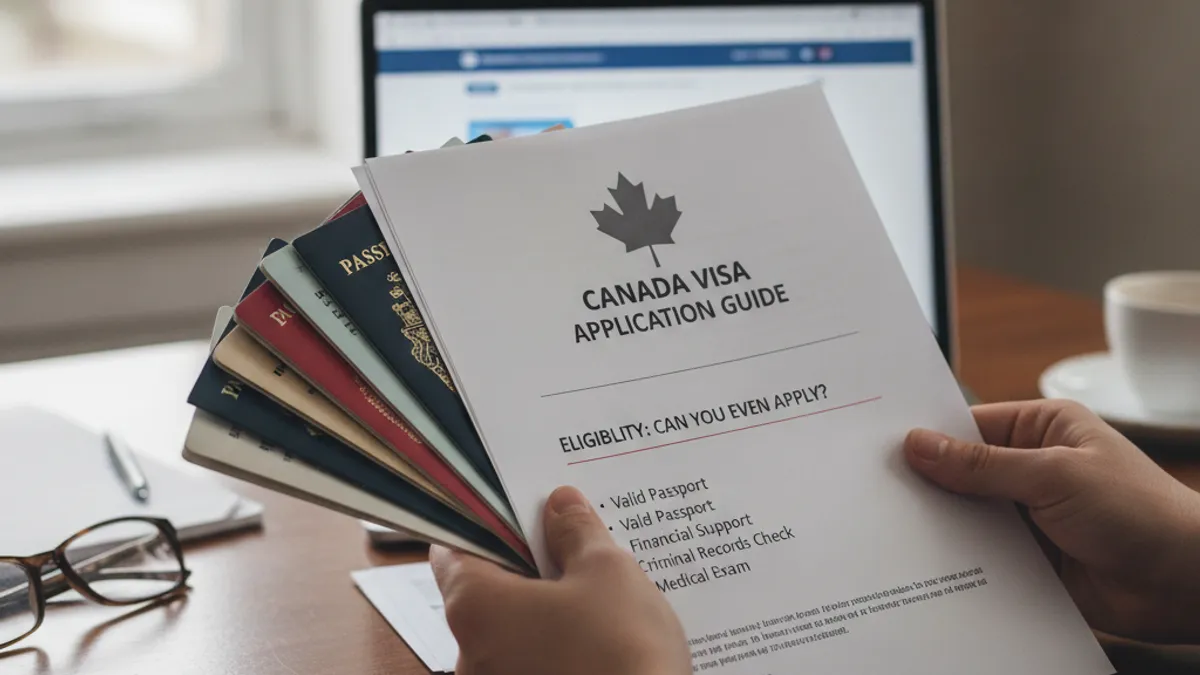
Before you get excited about booking flights or planning your stay, you absolutely have to check if you're eligible to even apply for a Canada visa. This isn't just a formality; the Canadian government has a set of rules, and if you don't meet them, your application will likely be refused. It's all about ensuring that people entering the country are doing so for legitimate reasons and won't become a burden or risk to Canadian society.
The main pillars of eligibility revolve around two key areas: your purpose for visiting and your admissibility. Your purpose is straightforward, are you visiting as a tourist, student, worker, or to see family? The visa type you choose must align with this. Admissibility, on the other hand, is about your background and current situation.
Proving You're Admissible to Canada
Being admissible means you don't have any reasons that would prevent you from entering Canada. This is a crucial part of the eligibility check, and if you have any issues here, it can halt your application process entirely.
- Criminality: If you have a criminal record, even for minor offenses, it can make you inadmissible. The severity and recency of the offense matter. In some cases, you might need to apply for "rehabilitation" to overcome this, which is a separate process that can take a significant amount of time. For instance, a DUI conviction can often lead to inadmissibility.
- Security Risks: This includes things like espionage, terrorism, or involvement in organized crime. These are serious grounds for inadmissibility.
- Health Concerns: While not all health issues make you inadmissible, if you have a condition that could pose a risk to public health or safety, or require excessive demand on Canada's health or social services, you may be found inadmissible. You might need to undergo a medical examination performed by a panel physician approved by Immigration, Refugees and Citizenship Canada (IRCC).
- Financial Reasons: If you are unable to support yourself financially, or if you have been found to have misrepresented financial information, you could be deemed inadmissible.
- Misrepresentation: This is a big one. If you provide false information or fail to disclose material facts on your application or at a port of entry, you can be found inadmissible for five years. This includes lying about your marital status, your travel history, or your intentions.
Meeting these admissibility requirements is non-negotiable. You'll be asked questions on your application form designed to assess these aspects. Honesty and thoroughness are paramount; any attempt to hide relevant information will almost certainly lead to refusal and potential future bans.
The Official Canada Visa Application Steps Explained

Alright, you've checked your eligibility and know which visa or permit you need. Now it’s time to roll up your sleeves and get through the application process. This is where following instructions precisely is key. While there might be slight variations depending on your visa type and country of origin, the overall flow is quite consistent.
The Government of Canada's immigration website is your official guide. They provide detailed checklists and online tools. It’s crucial to use these as your primary source because requirements can change. As of 2026, the primary method for most applications is online, which streamlines the submission and tracking process significantly.
Step 1: Identify Your Visa Type
As we touched on, this is your absolute first move. Are you going for tourism, studies, or work? The type of visa dictates the forms you fill out, the documents you need, and the fees you'll pay. For example, the documentation for a study permit will be vastly different from that for a visitor visa, as it will need to include proof of acceptance from a Canadian educational institution.
Step 2: Gather All Necessary Documents
This is where most of the work happens, and it’s vital to be thorough. Missing documents or incorrect information here is one of the most common reasons for application delays or refusals. You'll need to prepare a complete package based on the specific requirements for your chosen visa category.
Proof of Identity: Your Passport and More
Your passport is the cornerstone of your identity document for any visa application. It must be valid for at least six months beyond your intended date of departure from Canada. If your passport is expiring soon, renew it first. You might also need to provide birth certificates or other national identity documents, especially if your name differs across various official papers.
Showing You Have Enough Money to Stay
Canada wants to ensure you won't need to rely on public funds while you're there. You need to prove you have sufficient financial resources. This can be demonstrated through:
- Bank Statements: Typically, statements from the last four to six months showing a steady balance and regular deposits. Large, last-minute deposits can sometimes raise questions.
- Pay Slips: Recent pay stubs from your employer.
- Letter of Support: If someone else is financially supporting your trip (like a spouse or parent), they'll need to provide a letter stating this, along with their own proof of funds and financial stability.
- Proof of Accommodation: While not always mandatory for initial application, having reservations or a confirmed place to stay can strengthen your application, especially for longer tourist visits.
The exact amount needed varies based on your travel parties' size and length of stay. Aggregate reviews of successful applications suggest aiming for enough to cover your accommodation, food, and any planned activities without appearing to deplete your entire savings.
Step 3: Filling Out Your Application Forms Correctly
This is where you officially tell your story to the immigration officers. All application forms are usually accessed and submitted online through the official Government of Canada portal. You'll need to create an account. Read every question carefully.
Answer truthfully and completely.
- Personal Details: Ensure your name, date of birth, and other personal information match your supporting documents exactly.
- Travel History: Be thorough about your past international travel.
- Family Information: List all immediate family members, even if they are not accompanying you.
- Background Questions: Answer questions about your background, employment, and education honestly.
Double-checking your form for typos or errors before submitting is crucial. Even small mistakes can lead to requests for additional information, slowing down your progress.
Step 4: Paying the Canada Visa Fees
Once your application forms are filled out, you'll proceed to pay the required fees. These fees are non-refundable, so make sure you are absolutely ready to submit before you pay. The cost varies depending on the type of visa or permit you are applying for. For instance, as of the latest updates in 2026, the fee for a visitor visa is typically around CAD $100 per person, with potential additional charges for things like biometrics.
You can usually pay online using a credit card. Make sure to keep the receipt of your payment, as you may need to upload it with your application.
Step 5: Submitting Your Canada Visa Application
After you’ve completed all the forms and gathered all your documents, you'll upload them to the online portal along with your payment confirmation. Review everything one final time. Once submitted, you’ll usually receive a confirmation and a reference number. This number is vital for tracking the status of your application.
Step 6: Giving Your Biometrics (Fingerprints and Photo)
For most visa applications, you'll need to provide biometrics. That means your fingerprints and a digital photo. This is part of Canada's effort to enhance security and streamline identity verification. This step usually happens after you've submitted your initial application and paid the fees, and you've received instructions to do so.
Where you give your biometrics depends on your location. If you're in Canada, you might go to one of the pre-approved Visa Application Centres (VACs). If you're outside Canada, you'll likely visit an official VAC designated by the Canadian government. You’ll need to book an appointment in advance and bring your application number and passport.
The process is quick, usually only taking a few minutes.
Step 7: Waiting for That Decision: Canada Visa Processing Times
Once your application is complete, and you've given your biometrics, the waiting begins. Canada visa processing times can vary significantly. This is influenced by several factors, including the volume of applications the immigration department is handling, the country you're applying from, and the complexity of your specific case.
You can usually find estimated processing times on the official Government of Canada immigration website. However, treat these as estimates, not guarantees. Some applications might be processed faster, while others can take longer, especially if additional checks or documentation are required. It's best to apply well in advance of your planned travel date.
As of 2026, for example, visitor visa processing for some nationalities was averaging 4-6 weeks, but this fluctuates constantly.
During this waiting period, avoid contacting the immigration department unless they specifically request more information from you. Such inquiries can sometimes slow down the process. The best approach is patience and to periodically check your application status online using the reference number you received.
Common Canada Visa Application Mistakes to Avoid
Many people get their Canada visa applications right the first time, but some common pitfalls can cause unnecessary delays or outright rejections. Understanding these pitfalls beforehand can save you a lot of stress and potentially prevent you from having to reapply. These are common issues that our research indicates pop up frequently.
The goal is to present a clear, consistent, and complete application. When information is contradictory, missing, or appears questionable, immigration officers have to seek clarification, which extends the processing time. In worst-case scenarios, serious errors or perceived misrepresentation can lead to a refusal and impact future applications.
Don't Underestimate Document Requirements
A frequent mistake is not providing all the required documents or providing documents that don't meet the specified standards. For example, if a document needs to be translated into English or French, failing to get an official certified translation can be a problem. Or, if you're asked for financial statements from the last four months, submitting only two or three months' worth is insufficient.
- Unsupported Proof of Funds: A common issue is relying on bank statements with unusual transaction patterns, like a large deposit made just before application. This can signal that the funds aren't genuinely yours or that you're trying to artificially boost your financial standing. Aggregate user feedback suggests a consistent history of funds is more convincing than a sudden influx.
- Unclear Purpose of Visit: For a visitor visa, if your stated purpose isn't clear or seems inconsistent with your travel plans or the documents you provide, it can raise doubts. A detailed letter of explanation can help, but well-organized supporting documents are even better.
- Expired or Invalid Passports: Submitting an application with a passport that doesn't meet the validity requirements (e.g., expiring within six months of your intended stay) is an immediate roadblock.
Handling Financial Proof Like a Pro
Showing you have enough money is critical for most Canadian visa types, yet it's an area where many applicants stumble. It's not just about having a certain amount in your bank account; it’s about demonstrating the source and stability of those funds.
- Insufficient Funds: If your bank statements show a balance that, in aggregate, doesn't reasonably cover your intended trip expenses (accommodation, food, transportation, activities), your application might be flagged. While there's no single magic number, consider the cost of living in Canada and your travel itinerary.
- Unexplained Deposits: As mentioned, large, sudden deposits without clear documentation can be a red flag. If a relative gave you money as a gift, you may need a letter from them and proof of their own financial capacity.
- Tied-Up Funds: If your readily available funds are tied up in investments or property that can't be easily liquidated for travel expenses, it might not be considered sufficient proof of liquid assets for your trip.
To avoid these issues, start gathering your financial documents early. Understand the typical costs associated with travel in Canada and ensure your statements reflect sufficient readily accessible funds that have been accumulated over time.
When to Consider Expert Help for Your Canada Visa Application

While many people successfully apply for Canadian visas on their own, there are definitely times when getting professional help is a smart move. If your situation is complex, or if you've faced issues in the past, an experienced immigration consultant or lawyer can make a significant difference. They offer specialized knowledge and can guide you through the nuances of the application process.
Canada's immigration system can be intricate, with specific rules and procedures that are difficult for a layperson to fully grasp. An expert can tailor advice to your unique circumstances, ensuring that all requirements are met and that your application is as strong as possible. This can be particularly valuable if you have a criminal record, a past immigration refusal, or unusual financial circumstances.
- Complex Cases: If you have a criminal history, a past immigration violation, or a medical condition that might affect your admissibility, an expert can help you understand your options and prepare the necessary documentation to address these issues. For instance, they can advise on the process of applying for rehabilitation if you have a criminal record.
- Business Visas or Investor Programs: These often have very specific and demanding financial and business acumen requirements. Navigating these can be challenging without specialized advice.
- Study or Work Permits with Complications: If your chosen program isn't straightforward, or if your job offer has unique conditions, an immigration professional can ensure your application is correctly framed for approval.
- Appeals or Reapplications: If your initial application was refused, an expert can review the decision, identify the reasons for refusal, and help you prepare a stronger case for an appeal or a new application. They can interpret the refusal letter and advise on the best course of action.
It's crucial, however, to choose a reputable and authorized representative. In Canada, immigration consultants must be licensed by the College of Immigration and Citizenship Consultants (CICC), and lawyers must be members of a provincial law society. Always verify their credentials to avoid falling victim to fraudulent services.